The mathematics seem brutally simple: plug your €1,500 warm rent into a calculator, and it spits out a magical number, €545,023. According to the popular Mieten oder Kaufen Rechner (Rent or Buy Calculator) making rounds in Austrian finance circles, any property cheaper than this threshold means buying beats renting. The tool’s creator, a developer who built it after extensive research in online communities, claims it accounts for everything: opportunity costs, KESt (capital gains tax), inflation, and those pesky hidden expenses.
But here’s where the numbers start to smell funny. While the calculator correctly identifies that buying often outperforms renting over 30 years, it glosses over a reality that anyone who has actually tried to buy property in Vienna already knows: the math only works if you can clear the Eigenkapital (equity capital) hurdle, and if the market behaves exactly as your spreadsheet predicts.
The Opportunity Cost Mirage
The calculator’s core logic rests on opportunity cost, the idea that your down payment could earn 7% annually in an ETF instead. For a typical Austrian property requiring €80,000 in Eigenkapital, the tool calculates this “cost” at over €500,000 across three decades. This makes buying look like financial suicide.
What the basic model misses, as several technically-minded users pointed out, is that this 7% figure represents the real return of the S&P 500, not the nominal return. Since the calculator doesn’t properly account for inflation, it should use the MSCI World’s 10.8% nominal return instead. This subtle shift changes everything, shrinking the apparent advantage of renting and investing.
More importantly, this calculation assumes you actually have €80,000 liquid and ready to deploy. Data from Austrian banking institutions like Raiffeisen and Erste Bank shows the median Austrian household under 35 has less than €15,000 in savings. For most, the opportunity cost debate is purely academic, they’re choosing between renting and not having a roof over their head, not between renting and optimizing their equity allocation.
The 10% Kaufnebenkosten Trap That Destroys Returns
Let’s talk about what happens when you actually buy. The calculator dutifully includes Kaufnebenkosten (purchase ancillary costs) at 10% of the purchase price, but this category deserves its own horror show:
- Grunderwerbsteuer (real estate transfer tax): 3.5% in Austria
- Notar (notary) and Grundbuch (land registry): 2-3%
- Makler (real estate agent): 3% plus VAT if you’re unlucky
On that €545,023 “maximum” property, you’re burning €54,502 before even receiving the keys. That’s nearly four years of your €1,500 rent, gone in a puff of smoke. Unlike your rent, this money never builds equity. It’s simply gone.
And the hits keep coming. Austrian property experts recommend budgeting 1% of the property value annually for maintenance and Instandhaltung (upkeep). On our example property, that’s another €5,450 per year, roughly €454 monthly that renters don’t pay. Over 30 years, this adds €163,500 to your ownership cost, a figure that rarely appears in the neat calculations.
Current Market Reality: Rising Rents vs. Rising Rates
The research paints a stark picture. Vienna’s rental market is experiencing explosive growth, with Brigittenau seeing 20.6% rent increases and even premium districts like Mariahilf jumping 19.9%. At these rates, a €1,500 rent today becomes €1,800 in just five years.
This would seem to strengthen the buy case, except mortgage rates have simultaneously increased from historic lows below 1% to current levels of 3.7-4.5% depending on your loan term and Beleihung (loan-to-value ratio). The same €400,000 loan that cost €333 monthly in interest in 2021 now costs €1,483 at 4.45%.
The calculator attempts to model this, but it can’t capture the human element: ** affordability at the point of purchase**. Austrian banks now stress-test borrowers at 6% interest rates, requiring monthly net income of roughly €4,500 to qualify for that €400,000 loan. Even if the 30-year math works, the entry barrier has become nearly insurmountable for single-income households.
The Mietanbot Trap and Rental Market Distortions
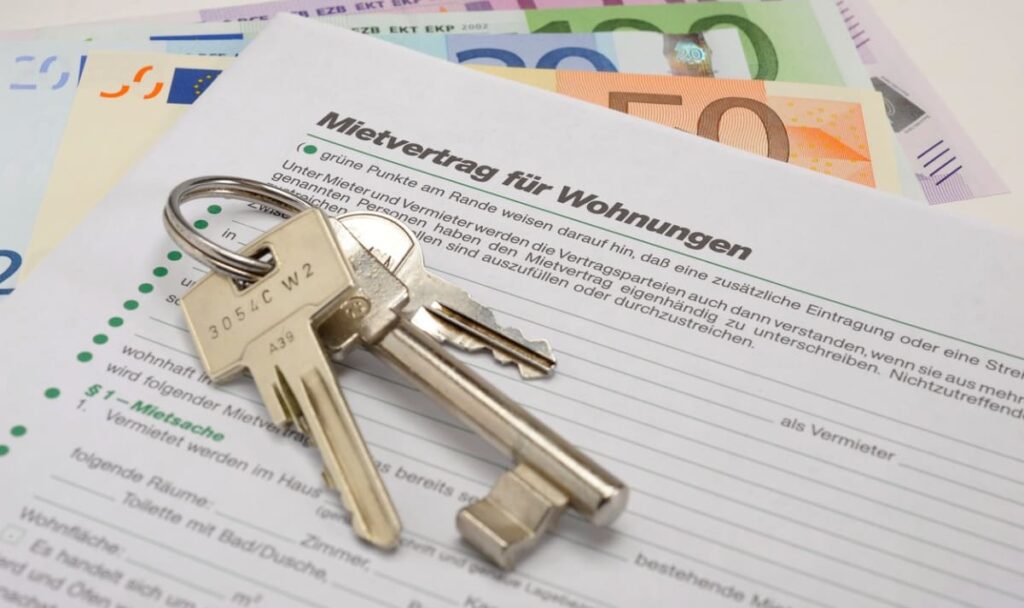
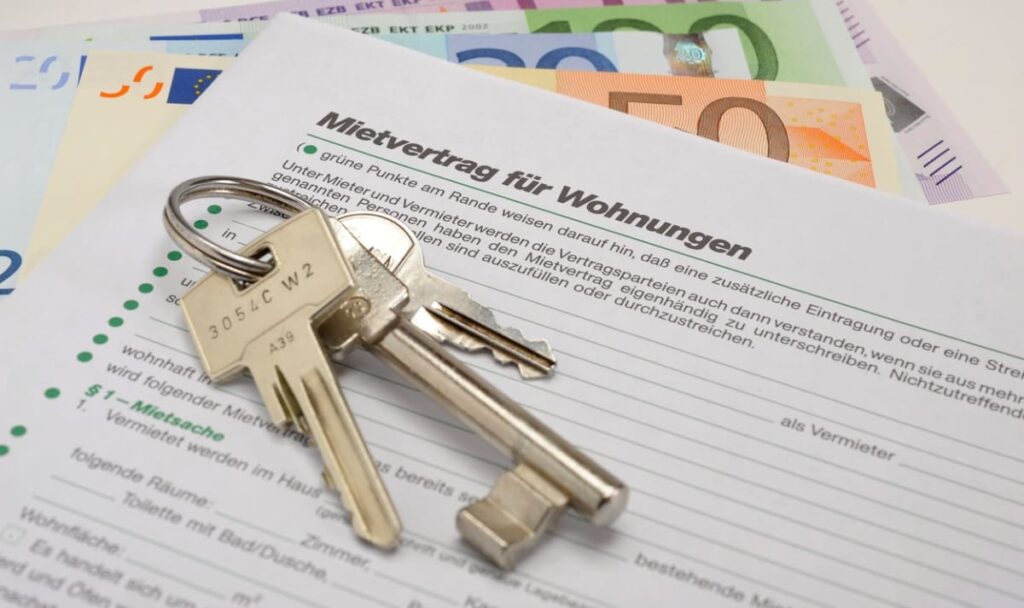
Before you even reach the buy decision, you might fall into the Mietanbot Trap. In Vienna’s hyper-competitive rental market, prospective tenants must often sign a Mietanbot (rental offer) before seeing the actual Mietvertrag (rental agreement). This legally binding document locks you into terms you haven’t fully reviewed, a practice that has trapped countless expats and locals.
This desperation is rational. With willhaben.at showing 90% of Austrian regions experiencing rent increases, holding onto any decent apartment feels like winning the lottery. Some residents are even keeping old rentals empty while living elsewhere, paying double rent to maintain their foothold in an increasingly hostile market. As one commenter noted: “A bezahlbare Mietwohnung gibt man heute so schnell nicht auf” (An affordable rental apartment is not given up quickly today).
When the Math Actually Works: Three Scenarios
Despite the flaws, buying does make sense under specific Austrian conditions:
1. The Genossenschaftswohnung (Cooperative Apartment) Steal
Some Vienna Genossenschaften still offer properties at 30-40% below market rate. If you qualify, and that’s a big if, the math becomes compelling. The Kaufnebenkosten shrink proportionally, and you’re not competing with international investors.
2. The 20-Year Holding Period
The calculator’s 30-year horizon masks a critical insight: the break-even point typically lands around year 12-15. If you can’t commit to at least two decades, transaction costs will eat any theoretical gains. For expats on 3-5 year assignments, renting almost always wins.
3. The High-Income, High-Tax Bracket Professional
If you’re earning €100,000+ and facing marginal tax rates above 50%, the Eigenheimzulage (homeowner’s allowance) and ability to deduct mortgage interest creates a tax arbitrage that renters can’t access. This is the one scenario where the spreadsheet matches reality.
The Wealth-Building Illusion
Perhaps the most dangerous aspect of the rent vs. buy debate is how it frames property as a wealth-building tool. While Austrian real estate has appreciated 2-3% annually over long periods, this barely exceeds inflation. The real returns come from forced savings through mortgage payments, not property appreciation.
Consider this: if you invested your €80,000 down payment plus the monthly difference between renting and owning (often €200-400 after all costs) into a diversified ETF portfolio, your expected wealth after 30 years is statistically higher than the property owner, assuming you actually invest the difference rather than spending it.
This behavioral reality is why the calculator’s creator added a note about the “große Eigenkapitalquote” (large equity ratio) being the real problem. Most people don’t have the discipline to invest what they save by renting.
A Practical Decision Framework for 2026
Instead of relying on a single number, run this Austrian-specific checklist:
Buy only if:
– You have at least 25% Eigenkapital (20% down + 5% for costs)
– Your total housing costs (mortgage + maintenance + utilities) stay under 35% of net income
– You can pass the bank’s 6% interest stress test
– You’ll stay 15+ years
– You’ve accounted for €5,000-10,000 in unexpected renovation costs
Rent and invest if:
– You lack substantial Eigenkapital
– Your career requires mobility
– You can automate monthly investments equal to what you’d spend on ownership costs
– You’re comfortable with market volatility
The Verdict: Calculators Don’t Buy Apartments
The Mieten oder Kaufen Rechner is a brilliant tool for sparking debate, but it’s not a decision-maker. It can’t quantify the psychological comfort of owning your walls in a country where Mieterhöhungen (rent increases) are making headlines monthly. It doesn’t account for the fact that in Brigittenau, your rent could jump 20% next year while your mortgage payment stays fixed.
What it does reveal is that the old rule, “buy if you can afford it”, needs updating. In 2026 Austria, the rule should be: buy if you can afford it, survive a 6% rate hike, and stay put for 15 years while maintaining a separate emergency fund of at least €20,000.
For everyone else, the calculator’s math might be correct, but life’s constraints make the answer irrelevant. The real financial hack isn’t choosing between rent or buy, it’s whichever option lets you sleep at night while building wealth systematically, whether through forced mortgage payments or disciplined ETF investing.
The Viennese rental market will continue its climb, and mortgage rates may or may not fall. But your financial decision should rest on your personal runway, not a website’s JavaScript. Before you let any calculator make life decisions for you, remember: it doesn’t have to live with the consequences. You do.
For deeper analysis on Austrian property calculations, see our guide on Mieten vs. Kaufen Excel-Berechnung und ETF-Alternativen. If you’re wondering whether Realistische Chancen auf Hausbesitz in Österreich still exist for average earners, we’ve crunched those numbers too.