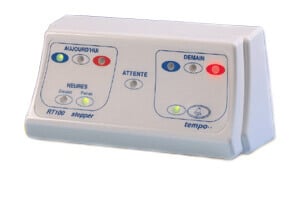
If you’re one of the 900,000 French households on EDF’s Tempo tariff, your February 2026 bill just became more expensive. The regulated electricity rates (tarif réglementé) increased on February 1st, but while most options saw modest changes, Tempo users face a 6.2% average hike, with red day peak rates soaring past 70 cents per kilowatt-hour. The question now isn’t just whether you can adapt your consumption, but whether this once-clever system still makes financial sense against simpler, cheaper market offers.
What Is Tempo and Why Did Prices Change?
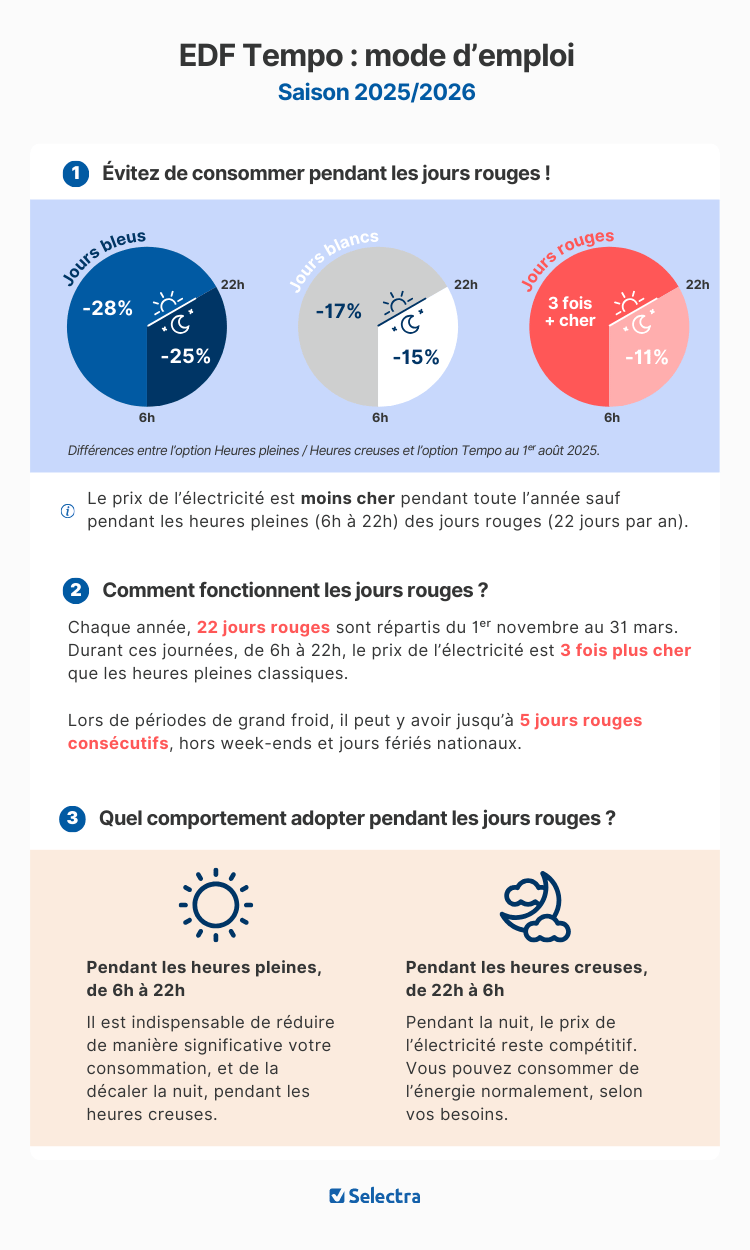
Tempo is EDF’s three-tier seasonal tariff that divides the year into blue, white, and red days. Each color carries different rates for peak (heures pleines) and off-peak (heures creuses) hours. The system was designed in the 1990s to reduce strain on the grid during winter peaks by making electricity prohibitively expensive on the 22 red days scattered from November through March.
The Commission de régulation de l’énergie (CRE) adjusts the regulated tariff every February and August. This time, they argued that Tempo’s rates had fallen “too low” compared to actual supply costs. The result: across-the-board increases that hit red days hardest.
New Tempo Rates (February 2026):
- Blue days (300 days/year): 0.1612€/kWh peak, 0.1325€/kWh off-peak (+7.9%)
- White days (43 days/year): 0.1871€/kWh peak, 0.1499€/kWh off-peak (+8.1%)
- Red days (22 days/year): 0.7060€/kWh peak (+9.1%), 0.1575€/kWh off-peak
The red day peak rate, now 0.7060€ per kWh, means running a 2,000W heater for one hour costs €1.41. Run your washing machine during peak hours on a red day and you’re looking at €2-3 per load.

The Real Cost for Typical Households
Let’s run the numbers for a standard French household: 9 kVA power supply, 5,739 kWh annual consumption (the average for Tempo users). Assuming you shift 34% of usage to off-peak hours and reduce peak consumption by 23% on red days, a realistic target for disciplined users, your annual bill breaks down as:
- Blue days (82% of consumption): €712
- White days (12% of consumption): €120
- Red days (6% of consumption): €179
- Subscription fee: €233
Total: €1,244 per year
Under the old rates, this same profile cost €1,172. The increase? €72 annually, or about €6 per month. Not catastrophic, but enough to tip the balance for many.
Compare this to EDF’s standard Heures Pleines/Heures Creuses (HP/HC) tariff: €1,310 per year for the same consumption pattern. Tempo still saves you €66, but that margin is shrinking.
Fixed-Rate Alternatives Are Stealing the Show
Here’s where Tempo’s value proposition collapses. Competitive suppliers now offer fixed-rate deals 15-20% below the regulated tariff, with no calendar-watching required.
La Bellenergie’s Prudence offer (fixed for one year):
* 0.1657€/kWh base rate
* €234 annual subscription
* Total for our example: €1,309 per year
Wait, that’s actually slightly more than Tempo. But consider the mental load: Tempo demands you check colors daily, avoid using major appliances on red days, and schedule everything from laundry to electric vehicle charging around a complex calendar. Fixed-rate alternatives eliminate this entirely.
More aggressive competitors like Gaz de Bordeaux’s NovaFixe offer:
* 0.1657€/kWh base rate
* €235 subscription
* Same total cost, but zero behavioral constraints
The real winners are households that can combine a competitive market offer with smart consumption habits, like using programmable thermostats and running appliances during standard off-peak hours (often 10 PM to 6 AM).
When Tempo Still Makes Sense
Despite the price hike, Tempo remains viable for specific profiles:
- Secondary residences used mostly in summer avoid red days entirely. If your consumption clusters in June-August, you’ll rarely see a white day, let alone a red one.
- Homes with non-electric heating (wood stoves, gas boilers, heat pumps). Since heating drives winter consumption, avoiding electric heating sidesteps the red day trap.
- Electric vehicle owners who can charge exclusively during blue day off-peak hours (22h-6h). At 0.1325€/kWh, this beats most public charging stations.
- Households with photovoltaic panels and battery storage. Store your solar production and draw from the grid only during cheap blue periods.
- Extreme night owls or those with total schedule flexibility. If you can shift 50%+ of consumption to off-peak hours, the savings still add up.
5. Extreme night owls or those with total schedule flexibility. If you can shift 50%+ of consumption to off-peak hours, the savings still add up.
For these users, the €66-100 annual savings versus fixed rates might justify the inconvenience.
When to Ditch Tempo Immediately
Switch now if you match any of these:
- Electric heating in a primary residence: Red days will destroy your budget. A cold snap hitting on a red day could cost €20-30 daily.
- Inconsistent schedule: If you can’t reliably avoid 6 AM-10 PM usage on red days, the penalty rates will erase any savings.
- High baseline consumption: Fridges, freezers, and always-on devices create an “incompressible consumption” floor. If this exceeds 30% of your usage, Tempo loses its edge.
- Value your time: The daily monitoring, app-checking, and behavioral adjustments have a real cost. Many users report spending 2-3 hours monthly managing Tempo.
As one energy analyst noted, the effort-to-reward ratio has flipped. “You’re essentially working for €3-4 per hour of inconvenience”, factoring the total savings against time spent.
How to Switch: A Practical Guide
Leaving Tempo is free and takes about 10 days. Here’s the process:
- Use a comparison tool (like Hello Watt or Selectra) to find the best market offer for your postal code and consumption profile.
- Contact the new supplier online or by phone. They’ll handle the entire switch, including notifying EDF.
- No technical changes needed if you have a Linky smart meter. The switch is administrative only, no technician visit, no interruption.
- Final Tempo bill: You’ll receive a pro-rated bill covering days up to the switch. Ensure you’ve minimized red day usage until then.
The CRE’s decision to raise Tempo rates while slightly lowering standard HP/HC rates signals a clear policy shift: they want to phase out these complex legacy tariffs. The number of Tempo subscribers quadrupled since 2022, creating grid management challenges. This price hike is designed to nudge users toward simpler market offers.
The Bigger Picture: Energy Costs in French Household Budgets
This Tempo hike arrives as French families already face pressure from rising property taxes and inflation. Cutting energy and household expenses has become a national priority. While switching suppliers can save €50-150 annually, the real gains come from reducing consumption through insulation, efficient appliances, and behavioral changes.
For comprehensive strategies on optimizing your entire household budget, from tax deductions to energy retrofits, see our guide on cutting energy and household expenses. The article details how combining supplier switching with home improvements can yield €500+ annual savings.
Final Verdict: Is Tempo Still Worth It?
Probably not for most households.
The 6.2% price hike narrows the gap with fixed-rate alternatives to just €50-80 annually, an amount easily offset by a single red day mistake. Unless you fit one of the niche profiles above, the mental load and risk of penalty rates now outweigh the modest savings.
Action plan:
– Calculate your exact scenario using your last 12 months’ consumption data (available in your EDF online account).
– Compare market offers using an accredited comparator. Look for fixed-rate deals 12-15% below the regulated tariff.
– Switch before March to avoid the remaining red days of the 2025-2026 season (14 are still scheduled through March 31).
The Tempo experiment isn’t dead, but it’s become a specialist tool rather than a mass-market money-saver. For the typical family seeking to reduce bills without becoming an energy manager, fixed-rate market offers now provide better value, and peace of mind.