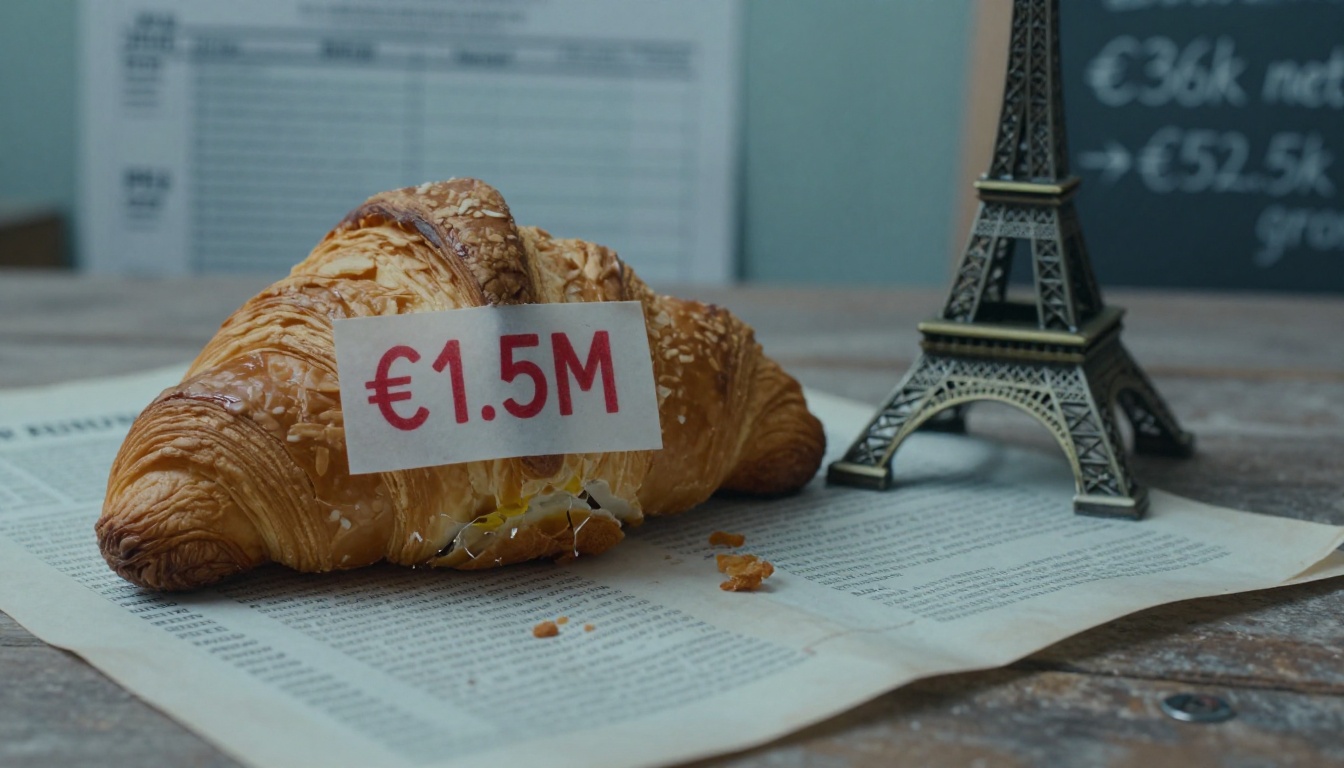
The math seems simple enough: want €3,000 net per month in retirement? That’s €36,000 per year. Apply the classic 4% withdrawal rule, and you need a €900,000 portfolio. Pack your bags, book a one-way ticket to Lyon, and start living your best baguette-and-bicycle life.
Except this calculation crumbles faster than a stale croissant the moment it hits French fiscal reality. The actual number isn’t €900,000. It’s not even €1.2 million. For true security, you’re looking at €1.5 million in investable assets, minimum.
The Raw Math: From €3,000 Net to €1.5 Million Gross
Here’s where the dream meets the DGFiP (French tax authority). That €3,000 monthly target is after taxes, after social charges, after all the French state takes its cut. But your portfolio generates gross returns.
The standard 4% rule assumes you’re paying minimal capital gains tax, maybe 15% if you’re in the US, or zero in some jurisdictions. In France, your investment gains face the prélèvement forfaitaire unique (flat tax) of 31.4% (30% income tax + 1.4% social charges as of 2026). This means for every €100 your portfolio generates, you keep only €68.60.
To get €36,000 net in your pocket, you need to generate roughly €52,500 gross annually. At a conservative 3.5% withdrawal rate (more on why you need to be conservative later), that requires €1.5 million in your investment account.
Many international residents discover this calculation only after they’ve already built their portfolio elsewhere. The shock comes when they realize their €1 million ETF portfolio, comfortable in Switzerland or Dubai, suddenly feels precarious in France.
The Flat Tax Reality: Why France Takes 30% of Your Gains
The flat tax (prélèvement forfaitaire unique) is the silent portfolio killer. While French residents can theoretically opt for the progressive income tax scale, for pure investment income, the flat tax is almost always applied, and it’s non-negotiable for non-residents cashing out.
This creates a permanent drag on your returns. An American investor might pay 15% on long-term capital gains. A French resident pays 31.4%. Over a 30-year retirement, this difference compounds into hundreds of thousands of euros in lost purchasing power.
Some expats consider timing their return strategically. If you’re currently in a zero-tax jurisdiction like the UAE, you might cash out your gains before becoming a French tax resident, resetting your cost basis. But this requires careful planning, French tax residency triggers the moment you spend more than 183 days in France or move your “center of economic interests” there.
The PEA Problem: The Tax Shelter You Can’t Access as an Expat
The Plan d’Épargne en Actions (PEA) is France’s crown jewel for equity investors. After five years, your gains are taxed at only 17.2% (social charges only) instead of 31.4%. On a €1.5 million portfolio generating €50,000 in annual gains, that’s a €7,100 yearly difference, enough for a very nice extended vacation.
But there’s a catch you can’t work around: you cannot open a PEA as a non-resident. The original poster, living in China, is locked out. You can only contribute while you’re a French tax resident.
If you already have a PEA from before you expatriated, you can keep it, but you can’t add new money. Many expats returning after years abroad discover their tax-advantaged account is frozen in time, unable to receive the capital they’ve accumulated elsewhere.
For those planning a future return, the advice is clear: open a PEA now, even with just €100, to start the five-year clock. Brokerages like Boursorama or Fortuneo allow remote account opening for French citizens, even if non-resident status prevents PEA eligibility. The window is narrow, but it exists.
The Hidden Cost: PUMa and Social Charges
Here’s the expense that blindsides most returnees: PUMa, the Protection Universelle Maladie. Since you’re not employed, you must pay social charges on your investment income. This adds roughly 6.5% to your tax burden.
On €52,500 of gross investment income, that’s another €3,400 annually, just for health coverage. It’s not optional, and it’s not included in the flat tax. Think of it as France’s subscription fee for access to its healthcare system.
This pushes your total effective tax rate on investment gains to nearly 38%. Now your €1.5 million portfolio needs to generate even more gross income, or you need an even larger portfolio.
The Withdrawal Rate Debate: 3% vs 4% vs “Flexible”
The Trinity Study’s 4% rule was based on 30-year retirements and US markets. For a 45-year-old potentially facing 40+ years of retirement, 4% is aggressive, especially in France’s tax environment.
French FIRE practitioners recommend 3% to 3.2% for true capital preservation. At 3%, you need €1.67 million to generate €50,000 gross. At 3.2%, you’re at €1.56 million. The €1.5 million figure is the bare minimum for safety.
But some argue for flexible withdrawal strategies instead of fixed rates. Rather than mechanically withdrawing 4% annually, you withdraw less during market downturns and more during rallies. This might let you start closer to €1.2 million, but requires discipline and a variable lifestyle budget, your “vacation” money becomes your buffer.
The math is unforgiving: 5% or 6% withdrawal rates mean you’ll likely be broke at 70. France’s generous life expectancy makes longevity risk very real.
The Currency Trap: Why Your USD Portfolio Might Fail You
The original poster invests heavily in US markets (NASDAQ ETFs, US stocks). This creates a double risk: market volatility and currency fluctuation.
If the dollar weakens against the euro, your purchasing power in France shrinks even if your portfolio value in USD stays flat. A 10% EUR/USD swing means a €150,000 change in your portfolio’s euro value on a €1.5 million equivalent.
Hedging currency risk costs money, typically 0.2% to 0.5% annually. On €1.5 million, that’s €3,000 to €7,500 yearly, another drag on your safe withdrawal amount.
Some expats keep their portfolios in their current country’s currency until just before return, then convert during a favorable exchange rate. This is market timing, and market timing is gambling with your retirement.
The Buffer Strategy: Why €70,000 in Cash Isn’t “Lost Money”
One commenter suggested keeping two years of expenses, about €70,000, in Livret A and LDDS (tax-free savings accounts) to avoid selling stocks during a crash. Another criticized this as “lost gains.”
They’re both right. That €70,000, invested at 7% annually, could generate €4,900 per year. Over 7 years, that’s €34,000 in “lost” returns.
But here’s the counter: during a 2008-style crash where your equity portfolio drops 40%, being forced to sell €36,000 of stock means liquidating €60,000 of pre-crash value. You permanently damage your portfolio’s recovery potential.
The cash buffer isn’t an investment, it’s portfolio insurance. It lets your equities recover while you live on safe money. For a risk-free rate of 3% on Livret A, you’re paying €2,100 annually to protect against sequence-of-returns risk. That’s cheap peace of mind.
The Real Estate Alternative: Why Some Choose Bricks Over Stocks

The CESdeFrance article highlights a different path: real estate leverage. Instead of €1.5 million in stocks, you might need only €500,000 in equity controlling €1.5 million in property.
The strategy: buy rental properties with mortgages, let tenants pay the loans, and in 20-25 years own the properties outright. The rental income then funds your retirement.
This path has advantages: inflation protection, tangible assets, and French tax deductions for property depreciation. But it requires hands-on management, concentration risk, and illiquidity. You can’t sell a bathroom to cover a medical emergency.
For expats returning with cash, the choice between financial portfolio and real estate often depends on temperament. Stocks offer passive income, property offers control and leverage. Many successful retirees blend both.
The Political Risk: What If Taxes Go Up?
The most sobering comment in the research: “La fiscalité peut et va évoluer” (taxation can and will evolve). France has already increased the PEA social charges from 17.2% to 18.6% in 2025. The flat tax could rise. Wealth taxes could return.
Some politicians have floated “taxation loyers fictifs” (fictional rent tax) on paid-off primary residences, essentially taxing you for the imputed rental value of your own home. While unpopular, it shows the direction of fiscal thinking: if you have assets, the state wants a share.
This is why conservative withdrawal rates matter. A portfolio that works at 31.4% tax might fail at 35% or 40%. Building in a 10-15% buffer isn’t paranoia, it’s realism about French fiscal policy.
Practical Steps: What to Do Today
If you’re the 45-year-old expat in China, here’s your action plan:
- Open a CTO (Compte-Titres Ordinaire) with a French broker now, even as a non-resident. Some allow it, and it establishes a relationship.
- If you have any path to open a PEA, do it with €100 immediately. The five-year clock is your most valuable asset.
- Model your portfolio in euros, not dollars. Convert at today’s rate and plan for a 10% adverse swing.
- Calculate with 3.2% withdrawal, not 4%. This means €1.5 million minimum, €1.7 million for comfort.
- Budget €6,000 annually for PUMa, it’s a fixed cost, not a variable one.
- Keep €70,000 in Livret A/LDDS when you return. It’s not lost gains, it’s survival insurance.
- Diversify beyond US tech. A global ETF like CW8 or WPEA reduces concentration risk.
The FIRE movement in France isn’t impossible, it’s just taxed, regulated, and complicated. Your €1.5 million target assumes a paid-off house, which eliminates France’s largest living expense. Without that, add another €300,000 to €500,000 to your target.
The final truth? France rewards those who understand its systems and punishes those who don’t. The difference between a successful early retirement and a mid-life financial crisis often comes down to timing your PEA opening, managing currency risk, and accepting that here, 3% is the new 4%.