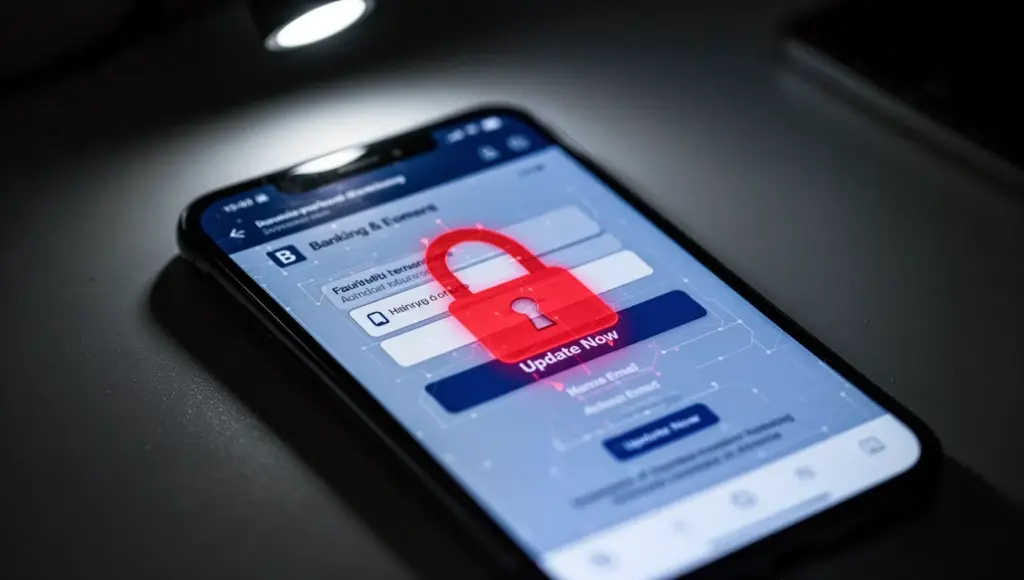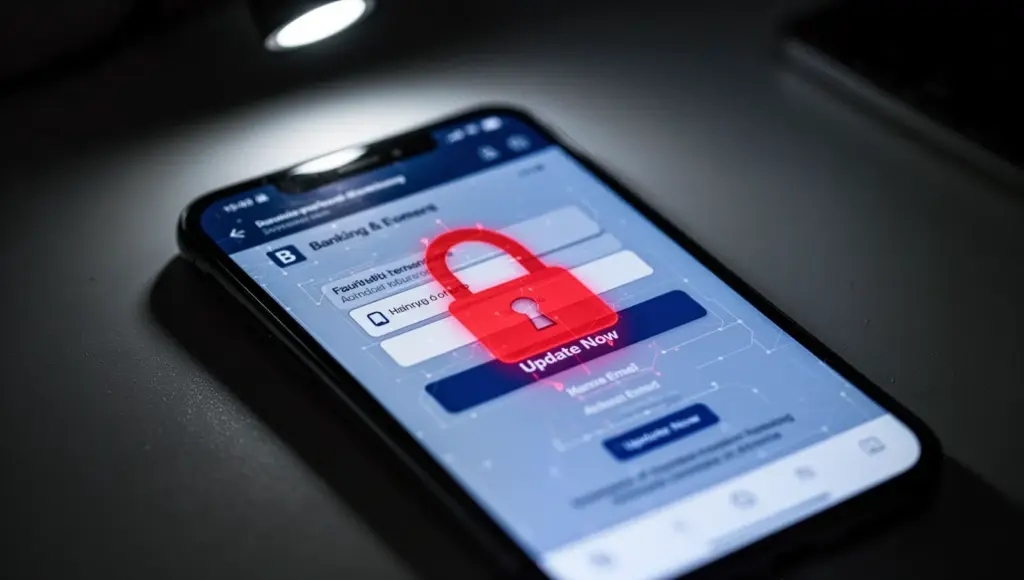
When a physical letter claiming to be from Deutsche Kreditbank (DKB) lands in your mailbox, complete with official-looking formatting and urgent security warnings, most people pause. After all, German banks still communicate important matters by post. But this particular letter, dissected by vigilant recipients, reveals a masterclass in deception that should alarm every banking customer in Germany.
The Anatomy of a Physical Phishing Attack
The scam letter arrives with all the hallmarks of legitimacy: DKB branding, a professional layout, and warnings about an impending security update. Yet buried in the details are red flags that expose it as a calculated attempt to harvest banking credentials through a hybrid digital-analog attack vector.
Timeline Absurdities That Betray the Scam
One of the most glaring errors involves temporal impossibilities. The letter references a banking function scheduled for activation on October 7, 2025, yet the correspondence itself bears a date four months later. This future-past confusion might seem like a sloppy mistake, but it reveals something more concerning: scammers are recycling old templates without bothering to update critical details. For a bank that prides itself on German precision, such chronological chaos would never pass compliance checks.
The Missing Foundation of German Business Letters
Any legitimate German business correspondence, especially from a financial institution, must include a comprehensive footer containing the Impressum (legal notice), full corporate address, board member listings, and regulatory information. This scam letter contains none of these legally required elements. The absence isn’t just a red flag, it’s a legal impossibility for actual bank communications in Germany.
QR Code Manipulation: When Paper Becomes a Digital Trap
The letter aggressively pushes recipients toward a QR code, supposedly for convenient account verification. This technique, known as Quishing (QR code phishing), transforms a harmless-looking piece of paper into a direct pipeline to a fraudulent website.
Suspicious Domains and Technical Deception
Scanning the code leads to app-verwaltung.app, a domain that bears no relation to DKB’s official infrastructure. The website mimics DKB’s mobile login page with alarming accuracy, but none of its links function. Clicking “Startseite” (Homepage) or “Impressum” redirects to dkb.de-1u898.cc, a domain registered in the Cocos Islands (the .cc TLD) using HTTPS to create a false sense of security.
This multi-layered deception demonstrates how scammers exploit the trust Germans place in both postal communications and digital security indicators. The presence of HTTPS means nothing when the domain itself belongs to criminals.
Postal Markings That Tell a Different Story
The letter’s physical attributes reveal more about the operation’s scale. It uses Gogreen addressing with a date stamp of 20.01.2026 and an actual postage stamp, something German banks abandoned decades ago in favor of machine franking. The return address shows a street location, while DKB officially uses a Postfach (P.O. box) with a different postal code.
Most revealing is the postal QR code processing data. Analysis shows the franking code registered in a city hundreds of kilometers from the supposed sender, with processing timestamps that would require physical teleportation to achieve. This indicates mass reuse of a single franking code across multiple mailings, a clear sign of bulk fraudulent operation.
Stolen Identities: When Signatures From Another Bank Appear
Perhaps the most audacious element involves the letter’s signature. Investigators discovered the supposed DKB representative’s signature, Frank Leitermann, was lifted directly from ING Bank documents publicly available online. This cross-bank identity theft shows scammers aren’t even creating original forgeries, they’re harvesting publicly accessible documents and repackaging them for new targets.
The ease with which these signatures were found online raises uncomfortable questions about document security at major German banks. Many customers upload correspondence to document-sharing platforms, creating a treasure trove for fraudsters. One analysis found genuine account statements and salary slips freely available through simple Google searches, complete with names, addresses, and contact details, a clear violation of DSGVO (GDPR) principles that banks seem powerless to prevent.
The Broader Context: Germany’s Multi-Channel Phishing Crisis
This physical letter doesn’t exist in isolation. It complements a massive digital phishing campaign targeting DKB customers through email, SMS, and phone calls, what cybersecurity experts call multi-channel attacks or Smishing (SMS phishing) and Vishing (voice phishing).
Digital Parallels: Same Tactics, Different Medium
The digital version of this scam uses emails with subject lines like “Wichtige Sicherheitsaktualisierung für Ihr DKB-Konto” (Important security update for your DKB account). These messages create artificial urgency, claiming new “German verification guidelines” require immediate action within three minutes or face account suspension.
The digital and physical campaigns share identical psychological manipulation techniques:
- Artificial urgency with impossible deadlines
- Authority exploitation using official-sounding regulations
- Fear-based compliance threatening account access
- Convenience traps offering QR codes for “quick verification”
The Professionalization of German Financial Fraud
What makes this particularly dangerous is the professional execution. Unlike the broken German and obvious errors of early phishing attempts, these letters and emails are linguistically flawless, properly formatted, and technically sophisticated. The scammers understand German banking culture, regulatory language, and consumer expectations.
This evolution mirrors broader trends in financial fraud across Germany. As documented in investigations into sophisticated financial identity theft in Germany, organized crime networks have built entire ecosystems dedicated to hijacking legitimate financial infrastructure. The DKB scam represents just one front in this expanding war.
Why Physical Mail Still Works in a Digital Age
You might wonder why scammers bother with paper when digital channels are cheaper and faster. The answer lies in German consumer psychology and regulatory environment.
Trust in Paper
Germans maintain a deep-seated trust in physical documents, particularly from financial institutions. The Bundespost legacy and Germany’s bureaucratic culture mean official-looking letters command attention and credibility that emails often lack. Older demographics, who remain primary targets for financial fraud, are especially likely to respond to postal communications.
Regulatory Camouflage
German banking regulations like PSD2 (Payment Services Directive 2) and various BaFin (Federal Financial Supervisory Authority) guidelines create a complex compliance landscape. Scammers exploit this by inventing plausible-sounding regulatory requirements that customers cannot easily verify. Who hasn’t received legitimate bank letters referencing obscure EU directives?
The QR Code Bridge
Physical letters solve the digital trust problem. By directing victims to scan a QR code, scammers bypass the need for victims to manually type suspicious URLs. The code provides a direct, trusted-looking pathway to fraudulent sites, and most users cannot visually distinguish a legitimate QR code from a malicious one.
Protecting Yourself: Practical Steps for German Banking Customers
Immediate Verification Protocols
If you receive unexpected bank correspondence:
- Check the footer: No Impressum means instant fraud
- Verify dates: Future references or illogical timelines signal scams
- Inspect postal details: Stamps instead of franking are suspicious
- Never scan QR codes: Always manually enter your bank’s URL
- Check domains: Official DKB domains are dkb.de and banking.dkb.de, nothing else
The Manual Access Rule
This is non-negotiable: Always access your bank manually. Type the URL directly or use your official banking app. Never follow links from emails, SMS, or letters, no matter how legitimate they appear. This single habit defeats 99% of phishing attempts.
Reporting and Community Defense
DKB maintains a dedicated reporting address: phishingverdacht@dkb.de. Forward suspicious letters (as attachments if digital) to help them track campaigns. German law enforcement also takes these reports seriously, as physical mail fraud involves postal crimes that can trigger federal investigations.
The Vulnerability of Germany’s Aging Population
The scammers’ focus on physical mail isn’t random. It specifically targets older Germans who may be less digitally savvy but deeply respect postal authority. This vulnerability has been devastatingly demonstrated in cases like the vulnerability of elderly Germans to financial scams, where an 84-year-old man lost 800,000€ to crypto fraudsters who exploited his trust in official-looking communications.
The DKB letter scam uses identical psychological levers: authority, urgency, and the illusion of regulatory compliance. Older customers who grew up in an era of unquestioned banking trust are particularly susceptible.
What Banks Aren’t Telling You
Here’s the uncomfortable truth: German banks are playing catch-up. While they invest millions in digital security, their physical document verification systems remain archaic. The fact that scammers can successfully impersonate DKB using publicly available ING signatures and basic printing equipment reveals a gaping hole in corporate document protection.
Banks rarely publicize successful physical phishing attacks, fearing reputational damage. This silence leaves customers vulnerable. The DKB case only became public because sharp-eyed recipients shared their findings online, not because the bank issued a warning.
The Franking Code Loophole
The German postal system (Deutsche Post) processes millions of items daily, making real-time fraud detection nearly impossible. The reuse of franking codes across hundreds of kilometers should trigger automatic flags, yet these letters reached mailboxes. This systemic weakness allows bulk scammers to operate with minimal risk.
Actionable Intelligence: Your Defense Checklist
- Treat every unexpected bank letter as guilty until proven innocent
- Verify through independent channels: Call your bank using the number on your card, not the letter
- Document everything: Photograph suspicious letters before disposal
- Warn your network: Share verified scam patterns with family and neighbors
- Check your credit report: If you suspect data compromise, request a Schufa (German credit agency) report immediately
The Bottom Line
The DKB impersonation scam represents a dangerous evolution in German financial fraud. By merging physical credibility with digital theft mechanisms, scammers have created a hybrid threat that exploits gaps in both consumer awareness and institutional security.
The solution isn’t complex technology or expensive security software. It’s radical skepticism and manual verification. In Germany’s high-trust banking culture, the most powerful security tool is your willingness to question authority, even when it arrives on official-looking letterhead.
Your financial safety depends on remembering one simple rule: No legitimate German bank will ever ask you to verify account details through a letter-sent QR code. If they do, it’s not your bank, it’s a criminal holding a printer.
Have you encountered similar physical phishing attempts? Share your experience (anonymously) to help others recognize emerging scam patterns in Germany.