
Germany’s latest electric vehicle subsidy sounds generous on paper: up to €6,000 for households earning less than €80,000 annually, with extra bonuses for families with children. The Bundesumweltministerium (Federal Environment Ministry) has earmarked €3 billion to put 800,000 electric cars on German roads by 2029. But here’s the uncomfortable truth, this well-intentioned policy might be steering public money toward people who were buying EVs anyway, while leaving its intended beneficiaries stuck at the bus stop.
The Subsidy Structure: Progressive on Paper, Regressive in Practice
Let’s break down the numbers. The new Kaufprämie (purchase premium) offers a base subsidy of €3,000 for pure electric vehicles. If your household income stays below €60,000, you get an extra €1,000. Drop below €45,000, and another €1,000 kicks in. Two children under 18? That’s €500 per kid, maxing out at €1,000 total. In theory, a family of four earning €44,000 could pocket the full €6,000.
The Einkommensgrenze (income limit) rises to €90,000 for families with two children, calculated from your average taxable income over the last two Steuerbescheide (tax assessments). Applications open in May 2026 but apply retroactively to any EV registered since January 1st. You’ll need to hold the car for 36 months, preventing immediate resale for profit, a lesson learned from earlier subsidy programs where Teslas were allegedly bought with German taxpayer money and flipped in Denmark.
The Affordability Gap That Subsidies Can’t Bridge
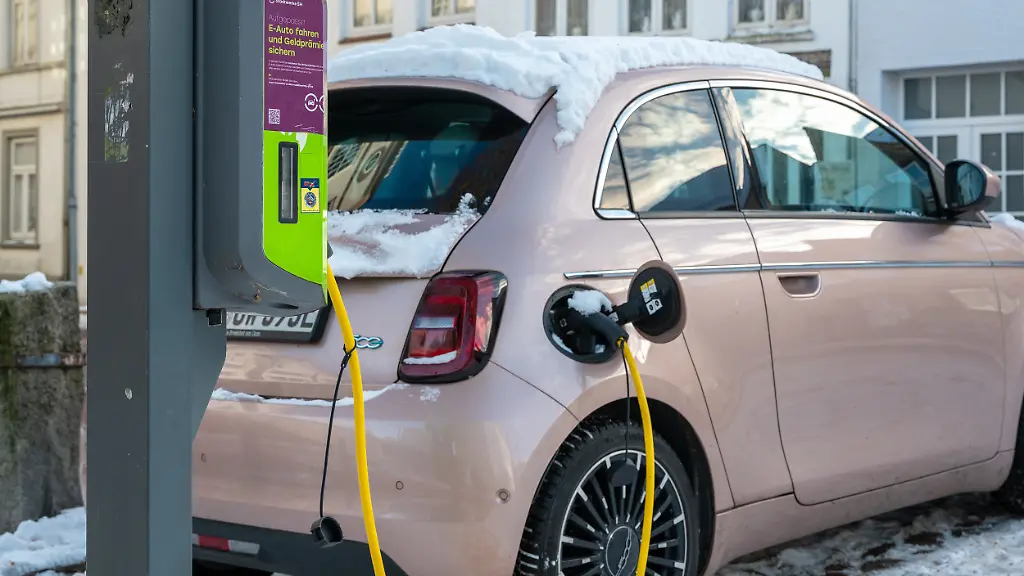
Here’s where the math gets brutal. The cheapest electric cars in Germany start around €25,000, for a bare-bones Fiat 500e or Dacia Spring. After the maximum €6,000 subsidy, you’re still looking at €19,000. That’s nearly half the gross annual income of a household earning €45,000. Even with generous financing, the monthly payments would devour a substantial chunk of a family’s budget.
Many international residents and financial analysts point out the obvious: households at the income threshold simply don’t have the financial cushion for new car purchases, subsidized or not. When you’re budgeting every euro for Miete (rent), Krankenversicherung (health insurance), and rising energy costs, a €300 monthly car payment, no matter how green, remains a luxury you can’t afford.
The subsidy’s design reveals a fundamental disconnect. It assumes the primary barrier to EV adoption is a few thousand euros, when for low-income households, the barrier is the total cost of ownership, credit access, and the financial risk of a long-term commitment. A €6,000 discount on a €40,000 VW ID.3 doesn’t help someone whose total vehicle budget is €8,000.

Plug-in Hybrids: The Controversial Compromise
The subsidy also covers Plug-in-Hybride (plug-in hybrids) with €1,500 base support, provided they emit ≤60g CO₂/km or have ≥80km electric range. This inclusion sparked immediate controversy. Critics, including Greenpeace and the Left Party’s environmental spokesperson, call it “Bullshit”, effectively subsidizing combustion engines.
The logic is simple: when the battery runs empty, a plug-in hybrid becomes a heavy, inefficient gasoline car, consuming more fuel and emitting more CO₂ than a conventional car. Their environmental benefit depends entirely on user behavior, how often they charge. Fleet data shows many company plug-in hybrids rarely get plugged in, making them worse for the climate than advertised.
The Bundesregierung defends the inclusion as an “Arbeitsplatzargument” (jobs argument), protecting German auto industry positions. But this industrial policy masquerading as climate policy undermines the subsidy’s environmental credibility.
Implementation Chaos and Timing Issues
The subsidy applies from January 1st, but applications only open in May. This creates a four-month gap where buyers must float the full purchase price, waiting for reimbursement. For a household scraping together savings, this timing gap alone could kill the deal.
Moreover, the subsidy excludes Gebrauchtwagen (used cars) initially, though the government may revisit this in 2027. This exclusion is particularly tone-deaf, as low-income buyers predominantly shop the used market. A €6,000 subsidy on a €12,000 used EV would be transformative. On a €35,000 new car, it’s a rounding error.
The ZDK (German Motor Trade Association) welcomes the subsidy but notes that the lack of used car support misses the mark for price-conscious customers. The IG Metall union goes further, demanding subsidies be restricted to “Made in EU” vehicles to avoid subsidizing Chinese manufacturers, though currently, Chinese EVs qualify like any other.
Who Actually Benefits? The Uncomfortable Answer
Run the numbers, and the picture clarifies. The primary beneficiaries will be:
– Dual-income households earning €70,000-€80,000 who were already EV-curious
– Families with children in the €60,000-€90,000 bracket
– Early adopters upgrading from older EVs
– German automakers who can maintain higher price points
The truly low-income households, those below €45,000 who qualify for the maximum subsidy, mostly can’t afford the remaining €19,000-€25,000 purchase price. They’re more likely to buy a €5,000 used Opel Corsa and drive it for a decade.
This isn’t speculation. The previous subsidy data showed most recipients were upper-middle-class homeowners with garages for charging. The new income limits help, but they don’t solve the fundamental mismatch between subsidy design and financial reality for working-class families.
What Would Actually Work?
If the goal is democratizing Elektromobilität, experts suggest better approaches:
1. Used EV subsidies: A €5,000 subsidy on a €15,000 used EV changes the math completely
2. Charging cost subsidies: Reduce public charging prices to home-charging levels
3. Leasing support: Subsidize operational leasing so families can access EVs without ownership risk
4. Infrastructure first: Build charging in apartment complexes and urban neighborhoods
5. Public transport: For many low-income households, the real solution isn’t a cheaper EV, it’s better buses and trains
The ADAC, Germany’s largest automobile club, supports the subsidy but admits they pushed for cheaper electricity instead. They recognize that purchase price is only one barrier, running costs and convenience matter more.
The Bottom Line for Your Wallet
If you’re a German household earning under €50,000 and considering this subsidy, here’s the honest assessment:
Don’t stretch your budget. A €20,000 car loan on a modest income is financial stress you don’t need, even with €6,000 “free money.” The subsidy doesn’t change the total cost of ownership, insurance, tires, and eventual battery replacement remain expensive.
Consider waiting. The subsidy runs through 2029, and EV prices continue falling. By 2027, that same car might cost €18,000 without subsidies.
Calculate charging costs. Without a home wallbox, public charging can cost €0.60-€0.80/kWh, equivalent to gasoline prices. Factor this into your budget.
Explore alternatives. For city dwellers, car-sharing plus a Bahncard (German rail pass) often costs less than owning any car. For rural residents, a small used combustion car plus the occasional Spritpreis (fuel price) shock might still be cheaper than stretching for an EV.
The subsidy is real money, but it’s designed for Germany’s middle class, not its working poor. That doesn’t make it useless, it will accelerate EV adoption and help domestic automakers, but it won’t transform transportation equity.
As with many German policies, the gap between intention and impact comes down to one question: who can actually access the benefit? For now, the answer remains: people who were buying new cars anyway. The rest of us will keep driving our old Polos, watching the future of mobility pass by, subsidized, but still out of reach.
