
The mathematics of financial independence are brutal. Every euro you pay in fees is a euro that isn’t compounding for your future. Yet many Slovenian investors continue to park their long-term portfolios with domestic brokers like NLB (Nova Ljubljanska Banka) or OTP, accepting fee structures that would make a Swiss private banker blush.
A quiet migration is happening. Experienced Slovenian FIRE (Financial Independence, Retire Early) practitioners are increasingly abandoning local platforms for Interactive Brokers (IBKR), and the reasons go far beyond simple cost comparisons.
The Fee Reality Check
Let’s start with the numbers that matter. A typical Slovenian investor maintaining a brokerage account with a major domestic bank faces annual custody fees of approximately 36€ simply for the privilege of holding assets. That’s before executing a single trade.
When you do trade, you’re often looking at minimum commissions that make regular investing prohibitively expensive for smaller amounts.
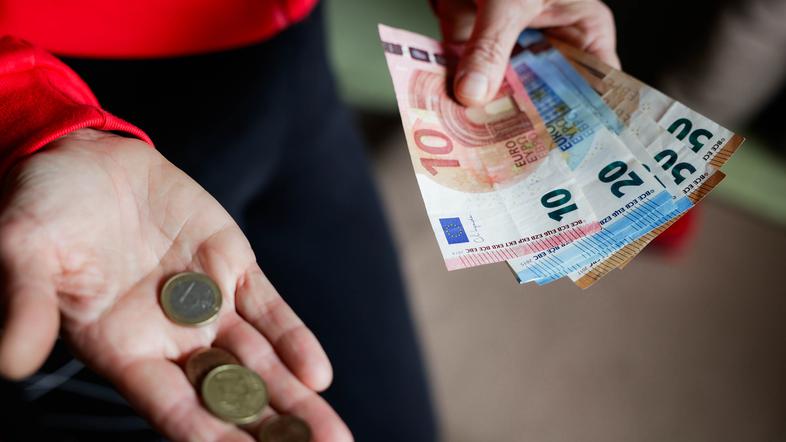
Contrast this with IBKR’s tiered pricing structure, where a purchase of a popular ETF like VWCE (Vanguard FTSE All-World UCITS ETF) on XETRA (Deutsche Börse) costs as little as 1.25€, or 0.05% of the transaction value, whichever is higher. For a monthly investment of 500€, that’s the difference between paying 36€ annually to do nothing versus paying 15€ annually to actually invest.
~36€ annual custody fees
High minimum commissions
No free trading opportunities
As low as 1.25€ per trade
Tiered pricing structure
60-80% cost reduction reported
Many investors report that switching to IBKR reduced their total cost of ownership by 60-80% annually. Over a 20-year accumulation phase, that fee differential compounds into thousands of euros in lost returns.
The Tax Reporting Myth
“How do I report to FURS?”
Concern about foreign broker compliance
Domestic brokers don’t simplify tax reporting
Manual eDavki entry still required
Open-source automation tools available
ib-edavki script handles everything
The most common objection to using foreign brokers among Slovenian investors concerns tax compliance. “How do I report this to FURS (Financial Administration of the Republic of Slovenia)?” The assumption is that domestic brokers somehow simplify the process of declaring dohodnina (income tax) on dividends and kapitalski dobiček (capital gains).
This is a misconception. Domestic brokers provide tax documents, yes, but you still must manually enter data into eDavki (the electronic tax filing system).
Meanwhile, the Slovenian FIRE community has developed sophisticated open-source solutions that automate IBKR reporting entirely. The ib-edavki script converts IBKR’s XML activity reports directly into FURS-compatible XML files for import into Doh-KDVP (capital gains), Doh-Div (dividends), and D-IFI (derivatives) forms.
In practice, many IBKR users spend less time on tax preparation than those with local brokers, simply because the automation handles currency conversions and FIFO (First In, First Out) calculations automatically.
The INR Account Paradox
The introduction of INR (Individual Retirement Account) in Slovenia promised tax advantages for long-term investors, with capital gains becoming tax-free after 15 years of holding. However, recent analysis reveals a structural trap for existing investors.
If you hold assets in a traditional brokerage account and wish to transfer them to an INR, you cannot transfer the securities directly. You must sell them, transfer cash, and repurchase. This triggers immediate dohodnina liability on any unrealized gains and incurs transaction costs.
- Sell securities → Convert to cash
- Transfer funds → Repurchase
- Immediate tax liability on gains
- Reset 15-year tax clock to zero
- Portfolio of 64 shares = 44€+ in fees
As detailed in recent coverage, transferring a modest portfolio of 64 shares across two positions could cost over 44€ in fees plus potential capital gains taxes, resetting your 15-year tax clock to zero.
For investors with privatization-era shares held for decades, currently exempt from capital gains tax after 15 years, this transfer effectively destroys their tax-free status. The local brokers’ high ongoing fees suddenly look trivial compared to the tax bomb of switching to the “tax-efficient” INR.
Market Access and the LJSE Limitation
Krka, Triglav stocks only
Extreme home bias exposure
150+ markets via IBKR
3,500+ global equities access
EUR trading on Amsterdam
Zero FX conversion fees
Domestic brokers naturally focus on LJSE (Ljubljana Stock Exchange) listings. While buying KRKG (Krka shares) or Zavarovalnica Triglav might feel patriotic, it exposes you to extreme home bias. The Slovenian market represents less than 0.1% of global market capitalization.
IBKR provides direct access to 150+ markets, allowing Slovenian investors to purchase VWCE on Euronext Amsterdam in EUR, avoiding currency conversion fees while gaining exposure to 3,500+ global equities.
For FIRE investors following the “VWCE & chill” strategy, a common approach in Slovenian financial independence circles, local brokers simply cannot execute the strategy efficiently.
Security and Longevity Concerns
Interactive Brokers has operated for nearly 50 years as a publicly traded company with transparent financials. Your shares are held in street name but segregated, and the firm maintains $20.5 billion in equity capital.
While NLB and OTP are regulated and deposit-insured, the recent history of financial technology has shown that “free” or expensive domestic platforms often change their business models.
- Nearly 50 years operational history
- $20.5 billion equity capital
- Publicly traded with transparency
- Segregated client accounts
Several European neo-brokers have already faced pressure to monetize through payment for order flow or by cutting interest on uninvested cash. IBKR’s profitability comes from interest on margin loans and a tiny fraction of transaction fees, not from selling your trading data or restricting withdrawals.
The Practical Setup for Slovenian Residents
- EMŠO (Unique Master Citizen Number)
- davčna številka (tax ID)
- Standard verification procedures
- Tiered: Best for buy-and-hold
- Fixed: Certainty on large trades
- Select based on trading frequency
Opening an IBKR account from Slovenia requires navigating standard KYC (Know Your Customer) procedures. You’ll need your EMŠO (Unique Master Citizen Number) and davčna številka (tax identification number). Critically, you must select the correct pricing tier, Tiered for most buy-and-hold investors, Fixed for those requiring certainty on large trades.
For recurring investments, IBKR supports automatic monthly purchases, though you’ll need to maintain sufficient EUR liquidity. Most Slovenian users fund accounts via SEPA transfer to IBKR’s Irish or Hungarian entities, with funds typically clearing within 1-2 business days.
When tax season arrives, export your annual Activity Flex Query as XML, run it through the ib-edavki converter, and import the resulting files directly into the FURS portal. The script handles the conversion of USD dividends to EUR using Banke Slovenije (Bank of Slovenia) exchange rates on the date of payment, ensuring compliance with local regulations.
The Verdict
The choice between local brokers and IBKR isn’t about patriotism or complexity, it’s about arithmetic. When local platforms charge 3% annual custody fees on a 10,000€ portfolio while IBKR charges effectively zero, the local option becomes a luxury tax on financial ignorance.
For Slovenian FIRE investors targeting a 4% withdrawal rate in retirement, every 1% paid in fees represents 25% of their potential income.
The local brokerage model, with its fixed costs and limited market access, is structurally incompatible with the mathematics of early retirement.
The migration to IBKR isn’t about avoiding taxes or hiding assets, it’s about refusing to subsidize outdated banking infrastructure with your future financial independence. FURS will still get its dohodnina. The question is whether you’ll have any returns left to tax after the local banks take their cut.