

Buying property in Slovenia has become a high-stakes negotiation where the house is almost incidental to the financial gymnastics required to afford it. With Ljubljana rental prices hitting 900, 1,000 EUR for two-room apartments and purchase prices requiring three decades of debt servitude, the stanovanjsko vprašanje (housing question) isn’t just a market concern—it’s becoming the defining economic trauma of the country’s younger generation.
The mathematics are brutal: you’ll need approximately 20% of the property value in cash, plus another 2-4% for transaction costs, all while proving to banks that you can survive on half your income after mortgage payments.
Yet the real trap isn’t the down payment—it’s what happens when you sit down with a bank officer to discuss your hipoteka (mortgage).
The Double Mortgage Workaround
Slovenian banks officially require 20% lastna udeležba (own contribution) for standard housing loans. If you’re looking at a 200,000 EUR apartment, that’s 40,000 EUR in cash before you even start paying notary fees and taxes.
Many first-time buyers discover a workaround that feels almost illicit: the double hipoteka (mortgage). If you lack the full 20% in liquid assets, banks like NLB and UniCredit will accept collateral against your parents’ property to cover the gap.
One recent buyer negotiated exactly this: one mortgage on the purchased property, a second on parental real estate, covering the period until the 20% gap closes.
OTP banka supposedly offers 90% financing without collateral in some locations, though terms vary significantly by region—a detail that suggests property valuation discrimination based on postal codes.
The Interest Rate Theater
Walk into any Slovenian bank asking for their “best rate” and you’ll receive a number that means nothing until you see the product bundle attached to it. Banks have shifted from transparent pricing to conditional pricing, where your obrestna mera (interest rate) depends on how many auxiliary products you purchase.
NLB Bundle Requirements
- Vita življenjsko zavarovanje (life insurance)
- Premium račun (premium account) with monthly fees
- 40 EUR monthly varčevanje v skladih for minimum 3 years
- Brezplačen otroški račun (free children’s account)
Hidden Costs
The monthly vodenje računa (account management fee) of 5 EUR, recently introduced at NLB after years of free banking, adds another 1,800 EUR over a 30-year loan term.
When comparing offers, calculate the efektivna obrestna mera (effective interest rate), not just the nominal rate.
Life insurance sold through banks often costs twice as much as comparable policies from independent zavarovalnice (insurance companies) like Zavarovalnica Triglav.
The Valuation Gap Trap
Here’s a detail that destroys deals: banks finance 80% of the cenitev (appraisal value), not the purchase price. In Slovenia’s heated market, purchase prices often exceed official valuations by 10-15%.
If you agree to buy for 200,000 EUR:
- Expected 80% loan: 160,000 EUR
- Actual 80% of 180,000 EUR valuation: 144,000 EUR
- Your shortfall: +16,000 EUR
Protect yourself by including a clause in the kupoprodajna pogodba (purchase contract) allowing withdrawal if valuation falls short.
The 50% Income Ceiling
Banka Slovenije regulations cap kreditna sposobnost (creditworthiness) at roughly 50% of your average net monthly income. But this isn’t simple arithmetic.
What Banks Count
- Average of last six months
- Regres (holiday bonus)
- Božičnica (Christmas bonus)
- Meal/transport allowances
The Reality Check
Banks must leave you a “minimum survival amount” after mortgage payment, meaning higher earners can’t actually borrow at the full 50% ratio.
Couple Example: Two average Slovenian salaries (~1,400 EUR net each) creates a ceiling around 1,400 EUR monthly for debt service. At current rates, that translates to roughly 160,000 EUR over 30 years—barely enough for a studio in Ljubljana’s center.
Regulatory Headwinds and Discriminatory Practices
The new guverner Banke Slovenije Primož Dolenc has explicitly criticized the asymmetry in interest rate adjustments—banks raise loan rates immediately when ECB rates climb, but drag their feet on deposit rates.
Non-Resident Fee Controversy
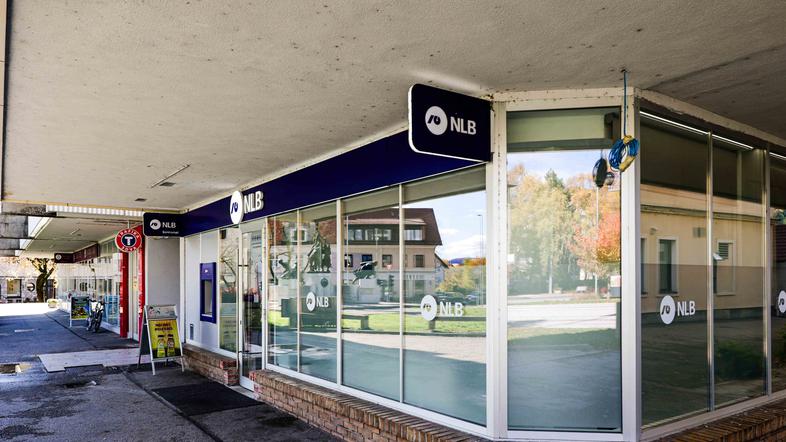
NLB recently introduced a 2 EUR monthly “administrative fee” exclusively for nerezidenti (non-residents) and foreign citizens.
The Zagovornik načela enakosti has opened an investigation following complaints of discrimination based on nationality.
This creates a two-tier system where access to basic banking services depends on passport type—a concerning development for international residents building lives in Slovenia.
The Timeline Reality Check
From first bank visit to key handover: Expect 3-4 months minimum
- November: Property viewing and initial bank consultation
- January 28: Notarized purchase contract + ara (deposit) payment
- February 10: DPN payment
- February 25: Bank contract signing
- February 26: Hipoteka registration and remaining payment
- February 27: Primopredaja (handover)
The process accelerates only if you have all documents prepared:
- Employment contracts
- Tax returns (dohodnina)
- Proof of existing assets
- Clean zemljiška knjiga extracts showing no encumbrances
Practical Navigation Checklist
- Secure the 20%—either in cash or through parental property collateral. Without this, you’re wasting time.
- Get pre-approved for creditworthiness before house hunting. Banks calculate differently than you do.
- Request itemized cost lists including all cross-sold products. Compare effective rates, not headline rates.
- Negotiate the notary—fees aren’t fixed. Split costs with sellers where possible.
- Time your closing for month-end to avoid intercalary interest.
- Check the building’s energy certificate—zeleni krediti (green loans) at NLB offer preferential rates for energy-efficient properties.
- Verify the appraisal—ensure your purchase price aligns with likely bank valuation, or include escape clauses in the contract.

Research from Mladinski svet Slovenije shows 79.3% of young Slovenians expect parental financial assistance for housing.
The housing market isn’t going to become more accessible. Until systemic solutions emerge, navigating the current system requires treating banks as negotiation opponents, not advisors.
The 30-year commitment you’re signing deserves that level of scrutiny.