Austrian savers just got a New Year’s gift from the Oesterreichische Bundesfinanzierungsagentur (OeBFA, Austrian Federal Financing Agency). Interest rates on Bundesschatz (Federal Treasury) deposits jumped to 3% for ten-year terms, with even the one-month option now offering 1.90%. For a country where most savings accounts still pay peanuts, these numbers turn heads. But before you transfer your nest egg, understand what you’re really buying: a product that’s brilliantly simple for you, even more brilliant for Austria’s budget, and one that institutional investors are quietly avoiding.
What Is Bundesschatz, Really?
Bundesschatz is Austria’s retail-friendly gateway to Staatsanleihen (government bonds). Launched in April 2024, it lets anyone with an Austrian bank account and ID Austria digital identity invest directly in sovereign debt. No broker, no custody fees, no investment minimum beyond what your bank allows for transfers. You pick a term, one month, six months, one year, four years, or ten years, transfer the money, and earn the advertised rate. Taxes are handled automatically through the KESt (capital gains tax) system.
The product’s genius lies in its simplicity. While German retail investors wrestle with complicated brokerage platforms and Americans need to navigate TreasuryDirect’s 1990s-era interface, Austrians can invest in their country’s debt using just their online banking. The OeBFA reports 145,000 accounts holding €5.5 billion from private investors, far exceeding their initial projections. For a bureaucracy not known for digital innovation, Bundesschatz works suspiciously well.
The New Rate Reality
The latest rate hike puts Bundesschatz squarely in competition with term deposits from major Austrian banks. Here’s the current lineup:
– 1 month: 1.90%
– 6 months: 1.95%
– 12 months: 2.00%
– 4 years: 2.35%
– 10 years: 3.00%
These rates apply automatically to new investments and rollovers. If you set up automatic reinvestment, a feature many investors use, your maturing deposit gets the current rate for that term, not the rate you originally locked in. This flexibility cuts both ways: you benefit when rates rise, but you can’t lock in today’s rates for future deposits.
The automated nature catches some investors by surprise. As one financial advisor noted, many clients don’t realize their “fixed-term” investment behaves more like a floating-rate product on rollover. The system sends an email before each renewal, but checking your spam folder isn’t a financial strategy.
Why Your Town Hall Isn’t Investing
Here’s where the story gets interesting. While private investors have poured billions into Bundesschatz, public institutions remain skeptical. Only 120 of Austria’s 5,092 eligible municipalities and public entities have invested, totaling just €2 billion. The rest keep their liquid funds in bank accounts, despite Bundesschatz offering what the OeBFA calls “the safest investment possible.”
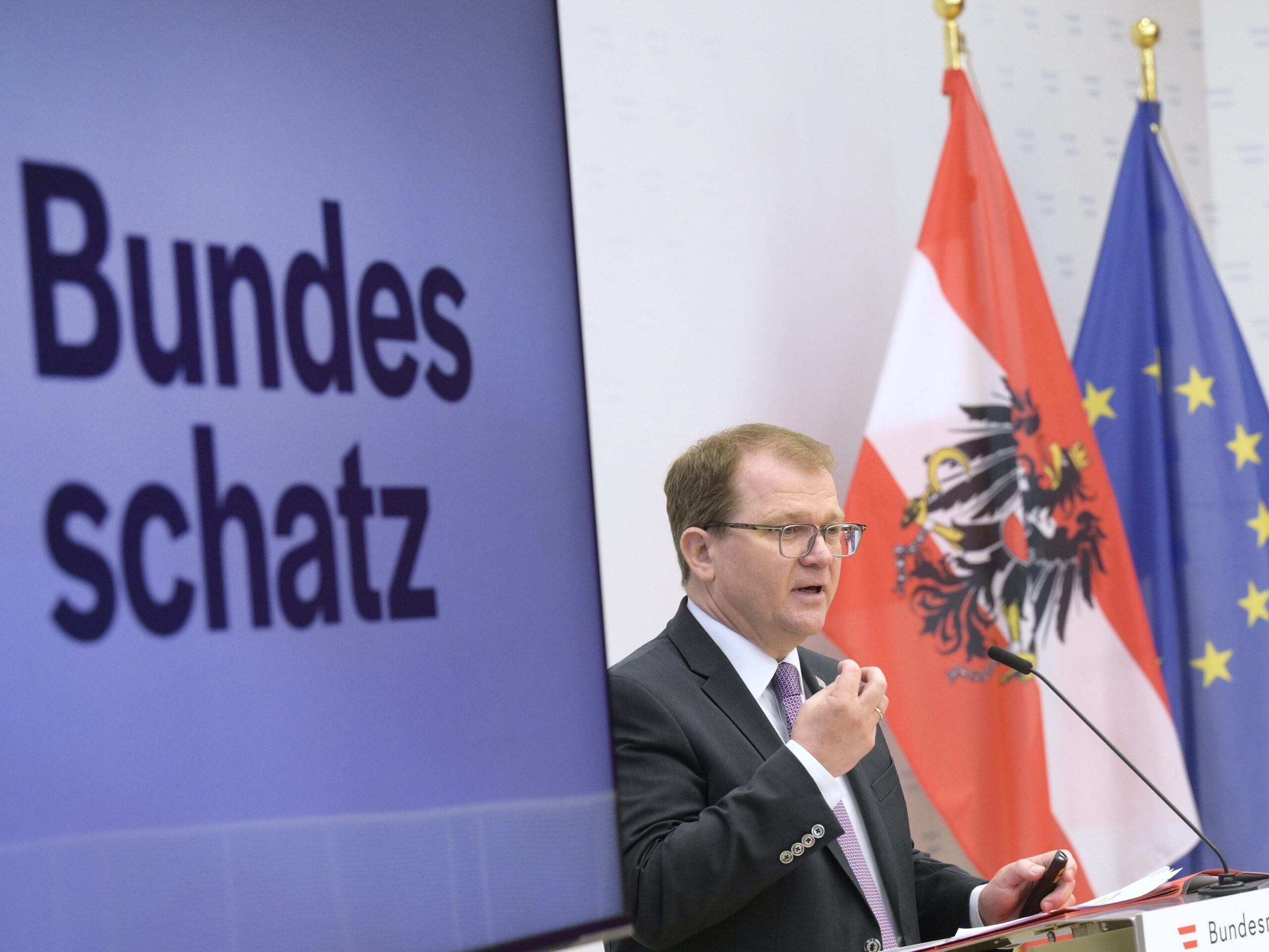
The reason? Banks pay public institutions better rates. Large municipalities can negotiate deposit rates that beat Bundesschatz by a significant margin. Markus Stix, OeBFA’s CEO, acknowledged this gap in a recent press conference: “We as the Republic are the safest investment. If we paid more than banks, something would be wrong.” That candid admission reveals the product’s core tension: retail investors get convenience and safety, but they sacrifice yield.
Public institutions face another hurdle. Bundesschatz legally counts as a Wertpapier (security), not a Sparprodukt (savings product), triggering different accounting rules. Municipal treasurers worry about compliance issues, and the OeBFA is pushing for a Vieraugenprinzip (four-eyes principle) regulatory change to ease these concerns. Until then, your local Gemeinde (municipality) will keep earning better rates at the bank while you settle for Bundesschatz.
The Hidden Spread You Pay
The OeBFA funds Bundesschatz by issuing Staatsanleihen on the wholesale market. If they pay you 3% on a ten-year Bundesschatz, they’re likely borrowing that money from institutional investors at around 2.5% or less. That 0.5% spread, estimated by market observers, covers administrative costs and generates profit for the state.
This isn’t inherently bad. The OeBFA’s 2025 annual report shows they raised €76.4 billion in debt at an average yield of 2.48%, down from 2.86% in 2024. Every basis point matters when you’re managing €313 billion in sovereign debt. By borrowing directly from citizens at slightly higher rates, Austria reduces its reliance on volatile international bond markets.
But understand the trade-off: you’re accepting a lower rate than institutional investors demand in exchange for zero fees and zero effort. For a €10,000 investment, that 0.5% difference costs you €50 per year. Over a decade, that’s €500, real money for the convenience of simplicity.
Technical Frictions and Fixes
Bundesschatz hasn’t been flawless. Until recently, transferring money triggered IBAN name-check warnings because the receiving account sits at the Oesterreichische Nationalbank (OeNB, Austrian National Bank), which was exempt from name verification rules. Your bank’s fraud system would flag the transfer, causing unnecessary anxiety.
Stix announced this will be resolved by the time you read this, with the OeNB registering in the verification system. It’s a small but telling detail: even the state’s banking infrastructure needed retrofitting to handle retail investors smoothly.
Another limitation: organizations like Kirchen (churches), Feuerwehren (fire departments), and Vereine (associations) can’t invest at all. The OeBFA wants to expand eligibility but admits “product development takes time.” For now, Bundesschatz remains a product for individuals and select public entities, not civil society.
The Green Angle
Austria offers a Grüner Bundesschatz (Green Federal Treasury) option, channeling funds into environmentally sustainable projects. With €1.65 billion already invested in the green version, it’s a rare example of a retail product where you can direct capital specifically toward climate initiatives without paying a green premium.
The OeBFA proudly notes Austria is the only country offering green short-term instruments, not just long-term bonds. For ESG-conscious investors, this adds genuine value beyond the headline rate.
What Should You Actually Do?
For conservative savers: Bundesschatz beats most standard savings accounts and eliminates bank counterparty risk. If you want absolute safety with minimal effort, it’s a solid choice.
For rate maximizers: Compare current bank offers. Raiffeisen and Erste Bank occasionally promotional rates for new deposits that beat Bundesschatz, especially for larger amounts. Check platforms like Durchblicker.at for current comparisons.
For investors with ≥€50,000: Consider splitting between Bundesschatz and a low-cost bond ETF. The iShares Core EUR Corp Bond UCITS ETF or similar products might yield more after fees, though with added complexity and risk.
For the tax-savvy: Remember that KESt is withheld automatically. If you haven’t exhausted your €1,000 annual capital gains allowance, you might prefer instruments where you can time tax realization.
For the paranoid: Bundesschatz deposits aren’t covered by the Einlagensicherung (deposit insurance) scheme, but they’re direct claims on the sovereign state. If Austria defaults, we’ve got bigger problems than bond yields.
The Bottom Line
Bundesschatz represents a rare win for retail financial simplicity in Austria. The new rates make it competitive, the green option adds ethical appeal, and the automatic features suit hands-off investors. But recognize it for what it is: a convenient way for the state to borrow from citizens at rates that institutional investors would reject.
Your Gemeinde treasurer isn’t being foolish by staying in bank deposits, they’re being paid for their sophistication. You, meanwhile, are paying for simplicity. Whether that’s a good deal depends entirely on how much you value convenience over optimization.
The OeBFA aims to grow accounts to 170,000, 180,000, and they’ll likely succeed. In a world of negative headlines about Austrian bureaucracy, Bundesschatz works. Just don’t expect it to work in your favor alone.

Action steps: Log into your online banking, search for “Bundesschatz” or “OeBFA” in the payment options, and start with a small one-month investment to test the process. Set up email alerts for renewal notices. And next time you pay your Gemeinde taxes, ask your mayor why they’re not investing in Austrian debt, it’s a conversation worth having.