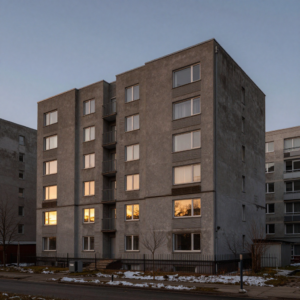
The Austrian property dream meets the reality of child support: a single parent earning €3,000 net monthly wants to buy a €300,000 apartment for themselves and their two children. They have €153,000 in assets, mostly in stocks and crypto they refuse to sell. The calculations show they’re left with just €80 per month. This isn’t a hypothetical scenario, it’s the exact situation playing out in Austrian financial forums right now, and it exposes how the country’s conservative lending standards collide with modern investment strategies.
The Numbers That Break the Dream
Let’s cut through the optimism and run the actual Austrian numbers. You earn €3,000 net. You have two children, aged 5 and 7, who live with your ex-partner. According to Austrian child support guidelines, you’ll pay approximately €1,120 per month in Unterhalt (child support). That’s not negotiable, it’s calculated based on your net income and the children’s needs.
Now for the apartment: €300,000. Austrian banks typically finance maximum 90% of the property value, meaning you need at least €30,000 down payment plus €30,000-€36,000 in purchase costs (Grunderwerbsteuer, notary, registration, etc.). Total cash needed: €60,000-€66,000.
Your assets:
– €52,000 in stocks
– €86,000 in crypto
– €15,000 cash
You don’t want to sell the stocks or crypto. But here’s what Austrian banks see: €15,000 in liquid assets, far short of the required €60,000+. Even if you liquidate everything, you’d have €153,000, enough for the purchase, but then you’d have zero reserves, which banks reject outright.
Austrian Banks’ Brutal Affordability Formula
Austrian lenders use a simple, rigid formula: Housing costs cannot exceed 40% of net income. Housing costs include:
– Mortgage payment (Zins und Tilgung)
– Operating costs (Betriebskosten)
– Heating (Heizkosten)
– Maintenance reserves (Rücklagen)
– Utilities (Strom, Internet)
For a €300,000 apartment with €60,000 down (80% financing):
– Mortgage: €240,000 at 4% interest = €800/month interest-only, or €1,300/month with 2% repayment
– Operating costs: ~€200/month
– Heating/utilities: €150/month
– Reserves: €150/month
– Total: €1,800/month
Your 40% affordability threshold: €1,200/month (40% of €3,000). You’re already €600 over before paying child support.
Add the €1,120 Unterhalt, and your total fixed costs become €2,920/month. That leaves €80 for food, transport, insurance, and life. In Austria, that’s impossible.
The Volatile Asset Problem: Why Banks Hate Your Crypto
You see €86,000 in crypto. Austrian banks see speculative capital that could vanish overnight. Austrian lenders require Eigenkapital (equity) to be:
– Liquid (cash or easily sellable securities)
– Stable (not subject to 50% value swings)
– Proven (sourced from consistent income, not speculative gains)
Your €52,000 in stocks? More acceptable, but banks will only count 70-80% of their value due to market risk. Your crypto? 0%. Most Austrian banks won’t even discuss it. They’ll ask: “Haben Sie zusätzliche Sicherheiten?” (Do you have additional collateral?). Your Ledger wallet doesn’t count.
This creates a liquidity trap: you’re asset-rich but cash-poor, and Austrian banks won’t finance your cash gap because your assets are “wrong.”
The Schweinsteiger Effect: When Child Support Dominates Your Financial Identity
The recent case of Bastian Schweinsteiger, ordered to pay €15,000 per child monthly, illustrates how Austrian courts prioritize maintaining children’s living standards over parents’ new investments. While your €1,120 is modest compared to Schweinsteiger’s €30,000+, the principle is identical: Unterhalt comes first, always.
Austrian lenders treat court-ordered child support as non-negotiable as tax. You can’t tell the bank, “I’ll pay less Unterhalt to afford the mortgage.” The Finanzamt (tax office) and Jugendamt (youth welfare office) will garnish your wages before the bank gets its mortgage payment. Banks know this, so they deduct Unterhalt from your usable income before calculating affordability.
Realistic Scenarios: What Actually Works
Scenario 1: Sell the Crypto (The Bank’s Preference)
Liquidate €50,000 from crypto. After Kest (Kapitalertragssteuer, capital gains tax) of 27.5% on gains, you might net €40,000. Combine with €15,000 cash = €55,000. Still short of €60,000+, but close enough that some banks might accept additional stock collateral. Your remaining crypto stays invested.
Scenario 2: Wait and Save (The Realistic Path)
– Stay renting for 2-3 years
– Save €500/month = €18,000
– Keep crypto/stocks, hope they appreciate
– Reapply when you have €30,000+ cash and higher income
Scenario 3: Lower Your Expectations (The Practical Move)
– Target €200,000-€250,000 property
– Required cash: €40,000-€50,000
– Mortgage payment: €900/month
– Total housing: €1,400/month
– Still tight, but leaves €480/month after Unterhalt
Scenario 4: Increase Income (The Best Solution)
Austrian banks are income-obsessed. A €500/month raise increases your affordability threshold by €200/month and reduces Unterhalt as a percentage of income. This is the only scenario where you keep all assets and buy the €300k apartment.
The Brokerage Withdrawal Trap
Even if you decide to sell assets, brokerage withdrawal limits could kill your Austrian home purchase. Many brokers limit daily withdrawals to €100,000. If you need €60,000 by the notary appointment and your crypto is locked in staking or your stocks are in a US brokerage with transfer delays, you’ll miss the contract deadline. Austrian sellers don’t wait, they’ll keep your deposit and relist.
This scenario is common enough that affording a €300k apartment on a modest net income in Austria requires military-grade financial planning. Your situation is even more complex because challenges of homeownership for average earners in Austria are amplified by Unterhalt obligations.
The Emotional vs. Financial Reality
You don’t want to sell assets because you believe in their future value. Austrian banks don’t care about future value, they care about today’s liquidity and tomorrow’s payment certainty. Your emotional attachment to your crypto portfolio is irrelevant to the Kreditsachbearbeiter (loan processor) in a Graz or Linz bank branch.
The math is emotionless: €3,000 income – €1,120 Unterhalt – €1,800 housing = €80. No Austrian bank will approve that. None. Zero.
Actionable Steps: What to Do Now
-
Calculate exact Unterhalt: Use the Austrian standard calculator (Durchblicker). For €3,000 net with two kids, expect €1,000-€1,200. Get a legal confirmation.
-
Talk to 3 banks: Ask specifically about Baufinanzierung mit Krypto-Bestand. Most will say no, but a few modern lenders (like N26, Easybank) are starting to consider crypto with strict conditions.
-
Liquidate some crypto strategically: Sell €30,000-€40,000 when market conditions are favorable. Pay the Kest. Document everything for the bank.
-
Increase your down payment: Aim for 30-40% down (€90,000-€120,000) to reduce monthly payments below €1,000. This requires selling more assets but makes approval possible.
-
Consider a Bausparvertrag (building savings contract): Start one now. In 2-3 years, you can use it for a lower-interest loan. It’s the classic Austrian path.
-
Renegotiate care models: If you switch to a 50/50 care model, Unterhalt drops dramatically. But this requires ex-partner agreement and practical feasibility.
The Verdict
Is it doable? Technically yes, but only by violating your core constraint (not selling assets) or by dramatically changing parameters (lower price, higher income, reduced Unterhalt).
Is it smart? No. You’d be house-poor with zero safety margin. One job loss, one crypto crash, one unexpected repair, and you’re in default. Austrian banks know this, which is why they’ll reject you.
The real answer: Your situation is a textbook case of why the Austrian property dream is fading for normal people. You have €153,000 in assets and still can’t buy a modest apartment because of rigid bank rules and Unterhalt obligations. The system isn’t built for your modern, volatile-asset financial profile.
Practical advice: Sell €50,000 in crypto, take the tax hit, buy a €250,000 property in 2 years when you have €70,000 cash and a higher income. Keep the rest invested. That’s the Austrian compromise.
The alternative? Keep renting, stay liquid, and wait for either crypto regulation to change bank attitudes or for your income to rise sufficiently. In Austria, patience isn’t just a virtue, it’s a financial necessity.