The Economic Guru Industrial Complex and How to Escape It in France

Most people searching for economic education in France face the same frustration: they want to understand how subprime crises unfold, why oil prices turn negative, or what derivatives actually do, but end up wading through videos pushing trading courses or affiliate links for brokerage accounts. This isn’t accidental. It’s a feature of what we might call the economic guru industrial complex, where education serves as marketing collateral.
The distinction matters more than most realize. One recent search for unbiased French economic resources revealed a common pattern: a user discovered Heur3ka’s detailed videos on financial crises and wanted more content at that level, but found most French YouTubers either hawk products or churn out shallow news commentary. This person wasn’t looking to change their investment strategy, they’d been following standard French financial advice for five years. They simply wanted to understand the machinery behind the headlines.
The Sales Pitch Disguised as Education
French financial content creators face the same monetization pressures as their American counterparts. The business model typically works like this: attract viewers with promises of market insights, then convert that attention into course sales, premium subscriptions, or brokerage referrals. Even platforms like Zonebourse, which many French investors use to track market data, can become echo chambers where the commentary section confuses speculation with analysis.
The problem isn’t that creators make money, it’s that the incentives shape the content. A video explaining the mechanics of the 2008 crisis doesn’t generate as many clicks as one promising “three stocks to buy now.” A deep dive into how the European Central Bank’s monetary policy affects French bond markets won’t outperform “how to get rich with crypto.” The result is an information landscape where genuine economic literacy becomes a rare commodity.
Real economic literacy means understanding systems, not picking products. It requires grappling with questions like: How does money creation actually work in the eurozone? What causes systemic banking crises? Why do markets fail, and what tools does the French state have to intervene? These questions have answers that don’t depend on whether you invest in a PEA (stock savings plan) or an assurance-vie (life insurance wrapper).
French Resources That Actually Teach Economics
Academic Foundations
The French publishing house Dunod offers two standout resources that approach economics as a discipline rather than a sales funnel. “Apprendre l’économie” (Learning Economics) just released its second edition in June 2025, completely revised to cover recent debates on inflation, artificial intelligence, financial crises, and ecological transition.
Written by professors from France’s prestigious preparatory classes (CPGE), the book treats economics as a serious subject with historical context and theoretical foundations. At 512 pages, it’s comprehensive but designed for readers from high school through undergraduate level.
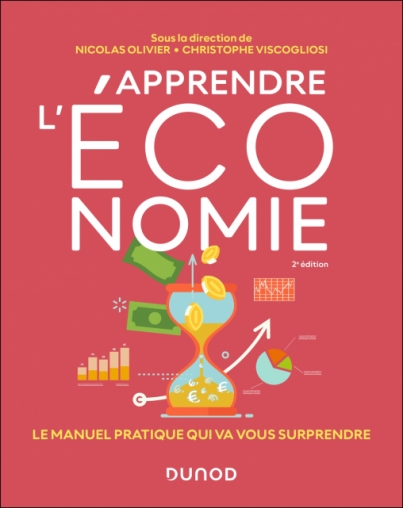
The book’s structure reveals what real economic education looks like: chapters on money (what it is, how supply and demand work, the effectiveness of monetary policy), markets (perfect competition, market failures), the state (fiscal policy, public debt concerns), prices (inflation measurement and history), employment, income distribution, and globalization. Each chapter connects theory to current French and European realities.
For those who prefer a more accessible entry point, Dunod’s “Le tour de l’économie en 10 étapes” (The Economy in 10 Steps) takes a different approach. Published in 2010 but still relevant, it breaks down economics into digestible sections with “In a Nutshell” summaries, key facts, historical context, and even humorous illustrations. It’s less academic but still refuses to reduce economics to investment tips.
Beyond Textbooks: Curating Your Information Diet
French economist Thomas Piketty’s “Une brève histoire de l’égalité” (A Brief History of Equality) demonstrates how serious economic research can remain accessible. Piketty uses clear explanations and direct graphics to trace inequality across societies, helping readers form informed opinions about wealth distribution without pushing a specific investment agenda. His work exemplifies how economic literacy empowers citizens to understand policy debates rather than just market movements.
For digital content, the YouTube channel Heur3ka stands out for its detailed explanations of complex events like negative oil prices or derivatives markets. The key is finding creators who treat viewers as curious learners, not potential customers. Many French residents also follow the Financial Times for macroeconomic coverage, using it as a baseline for understanding global trends that affect French markets and policy.
The strategy recommended by experienced French finance professionals involves combining these sources: follow quality French financial news platforms to track indicators and corporate results, then look up unfamiliar concepts on educational sites. Over time, this builds a framework for understanding rather than a list of stock picks.
The Critical Distinction: Economics vs. Investment Strategy
- Helps you comprehend liquidity traps (e.g., BlackRock private credit funds).
- Allows critical evaluation of ESG products and climate dividend claims.
- Distinguishes between daily-priced funds and illiquid underlying assets.
- Focuses on systems and mechanics.
- Decides whether to buy shares in specific companies like BlackRock.
- Focuses on holding specific instruments in your PEA.
- Treats news as trading signals rather than context.
- Often ignores market efficiency principles.
The confusion between these domains proves costly. Many French investors dive into individual stock picking within their PEA without understanding basic market mechanics, let alone macroeconomic context. They treat economic news as trading signals rather than as data points about how the world works. This approach rarely ends well, as the underlying economics of competitive markets and efficient pricing work against consistent outperformance.
Practical Application in the French Context
France’s specific economic structure makes literacy even more valuable. The French state’s significant role in the economy, the unique features of the French social model, and the country’s integration into European monetary policy create a context where generic investment advice often falls flat. Understanding how the BCE (European Central Bank) monetary policy transmits through French banks, or how French fiscal policy interacts with European deficit rules, requires more than a trading app tutorial.
Economic literacy also helps you spot when you’re being sold complexity disguised as sophistication. The premium on French numismatic coins from Monnaie de Paris can reach 16% above gold bullion value, with sales pitches emphasizing guarantees and heritage. Without understanding what actually drives gold pricing and liquidity, buyers mistake collectibles for investments.
Building Your Escape Plan
Start with one comprehensive resource like Dunod’s “Apprendre l’économie” and commit to working through it systematically. Supplement with daily reading from the Financial Times or Les Echos, focusing on understanding rather than acting on every piece of news. Add specific deep dives through Heur3ka-style content when major events occur.
Most importantly, maintain a strict firewall between your economic education and your investment decisions. The former informs the latter, but they serve different purposes. Your PEA allocation should probably remain boring and diversified while your mind grapples with the fascinating complexity of how French and global economies actually function.
The goal isn’t to become a trader or to predict markets, it’s to understand the forces shaping your financial environment in France. That knowledge makes you a more informed citizen, a harder target for financial sales pitches, and paradoxically, a more patient investor. The gurus won’t thank you for it, but your future self might.