Vatican ETFs: When the Holy See Meets Wall Street
The Vatican has decided that salvation and stock selection go hand in hand. In a move that raised eyebrows from the Sistine Chapel to the trading floors of Paris, the Institut pour les Œuvres de Religion (Institute for the Works of Religion), better known as the Vatican Bank, has partnered with Morningstar to launch two equity indices designed for Catholic investors. The end goal? ETFs that let you invest according to the Gospel while tracking the same tech giants everyone else owns.
This isn’t your grandfather’s church collection basket. The Vatican is entering the $14 trillion ETF market with indices that screen for Catholic values, promising to exclude companies involved in activities that clash with doctrine. Yet a glance at the holdings reveals Meta, Amazon, and Nvidia sitting comfortably in the "holy" portfolio. The disconnect between spiritual principles and market realities makes this launch either a masterstroke of modern finance or a case study in ethical investing contradictions.
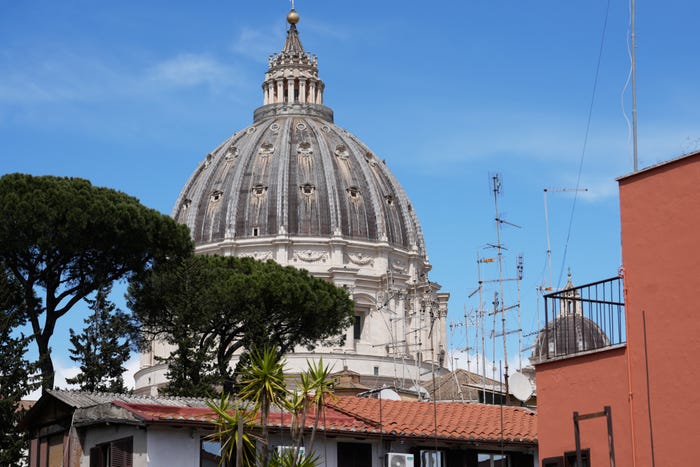
The Divine Indices: What the Vatican Actually Launched
The partnership created two distinct benchmarks: the Morningstar IOR US Catholic Principles Index and its Eurozone counterpart. Each contains 50 medium-to-large capitalization stocks filtered through a Catholic lens. According to the Vatican Bank’s statement, these indices are "built following market best practices and in accordance with Catholic ethical criteria", designed to serve as a reference for Catholic investments worldwide.
The structure follows a familiar ETF blueprint. Morningstar starts with its broad US Large-Mid and Eurozone Large-Mid indices, then applies the Vatican’s ethical screen to weed out sinners. The result? Portfolios that look remarkably similar to what you’d find in any ESG fund, just with more explicit religious branding.
Giovanni Boscia, the Vatican Bank’s deputy director general and CFO, praised the initiative for making their "evaluation and performance reporting processes more rigorous and transparent." This matters because the IOR has spent years trying to rebuild credibility after money laundering scandals and corruption investigations that plagued previous leadership.
What’s Actually in the Holy Portfolio?
The holdings tell a fascinating story of compromise between principle and performance. The US index leans heavily into technology, with Meta representing 5.31%, Amazon at 5.22%, and Nvidia at 5.09%. Tesla, Apple, and JPMorgan Chase also claim top positions. The European version features ASML Holding (6.16%), Deutsche Telekom (5.07%), SAP, Banco Santander, and luxury group Hermès.
The $84 Billion ESG Exodus
Here’s where the timing gets interesting. Morningstar data shows ESG funds suffered $84 billion in outflows last year, the first net withdrawals since the category became mainstream. Investors have grown weary of paying premium fees for funds that often hold identical stocks to conventional indices, just with better marketing.
The Vatican’s entrance into this space could either revitalize faith-based investing or get swept up in the broader ESG skepticism. Catholic investment funds already exist, with the S&P Catholic Values Index managing over $1 billion. The Vatican’s brand adds institutional weight, but French investors might ask: does the Holy See’s blessing justify another layer of fees?
For context, French investors have been particularly sensitive to ethical investing debates. The Bpifrance Défense fund launched recently, showing how French institutions balance national interest with investment mandates. The Vatican’s approach differs by prioritizing religious doctrine over geographic loyalty, but both reflect a growing institutional desire to align capital with values.
The French Connection: Why This Matters Across the Alps
You might wonder why a Vatican financial product should interest someone managing a PEA (Plan d’Épargne en Actions) in Lyon or Paris. Three reasons:
- First, French asset managers will likely create UCITS versions of these indices for European retail investors. The structure already exists, French banks like BNP Paribas and Société Générale have robust ETF platforms that could easily license the Morningstar IOR indices. If you’re taxed via prélèvement à la source (pay-as-you-earn withholding), a faith-based ETF would be treated like any other equity fund for tax purposes.
- Second, the underlying Eurozone index includes French blue chips like Hermès, giving domestic exposure with a moral veneer. French investors increasingly demand investment options that reflect personal values, whether environmental, social, or religious. The Vatican’s entry legitimizes this trend beyond the secular ESG framework.
- Third, the transparency push matters. French regulators like the AMF (Autorité des Marchés Financiers) have tightened rules on greenwashing and ethical claims. A Vatican-backed index must withstand scrutiny from both religious authorities and financial regulators, a dual accountability that could raise standards across the industry.
The Skeptic’s View: Holy Branding, Earthly Returns
Critics point out the inherent contradictions. How does Tesla’s environmental mission square with Catholic doctrine on humility and material modesty? Can Meta’s algorithms truly respect human dignity? The screening process appears to exclude obvious vices while giving tech giants a pass on more complex ethical questions.
Many international residents report similar frustrations with ESG investing, the gap between marketing promises and actual impact. The Vatican’s version risks amplifying this disappointment by adding religious authority to what remains, fundamentally, a stock-picking algorithm. The indices returned 18% annually (US) and 10.2% (Eurozone) over the past decade, but those numbers mirror broad market performance, not divine intervention.
The irony hasn’t escaped observers. Partnering with Morningstar, a name that also refers to Lucifer in Christian tradition, generated wry comments about symbolism. But Morningstar is simply a data provider, the real question is whether the Catholic Church should be in the index business at all.
Practical Implications for Your Portfolio
If you’re a French investor considering these future ETFs, treat them like any thematic fund. The 0.20-0.40% expense ratio typical of thematic ETFs would apply here. Compare that to a plain vanilla CAC 40 ETF costing 0.05% annually. The "Catholic premium" needs justification beyond spiritual comfort.
Consider your existing exposure. If you already own a global equity ETF, you’re likely holding 80% of the same stocks. The Vatican’s ethical screen might exclude 10-15 companies, but the overlap remains substantial. You’re paying for active exclusion, not active management.
Tax implications follow standard French rules. Dividends face the prélèvement forfaitaire unique (flat tax) of 30%, and capital gains are taxed at the same rate. The religious nature of the fund changes nothing for the DGFiP (Direction Générale des Finances Publiques).
The Bottom Line
The Vatican’s ETF launch represents institutional religion’s full embrace of modern finance. For French investors, it offers another thematic option in an already crowded market. The ethical screening provides comfort, but not necessarily differentiation. Performance will depend on the same market forces affecting all equity funds.
The real significance lies in the Vatican’s rehabilitation strategy. After decades of financial scandals, creating transparent, rules-based indices helps rebuild trust. Whether that trust translates into superior returns remains a matter of faith, and market efficiency.
For now, French investors might watch from the sidelines. Let the early adopters test whether divine guidance beats passive indexing. Your Livret A won’t notice the difference, but your conscience might.