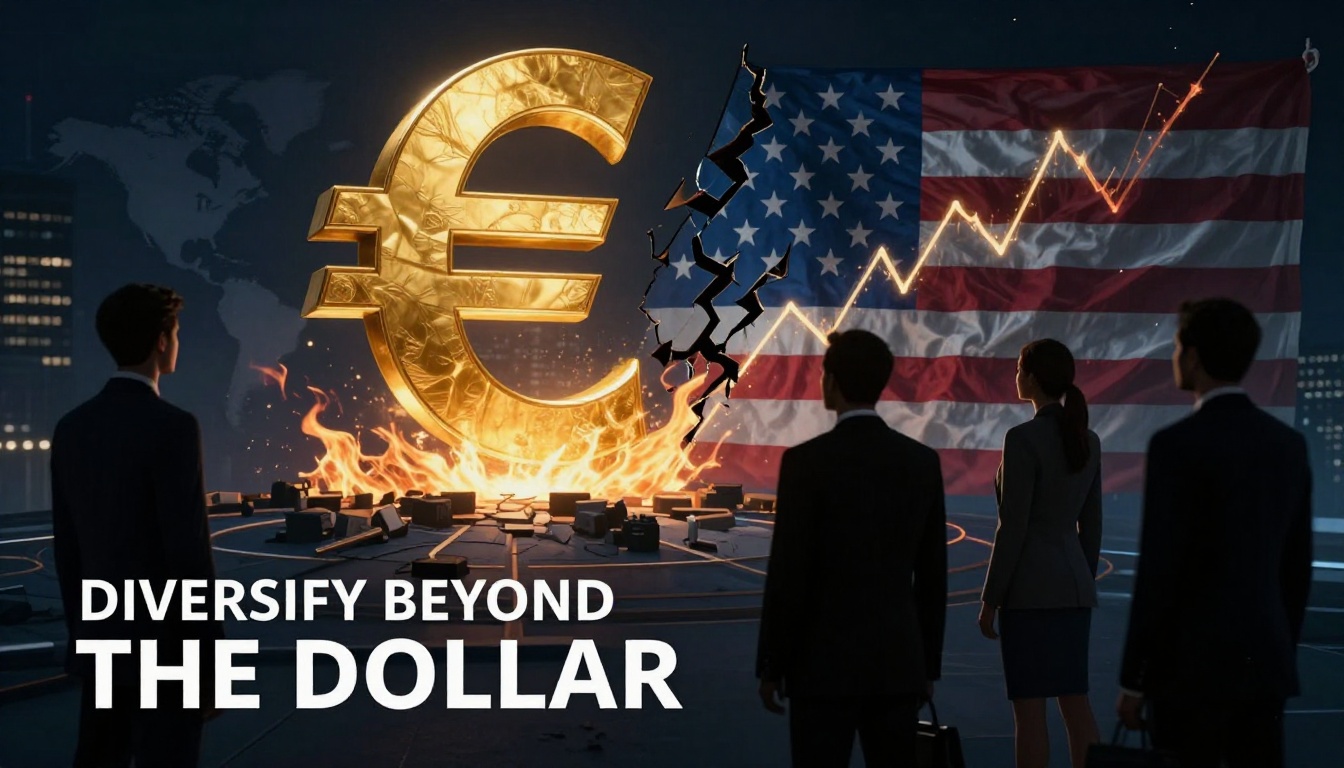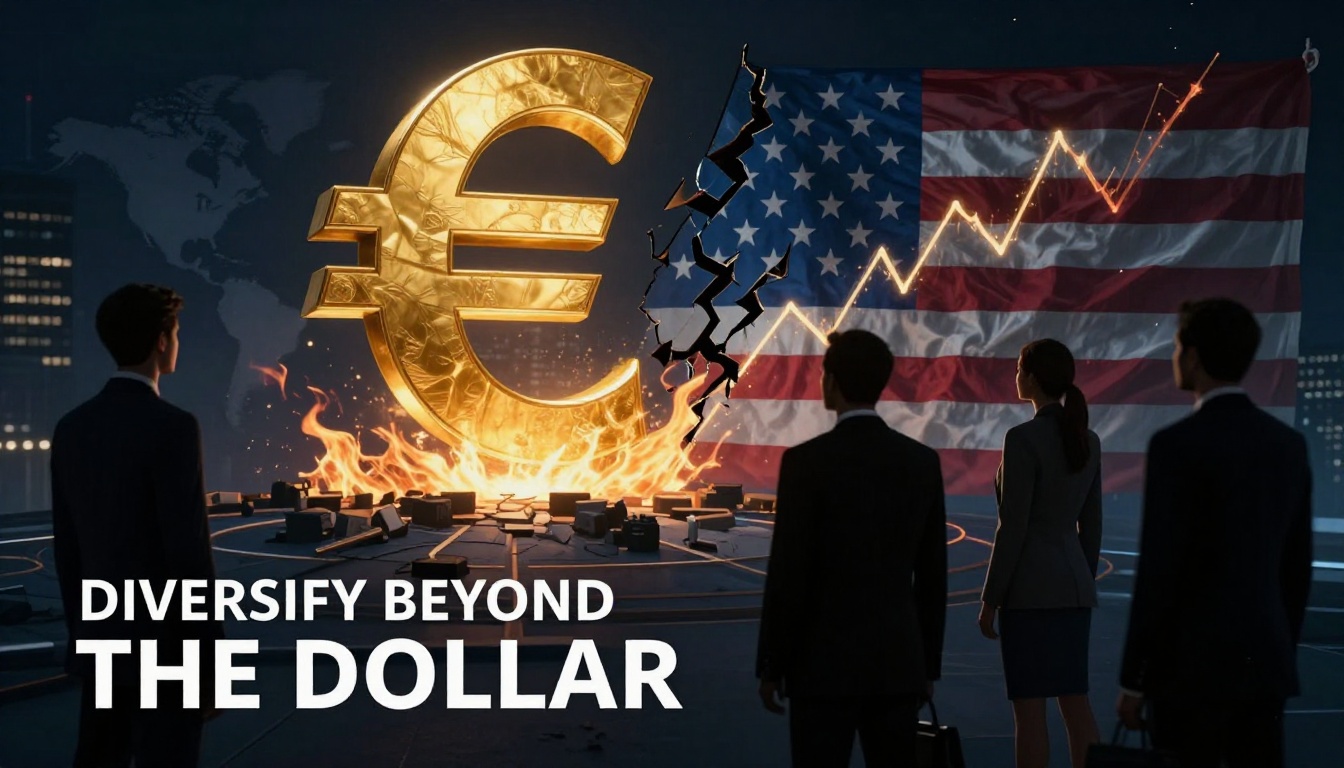
Amundi, Europe’s largest asset manager with €2.4 trillion under management, has told clients to reduce their exposure to US dollar assets. This isn’t a quiet rebalancing, it’s a public warning from a financial giant that the ground beneath conventional portfolio wisdom may be shifting. For German investors who’ve dutifully pumped money into MSCI World ETFs and US tech darlings for years, this raises an uncomfortable question: What if the “safe” American bet isn’t so safe anymore?
The Amundi Announcement: Reading Between the Lines
Valerie Baudson, Amundi’s CEO, didn’t mince words when she told the Financial Times that the firm has spent the last 12 to 15 months aggressively diversifying away from the dollar. She’s advising clients to continue this trend through 2026, citing concerns that US economic policy could trigger further dollar weakness. This makes Amundi the latest major institutional player to publicly question US market dominance, joining a chorus of European asset managers who’ve grown wary of American political volatility.
But here’s where it gets interesting for retail investors: Amundi’s advice primarily targets institutional clients and actively managed portfolios. If you’re holding Amundi ETFs in your Depot (brokerage account), you won’t receive a personal call from Baudson’s team. The guidance flows through institutional channels, banks, Vermögensberater (wealth advisors), and other financial intermediaries who shape product offerings and marketing materials. Your Amundi MSCI World UCITS ETF won’t suddenly dump its Apple and Microsoft holdings because the firm changed its macro view.
The German Investor’s Reality Check
Many international residents in Germany report confusion about how institutional moves affect their personal portfolios. The sentiment among German retail investors mirrors this uncertainty: Does a strategic shift at Amundi’s headquarters in Paris actually change anything for someone executing an ETF-Sparplan (ETF savings plan) through their local Sparkasse?
The short answer: Not directly. Your passively managed ETFs track their indices regardless of Amundi’s macroeconomic outlook. However, the longer answer reveals why this matters more than you might think.
Amundi’s public stance validates a growing concern among German investors reducing US stock exposure due to political and economic risks. When Europe’s largest asset manager warns about dollar assets, it legitimizes portfolio changes you might have been considering anyway. It’s no longer just nervous expats in Berlin Mitte discussing US political risk over craft beer, it’s institutional canon.
The MSCI World Trap Exposed
This announcement shines a harsh light on a problem many German investors don’t realize they have: The MSCI World, the supposed backbone of diversification, is secretly a concentrated US tech bet. While it holds over 1,600 stocks across 23 developed markets, roughly 70% of its weight sits in US companies. Your carefully constructed “global” portfolio is actually a leveraged play on American exceptionalism.
Amundi’s diversification advice essentially confirms what critics have argued: MSCI World ETFs as concentrated bets on US tech, masking lack of true diversification. If the asset manager behind some of Europe’s most popular ETFs is telling institutional clients to cut US exposure, what does that say about the product construction itself?
The issue extends beyond mere geographic concentration. Your ETF-Sparplan likely has massive exposure to the same handful of US tech giants that have driven market returns. When Amundi’s CEO warns about US policy risks, she’s implicitly warning about concentration in companies like Nvidia, whose dominance in the AI rally has made it a portfolio juggernaut. Nvidia’s dominance in US tech rally and implications for concentrated portfolios becomes a proxy for broader US market risk.
Currency Risk: The Hidden Tax on Returns
Baudson’s warning about dollar weakness points to another factor German investors often underestimate: Währungsrisiko (currency risk). Even if US stocks perform well, a falling dollar can erode your returns when converted back to euros.
Consider this scenario: Your US tech stocks gain 15% in dollar terms, but the dollar falls 10% against the euro. Your actual return in euros is closer to 3.5%, not 15%. This isn’t theoretical, many expats living in Germany have experienced the frustration of earning dollars that buy 15-20% less in Europe than they did a few years ago.
Amundi’s advice to diversify into European and emerging markets partly addresses this. European stocks denominated in euros eliminate currency conversion risk for German investors. Emerging market exposure, while carrying its own volatility, offers growth potential decoupled from US monetary policy.
Institutional Shift vs. Retail Action
The gap between institutional strategy and retail implementation creates a dilemma. Amundi can reposition billions in institutional mandates quickly. You, with your monthly ETF-Sparplan of €300, face different constraints.
Tax considerations matter. In Germany, selling ETFs after holding them less than a year triggers higher Steuern (taxes). The Vorabpauschale (advance lump-sum tax) complicates rebalancing. And many investors have built positions over years, making wholesale portfolio changes psychologically and financially painful.
Pragmatically, Amundi’s announcement should prompt review, not panic. If 70% of your portfolio is US-exposed through MSCI World, consider:
– Adding a dedicated European equity ETF for balance
– Exploring emerging market exposure through Amundi’s own emerging market products
– Considering currency-hedged versions of US ETFs (though these carry higher costs)
The 15-Year Holding Period Myth
German financial folklore holds that holding MSCI World ETFs for 15 years guarantees success. But historical performance of MSCI World and holding period assumptions may need recalibration if the underlying market dynamics shift. The next 15 years might not look like the last 15, especially if US dominance wanes.
Amundi’s move suggests institutional investors are questioning assumptions that retail investors still treat as gospel. The 15-year rule worked during a period of unprecedented US outperformance. If that period ends, the rule may need revision.
Practical Steps for German Investors
You don’t need to mirror Amundi’s institutional strategy, but you should borrow its analytical framework:
Audit your US exposure: Calculate what percentage of your portfolio is genuinely US-dependent. Include not just explicit US ETFs but also MSCI World and MSCI ACWI holdings.
Consider your time horizon: If you’re decades from retirement, you have time to ride out currency fluctuations. If you’re approaching retirement, dollar weakness could hit harder.
Evaluate your risk tolerance: Can you stomach the political and policy volatility that has institutional investors nervous? If not, European equity income ETFs or global ex-US products offer alternatives.
Review your broker’s offerings: German brokers like Trade Republic, Scalable Capital, and traditional banks offer increasing options for geographic diversification. Some now provide fractional shares in European stocks, making it easier to build balanced positions without large capital.
Don’t ignore costs: Currency-hedged ETFs typically charge 0.05-0.15% more annually. Over decades, this adds up. Weigh the cost against the risk.
The Bottom Line
Amundi’s US diversification isn’t a fire alarm, it’s a weather forecast. The institutional climate is changing, with Europe’s largest asset manager betting on a stormier outlook for dollar assets. Your personal portfolio doesn’t need to evacuate immediately, but it should probably pack an umbrella.
For German investors, this means recognizing that your “diversified” ETF portfolio might be anything but. The convenience of buying a single MSCI World ETF has masked concentration risk that Amundi now finds too dangerous for its institutional clients. Whether you follow their lead depends on your circumstances, but ignoring the warning entirely seems increasingly naive.
The real controversy isn’t that Amundi is diversifying away from the US, it’s that millions of German retail investors don’t realize how heavily they’ve bet on America in the first place.