
Meet Ray. He’s 38, lives in the Munich metropolitan area, and just did what most Germans dream of: he paid off his house. Completely. After 15 years of aggressive payments, his €500,000 purchase is now worth €1.5 million, and he owes the bank exactly nothing. He should be celebrating. Instead, he’s spiraling.
The problem? A chorus of online finance gurus has convinced him he blew it. That every extra euro he threw at his mortgage was a euro he should have funneled into ETFs. That he’s sitting on a property worth a small fortune but has “wasted” the greatest wealth-building opportunity of his generation.
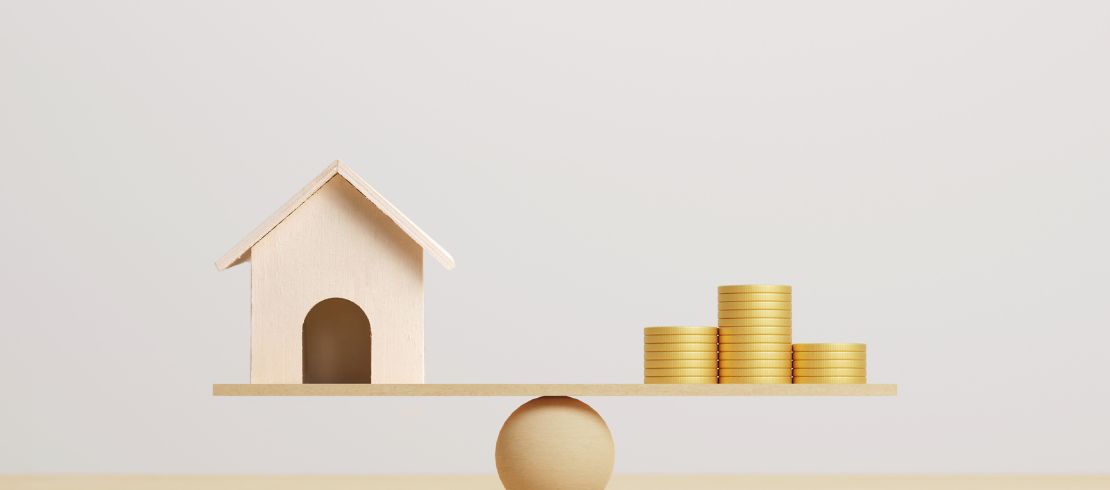
Welcome to the most heated financial debate in modern Germany: Should you pay off your house early, or invest every spare cent in the stock market?
The Munich Paradox: A “Winner” Who Feels Like a Loser
Ray’s situation captures the emotional chaos of this debate perfectly. On paper, he’s a financial superhero. He turned €500,000 into €1.5 million in 15 years, a 200% return that most fund managers would kill for. He owns his home outright in one of Europe’s most expensive cities. He has zero mortgage payments, zero debt stress, and maximum security for his family.
Yet the math-obsessed corners of the internet have him questioning everything. The argument goes like this: Opportunity cost (entgangene Gewinnchancen) is the silent killer of wealth. While Ray was paying down his mortgage at, say, 3% interest, the stock market was delivering average returns of 7-8% annually. Those extra payments weren’t “saving” him money, they were costing him compound growth.
The numbers sting. If Ray had invested his extra payments into a global ETF-Sparplan (ETF savings plan) instead, he might have an additional €200,000-€300,000 in liquid assets today. Liquid being the key word, because right now, his wealth is locked in Stein und Mörtel (stone and mortar).
The Opportunity Cost Calculation: When Math Meets Emotion
Let’s get technical. The German property market, especially in Munich, has seen explosive growth. But even with that appreciation, the leverage effect (Hebelwirkung) is what really matters here.
If Ray had put down his initial €100,000 equity and invested the remaining €400,000 he used for accelerated payments into a diversified portfolio, the calculation looks brutal:
- Scenario A (Paid off house): €1.5M property, no debt, but €0 liquid investments from extra payments
- Scenario B (Invested instead): €1.5M property with €400K remaining mortgage, BUT potentially €800K-€900K in ETF assets after 15 years
The difference? Liquidity and flexibility. Ray’s paid-off house is a fortress, but it’s a fortress with a moat he can’t cross. He still needs to save for a new roof (€45,000), a new heating system (€40,000), and ongoing maintenance. Meanwhile, the ETF investor can simply sell shares to cover any expense.
But, and this is crucial, the ETF investor also carries risk. As one commenter bluntly put it: “The market could crash tomorrow, and your house would still be your house.”
The German Tax Trap That Changes Everything
Here’s where the simple math gets complicated: Kapitalertragssteuer (capital gains tax). In Germany, profits from investments are taxed at a brutal 25% plus solidarity surcharge. Property? Completely different rules.
Ray’s primary residence is steuerfrei (tax-free) after just one year of ownership. If he sells his €1.5M house tomorrow, he keeps every cent. If the ETF investor sells €1.5M in stock, they’re handing over roughly €300,000 to the Finanzamt (Tax Office).
This is the detail most armchair analysts miss. As one detailed calculation showed: even if the ETF investor’s portfolio grew to €2 million, after capital gains tax and additional interest costs, they’d be left with around €1.375 million, less than Ray’s tax-free property value.
The German tax system actively rewards property ownership over securities investment. It’s not even close.
Emotional Wealth vs. Spreadsheet Wealth
Beyond the numbers lies a more profound question: What is money for?
Ray wrote that his house is his “dahoam”, a Bavarian word for “home” that carries deep emotional weight. This isn’t just an asset, it’s where his family grew up, where his kids feel safe, where he belongs. You can’t put that in a spreadsheet.
The anti-property crowd often dismisses this as sentimentality. They argue that a house is a consumption item, not an investment. That emotional attachment clouds rational financial thinking.
But the other side has a point: Sicherheit (security) has value. The peace of mind that comes from knowing you can never lose your home, no matter what the market does, is worth something. In fact, for many Germans, it’s worth everything.
As one Munich homeowner responded: “I enjoy not paying rent every month. Even with a small pension, you can get by when your housing costs are zero.”
The Leverage Effect: Why Debt Can Be Your Friend
The real magic of property investment isn’t appreciation, it’s leverage. When you buy a €500,000 house with €100,000 down, a 20% price increase gives you €100,000 profit. That’s a 100% return on your equity, not 20%.
Ray eliminated his leverage, which reduced his risk but also capped his potential returns. The ETF investor using leverage (through margin or simply not paying down the mortgage) could have amplified gains dramatically.
But leverage cuts both ways. As the Eigenkapitalrendite (return on equity) calculations show, if property values fall, leveraged investors get destroyed. Ray is immune to this, his house could drop to €500,000 tomorrow, and he’d still be fine. The leveraged investor would be wiped out.
What the German Finance Community Actually Thinks
The debate rages across German finance forums, but the consensus is more nuanced than the “you’re an idiot” crowd suggests.
The pro-investment faction argues:
– Historical stock returns beat mortgage interest rates
– Inflation erodes debt, making leverage profitable
– Diversification is safer than having all wealth in one property
– Liquidity provides options and security
The pro-payoff faction counters:
– German tax laws heavily favor property
– The psychological benefit of being debt-free is undervalued
– Property in top locations (München, Frankfurt, Hamburg) has outperformed markets
– You can’t live in your ETF portfolio
The most balanced voices suggest a hybrid: pay down your mortgage to a comfortable level, but don’t neglect investing entirely. As one advisor noted, the question isn’t either/or, it’s what proportion of each.
The Verdict: Did Ray Really Screw Up?
Let’s be brutally honest: No, Ray didn’t screw up.
He made a choice that prioritized security and peace of mind over maximum theoretical returns. In doing so, he:
– Avoided the risk of market crashes wiping out his investments
– Benefited from Munich’s insane property appreciation
– Eliminated housing costs for life
– Built tax-free wealth
– Gained something priceless: stability
Could he have made more money investing? Possibly. But “more money” isn’t the same as “better financial decision.” The goal of personal finance isn’t to die with the biggest number in your account, it’s to live a life you’re happy with.
Ray can now invest his former mortgage payment (around €3,000/month) into ETFs for the next 17 years. He’ll still retire comfortably at 55, just with a paid-off house as a bonus.
The Real Lesson: Context Is Everything
The dangerous part of this debate is how it ignores individual circumstances. A 25-year-old single professional in Berlin should probably invest rather than overpay a cheap mortgage. A 45-year-old with kids in Munich might prioritize security.
Your Anmeldung (registration) location matters. Your risk tolerance matters. Your job security matters. Your family’s needs matter.
The German obsession with paid-off property isn’t irrational, it’s a cultural response to historical instability. After hyperinflation and war, “owning your four walls” became the ultimate financial goal. That instinct isn’t wrong, it’s just different from the American-style leverage-everything approach.
Moving Forward: What Should Ray Do Now?
If you’re in Ray’s position, sitting on a paid-off house and wondering “what if?”, here’s the practical path:
- Start that ETF-Sparplan now. Invest your former mortgage payment monthly. You’ll still benefit from compound growth over 17 years.
- Keep the house. The transaction costs (Grunderwerbsteuer, notary, agent fees) of selling and renting would eat 10-15% of your equity.
- Consider a forward-looking strategy: Use the house as collateral for a low-interest loan only if you find an investment opportunity that clearly outperforms the cost.
- Remember why you bought it. Security, family, “dahoam”, those were valid reasons then and they’re valid now.
The market will crash. The market will recover. Your house will need a new roof. But you’ll sleep soundly knowing that no matter what, you have a place to call home.
And that, as any honest German will tell you, is worth more than any spreadsheet projection.

For more on German property investment strategies, see the Aurentum Immobilien analysis and the Lazy Investors rent-or-buy calculator