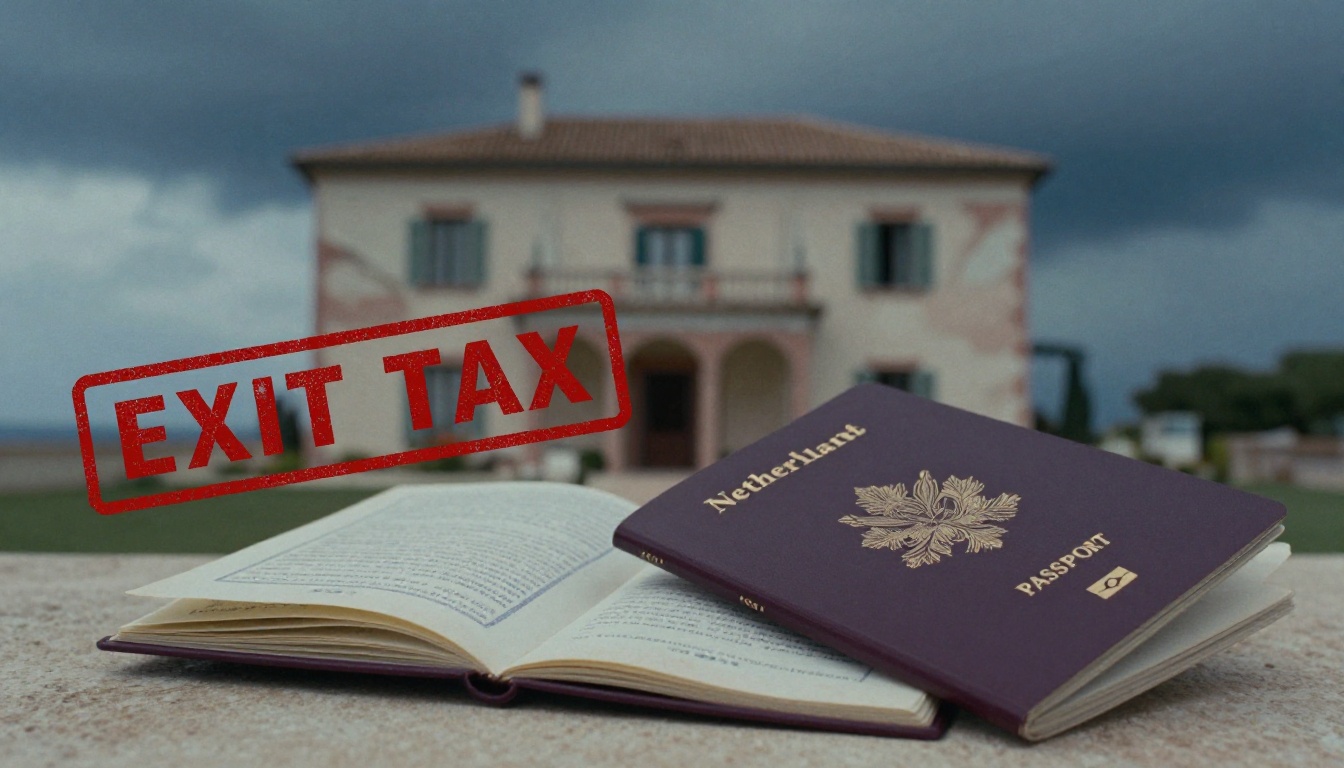
The Dutch tax system operates with the same precision as a Delta Works sluice gate, until you try to understand why you might owe 36% tax on a house in Spain you’ve never sold. Starting January 1, 2028, the Netherlands will implement a new Box 3 (wealth tax) regime that includes a capital gains tax on real estate. For Dutch residents with foreign property, this creates a potential exit tax that could trigger when you emigrate, gift the property, or even die.
The Box 3 Revolution: From Fiction to Reality
The current Box 3 system taxes a fictional return on your assets. The new system, approved by the Tweede Kamer (House of Representatives) in February 2026, shifts to taxing actual returns. This includes both income (rent, dividends) and value changes, even if unrealized.
For most assets, this means a vermogensaanwasbelasting (capital growth tax) of 36% on paper gains each year. But for real estate and startup shares, the law introduces a vermogenswinstbelasting (capital gains tax) that hits only upon realization.
The catch? “Realization” includes more than just selling. According to the final bill published by KPMG Meijburg & Co, capital gains tax applies when property leaves Box 3 for reasons including:
– Sale
– Gifting
– Emigration (does not apply to property located in the Netherlands)
– Destruction
– Divorce
– Death
The Exit Tax Mechanism: How It Works
Here’s where it gets controversial. If you own a second home in Spain, Portugal, or any other country, and you decide to leave the Netherlands, the tax authorities will treat your emigration as a deemed sale. The “capital gain” is calculated as the difference between your purchase price (adjusted for improvements) and the fair market value at the time of emigration.
The bill explicitly states: “If there is no sale price or the sale price has not been determined at arm’s length, the fair market value will count as the sale price.”
This creates an immediate tax liability, even though you haven’t received a single euro from the property. You can’t pay the tax from rental income if the property is vacant. You can’t pay from sale proceeds if you haven’t sold. You’re stuck with a bill based on a theoretical transaction.
Who Gets Hit: The Expats Caught in the Middle
The legislation appears targeted at wealthy Dutch citizens buying holiday homes in Spain to avoid Box 3. But it sweeps up a much larger group: EU nationals working in the Netherlands who maintain property in their home countries.
Consider a Spanish software engineer in Amsterdam who buys an apartment in Barcelona, planning to return someday. Under the new rules:
– The property falls under Box 3 as investment real estate
– Annual rental income is taxed at 36%
– If she moves back to Spain, capital gains tax applies to the entire value increase during her Dutch residency
– Spanish tax authorities will automatically share property data with the Belastingdienst (Tax Authority) through EU information exchange
The paradox? A Dutch crypto investor moving to Dubai faces no such automatic reporting, while the Spanish engineer gets caught in a double-taxation nightmare. Legal experts at Meijburg note this aspect “appears to be at odds with EU law.”
The EU Law Question: A Collision Course
The measure raises serious questions about compatibility with EU freedom of movement. Tax treaties generally allocate real estate taxation to the country where the property sits. The Netherlands can tax the property while you’re resident, but taxing it after you leave, based on gains accrued during residency, blurs jurisdictional lines.
Critics argue this violates the principle that you shouldn’t be penalized for exercising your right to free movement within the EU. The government’s justification? Preventing tax avoidance. But as one tax specialist noted, the measure creates “indirect incentives for tax evasion” by favoring non-EU destinations with opaque banking systems.
What the Tax Treaties Say (And Don’t Say)
Dutch tax treaties typically include an article stating real estate may be taxed in the state where it’s located. Some commentators initially argued this would exempt foreign property from Dutch tax entirely. However, the treaties cover annual property taxes and rental income, not capital gains triggered by emigration.
The Box 3 exit tax operates as a beschermende aanslag (protective assessment), securing the right to tax future gains. This mechanism is common for business assets but unprecedented for personal foreign real estate at this scale.
The Numbers: A Concrete Example
Let’s run the math on a realistic scenario:
Scenario: You bought a house in Spain in 2020 for €200,000. By 2028, it’s worth €280,000. You accept a job in Berlin and deregister from the Netherlands.
Tax calculation:
– Capital gain: €80,000
– Improvement costs: €10,000 (deductible)
– Taxable gain: €70,000
– Box 3 tax rate: 36%
– Tax due: €25,200
You haven’t sold the house. You haven’t received €80,000. But you must pay €25,200 to the Dutch tax authorities. If you later sell for less than €280,000, you can claim a loss, but only against future Dutch Box 3 gains, which may never materialize if you don’t return.
The Firestorm in Expat Communities
The proposal has triggered intense discussion among international residents. Many express frustration that the policy seems designed to force property investment in the Netherlands. As one Spanish national working in Amsterdam put it: “The implicit message is the only way to preserve my wealth is to buy a house in the Netherlands.”
This sentiment reflects a broader concern that the reform, combined with the Box 3 changes taxing unrealized gains, makes the Netherlands uniquely hostile to mobile EU professionals.
Practical Steps: What You Can Do Now
If you own or plan to buy foreign property while residing in the Netherlands:
1. Document Everything
Track purchase prices, improvement costs, and valuations meticulously. The tax authorities will use the WOZ-value system (or foreign equivalent) to determine fair market value at emigration.
2. Review Tax Treaties
Check the specific treaty between the Netherlands and the property’s location. While most won’t prevent this exit tax, they may affect how you claim foreign tax credits.
3. Consider Timing
If you’re planning to leave the Netherlands, understand that property value increases during your residency remain taxable. Some advisors suggest structuring property ownership through a Beleggings BV, but this carries its own risks and costs.
4. Monitor the Evaluation Clause
The Tweede Kamer inserted a three-year evaluation period instead of five, recognizing the system’s flaws. Pressure is building to transition to a pure capital gains tax by 2029, which would eliminate the exit tax problem.
5. Seek Professional Advice
The complexity of the new regime means generic advice is dangerous. The rules around loss offsetting are limited, and mistakes can be costly.
The Bigger Picture: A Threat to Financial Independence
The exit tax isn’t just about real estate, it symbolizes a broader shift in Dutch tax policy that threatens the FIRE (Financial Independence, Retire Early) movement. The combination of taxing unrealized gains and imposing exit taxes makes long-term wealth building unpredictable.
As one financial planner calculated, under the new rules, an investor with a volatile 6% annual return could face an effective tax rate of nearly 60% if they die after a loss year, due to the inability to carry back losses. This threatens the viability of FIRE strategies that rely on compound growth.
Conclusion: A Policy at Odds with Reality
The Netherlands is betting that taxing foreign property gains at emigration will raise revenue and prevent tax avoidance. But the policy may backfire, driving away skilled EU workers who feel penalized for maintaining ties to their home countries.
The measure’s survival depends on the Eerste Kamer (Senate), which must approve the bill by March 2026 for the 2028 start date to hold. Even if passed, legal challenges at the EU level seem inevitable.
For now, expats face a stark choice: accept the risk of a future exit tax, avoid foreign property ownership entirely, or join the growing number reconsidering their long-term future in the Netherlands.
The Dutch tax system may be precise, but this time, it risks sawing off the branch it sits on.
Disclaimer: This article provides general information, not tax advice. Consult a qualified tax advisor about your specific situation. Tax laws change frequently, and individual circumstances vary significantly.