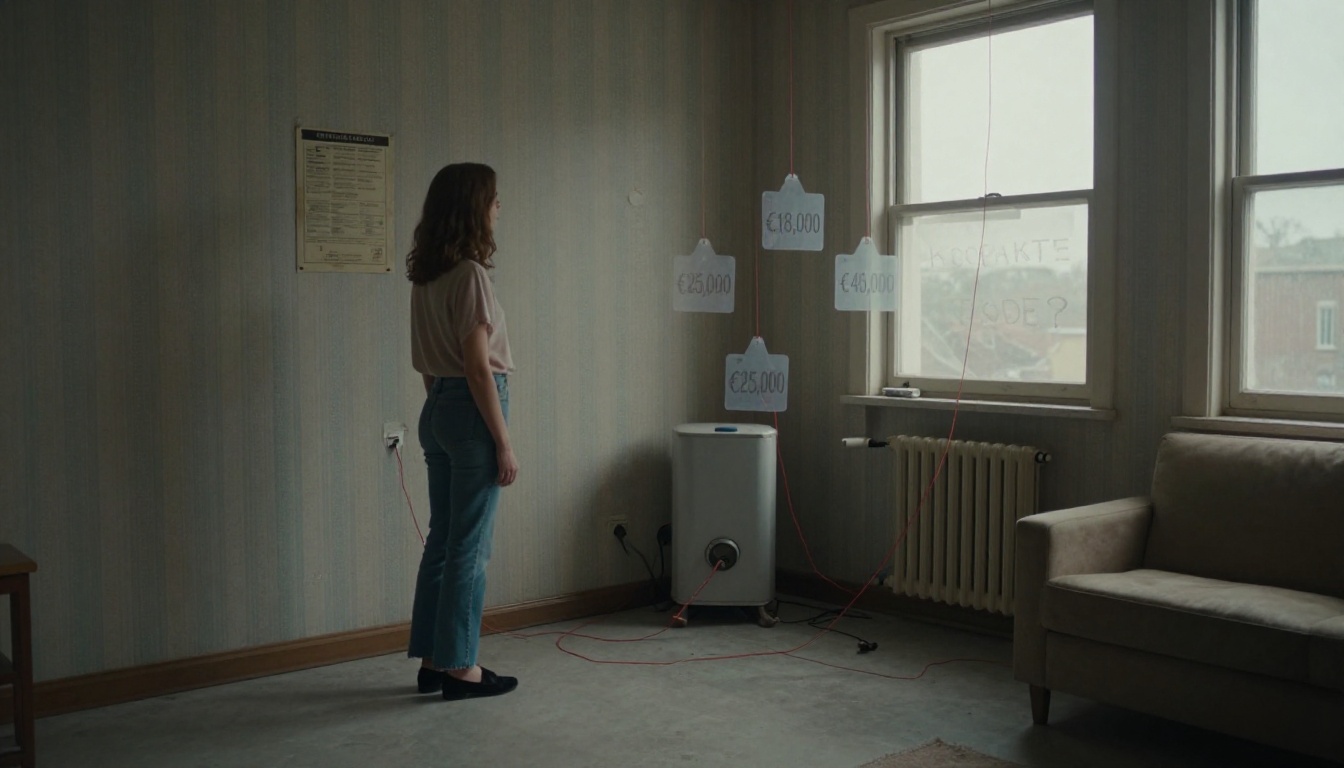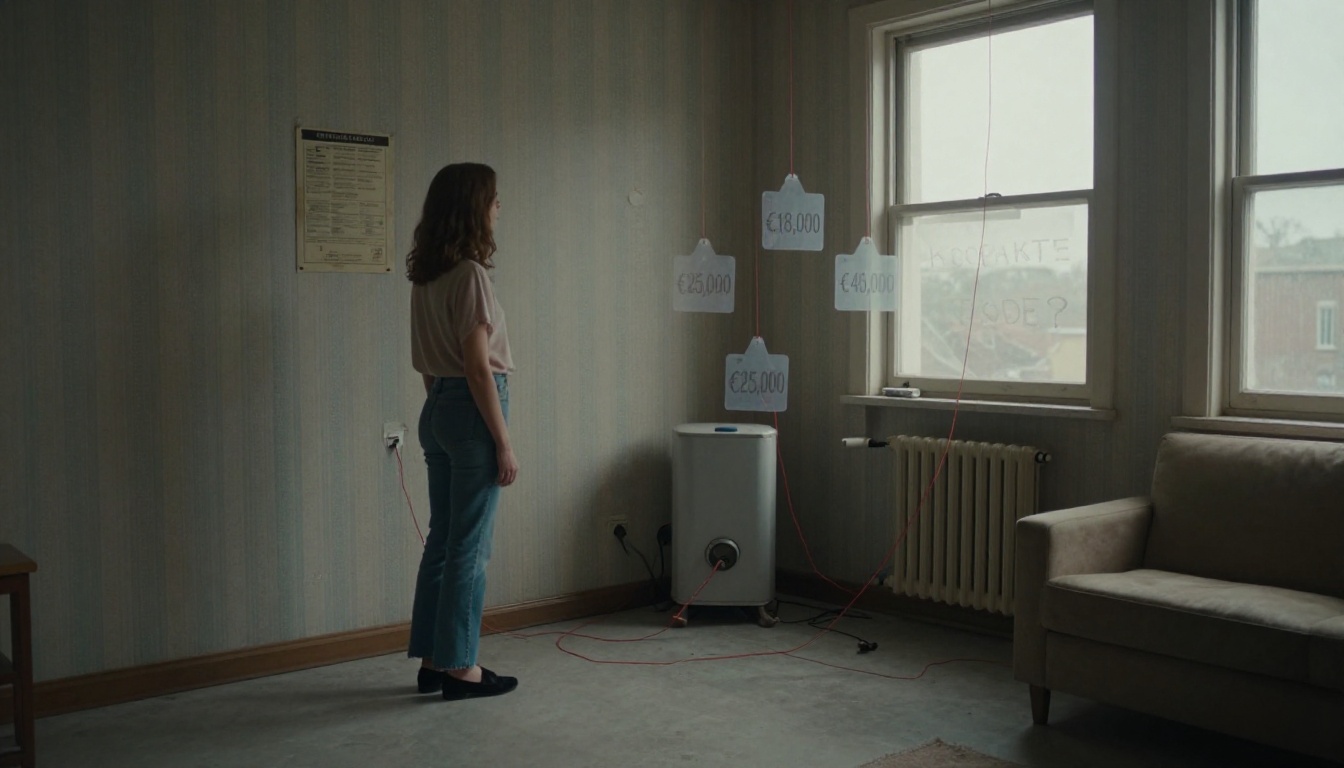
She stood in the living room of what could have been her first home, a modest €210,000 property with an energy label E, and felt the weight of her mistake. At 27, with a net income of €3,400 per month and a comfortable social housing rental at €500, she had just made the biggest financial miscalculation of her life. The €18,000 “available” for sustainability improvements? A mirage. The mental peace of homeownership? Shattered before she even signed the koopakte (purchase agreement).
This is the story that recently gripped the Dutch personal finance community, a cautionary tale that reveals how the Netherlands’ energy labeling system, combined with aggressive bidding tactics and incomplete information, creates a perfect storm of hidden costs for first-time buyers.
The Energy Label E Trap: What “Poorly Insulated” Really Means
When our protagonist bid on her house, she knew it had an energy label E and was “virtually uninsulated.” What she didn’t understand was the practical translation of that bureaucratic classification. In the Dutch system, energy labels range from A++++ (most efficient) to G (least efficient). Label E means the property consumes between 290-400 kWh/m² per year, roughly double what a modern label A home uses.
The real kicker? As of 2029, rental properties with labels E, F, or G will be phased out entirely. While this regulation currently applies only to rentals, it signals the direction of Dutch housing policy and creates a ripple effect in the owner-occupied market. Buyers are increasingly wary of low-label properties, making them harder to sell without significant upgrades.
For our Reddit hero, the practical impact meant facing a laundry list of essential improvements: spouwmuurisolatie (cavity wall insulation), dakisolatie (roof insulation), vloerisolatie (floor insulation), HR++ glas (high-efficiency glass), and kozijnen (window frames). Each item represents not just a cost, but a structural intervention that requires professional execution and proper documentation to qualify for subsidies.
The €18,000 Mirage: When Subsidies Don’t Apply
During the bezichtiging (viewing), the seller or agent mentioned that €18,000 might be available for verduurzaming (sustainability improvements). This vague assurance is where many buyers stumble. In reality, subsidies like the ISDE-regeling (Investment Subsidy for Sustainable Energy) have strict eligibility criteria based on:
– The specific measures taken
– Whether they’re combined within 24 months
– The home’s current energy performance
– The buyer’s personal financial situation
Our buyer discovered too late that she didn’t qualify for the expected amount. The ISDE subsidy for 2026 has a total budget of €511 million and covers insulation, heat pumps, and energy-efficient ventilation, but the actual amount depends on precise combinations of measures. Installing just one element might yield minimal subsidy, while strategic combinations within a two-year window can unlock significantly higher percentages.
Many municipalities offer additional subsidies through programs like VerduurSAMEN2030, covering smaller measures like radiatorfolie (radiator foil), tochtstrips (draft strips), and leidingisolatie (pipe insulation). These can be cost-effective quick wins, but they won’t transform a label E house into a modern, efficient home.
The Solo Buyer Financial Crunch: Running the Numbers
Let’s break down our protagonist’s financial reality:
Current situation:
– Net income: €3,400/month
– Social rent: €500/month
– Savings rate: €13,000/year (approximately €1,083/month)
After purchase:
– Total housing costs: €1,200/month (mortgage + energy + taxes + maintenance reserve)
– Remaining savings capacity: €400/month (€4,800/year)
– Leftover savings after purchase: €13,000
The math is brutal. Her current comfortable €1,083/month savings would plummet to €400/month. That €13,000 emergency fund? It would need to cover not just unexpected repairs but also the sustainability improvements she now realizes are essential.
The mental toll is equally significant. As she wrote: “I buy alone and have no financial safety net. It feels like I’m standing completely alone financially, and a lot needs to happen to the house, which gives me mental unrest.”
This emotional dimension is often overlooked in financial calculations. The stress of being a alleenstaande koper (solo buyer) without a financial vangnet (safety net) transforms what should be an exciting milestone into a source of chronic anxiety.
Strategic Escape Routes: The Bouwdepot Solution
One underutilized tool for buyers in this situation is the bouwdepot (construction deposit). This separate account linked to your mortgage allows you to finance improvements without immediately impacting your monthly cash flow.
Here’s how it works:
1. You secure a mortgage that includes a bouwdepot amount (based on a taxatierapport with renovation specifications)
2. The depot amount is reserved separately
3. You declare costs to the lender as work progresses
4. Payments come directly from the bouwdepot
For existing homes, this can cover verduurzaming, extensions, or replacing fixed elements. The key advantage? You pay mortgage interest on the full amount from day one, but you also receive interest on the undrawn depot balance. As construction progresses, the depot balance decreases, creating what Dutch financial advisors call renteverlies (interest loss), but this loss is often fiscally deductible.
The looptijd (term) is typically 12-24 months, giving you time to plan and execute improvements systematically rather than scrambling for cash.
The Regulatory Squeeze: Why 2029 Matters
While our buyer was focused on her immediate dilemma, broader market forces are accelerating. The Dutch government has made clear that energy-inefficient housing has no future. The recent consultation on new energy performance requirements for rental properties sets a precedent: by 2029, all rented homes must achieve at least label D.
This policy creates a two-tier market. Energy-guzzling homes become stranded assets, difficult to sell, impossible to rent, and expensive to heat. The value gap between label A and label G properties is widening, with some estimates suggesting a difference of up to 8% of property value.
For buyers considering a label E property, the question isn’t just “Can I afford the improvements?” but “Will this property be sellable in 10 years without massive investment?” The long-term financial risks of homeownership in the Netherlands extend far beyond the mortgage payment.
The Community Verdict: What Experienced Buyers Advise
The Reddit thread attracted 44 comments, with experienced homeowners offering conflicting but valuable perspectives:
The “Walk Away” Camp:
Many argued that at €1,600-2,300 in advice costs, backing out is cheap compared to years of financial stress. As one commenter noted: “It’s a house, not a package of butter. When in doubt, don’t do it.” Dutch law provides a wettelijk bedenktermijn (statutory reflection period) even after signing, allowing buyers to reconsider.
The “Proceed with Caution” Camp:
Others pointed out that her current €21,800 annual spending after rent suggests lifestyle flexibility. Could she live more frugally for 2-3 years to build equity? One homeowner shared: “We just bought a farmhouse where heat leaks out. We’re tackling it step by step over the coming years. Vacations, new cars, expensive clothes and furniture are off the table. But we live fantastically, and in a few years there will be more financial space.”
The Strategic Middle Ground:
Several commenters suggested investigating municipal Klimaat Route programs, which offer free energy advice and up to €2,500 in free insulation measures. They also emphasized that verduurzamen (sustainability improvements) don’t need to happen all at once, starting with cheap measures like tochtstrips and radiatorfolie can provide immediate comfort while saving for bigger projects.
Making the Decision: A Framework for Buyers
If you find yourself in this situation, here’s a structured approach:
1. Verify Subsidy Eligibility
– Check the ISDE 2026 subsidy calculator for your specific measures
– Contact your gemeente (municipality) about Klimaat Route or VerduurSAMEN2030
– Document everything, photos, invoices, energy advisor reports
2. Calculate True Total Cost of Ownership
– Mortgage payment
– Energy costs (current and future, factoring in rising prices)
– Onderhoudsreservering (maintenance reserve) of 1-2% of property value annually
– Property taxes (ozone-belastingen)
– Insurance
– Plus: phased renovation costs over 5-10 years
3. Assess Mental Readiness
– Are you prepared for 2-3 years of “staycation” instead of holidays?
– Can you handle the stress of being the sole decision-maker?
– Do you have a support network for advice and emotional support?
4. Explore Financial Flexibility
– Could you increase your income through salary growth or a partner’s contribution in future?
– Is a bouwdepot structure possible with your mortgage?
– Would a verduurzamingshypotheek (sustainability mortgage) with interest rate discounts be available?
5. Consider Market Timing
– If you can afford to wait, might better properties come available?
– Is the current discount on label E properties sufficient compensation for the risk?
The Hard Truth: Sometimes the Best Deal is No Deal
Our Reddit protagonist’s final question cuts to the heart of the matter: “Is stopping here rational, or am I being led by fear?”
The answer is both. It’s rational to fear a financially precarious situation that could lead to jarenlang stress (years of stress). But it’s also rational to recognize that her current €500/month social housing, while not perfect, provides stability that homeownership might destroy.
The Dutch housing market’s hidden financial risks aren’t just about purchase price, they’re about the total cost of turning a poorly insulated box into a comfortable, future-proof home. For solo buyers without a financial safety net, the margin for error is razor-thin.
Lessons for Future Buyers
- Never bid without voorbehouden (contingencies) unless you have 20% cash reserves beyond the purchase price
- Get an energy advisor before bidding, not after
- Calculate renovation costs conservatively, then add 30%
- Investigate subsidies before relying on them, eligibility is complex
- Consider the bouwdepot as a financial planning tool
- Factor in mental health costs, stress has a real financial value
- Remember the 2029 deadline, label E properties face increasing obsolescence
The most valuable insight came from a commenter who had walked this path: “Financially it’s a good decision, if it feels emotionally okay. A decision that’s financially ‘best’ but feels terrible is worth little.”
For our 27-year-old buyer, the €2,000 in advice costs might be the cheapest exit fee she ever pays. And for the rest of us, her story serves as a crucial reminder: in the Dutch housing market, what you see is rarely what you get, and what you don’t see can cost you everything.
Planning a renovation after purchase? Learn how a bouwdepot can help you finance improvements without immediate cash flow strain, and explore joint homeownership strategies if you’re considering buying with a partner to share both costs and risks.