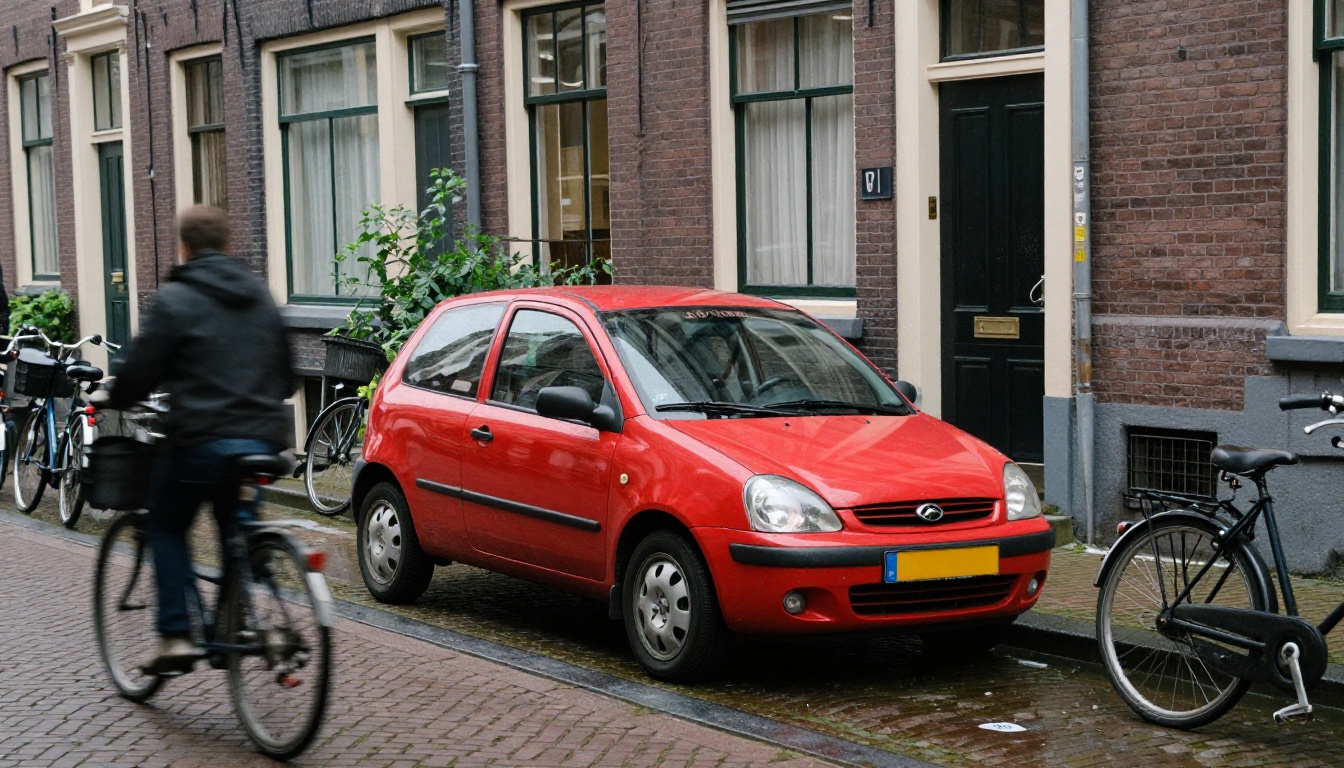
The Dutch car market runs on a peculiar logic: the bigger your car, the heavier the financial punishment. While your neighbors finance €40,000 SUVs that barely fit in their driveways, a growing group of practical drivers has discovered a contrarian truth, the Daihatsu Cuore (small car) delivers more financial freedom than any luxury badge.
This isn’t about being cheap. It’s about understanding how the Netherlands’ tax and infrastructure systems quietly reward extreme minimalism.
The Wegenbelasting Reality Check
Here’s where Dutch bureaucracy gets interesting. Your wegenbelasting (road tax) calculation punishes every extra kilogram. A modern Volkswagen Golf weighs around 1,300 kg, landing you in a tax bracket that costs approximately €60-80 per month. The Daihatsu Cuore? It tips the scales under 750 kg, placing it in the lowest possible category.
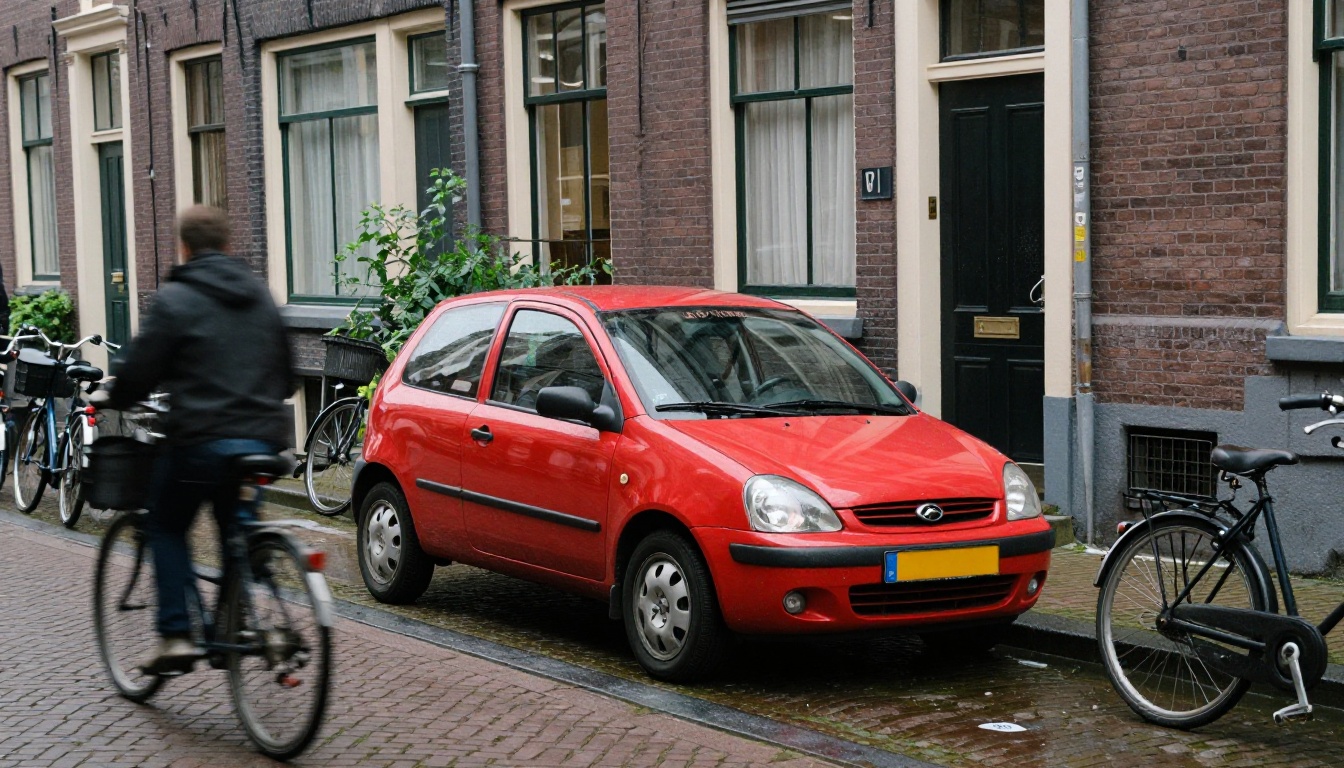
Many international residents report monthly wegenbelasting bills of €18-22 for their Cuore. That’s a €500+ annual saving before you’ve even turned the key. The math becomes more brutal when you realize this tax runs for the car’s entire life, over a decade, you’re looking at €5,000 saved versus a standard hatchback.
The weight advantage also slashes fuel costs. Owners consistently report consumption of 1 liter per 22 kilometers (1:22) in real Dutch driving conditions, city traffic, highway sprints to Utrecht, and those endless polder (low-lying land) roads where wind resistance matters. With current fuel prices hovering around €2.10 per liter, you’re looking at less than 10 cents per kilometer.
Amsterdam’s Parking Chess Game
If you’ve spent 45 minutes circling the grachtengordel (canal belt) hunting for a space that doesn’t require sacrificing your firstborn, the Cuore’s dimensions become spiritual. At just 3.4 meters long, it fits into half-parking spaces that SUV drivers don’t even register as possibilities.
One driver in De Pijp (Amsterdam neighborhood) described fitting into a gap between two poorly parked cars on Albert Cuypstraat where a Fiat 500 would have failed. The turning circle, smaller than a bicycle’s, means you can perform U-turns on residential streets without the three-point maneuver that enrages Dutch cyclists behind you.

The five doors that open to 90° aren’t just convenient, they’re a practical solution for narrow Dutch parking garages where door dings are a certainty, not a risk. When your doors can clear most obstacles, you stop caring about minor scratches, which, paradoxically, saves thousands in cosmetic repairs over the car’s lifetime.
What “Nothing Can Break” Actually Means
The Reddit wisdom that “what isn’t there can’t break” translates to real numbers. A 15-year-old Cuore owner in Rotterdam reported total maintenance costs of €380 over three years. That’s not a typo. No climate control to fail, no electric windows to jam, no complicated infotainment system to reboot.
Dutch garages confirm this pattern. The cars rank among the cheapest in their systems because parts are interchangeable across models, and the mechanical simplicity means even ANWB (Royal Dutch Touring Club) roadside assistance calls are rare.
Compare this to the average modern car’s annual service bill of €600-800, plus the inevitable €1,200 surprise when the air conditioning compressor fails or the electronic parking brake locks up. Over five years, the Cuore owner saves enough to fund a weekend in Barcelona, every year.
The Psychological Reset
Here’s the unexpected benefit that changes the equation: driving a car this small fundamentally alters your relationship with speed and status. The Cuore’s modest acceleration means you’re never tempted to race between traffic lights. On Dutch highways where 100 km/h is the daytime limit, you arrive at the same time as the BMW that passed you at 130 km/h, except you’ve burned half the fuel.
More importantly, you stop caring about status. In a country where cycling to work in a €3,000 suit is normal, the Cuore fits the Dutch poldermodel (consensus-based approach) mindset: practical, unpretentious, and financially sensible. Your buren (neighbors) might joke about your “tiny car”, but they’re secretly calculating their own lease payments versus your freedom.
The Cargo Miracle
The sliding rear bench, available on some trim levels, transforms the car completely. Push it forward, and rear legroom rivals a Mercedes S-Class. Fold it flat, and you can fit a standard Europallet behind the front seats. One owner moved apartments using only their Cuore, making multiple trips but avoiding the €150 van rental fee.
This versatility makes it viable for single-car households. The weekly boodschappen (groceries) run? Easy. A trip to the IKEA in Delft for a Billy bookcase? Manageable if you remove the packaging. Transporting a washing machine? That’s where you call a friend with a trailer.
When It Doesn’t Work
Let’s be honest: the Cuore fails for families with two children in car seats. The rear bench works for occasional passengers, but daily use with multiple kids isn’t realistic. Winter heating is adequate but not generous. And if your commute involves regular 130 km/h stretches on the A2 motorway, the engine works hard.
The cars are also old. Finding one under 15 years means paying a premium, and rust becomes a real concern in Dutch winters. The salt that keeps roads clear attacks wheel arches and sills. Budget €1,500-2,500 for a decent example, and expect to replace it after 200,000 km, though some owners report 265,000 km with basic maintenance.
The Financial Verdict
Run the numbers for a typical expat living in Amsterdam-Noord and commuting to Schiphol:
Daihatsu Cuore (15 years old):
– Purchase: €2,000
– Wegenbelasting: €20/month
– Insurance (WA only): €35/month
– Fuel (12,000 km/year): €550
– Maintenance: €150/year
Volkswagen Golf (5 years old):
– Purchase/lease: €300/month
– Wegenbelasting: €65/month
– Insurance: €55/month
– Fuel (12,000 km/year): €1,100
– Maintenance: €600/year
Annual difference: €3,780. Over three years, you could buy a second Cuore and still have money left for a vacation.
The Catch
The only real cost is pride. You won’t impress clients or dates. You’ll occasionally be overtaken by scooters on the Afsluitdijk. But if you can accept that your car is a tool, not a personality statement, the financial freedom is real.
As one long-term owner in Utrecht summarized: “I spent three years financing a BMW I couldn’t afford. Now I own my Cuore outright, and the money I save funds my actual life. The car gets me there. That’s all that matters.”
Making It Work in 2026
Finding a Cuore requires patience. Check Marktplaats (Dutch classifieds) daily, search for “Daihatsu Cuore” and “Toyota Yaris” (its mechanical cousin). Pay attention to service history, look for the timing belt change at 100,000 km. Inspect for rust around the rear wheel arches and under the doors.
Get a keuring (APK inspection) before purchase. Many sellers offer this, but insist on an independent garage. The €50 cost saves you from buying a car that won’t pass the mandatory annual inspection.
Finally, join the community. Dutch Cuore owners share parts sources, garage recommendations, and troubleshooting tips through informal networks. They’ll tell you which garages in Den Haag specialize in Japanese kei cars and where to find replacement trim pieces.
The Daihatsu Cuore isn’t just a car, it’s a financial instrument that happens to have wheels. In the Netherlands’ punishing tax environment and cramped cities, that’s a combination worth more than any luxury badge.