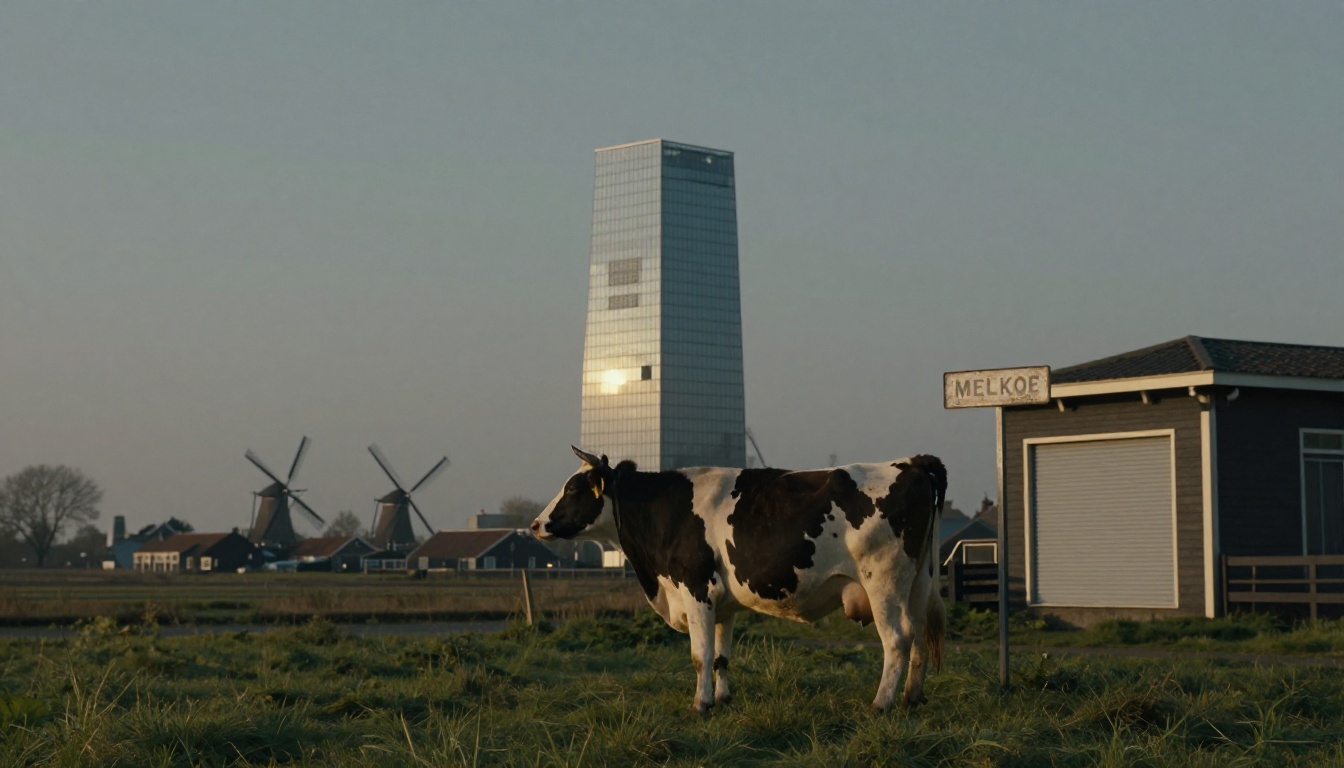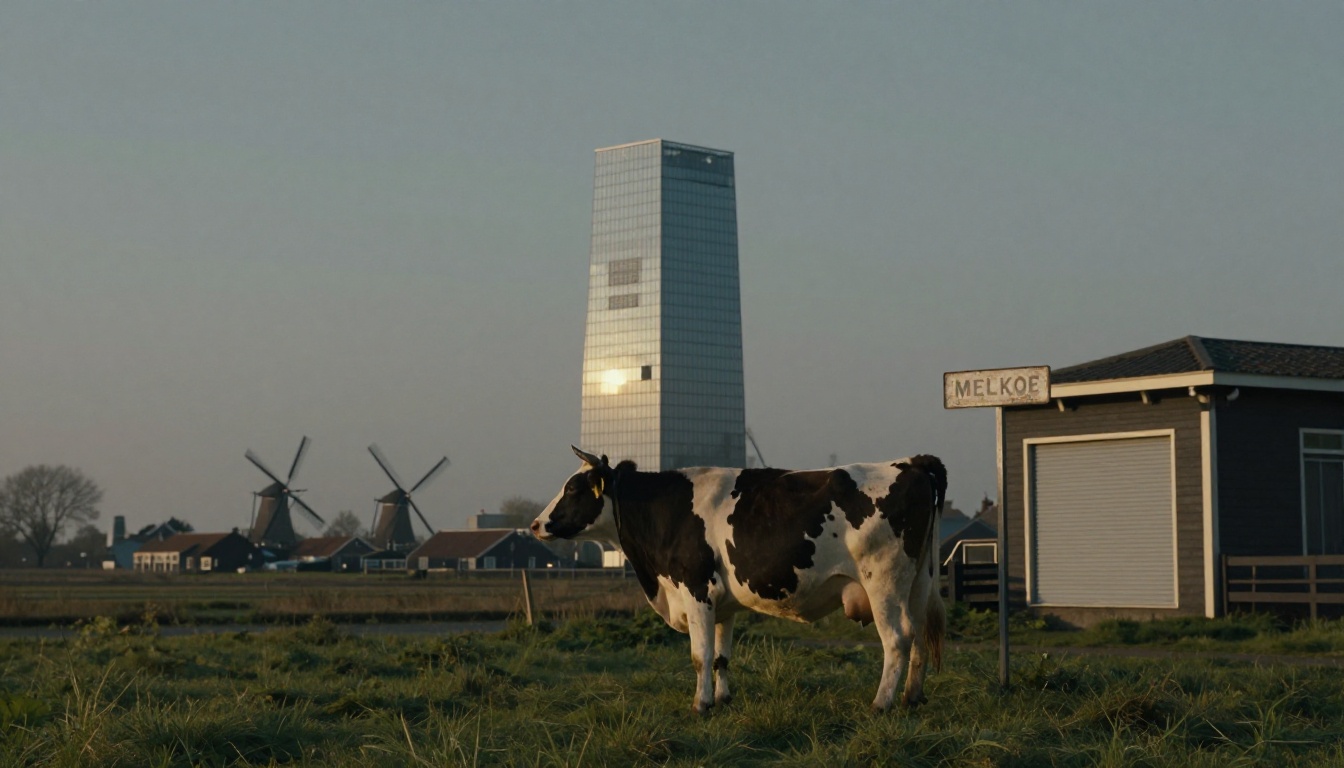
The sentiment echoes through cafés in Amsterdam and Slack channels in Rotterdam: “Ik voel me de melkkoe van de samenleving” (I feel like the milk cow of society). It’s the battle cry of the Dutch higher middle class, university-educated professionals earning €80,000 to €140,000 in loondienst (salaried employment), who watch nearly half their income vanish into the Belastingdienst (Tax Authority) while others seem to pay less or get more.
Are they right? Or are they just the latest victims of a tax system that rewards complexity and penalizes simplicity? Let’s unpack the numbers, the loopholes, and the political reality.
The 49.5% Squeeze: Where Your Money Actually Goes
If you earn €100,000 in the Netherlands, you’re not just paying 49.5% on every euro above €75,518 (the 2025 threshold for the top inkomstenbelasting (income tax) bracket). You’re also losing heffingskortingen (tax credits) as your income rises, creating a marginale druk (marginal tax pressure) that can hit 50% even before you reach the top bracket. Add in verzekeringsplicht (insurance obligations), gemeentelijke heffingen (municipal levies), and the inkomensafhankelijke bijdrage Zorgverzekeringswet (income-dependent contribution to health insurance), and your effective burden climbs higher.
One commenter noted: “Een bonusje voor hard werken, houd je de helft over” (A small bonus for hard work, you keep half). This isn’t hyperbole. Bonuses get taxed at the bijzonder tarief (special rate), often 49.5%, and while some may be refunded after aangifte (tax return), most higher earners never see it back.
The frustration isn’t just about the amount, it’s about the contrast. While you’re paying full freight, you see three other groups playing by different rules.
The Loophole Economy: How the Ultra-Wealthy Play a Different Game
The super-rich in the Netherlands don’t pay 49.5% on their income. They pay around 17%, according to French economist Gabriel Zucman, who recently presented to the Tweede Kamer (House of Representatives). How? Through what the NRC calls “ondernemersbox 2 structuren” (entrepreneur Box 2 structures) that remain “buiten de greep van de fiscus” (out of reach of the tax authorities).
Here’s the playbook:
– Mailbox companies: Dutch billionaires route income through brievenbusfirma’s (mailbox companies) in Curaçao or other low-tax jurisdictions, paying as little as 1% tax.
– Box 2 vs. Box 3: Instead of taking salary (Box 1, up to 49.5%), the wealthy keep wealth in a BV (private limited company) taxed in Box 2 at 24.5% (2025 rate) or Box 3 at 32% on actual returns, but with massive exemptions.
– Complex corporate structures: The case of a Curaçao-based BV that was deemed “feitelijk in Nederland gevestigd” (actually established in the Netherlands) shows how even when caught, companies can still claim verliesbeschikkingen (loss determinations) without time limits, offsetting future profits.
As one Reddit user put it: “De super rijken hebben hun eigen creatieve constructies” (The super-rich have their own creative constructions). These aren’t illegal, they’re just unavailable to anyone without a team of fiscalisten (tax advisors) and lawyers.
The Subsidy Paradox: The Lower End Gets Help, the Middle Gets Bills
On the other end of the spectrum, lower incomes receive toeslagen (subsidies): huurtoeslag (rent subsidy), zorgtoeslag (healthcare subsidy), kinderbijslag (child benefit). A family earning €40,000 might pay minimal income tax after credits and receive thousands in subsidies.
The middle class? You get nothing. Earn €60,000 and you still qualify for some support. Earn €80,000 and you’re cut off, but you’re not wealthy enough to benefit from the loopholes. You’re in what economists call the “belastingval” (tax trap): working more yields diminishing returns.
One commenter from a low-income background offered perspective: “Wij verwende Nederlanders snappen echt niet hoe bijzonder en uitzonderlijk dit is” (We spoiled Dutch people really don’t understand how special and exceptional this is). He pointed out that having a social safety net at all is rare globally, and that his €140,000 household income feels abundant compared to his childhood near the poverty line.
That’s a valid counterpoint. But it doesn’t change the feeling of unfairness when you see a neighbor with a Bentley paying less effective tax than you.
Box 3: The Wealth Tax That Only Taxes the Wrong Wealth
The Box 3 debacle perfectly illustrates the problem. After the Hoge Raad (Supreme Court) struck down the old system for taxing fictional returns, the government promised a “fairer” system based on werkelijk rendement (actual returns). Starting in 2028, you’ll pay up to 32% on your actual investment gains.
Sounds fair? Not quite.
The new system exempts vastgoedbeleggingen (real estate investments) and investeringen in start-ups en familiebedrijven (investments in startups and family businesses). Who owns those? The ultra-wealthy. Meanwhile, the middle-class saver with a Degiro account gets hit on every euro of actual return.
The NRC reports this will cost the treasury €42 billion over 30 years, money that must be recouped elsewhere, likely from income taxes on the middle class.
And the super-rich? They just keep their wealth in Box 2 structures or in tax-exempt assets, avoiding Box 3 altogether.
The Political Gridlock: Why Reform Fails
The new coalition’s akkoord (agreement) contains “precies nul maatregelen” (exactly zero measures) to increase wealth taxes, as the NRC noted. Instead, they introduced a vrijheidsbijdrage (freedom contribution) of €3.4 billion in extra income tax to fund defense.
Why? Because the VVD (center-right party) has been in government for 20 years and consistently blocks wealth taxes. The party skipped the meeting with Zucman entirely. Their base includes entrepreneurs and high-net-worth individuals who benefit from the current system.
As one commenter noted: “Dit is niet tijdelijk als tussenoplossing… Belastingontwijking wordt met ingang van dit stelsel een doel op zich” (This is not temporary as an interim solution… Tax avoidance becomes a goal in itself with this system).
The Perspective Check: Are We Really That Bad Off?
Let’s be honest: earning €100,000 in the Netherlands means you’re in the top 15% globally. You have excellent healthcare, safe streets, and a functioning society. Many middle-class Dutch who complain have never experienced life without a vangnet (safety net).
The counterargument is strong: “Reizend over de wereld realiseer ik mij iedere keer weer: over het geheel genomen hebben wij het fantastisch in Nederland” (Traveling the world, I realize every time: overall, we have it fantastic in the Netherlands).
But here’s the thing: fairness is relative. When you see the system clearly favoring those above and below you, it erodes trust. And when the Belastingdienst makes it hard for you to comply while making it easy for the wealthy to avoid, resentment builds.
What Can You Actually Do?
Feeling stuck? You have options:
1. Optimize Within the System
- Maximize hypotheekrenteaftrek (mortgage interest deduction): Still one of the few middle-class tax breaks, though it’s being phased out.
- Use jaarruimte (annual pension allowance): Reduce taxable income by up to €7,000 (2025) by contributing to your pensioen (pension).
- Consider eenmanszaak (sole proprietorship): If you have side income, this opens doors to aftrekposten (deductions) unavailable in loondienst.
2. Plan for Box 3
- Strategic schuld (debt): Taking on a mortgage can reduce your vermogen (wealth) in Box 3, though this is risky. Learn how debt strategies work in Box 3.
- Invest in exempt assets: The new Box 3 rewards investments in startups and real estate, if you can afford the risk and the minimums.
- Understand the real impact: See how new Box 3 reforms hit middle-class investors.
3. Vote and Advocate
- Support parties that target vermogen (wealth) over arbeid (labor): This often means progressive parties, but read the fine print. The VVD has been in power for 20 years, and wealth taxes haven’t increased.
- Push for simplification: The complexity itself is a subsidy for the rich. A simpler system with fewer loopholes helps everyone.
4. Consider the Nuclear Option: Emigration
- The Dutch FIRE movement is actively discussing leaving for Portugal, Greece, or Spain, where tax regimes are friendlier to middle-class wealth builders. Read about the emigration debate.
But before you pack your bags, remember: the grass is greener where you water it. The Netherlands still offers stability, rule of law, and quality of life that’s hard to match.
The Bottom Line
The Dutch middle class isn’t wrong to feel squeezed. The system is regressive at the top, where wealth can hide in BVs and brievenbusfirma’s (mailbox companies). The new Box 3 system will cost €42 billion in lost revenue, and that money will come from somewhere, likely your income tax.
But perspective matters. You’re still part of a system that provides universal healthcare, excellent infrastructure, and a social safety net that actually works. The frustration isn’t just about taxes, it’s about fairness.
The real scandal isn’t that you pay 49.5%. It’s that someone with a private jet pays 17% while using the same roads and courts you do.
Your move: Optimize what you can, vote for change, and maybe, just maybe, stop looking at your neighbor’s Bentley. Focus on building wealth within the system, even when it feels rigged. Because while the system is flawed, it’s still better than most. And if enough milk cows start mooing loudly enough, even The Hague might eventually listen.