
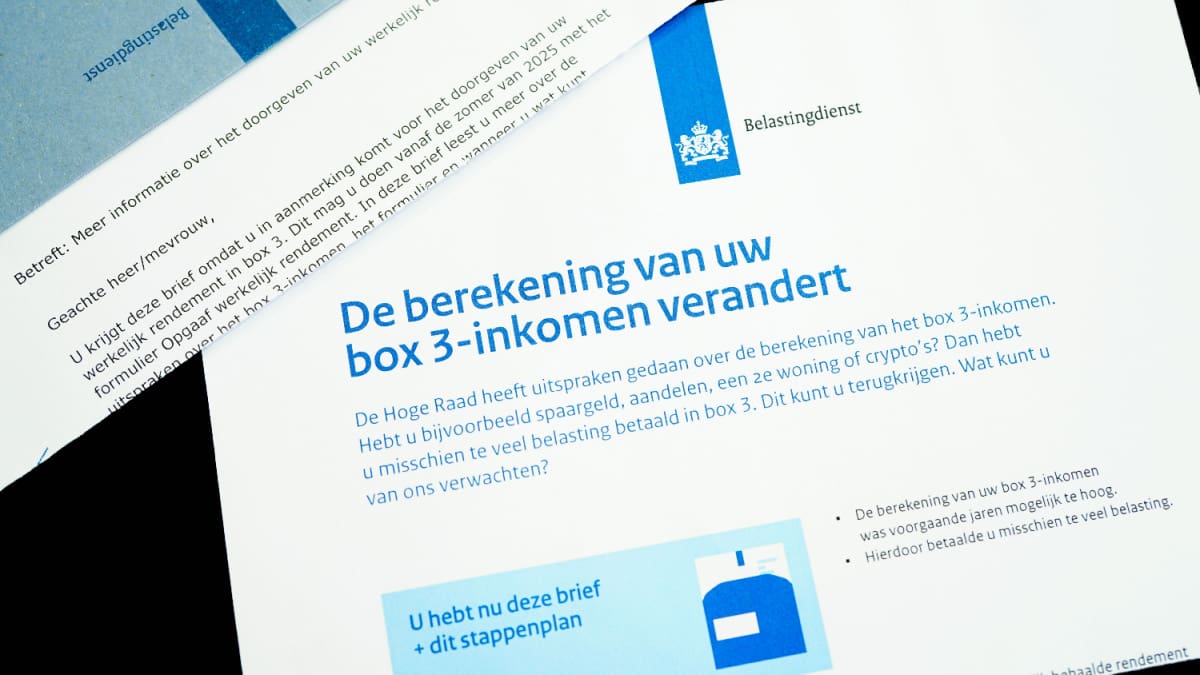
The Dutch tax system operates with the same precision as a Delta Works sluice gate, until you try to navigate the labyrinth of Box 3 (wealth tax box) reforms. Starting in 2028, the Netherlands shifts from taxing fictional returns to hitting investors with real-world rates of up to 36% on actual investment gains, including paper profits you haven’t cashed out. The response? A growing number of homeowners are doing something that feels mathematically backwards: deliberately increasing their mortgage debt to shrink their taxable wealth.
The Box 3 Paradox: Why Debt Suddenly Looks Attractive
Under the new system, the Belastingdienst (Tax Authority) will no longer assume everyone earns a flat percentage on their savings and investments. Instead, they’ll look at your actual returns, dividends, interest, and crucially, unrealized capital gains. If your crypto portfolio jumps from €100,000 to €180,000 by December 31, you owe tax on that €80,000 "gain" even if you never sold a single coin.
This creates a perverse incentive. Your wealth is calculated as assets minus debts. A larger hypotheek (mortgage) directly reduces your net wealth in Box 3, potentially dropping you into a lower tax bracket or below the €57,000 tax-free threshold altogether. The math is brutally simple: every euro of mortgage debt is a euro that won’t be taxed at 36%.
The strategy echoes the American "buy, borrow, die" approach, where wealthy individuals never sell assets but live off loans against them. In the Dutch context, many international residents report considering this as a direct response to the aggressive new tax structure. The logic? Why build a €200,000 investment portfolio that generates a €15,000 annual tax bill when you could park that money in your home and borrow against it instead?
Running the Numbers: A Real Dutch Household Scenario
Let’s examine a situation similar to what many Amsterdam-area families face. You bought a house a decade ago for €270,000, with €200,000 remaining on your mortgage. Comparable properties now sell for €550,000. You have €25,000 in savings and €75,000 in ETFs, total taxable wealth of roughly €450,000 after deducting your mortgage.
Under the new Box 3 rules, you could face taxes on actual investment returns of perhaps €30,000 in a good year, costing you around €10,800 at the 36% rate. But if you upgrade to a €750,000 house with a €600,000 mortgage, your net wealth drops to €250,000 (house value minus mortgage, plus your remaining investments). Your taxable investment base shrinks, and your tax bill with it.
The trade-off: your monthly mortgage payment jumps significantly. At current rates around 4.5%, that extra €400,000 in debt costs you about €1,500 more per month. Over a year, that’s €18,000 in interest, more than the tax you were trying to avoid. But here’s the Dutch twist: mortgage interest on your primary residence is partially deductible under the hypotheekrenteaftrek (mortgage interest deduction), though this is being phased down. Plus, you’re building equity in a potentially appreciating asset rather than paying what many consider a wealth confiscation tax.
The Data Shows This Isn’t Theoretical
The average hypotheekverhoging (mortgage increase) amount has climbed 28% in three years, from €75,500 in early 2023 to over €96,600 by late 2025. While some of this reflects rising property values, financial advisors confirm more clients are explicitly citing tax planning as their motivation.
One financial planner noted that clients are less interested in traditional beleggen (investing) and more focused on "tax-efficient wealth structuring", a polite term for strategic debt accumulation. The trend is particularly strong among households with €100,000 to €500,000 in investable assets, exactly the group the new Box 3 rules target most aggressively.
When the Strategy Actually Makes Sense
For some, this isn’t just tax avoidance, it’s lifestyle optimization. A family with young children might value a larger home now, planning to downsize in retirement and consume the equity then. In this case, the Box 3 benefit is a bonus, not the primary driver.
The approach also appeals to those burned by the volatility of ongerealiseerde winst (unrealized gains) taxation. If your crypto portfolio crashes after a December 31 peak, you’ve still paid tax on gains that evaporated. A mortgage doesn’t have this problem, your debt is fixed, predictable, and reduces your exposure to the Belastingdienst’s snapshot-in-time accounting.
The House Poor Trap and Other Pitfalls
Financial advisors warn this strategy can backfire spectacularly. Being "house poor", where your mortgage consumes so much income you can’t handle unexpected expenses, is a real risk. One homeowner who followed this path admitted they "ran into it hard" in the first two years, only breathing easier after significant salary increases.
The math also fails if property values stagnate or decline. Unlike a diversified investment portfolio, your wealth becomes concentrated in a single, illiquid asset. And if interest rates rise further, that cheap debt becomes expensive fast.
Critics argue the strategy reveals how broken the new system is. As one analysis of the Box 3 reforms noted, taxing paper profits while ignoring inflation means you’re "effectively paying tax on wealth preservation, not wealth creation." The mortgage strategy is simply a rational response to an irrational policy.
Who Should Consider This (And Who Shouldn’t)
This approach might work if:
– You were already planning to move to a larger home
– You have stable, growing income that can handle higher mortgage payments
– You value the non-financial benefits of a better property
– You’re uncomfortable with the compliance burden and uncertainty of the new Box 3 system
It’s probably unwise if:
– You’re stretching financially to make the numbers work
– Your income is variable or uncertain
– You’re treating this as a short-term tax play rather than a long-term housing decision
– You haven’t maxed out more straightforward tax shelters like pensioen (pension) contributions
The Bigger Picture: A Tax System That Rewards Debt
The fundamental issue is that the new Box 3 rules create a clear incentive to prefer debt over savings. While the government aims to tax the "rich", the policy may instead encourage risky financial behavior among middle-class homeowners.
The controversy extends beyond individual strategies. Some legal scholars question whether taxing unrealized gains violates the same property rights the Hoge Raad (Supreme Court) cited when striking down the old fictional-return system. If your bitcoin gains disappear before you cash them out, were they ever really "yours" to tax?
Final Calculation: Debt as Defensive Finance
The mortgage-increase strategy for Box 3 mitigation isn’t for everyone, but it’s a legitimate response to a tax system that turned retirement savings into a penalty box. The key is treating it as a housing decision first and a tax move second. If you’re already considering a move and the numbers work with conservative assumptions, the Box 3 benefit is a compelling bonus.
Just remember: the Belastingdienst can change the rules again. Your mortgage, however, is a contract that will be with you for decades. In the Dutch tradition of polderen (consensus-building), perhaps the best strategy is to diversify, not just across assets, but across tax regimes, by keeping some wealth mobile and some locked in property.
Before making any moves, calculate the true cost of that extra debt, factor in the phased-out mortgage interest deduction, and ask yourself: am I running toward a better life, or just away from a bad tax bill? Sometimes the answer is both, but you need to be certain before you sign at the notaris (notary public).