The Dutch energy market has become a high-stakes poker game where everyone’s trying to read the dealer’s next move. With gas prices hovering around €1.26 per m³ in March 2026 and memories of the 2022 energy crisis still fresh, the question isn’t just academic, it’s hitting Dutch households directly in their maandbedrag (monthly payment). Should you lock in your gas price for three years of certainty, play it safe with a one-year fix, or ride the waves with a dynamic contract? The answer depends on your risk appetite, your ability to time the market, and whether you’re willing to play the uniquely Dutch game of annual switching for bonuses.
The Fixed-Rate Promise: 1 Year or 3?
When you opt for a vast energiecontract (fixed energy contract), you’re essentially buying insurance against price volatility. For the duration of your contract, whether 1 or 3 years, your gas price per m³ remains unchanged, regardless of geopolitical tensions, LNG supply disruptions, or how cold the winter gets. This predictability is exactly what many Dutch households crave after years of uncertainty.
The case for 3 years is straightforward: maximum price security. If gas prices spike due to unforeseen events in the Middle East or reduced Russian gas flows, you’ll be shielded until 2029. However, this comes at a premium. Energy suppliers price long-term contracts higher to cover their own risk exposure.
“I find gas too expensive for a 3-year contract right now.”
— Energy consumer, online discussions
The price difference between 1-year and 3-year fixed rates can be substantial, often 10-15% higher for the longer term.
The 1-year option offers a middle path. You get price certainty for the next 12 months while retaining flexibility. If prices drop, you can switch to a cheaper contract next year. More importantly, you can collect the overstapbonus (switching bonus) annually, which savvy Dutch consumers have turned into a sport. These bonuses typically range from €200-400, effectively subsidizing your energy costs. One consumer reported earning €430 in switching bonuses this year alone, noting that “you have to stoke quite a lot to beat that.”.
The Dynamic Gamble: When Flexibility Pays
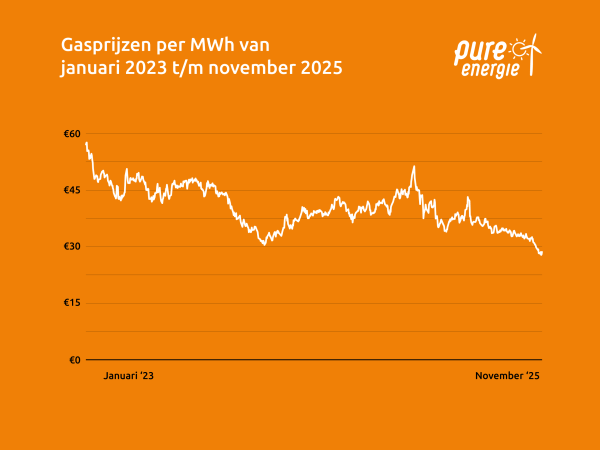
Dynamic contracts, where prices change hourly for electricity and daily for gas, sounded risky until the numbers came in. Data from 2025 reveals that dynamic electricity prices were 11% below the national average, while dynamic gas prices were a remarkable 19% cheaper than fixed contracts. In December 2025, dynamic gas prices dropped to €1.11 per m³, allowing flexible consumers to capitalize on market dips.
The key advantage? You pay what energy actually costs at that moment, without the risk premium suppliers build into fixed rates. As Gijs Wubbe of NextEnergy explains, “You pay what energy really costs at that moment, without extra risk margin for the supplier. That yields advantage in the long term.”.
But this requires active management. You need a slimme meter (smart meter) and the willingness to shift consumption. Running your vaatwasser (dishwasher) and wasmachine (washing machine) during sunny afternoons when solar production peaks can mean paying next to nothing, or even receiving money when prices go negative. In 2025, there were 581 hours of negative electricity prices, up from 458 in 2024. That’s 7% of the year where consuming electricity earned you money.
The Hybrid Compromise: Best of Both Worlds?
Dutch energy suppliers have caught onto the fact that consumers want security for essentials while staying flexible for opportunities. The hybride energiecontract (hybrid energy contract) lets you fix your gas price for a year while keeping electricity dynamic. This makes particular sense because gas prices are more volatile due to geopolitical factors, while electricity prices fluctuate predictably with renewable generation.
Pure Energie actively promotes this model: “You fix your gas costs for a year, while with electricity you benefit from low, sometimes even negative, hourly rates when the market is favorable.” For households with zonnepanelen (solar panels), this combination is especially powerful. Your gas heating costs stay predictable through winter, while your electricity consumption can align with your own solar production or cheap market rates.
The Overstapbonus Factor: A Uniquely Dutch Consideration
Here’s where Dutch energy strategy diverges from textbook financial advice. The Netherlands has institutionalized switching bonuses to such a degree that it changes the math entirely. Many consumers report switching providers annually specifically to capture these bonuses, which can offset higher tariffs.
“I’ll never take a contract longer than one year again. Switching is now a piece of cake.”
With comparison apps like Bencompare and Gaslicht.com, the process takes under 10 minutes. The €300-400 bonus often outweighs any savings from a slightly lower tariff, especially for average consumption of around 1,000 m³ gas and 2,500 kWh electricity annually.
This creates a perverse incentive: the theoretically optimal 3-year fixed rate becomes suboptimal when you factor in opportunity cost. You’re not just comparing tariffs, you’re comparing tariff minus bonus. A 3-year contract at €1.20/m³ might look cheaper than a 1-year at €1.26/m³, but if the 1-year option lets you collect €350 in bonuses over three years, the math flips.
What History Teaches Us: The 2022 Price Shock
To understand why fixed contracts appeal, look at the gasprijs grafiek (gas price chart) from recent years. Summer 2022 saw prices explode due to the energy crisis, with households paying multiples of normal rates. Since then, prices have nearly returned to pre-crisis levels, but the trauma remains.
However, historical perspective matters. Adjusted for inflation, current gas prices are actually historically low, the increase is largely in belastingen (taxes). One analyst pointed out that “the gas price itself isn’t that high. Adjusted for inflation, the gas price is even historically low. Only an enormous amount of tax has been added.” This nuance gets lost when people focus on their total maandbedrag rather than the underlying commodity price.
Risk Tolerance: Matching Contract to Lifestyle
Your optimal choice depends on four factors:
1. Financial Cushion
Can you handle a €40 spike in your monthly bill during a cold January? Dynamic contracts can swing dramatically. Fixed contracts offer peace of mind.
2. Consumption Patterns
Do you work from home with flexible scheduling? Can you run appliances during cheap hours? Dynamic rewards flexibility. Fixed suits rigid routines.
3. Technical Setup
Dynamic requires a slimme meter. If you don’t have one, you’ll need to wait 2-6 weeks for installation. Some suppliers let you start on a variable contract and switch to dynamic later.
4. Mental Bandwidth
Tracking 96 daily price points requires attention. Apps help, but it’s still active management. Many consumers value mental peace over potential savings.
The data from Energiek shows concrete differences: for a typical household using 2,336 kWh and 929 m³, annual costs are €1,966 on variable, €1,918 on duo (dynamic electricity + fixed gas), and €1,872 on fully dynamic. That’s €94 annual savings for full dynamism, but with increased volatility.
The Mortgage Analogy: Why Term Length Matters
This energy decision mirrors another major Dutch financial choice: hypotheek (mortgage) term length. Just as with mortgages, longer fixed terms provide more security but cost more upfront. The calculation involves similar trade-offs between certainty and flexibility. For comparable fixed-term contract strategies, the principles of locking in rates for longer periods apply across both energy and housing markets.
Making Your Decision: A Practical Framework
- Choose 3-year fixed if: You value budget certainty above all, have limited financial flexibility, and want to avoid thinking about energy for as long as possible. This is the “set it and forget it” approach.
- Choose 1-year fixed if: You want to balance security with flexibility, plan to collect switching bonuses, and believe prices may stabilize or drop. This is the pragmatic Dutch middle way.
- Choose dynamic if: You have a slimme meter, can shift consumption, have financial buffer for monthly swings, and want to minimize long-term costs. This is the optimizer’s path.
- Choose hybrid if: You want gas security with electricity flexibility, especially with zonnepanelen. This is the best-of-both-worlds compromise.
The Bottom Line: No Perfect Answer
The frustrating truth is that the “best” choice depends on unknown future events. A 3-year fixed contract would have been disastrous if signed in summer 2022 at peak prices. A dynamic contract would have been painful during the subsequent winter spike. Hindsight always wins.
What you can control is aligning your choice with your risk tolerance and lifestyle. The Dutch market’s unique features, generous switching bonuses, widespread smart meter adoption, and transparent price comparison tools, mean that active consumers can significantly outperform passive ones.
One final piece of advice: whichever route you choose, set a calendar reminder to review your contract annually. The energy market evolves rapidly, and what makes sense today may not in 2027. In the Netherlands, the penalty for loyalty is often higher prices. Don’t be afraid to switch, it’s designed to be easy for a reason.
Your energy contract isn’t just a utility bill, it’s a financial instrument. Treat it with the same scrutiny you’d give any investment decision. The €94 you might save with a dynamic contract, or the €400 switching bonus you might collect, adds up to real money that could be better spent on… well, almost anything else.