Microsoft’s AI Panic: Why Dutch Investors Are Watching a Software Empire Tremble
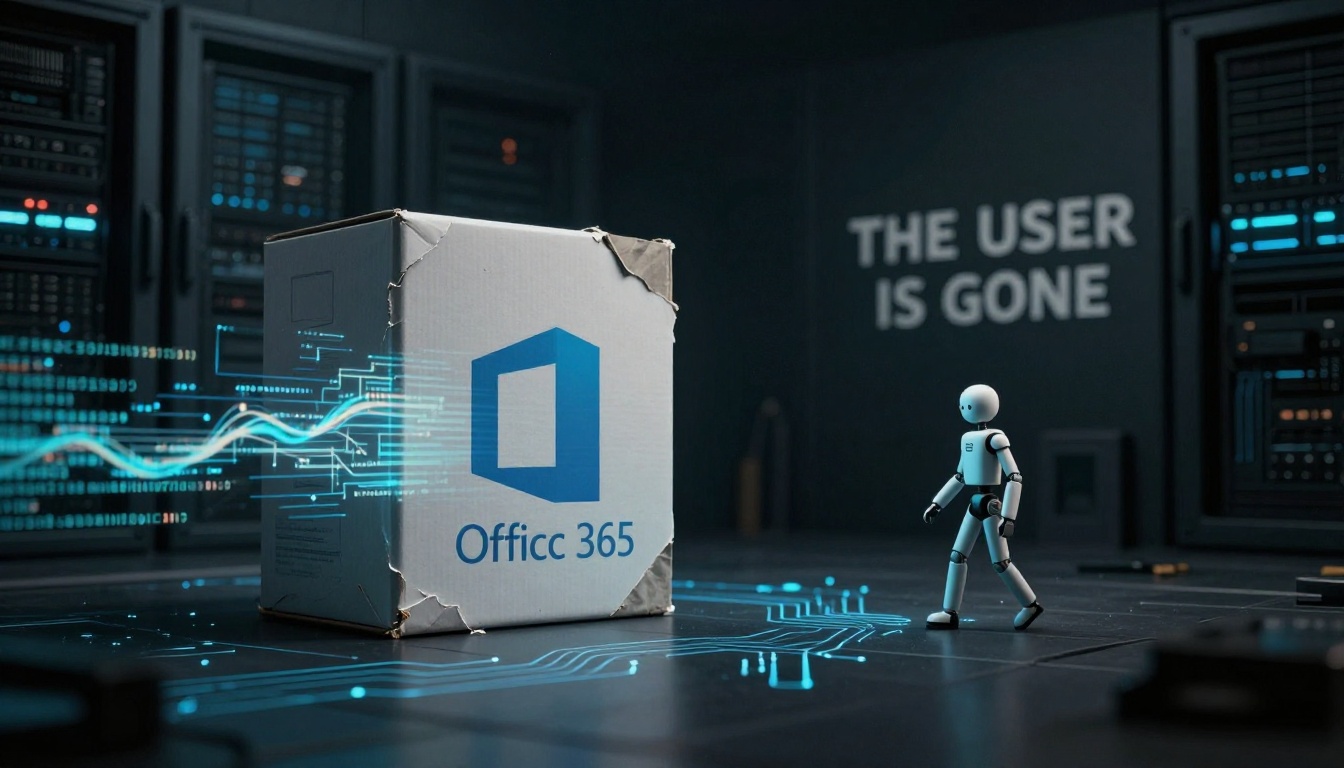
Microsoft’s latest quarterly report should have triggered champagne corks. Instead, it sparked a sell-off that wiped billions from its valuation and sent tremors through Amsterdam’s tech-heavy investment portfolios. The reason? Artificial intelligence isn’t just threatening Microsoft’s business model, it’s allegedly making it obsolete.
The paradox is striking: Microsoft’s strategic partner OpenAI reports ChatGPT growing at over 10% monthly, surpassing 800 million weekly active users. Yet investors are dumping Microsoft stock as if it’s the next Blockbuster. This disconnect reveals a fundamental question haunting Dutch index fund holders and direct stock pickers alike: Is AI the executioner of the subscription software model, or are markets suffering from temporary hysteria?
When AI Agents Become the Customer
The core anxiety isn’t about AI failure, it’s about AI success. The new generation of autonomous AI agents doesn’t just assist users, it replaces them. Or more accurately, it consolidates them.
Consider the typical enterprise software stack: a Salesforce license for CRM, an Adobe suite for design, Microsoft 365 for productivity, and specialized tools for data analysis. Each subscription represents a seat-based pricing model that has minted fortunes for two decades.
Now enter AI agents that can navigate between these platforms, executing tasks across multiple systems through simple natural language commands. One agent can perform the work that previously required five human seats across five different software platforms. The math is brutal for investors: if AI agents become the primary "users", the seat-based pricing model collapses.
Recent data from Dutch developers confirms this shift. Many report their teams now use Claude and GitHub Copilot to automate ticket resolution, with some estimating 50% productivity gains in code generation. The traditional software stack becomes a backend utility while AI agents capture the user relationship.
Microsoft’s High-Stakes AI Gamble
Microsoft’s $13 billion investment in OpenAI looked brilliant when ChatGPT was a novelty. Now it resembles a Faustian bargain. The partnership gives Microsoft cutting-edge AI integration, but it also accelerates the very disruption threatening its core Office 365 and Azure revenue streams.
OpenAI’s new revenue strategy adds another layer of complexity. The company plans to introduce advertisements in ChatGPT for US users while expanding enterprise subscriptions and developer tools like Codex. This diversification is crucial because training and running large language models demands massive capital, OpenAI’s costs reportedly exceed $3 billion annually.
For Microsoft investors, this creates a three-way tension:
1. Growth: OpenAI’s 10% monthly user growth and Codex’s 50% usage surge demonstrate market dominance
2. Cannibalization: Every ChatGPT user potentially means one less Office 365 subscriber
3. Cost: Microsoft’s Azure cloud services benefit from OpenAI’s computational demands, but only if OpenAI can pay its bills
The market’s verdict has been harsh. Despite strong quarterly figures, Microsoft stock dropped significantly as investors reacted negatively to high AI investments, capacity constraints, and uncertain future growth. The fear is palpable: what if AI becomes a utility that makes Microsoft middleware?
The Investment Avalanche Nobody Trusts
Microsoft isn’t alone in the AI spending spree. Meta, Alphabet, Amazon, and others announced combined AI investments reaching hundreds of billions of dollars over the coming years. This coordinated capital deployment has triggered investor skepticism about return on investment.
The Dutch financial regulator AFM (Autoriteit Financiële Markten) recently noted that financial markets show resilience but remain vulnerable to tech sector volatility. The concern isn’t the amount being spent, it’s the timing mismatch. Datacenter construction takes years, while AI revenue remains speculative.
If demand for computational power plateaus, tech giants could be left with massive infrastructure liabilities. This asymmetry between immediate costs and distant revenues explains why Dutch pension funds and retail investors are rethinking their tech allocations.
What Developers Actually See
The reality on the ground is more nuanced than the market panic suggests. A developer at a Dutch SaaS company recently noted that while AI can now handle simple tickets autonomously, enterprise software replacement is far more complex.
The theory emerging from Amsterdam’s tech community suggests three phases:
- Phase 1: Devaluation of Legacy Code
Existing software becomes easier to replicate. Years of proprietary codebase advantage erode when AI can generate similar functionality in weeks. - Phase 2: Expertise Moat Deepens
Market knowledge and industry-specific logic remain defensible. AI can write code, but it can’t instantly absorb a decade of customer workflow understanding. - Phase 3: Architectural Premium
As AI takes over implementation, the value shifts to system architecture and governance. Companies that design AI-ready infrastructure with robust testing and clear responsibility chains will command premiums.
This explains why many developers view AI as augmentation rather than replacement. Deterministic processes like invoice generation and record storage still require traditional software architecture. AI handles the variable layer, core systems remain.
The Generational Time Bomb
Here’s what keeps Microsoft executives awake: Generation Alpha doesn’t use Microsoft Office. They grow up with Google Docs, Figma, and browser-based collaboration tools. Microsoft’s attempt to push AI features into Windows and Office sometimes feels like adding jet engines to a horse carriage.
Critics within the Dutch tech community point out that Windows deteriorates with unwanted AI integration, creating opportunities for Linux, SteamOS, and macOS. The moat isn’t just technical, it’s cultural.
Yet enterprise software has proven remarkably sticky. The average worker barely utilizes 10% of Word, Excel, or PowerPoint capabilities. AI that makes these tools more accessible might actually increase dependency rather than reduce it.
Why Replacement Is Harder Than It Looks
The market assumes software is fungible. Reality disagrees. Enterprise software involves:
- Compliance requirements: Financial and healthcare sectors need audit trails that AI agents can’t yet provide
- Integration depth: Decades-old systems connect through APIs that would require massive refactoring
- Change management: Large organizations move slower than startups predict
- Data governance: Letting AI agents access sensitive databases remains a regulatory nightmare
This explains why companies like SAP, Salesforce, and Microsoft will likely recover. Their software isn’t just code, it’s institutional memory embedded in corporate processes.
The Dutch Investor’s Dilemma
For Netherlands-based investors holding Microsoft through ETFs or directly, the question isn’t theoretical. The Dutch tax system, particularly the box 3 vermogensrendementsheffing (wealth tax), makes holding volatile assets expensive. If Microsoft trades sideways while you pay annual wealth tax, your real return turns negative.
The recent market correction might present a buying opportunity, but price-to-earnings ratios remain elevated. Dutch investors must weigh:
- Strategic positioning: Microsoft owns the AI stack from infrastructure (Azure) to application layer (OpenAI)
- Valuation discipline: Even after the drop, multiples assume flawless execution
- Tax efficiency: For high-net-worth individuals, the box 3 heffing (tax) makes long-term holding costs significant
Pearl Capital, an Amsterdam-based investment firm, notes that investors seeking predictability increasingly look beyond volatile tech stocks toward alternatives like commercial mortgages offering stable 6% returns. This flight to stability reflects broader market uncertainty about AI’s payoff timeline.
Overreaction or Justified? The Verdict
The market’s panic is both rational and exaggerated.
Justified concerns:
– AI agents fundamentally challenge seat-based pricing
– Massive capital investments create near-term margin pressure
– Generational shifts in software preference are real
– ROI timeline for AI investments remains uncertain
Overreaction factors:
– Enterprise software replacement cycles are measured in years, not quarters
– Microsoft’s AI integration creates new revenue streams even as it disrupts old ones
– OpenAI’s growth trajectory is genuinely exceptional
– The total addressable market for AI-enhanced productivity is larger, not smaller
The key insight for Dutch investors is that this isn’t a binary outcome. Microsoft won’t disappear, but its margin structure may permanently change. The company will likely transition from pure subscription revenue to a hybrid model mixing usage-based AI fees, enterprise infrastructure, and traditional licensing.
Actionable Takeaways for Netherlands-Based Investors
-
Rebalance, don’t panic: If Microsoft exceeds 5% of your portfolio, trim. But don’t exit completely, the AI transition will have winners.
-
Consider tax implications: For wealth subject to box 3 heffing, high volatility without dividends creates drag. Evaluate if the risk-adjusted return justifies the tax cost.
-
Watch the moat indicators: Monitor Microsoft’s enterprise contract renewal rates and Azure AI revenue growth. These metrics matter more than ChatGPT user numbers.
-
Diversify intelligently: Don’t flee to cash. Consider Dutch real estate funds or commercial mortgage products for stability, but keep 20-30% in quality tech for growth.
-
Time horizon matters: If you’re investing for 10+ years, this correction is noise. If you need capital in 2-3 years, reduce exposure.
The AI revolution won’t kill Microsoft, but it will reshape it. Dutch investors who understand this distinction, and act with tax-aware discipline, will navigate this transition better than those who simply follow the market’s fear.