
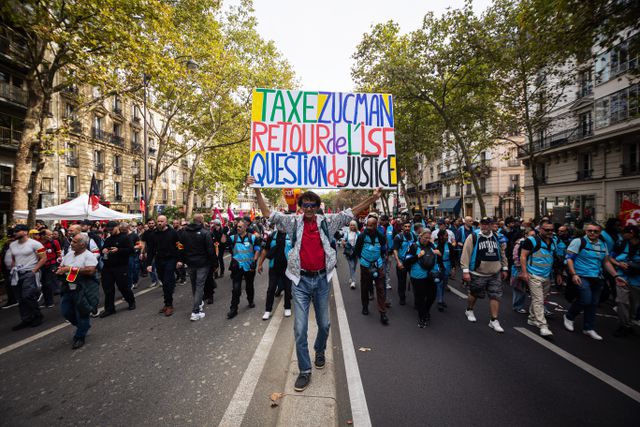
The French economist Gabriel Zucman walked into the Tweede Kamer (House of Representatives) with a simple message: Dutch billionaires aren’t paying their fair share. His solution? A 2% annual tax on wealth exceeding €100 million. The proposal, already making waves in France as the “Taxe Zucman”, has now ignited a firestorm in Dutch political circles, forcing a confrontation with the uncomfortable reality of wealth inequality and tax avoidance at the highest levels.

The Billionaire Tax Loophole Nobody Talks About
Zucman’s research reveals a stark reality: most billionaires pay little to no income tax. Not because they break the law, but because they don’t have traditional income. Through sophisticated aandelenconstructies met holdings (share structures with holding companies), the ultra-wealthy live off loans backed by their assets, never realizing gains that would trigger income tax. When they need cash, they borrow against their stock portfolios. The interest is often tax-deductible, and the loans are repaid from their estates after death.
This isn’t theoretical. A study by the Centraal Planbureau (CPB – Netherlands Bureau for Economic Policy Analysis) shows that the super-rich in the Netherlands pay a maximum of 17% in taxes, primarily on business activities. On their personal vermogen (wealth), they pay virtually nothing. Meanwhile, ordinary Dutch workers and middle-class families hand over 40-45% of their income to the Belastingdienst (Tax Authority).
The threshold of €100 million isn’t arbitrary. Zucman demonstrates that beyond this point, tax systems in most countries become regressief (regressive) – as wealth increases, the effective tax rate actually decreases. This, he argues, violates the fundamental principle of equality before the law enshrined in the Verklaring van de rechten van de mens en de burger (Declaration of the Rights of Man and of the Citizen).
Why Box 3 Failed and What Comes Next
The Dutch wealth tax system, known as Box 3, was supposed to address this imbalance. Instead, it’s become a case study in how not to tax wealth. The Hoge Raad (Supreme Court) struck down the old system for taxing fictional returns, and the new reforms set to take effect in 2028 have created panic among middle-class savers. The reforms will tax actual investment returns at rates up to 36%, prompting many to consider emigratie (emigration).
This is where Zucman’s proposal diverges sharply from the Dutch approach. While Box 3 targets the broadly defined “wealthy” – including many who’ve simply saved diligently for retirement – Zucman’s tax laser-focuses on the ultra-rich. “Met zoveel vermogen zal 2 procent belasting echt niet je ondernemers- of investeringsactiviteiten beïnvloeden”, he told Dutch parliamentarians. The tax would apply only to wealth exceeding €100 million, leaving the vast majority of business owners and investors untouched.
The distinction matters. Current Box 3 reforms have triggered what some call a Dutch FIRE rebellion, with middle-class investors feeling punished for saving. Zucman’s tax, by contrast, targets those who’ve built fortunes exceeding the lifetime earnings of hundreds of ordinary families combined.
The Capital Flight Bogeyman
Opponents immediately raise the specter of capital flight. “Als je vermogen hebt, je invloed hebt”, as one Dutch commentator noted. The wealthy can simply relocate to friendlier jurisdictions. It’s a valid concern – and one Zucman has addressed head-on.
He points to international cooperation as the solution. Since 2018, European countries and Zwitserland (Switzerland) have been required to exchange financial data, effectively ending bank secrecy. Moreover, Zucman suggests the Netherlands adopt a system similar to the American approach: if you’ve built your wealth in the Netherlands, you remain liable for taxes for 5-15 years after leaving. Any taxes paid abroad would be credited against the Dutch liability.
“Nederland is veel te lief”, Zucman argues. The current system allows billionaires to depart and pay nothing further, despite having benefited from Dutch infrastructure, education, and stability for decades. His middle-ground proposal would prevent the worst tax avoidance while respecting personal freedom of movement.
The French Precedent and Dutch Opportunity
France has already taken the plunge. The French Tweede Kamer (National Assembly) passed the Taxe Zucman last year, though the Senaat (Senate) has yet to approve it. Zucman remains confident: “In Frankrijk duurt het altijd een paar jaar voordat de Senaat zo’n wet goedkeurt. Maar hij komt er echt.”
The tax is projected to generate €1 billion annually for the Dutch treasury – a significant sum, but secondary to the principle at stake. For Zucman, this is about completing the fiscal revolutie (revolution) that began with income taxes in the early 20th century. “Als blijkt dat het geen zin heeft om de allerrijksten inkomstenbelasting op te leggen, dan moeten we maatwerk leveren en een belasting verzinnen die aangepast is aan die grote vermogens.”
The timing is crucial. Vermogensongelijkheid (wealth inequality) in the Netherlands has grown more extreme than in France, Italy, Sweden, or Norway. The richest 500 French households now control 42% of GDP, up from 6% in 1996. Dutch figures show similar concentration at the top, though precise comparisons are complicated by the use of trusts and offshore structures.
The Counterarguments Don’t Hold Up
Critics claim the tax would stifle innovation. Arthur Mensch, founder of AI startup Mistral, argued his wealth is in shares and he lacks cash to pay. Zucman’s response is blunt: innovation depends on public investment in education, research, and infrastructure – not on exempting billionaires from taxes. If cash is truly unavailable, the tax can be paid in shares.
Others argue that vermogen (wealth) represents already-taxed income. But this ignores that most billionaire wealth comes from unrealized capital gains that have never been taxed. As Zucman notes, “Het vermogen wel maar het rendement niet.” The proposal doesn’t tax the wealth itself, but the inadequately taxed returns it generates.
The most cynical argument suggests the ultra-rich already contribute through job creation and investment. Zucman dismantles this: their wealth grows at an average 6-10% annually while economies grow at 2-3%. Without taxation, society is essentially issuing a massive, growing subsidy to those who need it least.
What This Means for Ordinary Dutch Savers
Here’s the crucial distinction: if you’re worried about the Box 3 tax bomb affecting your retirement portfolio, Zucman’s tax isn’t aimed at you. The €100 million threshold means it affects perhaps a few dozen individuals in the Netherlands. Forbes counts 14 Dutch billionaires, Quote magazine estimates 52.
Yet the debate directly impacts middle-class investors because it exposes the fundamental flaws in how the Netherlands taxes wealth. The current system, which will soon tax unrealized gains, punishes savers while leaving loopholes wide open for the ultra-rich. Zucman’s targeted approach suggests an alternative: tax those who can genuinely afford it, without crushing the investeringsbereidheid (investment willingness) of ordinary citizens.
The controversy also highlights a political reality. While 86% of French citizens support the Taxe Zucman, its implementation stalls due to the political invloed (influence) of the ultra-wealthy. Dutch media ownership is increasingly concentrated, with billionaires acquiring newspapers and TV stations. The same voices shaping public opinion have the most to lose from the tax.
The Path Forward
Zucman predicts that within 20-30 years, such taxes will be universal. The question is whether the Netherlands will lead or follow. California holds a referendum on a similar tax this November, and other jurisdictions are watching closely.
For Dutch policymakers, the choice is stark: continue with a system that allows billionaires to pay lower effective rates than their cleaners, or implement a targeted tax that aligns with principles of fairness without harming entrepreneurship. The €1 billion in revenue is almost incidental to the precedent it would set.
The real test isn’t economic – it’s political. Can a small nation stand up to mobile global capital? Zucman’s answer is yes, through international cooperation and smart policy design. The Netherlands, with its history of innovative governance and commitment to equality, could be the perfect testing ground.
As the debate moves from the Tweede Kamer to the public sphere, one thing is clear: the current system cannot hold. Whether through Zucman’s proposal or another mechanism, the ultra-wealthy will eventually pay more. The only question is how much political courage it will take to get there – and how many ordinary savers will be caught in the crossfire of poorly designed reforms before we fix the real problem.
Key Takeaways for Your Financial Planning
-
If you’re not a billionaire, this tax doesn’t target you – The €100 million threshold means ordinary investors and business owners can breathe easy.
-
Box 3 remains the real threat – Unlike Zucman’s proposal, the 2028 Box 3 reforms will affect anyone with significant savings. Review your strategy now.
-
Capital flight is overstated – With international data sharing and smart policy design, the risk of billionaires fleeing is manageable. The bigger risk is doing nothing.
-
The principle matters – Even if you never reach €100 million, a tax system where the wealthiest pay less than workers undermines social cohesion and democratic legitimacy.
-
Watch the politics – The implementation battle will reveal who really holds power in the Netherlands. If a policy supported by 86% of the public can’t pass, it says more about political capture than economic reality.
The Dutch have a word for this: poldermodel – the consensus-driven approach to problem-solving. But consensus requires good faith from all parties. As Zucman’s proposal shows, when it comes to taxing extreme wealth, the current system isn’t negotiation – it’s capitulation.