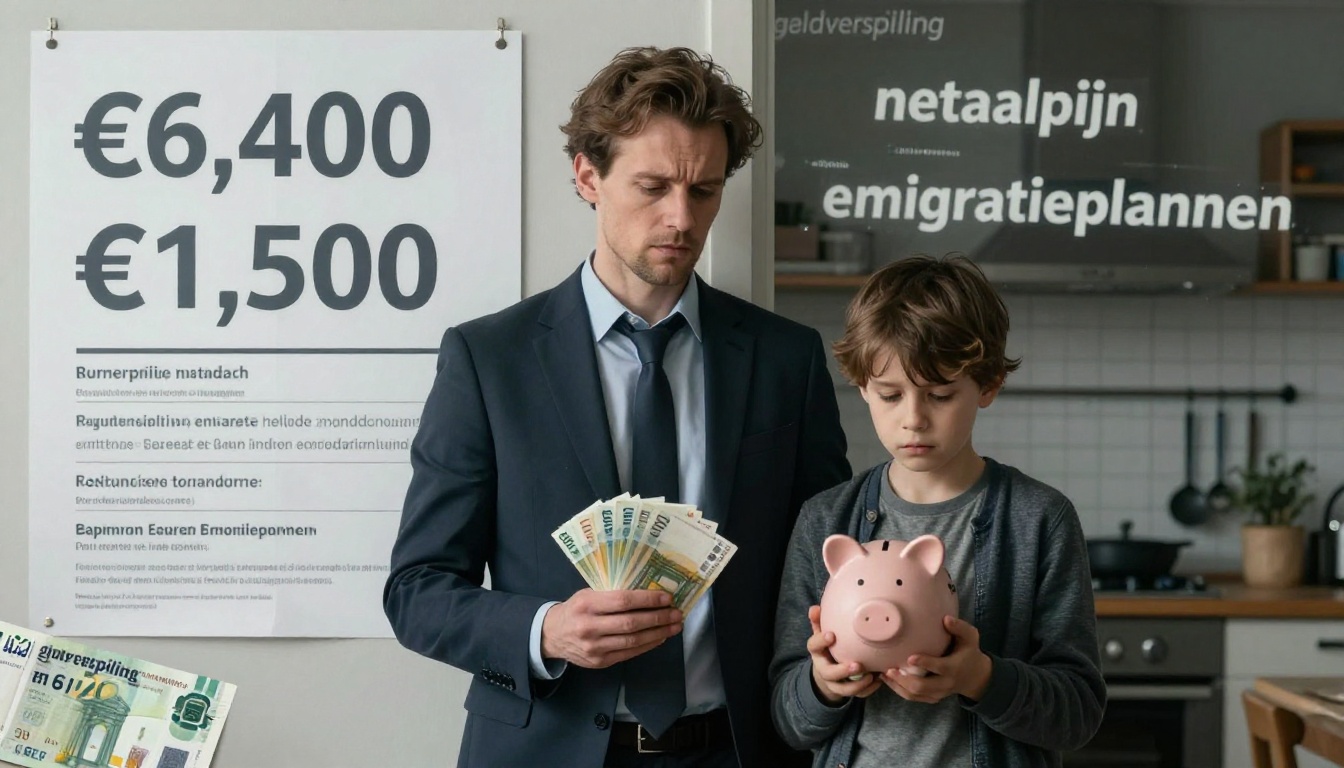
A 28-year-old Dutch professional earning €6,400 gross per month has everything going for him, except the ability to spend money without feeling physical pain. His story, shared in personal finance communities, exposes a dark side of the Netherlands’ celebrated frugal culture. While his peers navigate the Amsterdam rental market or invest in their first hypotheek (mortgage), he’s trapped in his childhood bedroom, unable to pull the trigger on a €1,500 apartment that would give him independence.
This isn’t just another tale of expensive Dutch housing. It’s a case study in how financial trauma rewires your brain, turning the noble goal of building vermogen (wealth) into a cage that blocks you from living.
The €6,400 Salary Trap: When Good Income Doesn’t Equal Good Life
Let’s be clear: €6,400 gross monthly (roughly €4,500 net) puts this individual in the top 15% of Dutch earners. He could comfortably afford the average €1,650 rent for a one-bedroom in Amsterdam, pay his zorgverzekering (health insurance) premiums, and still save aggressively. Yet he lives with his parents, describing the situation as “not ideal”, lots of obligations, little privacy, minimal peace.
His emigratieplannen (emigration plans) fuel the fire. Every euro spent on Dutch rent feels like a euro stolen from his future life abroad. This creates a psychological conflict: the rational part of his brain knows €1,500 is reasonable, but the emotional part screams “geldverspilling” (money waste) when he thinks about combining housing costs with his travel budget.
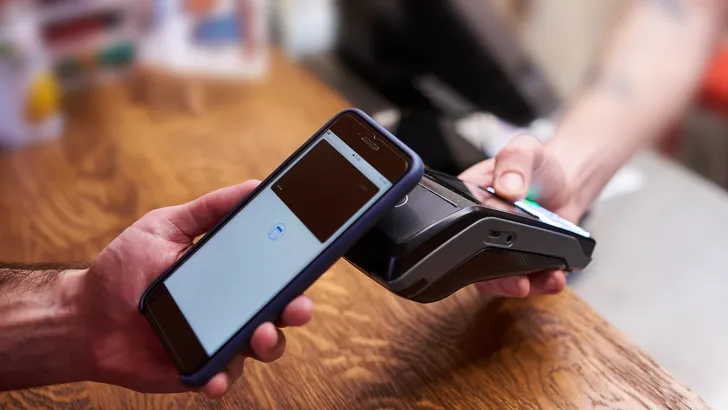
The contactless payment revolution makes this worse. Research published in the Journal of Retailing confirms that digital payments reduce the “betaalpijn” (payment pain) that helps regulate spending. When you’re already wired to feel too much pain from spending, removing the physical act of handing over cash is like performing surgery without anesthesia, you don’t feel the cut, but the damage is real. This “pinnen zonder pijn” (pinning without pain) phenomenon explains why he might overspend on small things while freezing on major life decisions.
From Childhood Poverty to Adult Anxiety: The Psychology of Money Scarcity
The root cause is explicit: he grew up in a family with “grote financiële problemen” and experienced “extreme armoede” (extreme poverty). This trauma created a survival mechanism where sparen (saving) equals safety. Morgan Housel’s “The Psychology of Money” explains this perfectly, financial decisions are driven by personal history, not just spreadsheets.
When you’ve watched money evaporate as a child, your nervous system encodes spending as threat. Your hypotheek payment isn’t a transaction, it’s a trigger. This explains why Dutch statistics show that even wealthy individuals from low-income backgrounds often under-consume relative to their net worth. The psychology of money isn’t about math, it’s about the stories we tell ourselves.
The Reddit advice he received reflects this duality. One commenter urged: “Op jezelf gaan is enorm belangrijk voor je ontwikkeling op alle fronten” (Moving out is extremely important for your development on all fronts). Another warned: “Als je dood bent kan je je geld niet meer uitgeven” (When you’re dead, you can’t spend your money anymore). Both are true, but neither addresses the psychological block.
The Housing Decision That Reveals Everything
His specific dilemma is telling: a €1,500 apartment including gwe (utilities), boodschappen (groceries, estimated at €250-300), and gemeentelijke lasten (municipal charges). This is actually below what most Dutch financial advisors recommend spending at his income level. The Nibud (National Institute for Family Finance Information) suggests housing costs should stay under 30% of net income, he’d be at roughly 20%.
Yet he’s about to reject it. Why? Because his extreme frugality has become part of his identity. Spending less isn’t just a strategy, it’s who he is. This is where the Dutch FIRE community often splits: those who see frugality as a tool versus those who’ve made it their personality.
This behavior pattern mirrors what happens with Box 3 tax optimization. People become so obsessed with minimizing wealth tax that they make irrational investment decisions, like holding too much cash or creating overly complex structures. The tax savings become less important than the feeling of optimization.
Digital Payments and the “Painless Spending” Illusion
The Panorama article on cashless payments reveals another layer. The “cashless effect” systematically increases spending by removing friction. For someone with his background, this creates a cruel paradox: digital payments make small purchases feel painless (so he might overspend on takeout or gadgets), while large, necessary expenses still feel catastrophic because they represent loss of control.
Behavioral economist Richard Whittle notes that cash provides a “crucial moment of reflection.” When you physically count out €1,500 in rent money, you engage with the reality of the transaction. Digital payments rob you of that moment, which is dangerous for most people but potentially helpful for someone who feels too much pain from spending.
The “cash stuffing” method, dividing physical cash into envelopes for different spending categories, could actually help him. It would force him to pre-commit to spending categories, making the money “already spent” in his mind. This is the opposite of how most Dutch people use their ING Bank or Rabobank apps, but it might be exactly what his psychology needs.
Breaking Free: From Financial Control to Life Control
The solution isn’t to stop being frugal. It’s to redirect that energy from prevention to creation. Instead of asking “How do I avoid spending?” he needs to ask “What am I saving for?”
This is where a balanced budgeting approach becomes crucial. The goal isn’t to maximize savings, it’s to optimize life satisfaction while meeting financial goals. For someone with his income and plans, that might mean:
– Spending €1,500 on housing now to improve mental health and productivity
– Using the “cash stuffing” method for discretionary spending
– Setting a “joy budget” that must be spent on experiences each month
The power of compounding works on life experiences too. Delaying independence for five years doesn’t just save rent money, it compounds lost life skills, missed relationships, and stunted emotional growth. The math is clear: at his savings rate, moving out might delay his emigration by 6-12 months, but staying might make him too psychologically fragile to emigrate at all.
The Tax and FIRE Planning Risks
His situation also highlights risks in the Dutch FIRE movement. Many pursuing Financial Independence, Retire Early (FIRE) focus intensely on Box 3 tax efficiency, but the 2028 Box 3 overhaul could change the rules dramatically. More importantly, the psychological cost of extreme frugality can derail FIRE plans entirely.
Research from smart grocery savings tools shows that hyper-optimization of small expenses creates decision fatigue that leads to worse choices on big expenses. He’s optimizing his grocery spending to the euro but can’t decide on housing, a classic pattern.
Actionable Steps for the Trauma-Driven Saver
-
Name the trauma: Acknowledge that your relationship with money was formed in survival mode. It’s not a character flaw, it’s a protective mechanism that no longer serves you.
-
Create a “transition fund”: Set aside money specifically for moving out, decorated with images of your future life. Make the spending concrete and goal-oriented.
-
Use physical cash for discretionary spending: Implement the cash stuffing method for things like travel and entertainment. This creates a spending ceiling while allowing guilt-free enjoyment.
-
Practice “good enough” spending: Aim for 80% optimization, not 100%. The last 20% of savings costs 80% of your mental energy and life satisfaction.
-
Get professional support: A financial coach who understands the psychology of money can help separate rational financial planning from trauma responses. The Dutch system offers access to financial advisors through many employers, and some specialize in expat and immigrant financial trauma.
-
Set a deadline: Give yourself three months to find housing. The deadline creates urgency that bypasses analysis paralysis.
The commenter who said “Je kan als je op jezelf woont jezelf en uitgaven in de gaten houden” (When you live alone, you can monitor yourself and your expenses) was right. Moving out isn’t just a cost, it’s an investment in your ability to manage money as an adult, not a traumatized child.
Final Reckoning
Your €6,400 salary is a tool, not a trophy. If the tool sits unused in a drawer because you’re afraid of scratching it, it’s worthless. The same applies to your twenties. The memories, skills, and relationships you build by living independently are assets that compound for decades.
The Dutch tradition of zuinigheid (frugality) has value, but it was never meant to be a prison. The goal was always vrijheid (freedom), the freedom to weather storms, seize opportunities, and build a meaningful life.
If you’re offered a €1,500 apartment that gives you peace, privacy, and a place to build your future, take it. The real waste isn’t spending money on housing. The real waste is spending your prime years paralyzed by a fear that belongs to your past, not your future.
The research is clear: Dutch families optimizing for Box 3 often miss that wealth without well-being is just a number in an app. Don’t let your emigratieplannen become a reason to postpone living. The best preparation for a new life abroad is learning to live fully right now, even if that means spending €1,500 on a place of your own.