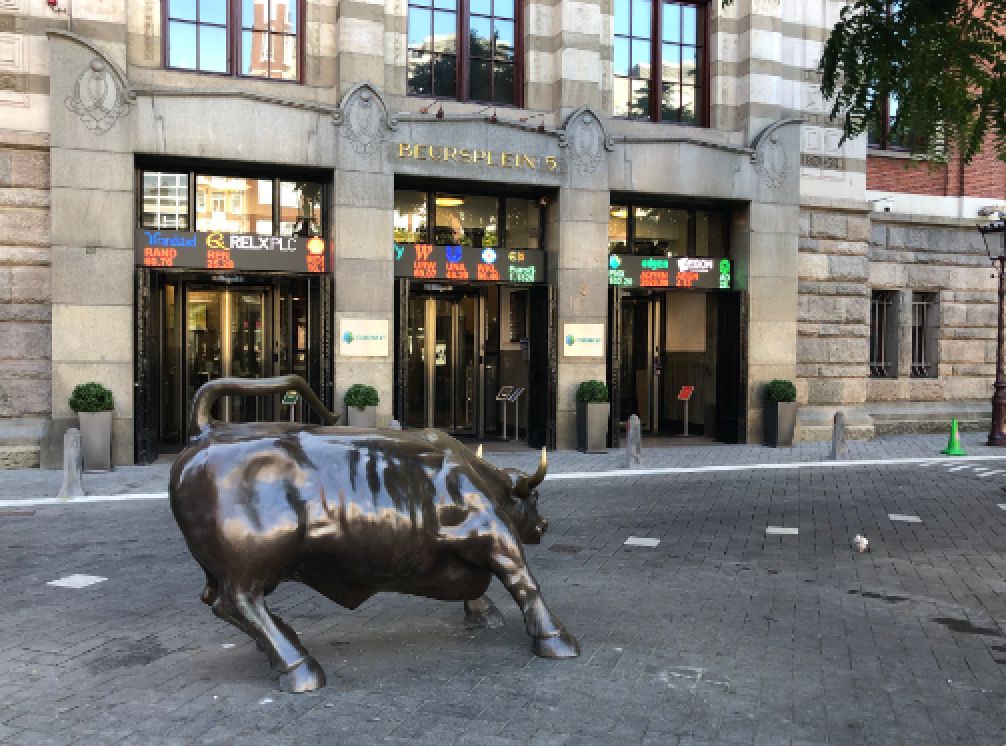
The morning coffee hadn’t even cooled when a Dutch retail investor posted what many were thinking: price targets from major financial institutions might be complete nonsense. The sentiment resonated because anyone watching the AEX (Amsterdam Exchange Index) has seen this pattern repeat for years. A stock climbs, and within days, analysts raise their targets. The same stock falls, and those targets get slashed. The supposed forecasters are really just expensive trend-followers.
The UBS-ASML Dance: Raising Targets After the Fact
Take the recent UBS adjustment for ASML (Advanced Semiconductor Materials Lithography), the Netherlands’ tech crown jewel. On January 20, 2026, UBS analyst Francois-Xavier Bouvignies bumped his price target from €1,030 to €1,400, a massive 36% increase. The justification? Positive developments from TSMC, statements from memory chip manufacturers, and China’s situation stabilizing.
Here’s the problem: ASML had already been trading above €1,100 for weeks before this “upgrade.” The stock didn’t react because the market had already priced in these exact factors. As one market observer noted, when a stock trades at €1,111 and an analyst raises his target to €1,400 after the fact, he’s not predicting the future, he’s describing the present.

The timing reveals everything. The adjustment came just before quarterly earnings, when any analyst with decent sources already knew the results. This isn’t forecasting, it’s reputation management. By raising targets ahead of good news, analysts appear prescient while actually being reactive.
The Downward Spiral: When Stocks Fall, Targets Follow
The reactive nature becomes even clearer on the downside. Betsson, a gaming company popular among Dutch investors, saw its share price collapse 21% on Friday, then drop another 7.7% Monday morning. Within days, DNB Carnegie slashed its target from 190 to 120 kronen, a 37% reduction.
Did DNB Carnegie discover new fundamental information? No. They simply acknowledged what the market had already decided. The same pattern appears with Hacksaw, where Berenberg trimmed its target from 100 to 95 kronen while paradoxically maintaining a “buy” rating. If the company is still worth buying, why lower the target? Because the stock had already fallen, and the analyst needed to maintain the appearance of being “in line” with market sentiment.
Goldman Sachs performed similar theater with Adidas, cutting its target from €210 to €180 while keeping a “neutral” rating. The stock had already been struggling. The target reduction didn’t predict anything, it validated what traders already knew.
Why Analysts Can’t Afford to Be Wrong
The incentives explain this behavior. An analyst who correctly predicts a 50% stock surge becomes a hero, but one who forecasts a 50% drop that never materializes gets fired. The career risk is entirely asymmetrical.
Many international residents report that the Dutch financial system feels particularly conservative in this regard. Analysts at major institutions like ING, ABN AMRO, and Rabobank face intense pressure to maintain relationships with the companies they cover. A sell rating can mean losing access to management, which means losing information edge.
This creates a system where analysts cluster around consensus. When ASML rises, everyone raises targets. When Betsson falls, everyone cuts them. The result is what behavioral economists call “herding”, professionals following each other to avoid standing out, even when the fundamentals suggest otherwise.
The Real Value: Research Reports vs. Price Targets
Here’s the uncomfortable truth for retail investors: the actual research reports these analysts produce often contain valuable insights. The UBS report on ASML included detailed analysis of TSMC’s capex plans, memory market dynamics, and China’s semiconductor strategy. That information is useful for long-term investors.
The price target at the end? That’s the marketing department’s job. It’s a soundbite for journalists, not a serious forecast. As one professional investor explained, if someone could reliably predict stock prices, they’d be trading their own billions, not sharing targets with the public.
This distinction matters for Dutch investors facing new tax rules on paper profits affecting investment decisions. Starting in 2028, the Box 3 (wealth tax) reforms will tax unrealized gains annually. This creates enormous pressure to focus on actual cash flows and dividends rather than speculative price targets that may never materialize.
The Tax Bomb That Makes Price Targets Even More Dangerous
The upcoming Dutch tax changes make this price target game particularly toxic. Under the new Box 3 system, you’ll pay wealth tax on your portfolio’s paper gains every year, regardless of whether you sell. If you buy ASML at €1,000 because an analyst targets €1,400, but the stock drops to €900, you’ve paid tax on gains you never realized and now sit on losses.
This liquidity pressure of taxing paper gains, undermining buy-and-hold investing means Dutch investors need to be especially skeptical of price targets. A target that encourages you to hold through volatility could leave you unable to pay the annual tax bill when the market turns south.
The taxation of unrealized gains and its impact on investor behavior is already causing sophisticated Dutch investors to shift strategies. Some are moving assets into Beleggings-BVs (investment corporations) to defer taxes, while others are dumping individual stocks for boring ETFs that generate predictable dividend income to cover tax liabilities.
What Actually Works: Ignoring the Noise
The evidence suggests that for most investors, especially those building wealth in the Netherlands, the optimal strategy is to treat price targets as entertainment, not guidance. Instead:
- Focus on dividend aristocrats that generate reliable cash flow to cover your Box 3 tax
- Use index funds to avoid the concentration risk that makes analyst coverage so tempting
- Read research reports for their analysis, not their conclusions, the data on competitive positioning and market trends is valuable, the target price is not
- Track your own cost basis relative to Dutch tax thresholds, not some analyst’s fantasy price
This approach aligns with the portfolio diversification and the risks of stock picking vs. passive investing strategy that many successful Dutch investors are already adopting. When you own the entire AEX through an index fund, you don’t need to care whether UBS thinks ASML is worth €1,400 or €1,000.
The Bottom Line: You’re the Analyst Now
The Dutch financial system operates with admirable transparency, but that transparency includes seeing how the sausage is made. Price targets are not sophisticated financial modeling, they’re career protection tools that follow the market, not predict it.
For investors navigating both market volatility and how upcoming tax changes threaten long-term investment strategies like FIRE, this realization is liberating. You can stop waiting for analyst upgrades and start building a portfolio that generates predictable returns to cover your predictable tax bills.
The Koersdoel (price target) game is rigged, but not in the way conspiracy theorists imagine. It’s rigged by incentives that reward following the herd, not fundamental analysis. Your edge isn’t in finding better analysts, it’s in recognizing that the best investment strategy doesn’t require their approval at all.
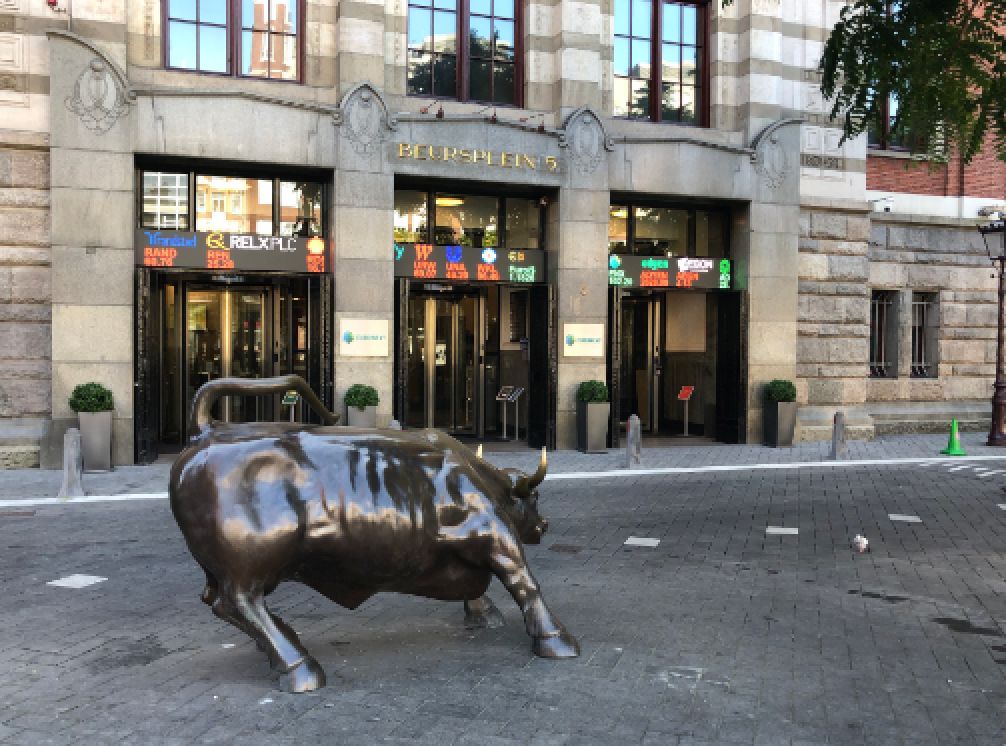
The next time you see a headline about UBS raising its ASML target or Goldman cutting Adidas, remember: the market moved first. The analysts are just signing the paperwork.