The Austrian direct banking market operates with the same logic as a Viennese coffee house during morning rush: it looks efficient from the outside, but one wrong move and you’re stuck waiting for service that may never come. For international residents navigating the maze of Gehaltskonten (salary accounts), the promise of low fees and digital convenience often crashes into three harsh realities: cash dependency, bureaucratic support systems, and apps that belong in a museum.
The Direct Bank Dilemma: Why “Free” Costs You in Austria
Most financial advice about Austrian banking assumes you live in a cashless society. That assumption dies the moment your landlord demands the Kaution (rental deposit) in cash, or your favorite Würstelstand (sausage stand) laughs at your smartphone. Austria remains stubbornly attached to physical currency, and your choice of direct bank determines whether you’ll spend weekends hunting for functioning ATMs or paying exorbitant fees to access your own money.
The research from Austrian consumer forums reveals a clear pattern: people choose direct banks to escape the €60-120 annual fees of traditional banks like Erste Bank or Raiffeisen, then discover that cash access and competent support matter more than they expected.
The Three Contenders: What Actually Works
easybank: The Boring Workhorse That Delivers
easybank, the digital arm of BAWAG P.S.K., has been around since 2010, ancient history in fintech terms. This longevity translates into one crucial advantage: reliability. Users report using easybank for everything from daily transactions to financing their houses, with better conditions than traditional banks.
The reality check: The app and online banking are described as “so lala aber solide” (so-so but solid). This is Austrian for “it works, don’t expect fireworks.” Support gets positive marks, but you’ll need patience, the Viennese approach to customer service applies here too.
Cash situation: You can deposit cash at BAWAG branches, but the network is limited compared to the Raiffeisen empire that BankDirekt taps into.
Cost: Free with regular income, though the exact threshold varies. The integration with BAWAG means you’re dealing with an established player, not a startup that might vanish.
BankDirekt: The Raiffeisen Backdoor
Here’s where it gets interesting. BankDirekt is essentially the digital front for Raiffeisen, but with a critical difference: you get access to the entire Raiffeisen banking network without paying Raiffeisen prices. This includes using SB-Automaten (self-service machines) in Raika-Filialen (Raiffeisen branches) across Austria for cash deposits and withdrawals.
The killer feature: Free cash deposits and withdrawals at any Raiffeisen branch nationwide. For a country where cash remains king, this is the difference between a bank that works and one that doesn’t.
Support: Multiple users praise the telephone support as “gut erreichbar und kompetent” (easily reachable and competent). One user switched from Raika to BankDirekt specifically for the better service.
The political baggage: Some users raise concerns about supporting the “Giebelkreuzmafia” (Raiffeisen’s cross logo, implying conservative political ties). The pragmatic response: if they offer the best service for free, the politics are irrelevant to your wallet.
N26: The German Import That Almost Works
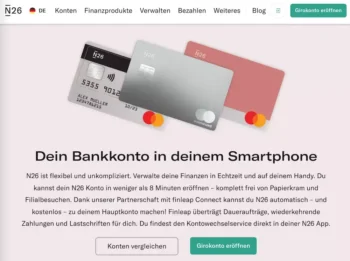
N26 operates in Austria with a German IBAN, which creates subtle friction. The app is slick, the interface is modern, and the banking experience feels like 2026 rather than 2006. But Austrian banking has specific requirements that N26 sometimes misses.
Cash limitations: N26’s Cash26 system lets you deposit cash at supermarkets (REWE, Penny, dm), but charges 1.5% fees and limits you to €999 per 24 hours. For rent deposits or larger cash purchases, this falls short.
The salary question: N26 works fine for receiving your Gehalt (salary), but the three free ATM withdrawals per month limit forces you to plan cash needs carefully. Go over that limit, and you’re paying €2 per withdrawal.
Support: Chat-based, available daily from 7 AM to 11 PM. Convenient for digital natives, useless when you need to explain a complex Überweisung (transfer) issue to someone who understands Austrian banking specifics.
The Cash Problem: Why This Matters More Than Fees
Austrian society runs on cash in ways that surprise newcomers. The Finanztip research confirms that direct banks and neobanks struggle with cash deposits compared to traditional branch banks. This isn’t a minor inconvenience, it’s a daily reality.
BankDirekt solves this by giving you access to Raiffeisen’s network. easybank offers limited BAWAG branch access. N26 forces you into retail partnerships that charge fees and impose limits.
The math is simple: if you deposit €2,000 in cash quarterly, N26 costs you €30 annually in fees. BankDirekt costs you zero. That “free” N26 account suddenly isn’t so free.
Customer Support: The Austrian Reality Check
The forums reveal a stark divide. BankDirekt users report calling and getting competent help. easybank users say support is “good” but note the app is merely adequate. N26 users get chat support that works for simple issues but struggles with Austria-specific questions.
One BankDirekt user noted: “Haben noch guten, sehr freundlichen und wirklich bemühten telefonischen Support.” This translates to “still have good, very friendly, and genuinely committed telephone support.” The word “bemüht” (committed/earnest) is key, it implies they’re trying, which in Austrian service culture is high praise.
The Fine Print: What “Free” Actually Means
All three banks offer free accounts with conditions:
- easybank: Free with regular income (exact threshold varies)
- BankDirekt: Free with no minimum income requirement mentioned in user reports
- N26: Free Standard account, but physical cards cost €10 each, and premium features require paid tiers
The hidden cost is in the details: N26’s 1.5% cash deposit fee, easybank’s limited cash network, BankDirekt’s reliance on Raiffeisen’s infrastructure.
Salary Account Specifics: What Makes a Gehaltskonto Work
For a salary account, you need:
- Reliable IBAN acceptance: All three provide Austrian (or German) IBANs that employers accept
- Stable incoming transfers: No issues reported with salary deposits
- Overdraft facilities: BankDirekt offers low overdraft rates (mentioned as lowest in forums), N26 charges 8.9%, easybank’s rates are competitive
- Tax document access: All provide necessary Kontoauszüge (account statements) for Finanzamt (Tax Office) purposes
The Familienbonus (family bonus) and other salary-dependent tax adjustments work regardless of which bank you choose, though you’ll need to understand how these credits affect your net income. The Familienbonus impact on net salary can be significant, and your bank choice doesn’t change the tax calculation, only how you manage the resulting cash flow.
The Expat Factor: What International Residents Miss
Many newcomers focus on app design and English-language support, then hit a wall when they need to:
- Deposit cash from a side job or private sale
- Get a document for the Meldezettel (registration certificate) process
- Understand why their Lohnsteuer (wage tax) calculation seems off due to regional variations
Decision Framework: Which Bank for Whom
Choose BankDirekt if: You value cash access, want reliable phone support, and don’t mind a traditional banking experience wrapped in a digital interface. The Raiffeisen network access is unbeatable for Austrian life.
Choose easybank if: You want established stability, decent support, and already have another way to handle cash (like keeping a secondary account at a traditional bank). The BAWAG connection provides security.
Choose N26 if: You’re digitally native, rarely use cash, and prioritize app experience over local support. The English interface is a significant advantage, but calculate those cash fees honestly.
The Hybrid Solution Many Expats Use
The smartest approach? Use BankDirekt or easybank as your primary Gehaltskonto for salary, rent, and utilities, then maintain N26 as a secondary account for travel, online purchases, and international transfers. This gives you the best of both worlds: Austrian banking functionality and modern fintech convenience.
This strategy also aligns with Austrian saving behaviors, Austrians tend to be conservative with their primary accounts while experimenting with new tools for specific purposes.
Final Verdict: The Uncomfortable Truth
There is no perfect Austrian direct bank. The market forces you to compromise:
- BankDirekt wins on cash and support but loses on modern app experience
- easybank offers stability but limited cash network
- N26 provides digital excellence but nickel-and-dimes you on cash and lacks Austrian-specific support
For a salary account that actually works in Austria, BankDirekt edges ahead because cash access isn’t a feature, it’s a necessity. The free Raiffeisen network access means you’re not a second-class customer, and the telephone support resolves issues that would take days via chat.
The real controversy? Austrian banking innovation moves at the speed of a queue at the Finanzamt. Direct banks promise revolution, but the country’s cash culture and bureaucratic requirements mean you still need a bank that understands local realities, not just a slick app.
Choose wisely. Your wallet, and your landlord, will thank you.