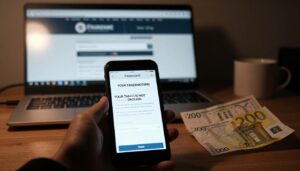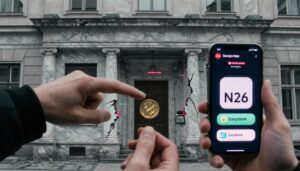
You open a new bank account in Austria, attracted by a sleek end-of-year promotion: a metal debit card, completely free. The card arrives, you start using it for your daily coffee at Café Central and your weekend groceries at Billa. Then, bam, a €30 charge appears on your statement for “Ausstellungsentgelt für Karte 001” (card issuance fee). Welcome to the fine print circus that is Austrian digital banking.
This exact scenario played out for numerous Easybank customers in early December 2025, turning what looked like a straightforward promotion into a masterclass on why you should never trust the word “free” without a magnifying glass and a law degree.
The Promotion That Wasn’t
Easybank’s end-of-year offer seemed simple enough: open an account, get the metal card gratis. Many customers, particularly those under 27, signed up expecting exactly that. What they missed was the elaborate choreography of conditions hidden behind asterisks and hyperlinks.
The actual requirements to avoid that €30-€49 fee read like a scavenger hunt designed by someone who enjoys watching people jump through hoops:
- Activate the Kontowechselservice (account switching service) and inform at least four payment partners (your landlord, electricity provider, etc.)
- Ensure a minimum of €500 in Gehalt (salary) or pension deposits by May 15, 2026
- Log into the app regularly
- Wait until May 15, 2026 for a refund, if you meet all conditions perfectly
Miss any step, and that “free” metal card becomes an expensive piece of wallet jewelry.

The Fine Print Industrial Complex
What makes this particularly Austrian is how seamlessly it fits into the broader banking landscape. Digital banks like Easybank market themselves as the antidote to traditional banking complexity, yet they’ve mastered the same opaque tactics that make hidden fees and traps in Austrian digital banking offers so pervasive.
The Handelsblatt comparison of Easybank versus TF Bank reveals a crucial insight: both institutions advertise “0 Euro Gebühr” (zero euro fee) for ATM withdrawals, but this only means they don’t charge a flat transaction fee. The moment you withdraw cash, interest starts accruing from day one unless you immediately repay. It’s a semantic game that would make a Viennese lawyer proud.
For the metal card specifically, Easybank’s website buried the critical detail: “Nur wenn die Bedingungen erfüllt sind, bekommst du die Kosten der easy metal card in Höhe von 49 Euro bis 15.5.2026 auf dein Konto refundiert” (Only if conditions are met will you receive a refund of the €49 metal card cost by May 15, 2026). The word “refunded” is doing a lot of heavy lifting here, it means you pay first, then jump through hoops to get your money back.
Why This Hits Different in Austria
Austria’s banking culture operates on trust and long-term relationships. You don’t just switch banks like you change your favorite Würstelstand. When a digital newcomer like Easybank, backed by the established BAWAG Group, pulls these moves, it feels like a betrayal. It’s not some faceless international fintech, it’s a domestic player exploiting domestic expectations.
The controversy also exposes a generational divide. Customers under 27 were told they’d get their €30 refunded automatically, while older customers needed the salary deposit. This age-based distinction, while legal, feels arbitrary and patronizing, especially when the promotion wasn’t clearly communicated as age-restricted.
Moreover, the timing was impeccable: a December promotion when people are too busy with Weihnachtsmarkt visits and year-end chaos to read 47 paragraphs of terms. By the time the charge hit in January, many customers couldn’t even locate their original contract documents, because digital banks often don’t provide them in a user-friendly format.
The Bigger Pattern: “Free” as a Loss Leader
This isn’t just an Easybank problem. The entire Austrian digital banking sector has adopted a “free now, pay later” model that mirrors the worst of American credit card tactics. Banks offer misleading financial product promotions by banks because they know most customers won’t cancel after discovering the catch.
Consider the economics: issuing a metal card costs the bank maybe €15-20 in production and shipping. Charging €30-49 means they profit even if you meet the conditions and get “refunded”, because that refund happens months later, and many customers won’t complete all requirements. It’s a calculated bet that inertia will win.
The Finanztip analysis of “free” credit cards warns explicitly: “Die Teilzahlung solltest Du vermeiden und immer die gesamten Schulden tilgen” (You should avoid partial payment and always pay off all debts). Yet banks make this difficult. Easybank charges €2 monthly for automatic full repayment via Lastschrift (direct debit). The “free” card suddenly costs €24 annually unless you manually transfer money each month.
How to Protect Yourself
If you’re navigating Austria’s digital banking landscape, treat every “free” offer as a potential contract with the Finanzamt (tax office), assume complexity until proven otherwise.
- Read the Kontowechselservice fine print: If a promotion requires switching providers, calculate whether the hassle is worth the reward. Sometimes keeping your old Konto (account) and paying a small fee is cheaper than hours of administrative work.
- Check your app immediately: Many customers reported their cards showed as “inactive” despite working perfectly. This discrepancy is your first warning sign that something’s misaligned in the bank’s system.
- Set calendar reminders: If you’re waiting for a refund conditioned on May 15, 2026, set multiple reminders starting in April. Austrian banks won’t chase you to give your money back.
- Document everything: Screenshot the promotion page, save confirmation emails, and export your transaction history. When the Bankomatkarte (ATM card) fee hits, you’ll need evidence.
- Call immediately: Customers who phoned Easybank got clarity, sometimes a promise of refund, sometimes an explanation. Austrian phone support, while not always swift, does eventually connect you to humans who can access your actual contract.
The Trust Deficit
This controversy matters because it erodes trust in digital banking just as Austria needs it most. With dissatisfaction with traditional Austrian banks leading to switching behavior, customers are looking for transparent alternatives. Instead, they find the same opaque tactics wrapped in a modern app interface.
The irony? Easybank’s metal card is genuinely well-designed, durable, stylish, with good NFC performance. If they’d simply advertised it as “€30, refundable with active account use”, most customers would have been fine with it. The deception wasn’t in the price, it was in the presentation.
What Actually Works
For those needing a reliable Kreditkarte (credit card) in Austria, the research points to simpler solutions. The Bank Norwegian Visa offers genuinely free worldwide withdrawals without the circus of conditions. The Hanseatic Bank Genialcard provides solid service if you avoid their domestic ATM fees.
But the real lesson? In Austria’s banking market, the old rule applies: If it sounds too good to be true, it probably requires a Kontowechselservice, a €500 Gehalt deposit, and a sacrifice to the banking gods under a full moon.
Final Takeaway
The Easybank metal card fiasco isn’t about €30. It’s about the growing gap between digital banking’s marketing promises and operational reality. As Austrian consumers become savvier about alternative premium card options for high spenders in Austria, traditional and digital banks alike will need to choose: transparent pricing or customer exodus.
For now, treat every “free” offer like a Fiaker ride through Vienna, enjoy the experience, but check the meter constantly and don’t be surprised if the final charge exceeds expectations. The difference is, with banks, you can actually fight back. Just make sure you have screenshots.
Action steps:
1. Review your last three bank statements for unexpected charges
2. Export your current account terms and conditions today
3. If you took the metal card promotion, set a May 2026 calendar reminder
4. Consider whether that shiny metal card is worth the mental overhead
Because in Austria, the only thing more expensive than a “free” bank card is the time you’ll spend on hold with customer service trying to get your money back.