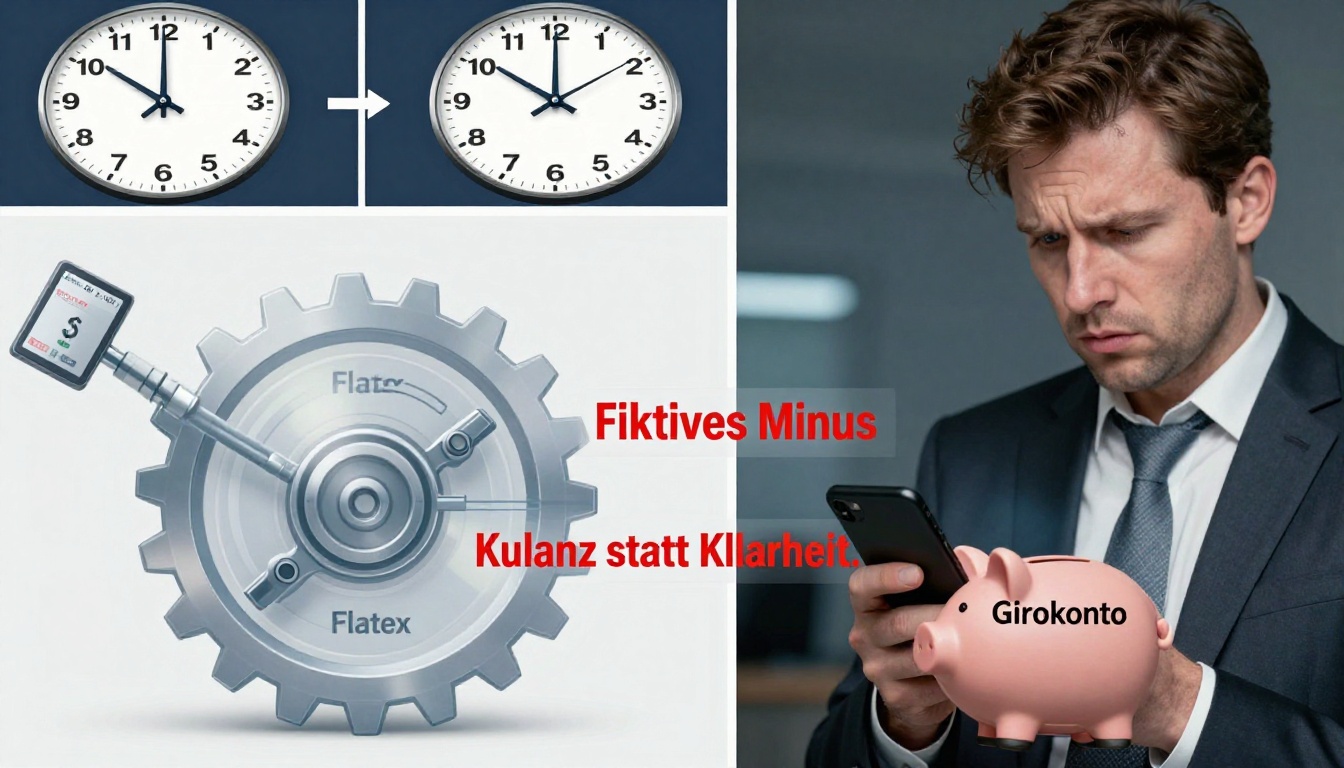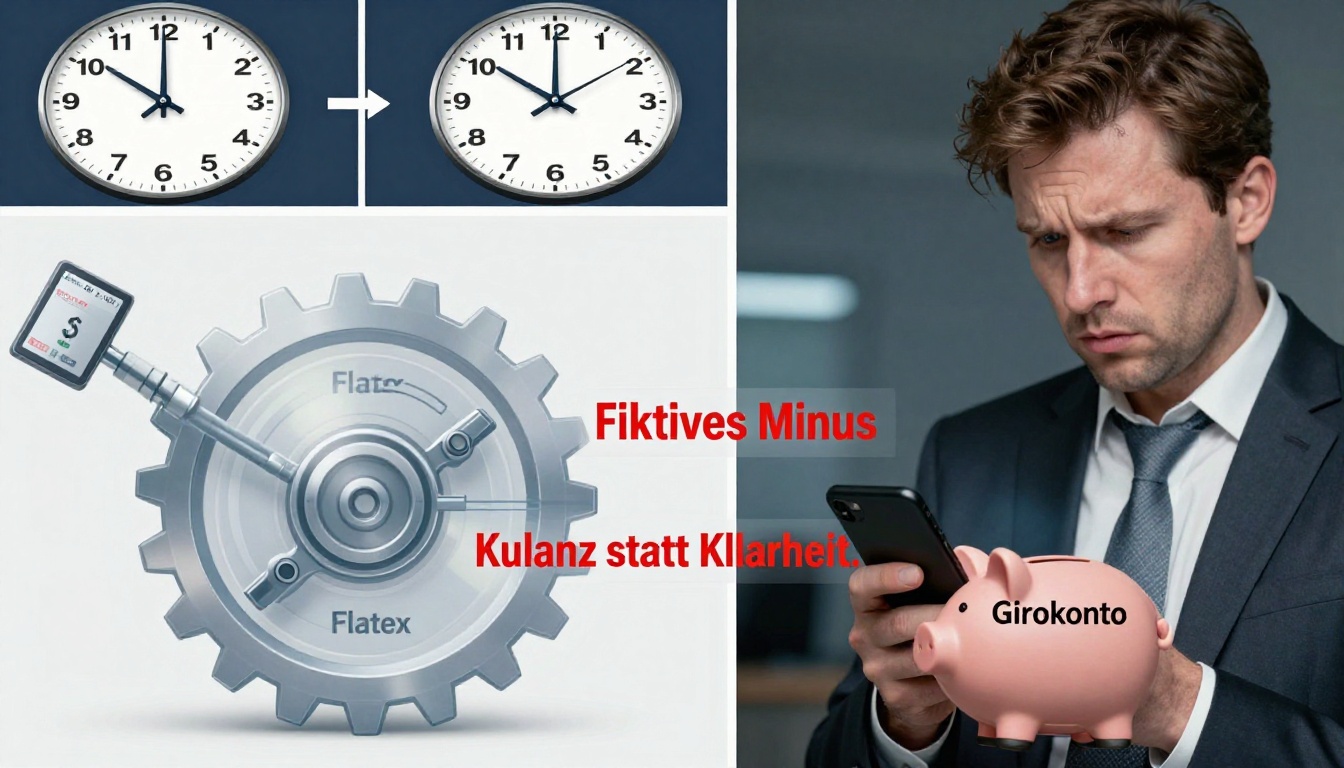
Flatex processes your ETF purchase before collecting the money, creating a two-day negative balance that some investors fear could trigger interest charges. While many users report never actually paying fees, the practice highlights a broader transparency problem in Austrian digital banking that savvy investors can’t afford to ignore.
The Timeline That Trips Up Investors
Picture this: It’s February 15th, and your monthly ETF Sparplan (savings plan) executes automatically at Flatex. You see the shares in your depot, everything looks normal. But in your Verrechnungskonto (settlement account), the money is already gone, yet your linked Girokonto (checking account) at your Hausbank (main bank) hasn’t been debited. For two banking days, you’re staring at a negative balance that exists only in Flatex’s system.
This isn’t a glitch. It’s Flatex’s standard operating procedure. As one investor described it, “Aktien werden am 15. gekauft und am 17. wird das Geld von meinem Girokonto bei meiner Hausbank abgezogen.” During those intervening days, you see what many call a “fiktives Minus”, a fictional negative balance that appears real enough to cause anxiety.
Most Austrian brokers handle this differently. They secure the funds first, then execute the trade. Flatex reverses this order, putting the execution cart before the payment horse and leaving customers to wonder if they’ll be charged for the privilege of temporary debt.
Do You Actually Pay Interest? The Mixed Reality
Here’s where it gets interesting. The research shows wildly different experiences among Flatex customers. Some report never paying a cent in interest despite years of regular Sparpläne (savings plans) on multiple ETFs. Others describe having to fight for refunds every second quarter, suggesting inconsistency in how Flatex applies its own policies.
The mechanism is straightforward: if Flatex does charge Zinsen (interest) on that negative balance, you need to contact them immediately. The magic phrase seems to be pointing out that they debited your account too late. In most cases, Flatex refunds the charges, often labeling them as “Kulanz” (goodwill gestures) rather than admitting fault.
This goodwill approach is telling. It suggests Flatex knows the practice is problematic but continues it anyway, betting that most customers won’t notice or complain about small amounts. It’s a classic example of how banks use procedural loopholes to impose fees and complicate customer exits, a pattern we’ve seen across Austrian financial institutions.
The Austrian Banking Transparency Problem
Flatex’s direct debit timing isn’t an isolated issue. It fits into a larger pattern of hidden fees in financial products and lack of transparency by Austrian banks. Whether it’s Raiffeisen’s secret fund kickbacks or Card Complete’s illegal foreign transaction charges, Austrian financial institutions have developed a reputation for burying costs in procedural fine print.
The frustration isn’t just about potential fees, it’s about mental load. Investors automate their savings precisely to avoid thinking about them. When your supposedly hands-off Sparplan requires you to monitor for phantom overdrafts and file complaints every few months, the automation becomes a source of stress instead of relief.
This lack of clarity around basic account mechanics is part of why unauthorized or illegal banking fees and how consumers can challenge them has become such a hot topic in Austria. The Arbeiterkammer (Chamber of Labour) has taken multiple banks to court over similar practices, suggesting regulators are paying attention.
The Workaround: Beat Flatex at Its Own Game
Experienced Flatex users have found a simple solution: the Dauerauftrag (standing order). Instead of letting Flatex pull money from your bank account, you push it to Flatex automatically. Set up a monthly standing order from your Girokonto to your Flatex Verrechnungskonto for a few days before your Sparplan executes.
This approach has two advantages. First, the money is already there when Flatex buys your ETFs, eliminating the negative balance entirely. Second, it gives you more control over the timing and makes your cash flow more predictable.
The catch? You need to change your Sparplan settings to debit from your Verrechnungskonto instead of your external bank account. It’s a one-time configuration change that saves ongoing headaches. As one investor noted, you need to “die Ausführung auf das Verrechnungskonto umstellen” (switch the execution to the settlement account).
Competitive Pressure and the Brokerage Fee War
Flatex’s timing issue looks even worse when you consider the current brokerage landscape in Austria. With brokerage fee structures and competitive changes in Austria’s discount brokerage market heating up, every friction point matters.
Trade Republic’s entry in April 2025 shook up the market, forcing established players to slash fees. DADAT responded by cutting depot fees by 33% in December 2025. In this environment, a procedural annoyance that makes customers file complaints every quarter is a competitive disadvantage waiting to happen.
Newer brokers have built their systems from scratch with modern user experience in mind. They understand that in 2026, investors expect seamless automation without phantom overdrafts or goodwill refund dances. Flatex, as an established player, seems to be dragging legacy processes into a market that no longer tolerates them.
Your Action Plan: Protecting Yourself from Phantom Fees
If you’re sticking with Flatex, and there are reasons to, including their extensive ETF selection and FMA regulation in Austria, here’s how to handle this issue:
Monitor your statements. Check your Flatex account around your Sparplan execution date. If you see interest charges, don’t ignore them.
Document the timing. Take screenshots showing the purchase date versus the debit date. This creates a paper trail if you need to complain.
Contact customer service immediately. Use the messaging system in your Flatex portal or call them. Be specific: “I was charged interest for a negative balance that existed only because Flatex debited my account two days after executing the purchase.”
Request a refund. Reference the timing issue and ask for the charge to be reversed. Most customers report success when they push back.
Consider the standing order approach. If this happens more than once, the Dauerauftrag solution saves time and stress.
Evaluate alternatives. If the hassle outweighs Flatex’s benefits, explore other Austrian brokers. The market has never been more competitive, and brokerage fee structures and competitive changes in Austria’s discount brokerage market mean you have options.
The Bottom Line: A Fixable Annoyance That Shouldn’t Exist
Flatex’s direct debit delay is ultimately a manageable problem, but that’s not the point. In a modern banking system, investors shouldn’t need workarounds to avoid phantom overdrafts on automated savings plans. The practice reflects a broader lack of transparency in Austrian digital banking fee disclosures that regulators and consumers are increasingly challenging.
The fact that Flatex refunds charges when pressed suggests they know it’s wrong. The fact that they continue the practice suggests they’re betting on customer inertia. Austrian investors deserve better, especially when they’re trying to do the right thing by automating their long-term savings.
Until Flatex changes its system, the Dauerauftrag remains your best defense. But keep the pressure on. Every complaint, every refund request, every forum post documenting this issue pushes the industry toward the transparency it should have implemented years ago. Your ETF savings plan should build your wealth, not test your patience with procedural games.