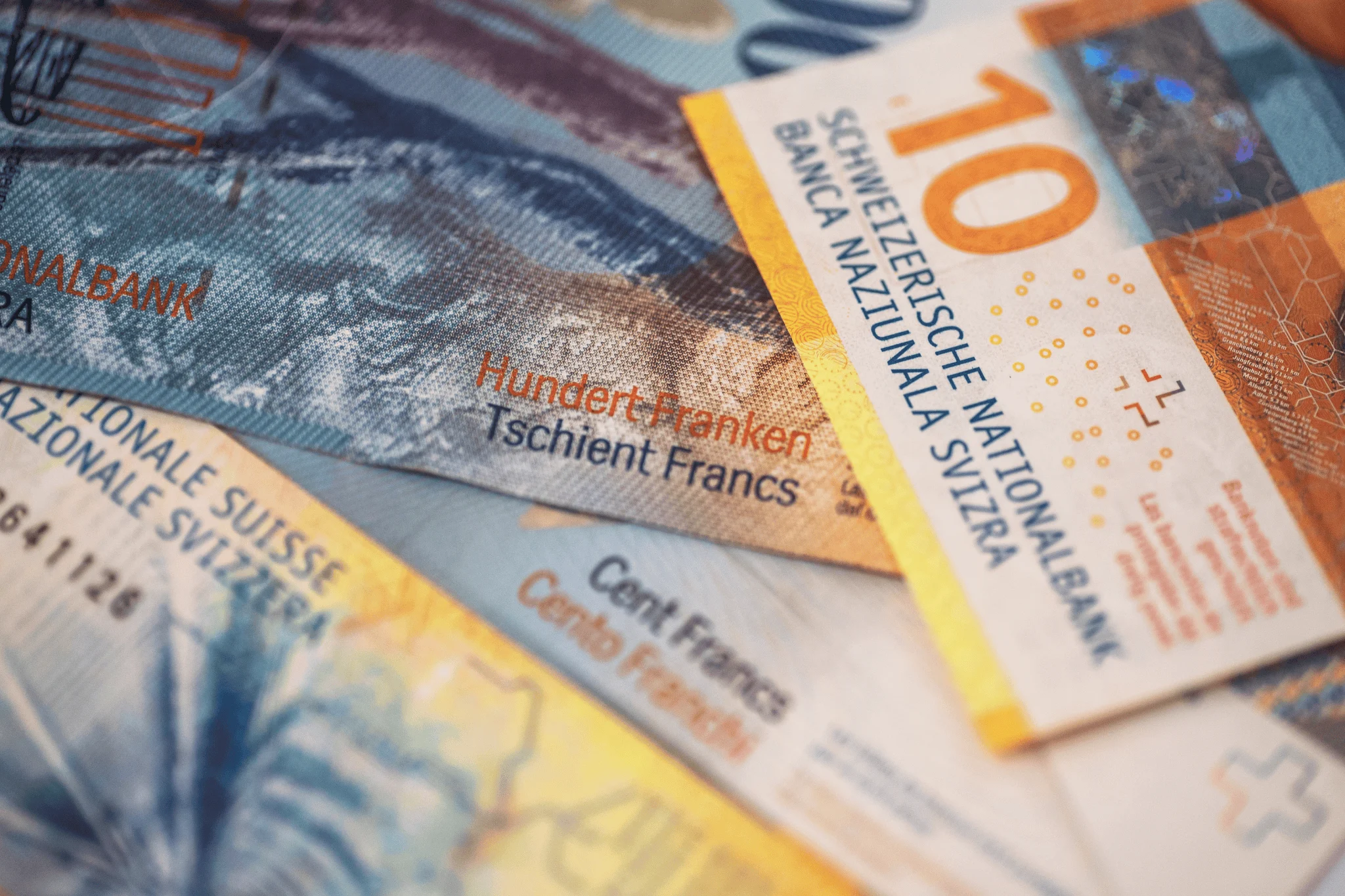
Swiss Francs Under the Mattress: Is the CHF Your Secret Weapon Against the Eroding Euro?
It feels vaguely unpatriotic, doesn’t it? While your salary lands in a local Erste Bank or Raiffeisen account, a small but growing number of Austrians are digitally sneaking a chunk of their Notgroschen (emergency fund) next door, into Swiss Franc (CHF) accounts on fintech apps like Revolut.
The logic seems seductively simple. Faced with eurozone inflation that has persistently outpaced paltry savings interest, and a euro that feels perpetually wobbly, the legendary stability of the “Swissie” beckons. But is this tactical currency shift a stroke of genius for your bottom line, or a sophisticated way to fool yourself? Let’s unpack the data, the mechanics, and the very Austrian realities of betting against your home currency.

The Allure of the Alpine Fortress Currency
The core argument for holding CHF, often seen in online discussions among financially savvy residents, boils down to purchasing power preservation. The Swiss Franc isn’t just another currency, it’s a global safe-haven asset, often lumped in with gold. Its strength stems from Switzerland’s political neutrality, formidable fiscal discipline, and a central bank, the Swiss National Bank (SNB), historically obsessed with preventing excessive appreciation.
The data backs up the reputation. According to the European Central Bank’s (ECB) official exchange rate statistics, the long-term trend has not been kind to euro-holders. While the EUR/CHF rate fluctuates, the pressure is often downward. Many international residents in Austria point out that over multi-year periods, holding CHF has effectively acted as a shield against euro depreciation.
The appeal is amplified by the brutal arithmetic of post-tax euro returns. As one commonly shared analysis goes: if you get 2% gross interest on a euro savings account in Austria, after the 27.5% Kapitalertragsteuer (Kest) you’re left with about 1.45% net. When headline inflation runs at double that, you’re losing real purchasing power every single day. The CHF, by contrast, offers a different proposition: capital appreciation through exchange rate gains, not interest.
Crunching the Numbers: A Five-Year Stress Test
Let’s move beyond theory. Imagine an Austrian resident who exchanged 10,000 euros into CHF five years ago. Using historical data from the ECB, we can trace that journey. While past performance is no guarantee, the trend has been stark.
The sentiment among some investors is that the franc has appreciated around 18% against the euro over a recent five-year period. During that same time, cumulative inflation in the eurozone might have eroded the purchasing power of the static euro sum by nearly 30%. Even factoring in the complete absence of interest on the CHF deposit (a reality with the SNB’s long-standing zero-to-negative rate policy), the currency gain could have significantly offset the inflationary loss.
This is the powerful, if silent, argument. It’s not about earning yield, it’s about avoiding decay. In a climate where real euro interest rates are deeply negative for savers, parking money in a historically strong currency can feel less like speculation and more like rational wealth defense.
The Invisible Fist of the Swiss National Bank
Here’s where it gets tricky, and where many DIY currency hedgers get a nasty surprise. The Swiss Franc’s stability isn’t a law of nature, it’s actively enforced. The SNB famously dislikes a “strong” franc, as it hurts Swiss exports. They have a long history of intervening directly in foreign exchange markets to weaken it, setting a de facto floor for the EUR/CHF exchange rate.
This creates a unique risk. Your clever CHF position isn’t just betting on Swiss economic strength, it’s betting against the willingness and firepower of the SNB. When they intervene, they do so with billions. Your Revolut account does not.

Major banks are factoring this into their forecasts. Analysis from UBS suggests that improved growth in the Eurozone relative to Switzerland could reduce the franc’s traditional safe-haven premium. They project a potential rise in the EUR/CHF pair towards 0.94 by 2026, which, if it materializes, would mean your CHF savings would lose value relative to the euro. The very act of popularizing this trade could invite the SNB’s response, turning a crowd-sourced hedge into a crowded trade with limited upside.
The Practical Realities for Austrian Residents
So, should you open that multi-currency pocket? Let’s walk through the practicalities, which go far beyond just checking the exchange rate on Smart-Rechner.de.
- The Platform: Services like Revolut, Wise (formerly TransferWise), and even some neo-banks make holding CHF trivially easy. You can exchange euros at near-spot rates (watch out for weekend markups) and keep the balance in the app. It’s not a Swiss bank account with deposit protection, but a digital wallet.
- The Tax Man Cometh (Die Finanzamt kommt): This is the critical, often overlooked, Austrian twist. Currency gains are taxable. If you buy CHF at 0.95 EUR/CHF and sell years later at 0.90 EUR/CHF, you have made a profit in euro terms. This Kapitalertrag is subject to the standard 27.5% Kest. You must track your purchase and sale rates meticulously. Using a fintech app that provides transaction histories is essential for your Finanzonline declaration.
- It’s Not a Savings Account: You earn no interest. The SNB’s policy rate is 0.0%, and Swiss inflation hovers around 0%. This is pure currency speculation, not an income-generating asset. Your “return” is purely the exchange rate movement, minus any platform fees.
- The Psychological Trap: It’s easy to fall in love with a “winning” trade. If the CHF strengthens 5% in a year, the urge to convert more euros can be strong. This concentrates risk. As any seasoned Vorarlberger with a Frankenkredit (CHF-denominated mortgage) from the past can tell you, currency bets can reverse painfully.
The Verdict: A Tactical Tool, Not a Strategic Pillar
Holding a portion of your emergency fund in Swiss Francs is not a “smart” or “dumb” strategy in absolute terms. It’s a specific financial tool with clear pros and cons.
- Consider it for:
* Diversification: As a small (5-15%) slice of your highly liquid savings, alongside euros.
* Long-Term Horizon: As a multi-year, set-and-forget position to counter long-term euro debasement fears.
* Low-Cost Execution: Only if you use a platform with minimal FX fees. - Avoid it as:
* A replacement for proper euro-denominated investments (ETFs, bonds).
* A short-term play to “time the market.”
* The bulk of your savings, unless you have specific Swiss liabilities.
The fundamental truth is this: for an Austrian resident whose life costs are in euros, the primary value of the CHF hedge is psychological insurance against a dramatic euro collapse. It’s a premium you pay (in forgone interest and complexity) for peace of mind. In a world of financial uncertainty, that can be a valuable commodity, just know exactly what you’re buying.