The debate exploded with the subtlety of a Wiener Linien (Vienna Public Transport) announcement at 6 AM. Someone dared to ask the question that Austrian financial forums have been circling for years: “Ab wann ist man reich?” (When are you rich?). The consensus that emerged would make any statistician reach for a Grüner Veltliner before noon. According to many participants, you’re merely upper class at €1 million, truly rich only at €10 million, and super-rich beyond €100 million. The problem? These numbers have about as much connection to Austrian reality as a sunny weather forecast in November.
The 80% Reality Check
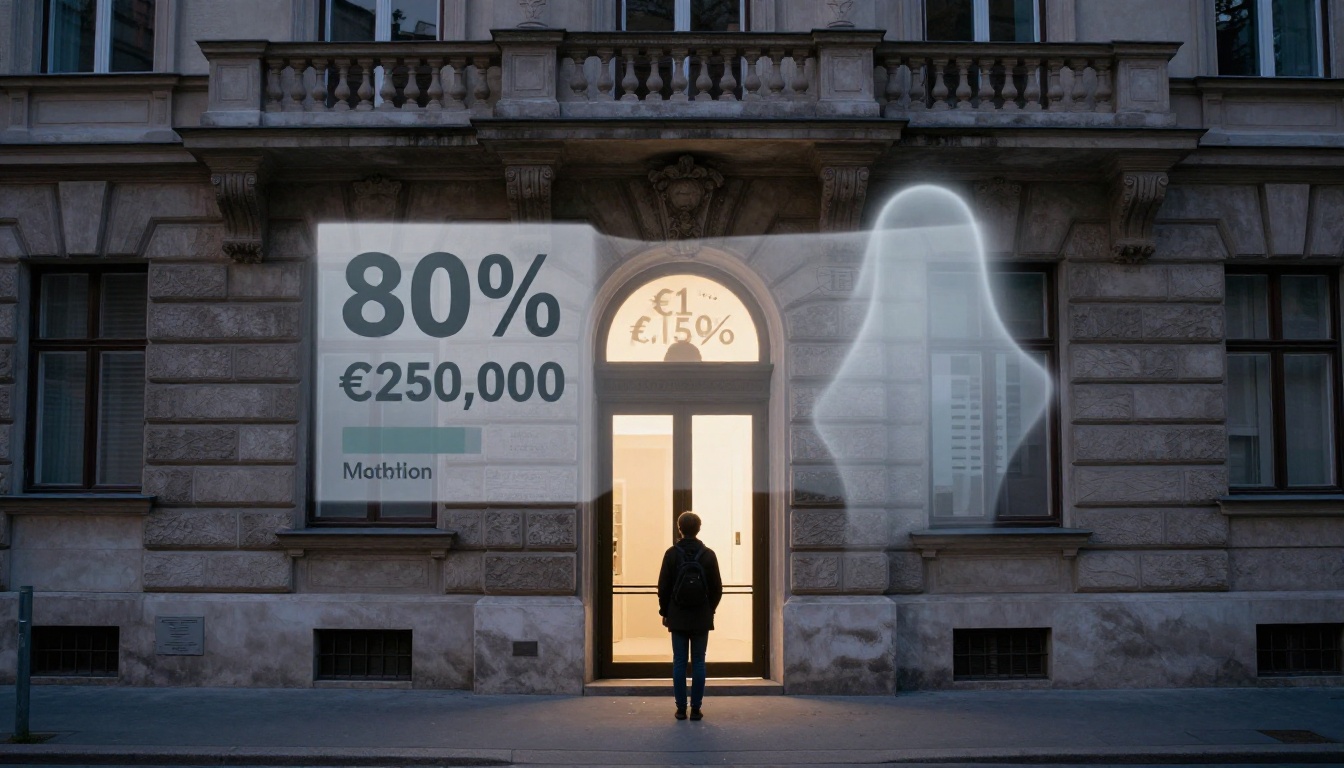
Let’s cut through the noise with some numbers that actually matter. Roughly 80% of Austrians hold less than €250,000 in wealth. Only about 2% have crossed the million-euro threshold. Move up to €2 million and you’re looking at roughly 1% of the population. Beyond €10 million? You’re in a club with fewer than 0.1% of Austrians, a four-digit membership in a country of nine million.
The original poster’s frustration is palpable and mathematically sound: defining “Oberschicht” (upper class) as a group that includes only 1-2% of the population makes the term meaningless. If you have a million euros in Austria, congratulations, you are, by any statistical measure, rich. The fact that you can’t buy a yacht in the Mediterranean or retire at 35 without financial planning doesn’t change this fundamental reality.
This disconnect isn’t just semantic hair-splitting. It has real consequences for how Austrians think about tax burden on high earners and its impact on perceived wealth, social policy, and even personal financial planning.
The Liquid Assets Trap: Why Your House Doesn’t Count (But Should)
Here’s where the debate gets particularly Austrian. Many wealth reports, including the Capgemini study referenced in the discussion, only count “liquid assets”, stocks, bonds, cash, and other easily convertible investments. Your home? Doesn’t count. That rental property in Graz? Ignored. The family business you’ve built over decades? Not relevant.
This methodology creates a bizarre distortion in a country where property ownership forms the bedrock of middle and upper-middle-class wealth. As one commenter pointed out, in West Austria, “praktisch jeder Hausbesitzer Millionär” (practically every homeowner is a millionaire), at least on paper. Property values have appreciated so dramatically that someone who bought a house for €300,000 two decades ago might now own an asset worth well over a million.
But here’s the catch: being a “paper millionaire” doesn’t feel like wealth when you’re still paying down the final years of a mortgage or facing €50,000 in renovation costs for a roof that hasn’t been touched since the early 90s. This is why financial independence and wealth-building through property decisions in Austria require more nuanced calculators than simple net worth equations.
The €3,000 Net Income Illusion
Perhaps the most telling part of the debate centers on income perception. One commenter sarcastically noted that on Austrian finance forums, “jeder verdient generell 3K Netto” (everyone generally earns €3k net). The unspoken assumption: if you’re not hitting this number, you’re doing something wrong.
This reveals a profound blind spot. While €3,000 monthly net income (€36,000 annually) places you comfortably above the Austrian median, many high earners still identify as solidly Mittelschicht (middle class). They’re not entirely wrong, in expensive cities like Vienna or Salzburg, that income supports a comfortable but hardly extravagant lifestyle. After rent, groceries that seem to get more expensive weekly, and the occasional weekend in the Alps, there’s not much left for wealth building.
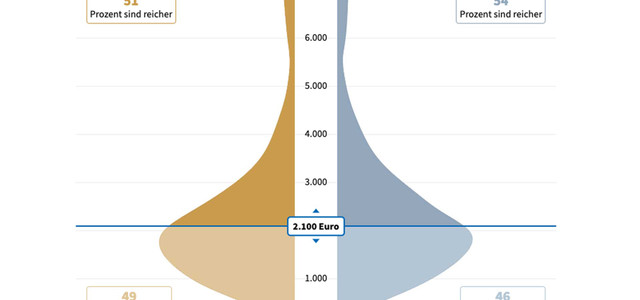
Yet statistically, someone earning €3,000 net is in the top tier of Austrian income distribution. The median net equivalized income in Austria hovers around €2,000-2,200 monthly. This means half the population lives on less. The perception gap stems from social circles, if all your friends are IT professionals, lawyers, and doctors, €3,000 feels average. Step outside that bubble and the perspective shifts dramatically.
Defining Rich: The Statisticians vs. The People
The German Federal Ministry of Labour and Social Affairs offers a technical definition: you’re income-rich if you earn more than double or triple the median net equivalized income. In concrete terms, that means crossing roughly €4,500-6,500 monthly net for a single person.
But here’s where official definitions clash with lived reality. Ask Austrians when someone becomes “rich” and you’ll get answers starting at €5,000 monthly net and climbing. The bureaucratic threshold feels too low because it doesn’t account for Vienna’s brutal housing market or the psychological impact of cost of living pressures and inflation affecting real purchasing power.
Wealth richness is even more contentious. While statisticians might point to the top 5% of net worth (starting around €500,000-600,000), most people reserve the term “rich” for those with multi-million-euro fortunes they can actually live on without working. This creates the absurd situation where someone with €800,000 in ETFs and a paid-off apartment can simultaneously be statistically wealthy and personally feel middle-class.
The Homeowner Millionaire Who Isn’t
The most Austrian phenomenon in this entire debate is the Eigenheimbesitzer (homeowner) who refuses to accept their millionaire status. As one story illustrated, a father whose house appreciated from €300,000 to over €1 million simply couldn’t accept that this made him wealthy. “Er ist ja Mittelschicht” (he’s middle class, after all).
This psychological block makes perfect sense. Unlike liquid assets, you can’t spend your home’s appreciation without selling and moving. In many cases, the “wealth” is entirely theoretical, tied to a property you need for housing, subject to market fluctuations, and expensive to maintain. A €1 million house with a €200,000 mortgage and €50,000 in necessary repairs isn’t exactly a ticket to financial freedom.
Yet this distinction between paper wealth and liquid wealth drives much of the political debate around taxation. The top 1% of Austrian households controls roughly 40% of net wealth, but many in that group don’t feel wealthy enough to shoulder additional tax burdens. They’re not wrong about their cash flow constraints, but they’re dramatically underestimating their position relative to the broader population.
Why Perception Matters for Policy
This wealth perception gap isn’t just fodder for online arguments, it shapes Austrian politics. When millionaires consider themselves middle class, they resist wealth taxes as attacks on “normal” people. When high earners making €4,000 net feel financially squeezed, they oppose progressive income tax reforms.
The result is a political stalemate where meaningful wealth redistribution becomes difficult because the people who would be taxed don’t see themselves as wealthy enough to afford it. Meanwhile, the genuinely middle and lower classes, who might benefit from such policies, often vote against their economic interests because they aspire to reach that “not quite rich” status themselves.
This dynamic explains why Austria has relatively modest wealth taxes compared to its social democratic reputation. It also illuminates why spending behaviors of top earners that erode wealth despite high income persist, the psychological need to display status in a society where everyone feels middle class creates a never-ending consumption treadmill.
The Bottom Line: Where Do You Actually Stand?
Forget the online debates. Here’s how to realistically assess your position in Austria’s wealth distribution:
If your net worth is:
– Under €100,000: You’re below the median, but far from alone. Most Austrians are in this boat.
– €100,000-€250,000: You’ve crossed into the upper half of wealth distribution. Well done.
– €250,000-€500,000: You’re in the top 20%. You have options most Austrians don’t.
– €500,000-€1,000,000: Top 10% territory. Statistically, you’re wealthy, even if it doesn’t feel like it.
– Over €1,000,000: Top 2-5%, depending on definitions. You are rich. Full stop.
If your monthly net income is:
– Under €2,000: Below median. Financial life is likely stressful.
– €2,000-€3,000: Solid middle. Comfortable in smaller cities, tight in Vienna.
– €3,000-€4,500: Upper middle. You’re doing very well statistically.
– €4,500-€7,000: Income-rich by official standards. Top 10% earner.
– Over €7,000: Top 5% or better. Your complaints about money will find few sympathetic ears.
The uncomfortable truth? Most Austrians arguing about wealth thresholds online are already in the top 20% of earners or wealth holders. They’re not suffering, but they’re competing within an affluent bubble where €3,000 net feels normal and €1 million feels insufficient.
What Actually Makes You “Rich” in Austria
Here’s a radical proposal: stop thinking about arbitrary thresholds and start thinking about financial independence. In Austria’s high-tax, high-cost environment, true wealth isn’t a number, it’s the ability to make life decisions without financial coercion.
Can you quit your job without immediate financial panic? Can you absorb a €10,000 unexpected expense? Can you support family members if needed? Can you choose where to live based on preference, not just price? These are the real indicators of financial security.
For most Austrians, achieving this requires far less than €10 million. A paid-off home outside the most expensive districts, €300,000-500,000 in diversified investments, and modest spending habits can provide genuine freedom. The fact that this doesn’t feel “rich” says more about our consumption expectations than our actual financial position.
The next time someone claims you need eight figures to be wealthy in Austria, remember: they’re not describing financial reality. They’re describing a lifestyle choice, one that requires extraordinary wealth to sustain, but that most people, including most millionaires, will never achieve or even need.
And that’s not poverty. That’s just math.