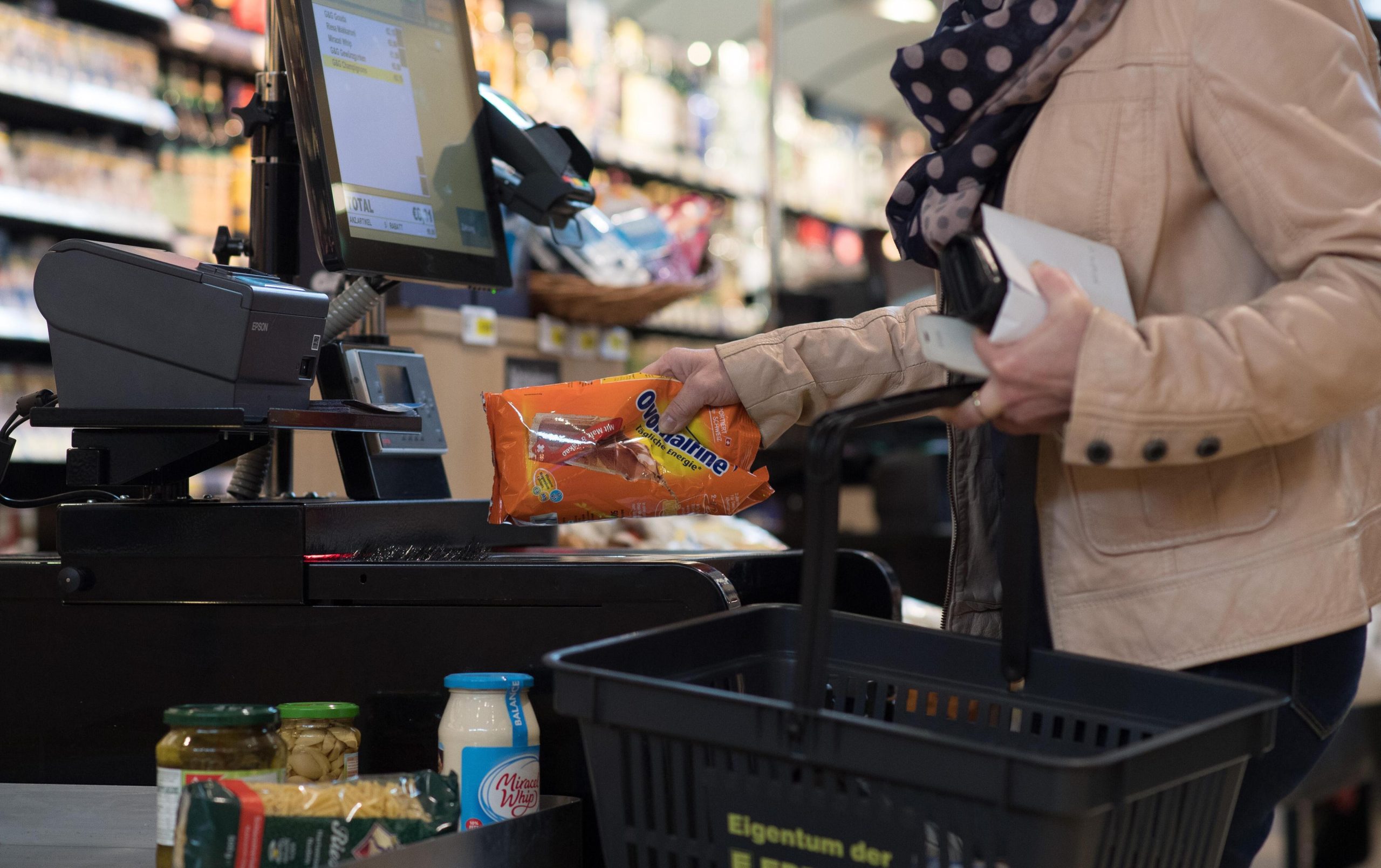
The New Year’s resolution was clear: no more McDonald’s or Burger King. One consumer reported spending €25 on a single dinner at what they called the “Schachtelwirt” (box-style restaurant). Meanwhile, at Lidl, a 0.75kg bag of frozen chicken nuggets costs €5 and takes less than 10 minutes in a pan. This raises a question many Austrians are now asking: why are McDonald’s locations still packed when the prices seem completely detached from reality?
The Brutal Price Reality in Austria
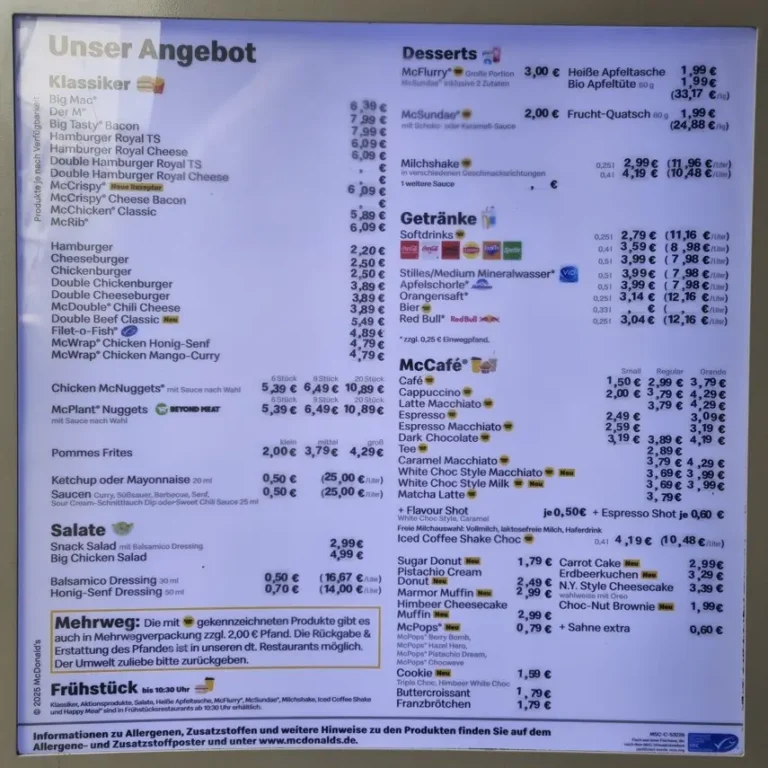
McDonald’s recent price adjustments following Germany’s VAT reduction for restaurant meals have created a confusing landscape. While the company announced significant price cuts, Happy Meal dropping from €5.99 to €4.49, Big Mac menus falling from €11.49-11.99 to €9.99, these reductions mask a larger truth: fast food has become shockingly expensive.
The VAT reduction from 19% to 7% for on-site consumption was supposed to benefit consumers, but many international residents report that Austrian McDonald’s prices remain stubbornly high compared to neighboring countries. One commenter noted that in Italy, dipping sauce costs €0.40, while in Austria it’s €0.80. In Germany and Hungary, sauces are often complimentary.
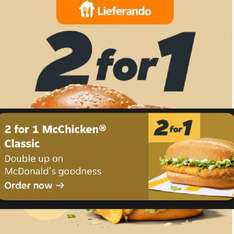
The most telling example? A clever Lieferando (food delivery) hack that combines a “2 for 1” promotion with new customer vouchers can theoretically get you two Big Macs and fries for as little as €0.37. If you need to game the system that dramatically to get value, something is fundamentally wrong with the pricing.
Supermarket Math That Destroys Fast-Food Logic
Let’s run the numbers that many Austrian households are now calculating:
Chicken Nuggets Comparison:
– McDonald’s: 9 Chicken McNuggets menu costs €10.69
– Lidl: 750g frozen nuggets (roughly 30-35 pieces) for €5
– Cooking time: 10 minutes in a pan, or superior results in an air fryer (Heißluftfritteuse)
The frozen option gives you three times the quantity for half the price. Even accounting for electricity costs and a bit of oil, the savings are over 70%.
The Burger Breakdown:
A Big Mac costs €6.39 for just the sandwich, or €9.99 as a medium menu. For that same €10, you could buy:
– 500g ground beef (€4)
– Burger buns (€2 for 4)
– Cheese, lettuce, sauce ingredients (€3)
– Potatoes for homemade fries (€1)
You get 4-5 homemade burgers with better ingredients and no mysterious “special sauce” mysteries.
The Hidden Costs No One Talks About
The debate isn’t just about ingredient costs. Fast-food defenders point to convenience, but this argument collapses under scrutiny.
Time Investment:
Many claim cooking takes too long, but McDonald’s runs have hidden time costs:
– Driving to the location (5-15 minutes)
– Ordering at increasingly slow touchscreens (2-5 minutes)
– Waiting for “fresh” preparation (5-10 minutes)
– Driving home (5-15 minutes)
Total: 17-45 minutes. Meanwhile, frozen nuggets in an air fryer take 12 minutes with zero travel time. The pan method takes 10 minutes of mostly passive cooking.
Equipment Costs:
The air fryer has become the symbol of this debate. While it costs €60-120 initially, it pays for itself after roughly 15-20 avoided McDonald’s visits. For families, the break-even point comes even faster.
Quality Control: What Are You Really Buying?
Austrian consumers have noticed something: the product quality hasn’t improved with the prices. One long-time customer observed that the Big Mac has remained the same size while nearly doubling in price over recent years. The famous “Burger-Wühltisch” (burger assembly trough) where employees fish for your order among dozens of items has replaced the old efficient Kanban system.
The result? You might wait longer for a burger that was arguably prepared with less care than you could manage at home. As one person noted, the cardboard box might have more flavor than the burger itself after the recent recipe changes.
The Austrian Consumer Trap
Why do people still go? Several factors unique to Austria and the region:
1. The “Gemütlichkeit” Myth: McDonald’s positions itself as a family-friendly space. The Happy Meal price drop to €4.49 targets families specifically, even though you could prepare a healthier children’s meal at home for €2-3.
2. Location Dominance: McDonald’s controls prime real estate at train stations, shopping centers, and highway rest stops (Raststätten). When you’re traveling with kids and see those golden arches, convenience feels mandatory.
3. The App Trap: McDonald’s invests heavily in its app with “exclusive” deals. But these deals often just bring prices down to what they should have been originally. The €9.99 Big Mac menu after a €2 discount is still €9.99.
4. Austrian Work Culture: With many employees working through lunch or commuting long distances, the “quick” meal feels necessary. But this ignores that a meal-prepped lunch costs €2-3 versus €10+ at McDonald’s.
When McDonald’s Actually Makes Sense (The Honest Exceptions)
Let’s be fair. There are specific scenarios where McDonald’s isn’t financial madness:
1. Emergency Situations: You’re on the Autobahn, starving, with no kitchen access. The €9.99 menu is cheaper than a restaurant’s €15-20 lunch special.
2. The 37-Cent Hack: If you can reliably exploit the Lieferando new-customer system, you might get occasional genuine deals. But this requires constant email/phone number churning.
3. Social Pressure: Kids’ birthdays at McDonald’s are a cultural fixture in Austria. The €4.49 Happy Meal includes a toy and supervised play area, hard to replicate at home for the same price and hassle.
4. Extreme Time Poverty: If your alternative is skipping meals entirely due to a 12-hour work shift, McDonald’s serves a purpose. But this points to larger labor issues, not food value.
The Real Math for Austrian Households
Let’s calculate the annual impact for a family of four eating McDonald’s twice weekly:
McDonald’s Habit:
– 2 visits/week × €40/visit × 52 weeks = €4,160/year
Supermarket Alternative:
– 2 meals/week × €12/meal × 52 weeks = €1,248/year
Difference: €2,912 annually
That’s enough for a week-long family holiday in Italy, several months of Kinderbetreuung (childcare), or substantial contributions to your Bausparen (building savings contract).
Even accounting for the occasional restaurant meal (Gasthaus) at €12-15 per person, you still come out thousands ahead. As one Vienna resident pointed out, you can get a proper Schnitzel at Gasthaus Kopp for €12, or two for €14.90, real food at a sit-down restaurant for the price of processed fast food.
Actionable Austrian Consumer Strategy
For Families:
– Batch-cook chicken nuggets and freeze them. Kids don’t care about the brand, just the ketchup.
– Use the “Happy Meal” toy budget to buy a small toy separately (€1-2) and pair it with homemade food.
For Singles/Couples:
– The air fryer is your best friend. It’s faster than McDrive and cleanup takes 2 minutes.
– Meal prep on Sundays: 2 hours of cooking yields 10 meals at €3-4 each.
For Travelers:
– Pack a cooler for Autobahn trips. Raststätte McDonald’s charges premium prices (often 20% higher than city locations).
– Use the Raststätte parking but eat your own food. No one will stop you.
For the Budget-Conscious:
– If you must use McDonald’s, only order from the McSmart menu (€4.99-7.99) and never add extras.
– Never pay for dipping sauces. Keep Devely sauce bottles at home for €2.50/250ml versus €0.80 per tiny packet.
The Bottom Line
McDonald’s in Austria survives on three things: habit, location monopoly, and the illusion of convenience. The math doesn’t lie, a family can save nearly €3,000 annually by avoiding it. The recent VAT-driven price cuts are a marketing smoke screen, even at €9.99, a Big Mac menu costs triple what you’d pay for superior homemade food.
The real shock isn’t that McDonald’s is expensive, it’s that we’ve normalized paying restaurant prices for assembly-line food. Austrian consumers are waking up. The question isn’t whether McDonald’s is worth it. The question is: what could you do with an extra €3,000 this year?
For most households, the answer makes those golden arches look significantly less shiny.