If you’ve spent more than five minutes researching house construction costs in Austria, you’ve probably noticed something: the numbers make no sense. One website promises a “schlüsselfertig” family home for €300k, while your neighbor just dropped €750k on something that looks suspiciously similar. The Austrian building market operates with the transparency of a Viennese coffee house menu, everything seems reasonable until you actually have to pay.
The confusion isn’t accidental. Between 2022 and 2024, construction costs in Austria jumped roughly 30-40%, and the delta between catalog prices and reality has become a chasm that swallows budgets whole. Let’s cut through the marketing speak and look at what it actually costs to build in Austria today, using real projects and real numbers from people who’ve just been through the fire.
The Price Reality Check: From €580k to “Over €1 Million”
A recent project breakdown from Lower Austria reveals the brutal truth. For a 190m² living space plus 120m² basement on a moderate slope, with high-end finishes including a Lambda heat pump, 30kWp PV system, KNX smart home, and floor-to-ceiling windows, the final tally came to over €1 million including land. The house itself consumed €650k, with the builder’s work alone costing €310k.
Breaking down the essentials:
– Baumeister (general contractor): €310,000
– Fenster und Beschattung: €90,000 (those glass fronts aren’t cheap)
– Installateur (plumbing/heating): €60,000
– Elektriker with KNX: €40,000
– Fassade: €40,000
– PV Anlage: €35,000
– Erdarbeiten und Hangsicherung: €45,000+
The owners started planning in 2019 with a €650k budget. By the time they broke ground in 2026, they’d added €350k in unavoidable costs. This isn’t scope creep, it’s the difference between 2019 prices and 2024 reality.
Another builder reported their 165m² Ziegelmassivhaus with basement cost €580k in 2022, excluding earthworks and garden. Add 20-30% for 2024 pricing, and you’re looking at €700k minimum for a straightforward build without the slope complications.
The Slope Tax: Why Hanglage Destroys Budgets
That scenic hillside plot in the Vienna Woods? It’s a financial black hole. Building on a slope triggers a cascade of costs that catalog prices never mention:
Erdarbeiten und Grundwerksicherung: €45,000-70,000
– Standard foundations become impossible, you need Piloten (concrete piles) or massive retaining walls
– Excavation increases by 40-60% because you’re cutting into the hill
– Soil disposal: €25,000+ unless you get lucky and find someone nearby who needs fill
Zugang und Erschließung: €25,000-40,000
– Driveways become engineering projects requiring reinforced concrete and drainage systems
– Construction access for heavy equipment needs temporary roads
– Asphalt alone runs €8,000-15,000 for a proper slope-stable driveway
Wasserversorgung: €15,000-25,000
– No municipal water? You’ll need a Brunnen (well) and Senkgrube (septic system)
– Water quality testing and filtration add another €3,000-5,000
The kicker: these are fixed costs that don’t scale with house size. Whether you’re building 120m² or 220m², that slope needs the same retaining wall. This is why many advise that if you’re on a budget, flat land is worth its weight in gold.
The Basement Question: To Keller or Not to Keller?
Here’s where Austrian building traditions clash with modern economics. The classic Austrian Keller (basement) is considered essential, for storage, technical rooms, and that extra living space. But in 2024, it’s a €120,000-180,000 decision.
A 120m² basement adds:
– Excavation and disposal: €25,000
– Waterproofing and drainage: €15,000-20,000
– Concrete work: €35,000-45,000
– Interior finishing: €20,000-40,000
– Heating/ventilation: €8,000-12,000
For a 160m² house, skipping the basement saves roughly €150,000. That could fund your entire PV system, heat pump, and high-end windows with change to spare. Yet most Austrian banks and builders will push for a basement because “that’s how it’s done.”
The counterintuitive truth: a single-story house with basement often costs the same as a two-story house without one, but the two-story version gives you more actual living space for your money. If you don’t need the storage, the math is clear.
Where the Catalog Prices Lie
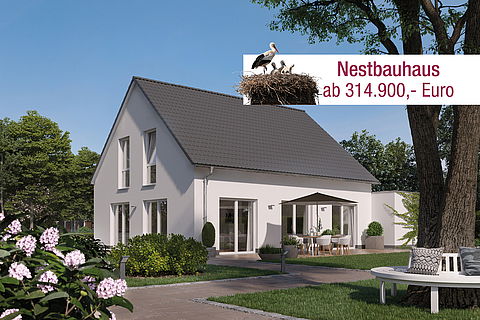
Prefab house catalogs are the real estate equivalent of airline ticket prices, the base fare looks great until you add the “optional” essentials. That €350k “schlüsselfertig” price typically excludes:
- Bodenplatte: €15,000-25,000 (often listed separately)
- Erdarbeiten: €20,000-45,000
- Kitchen: €20,000-40,000
- Bathrooms: €10,000-20,000 each
- Flooring: €15,000-30,000
- Garden and landscaping: €10,000-30,000
- Garage/Carport: €20,000-40,000
One family paid €680k for a 160m² prefab house from Wolf Haus, with another €30-50k expected for final finishes. The “schlüsselfertig” promise didn’t include the €250k land cost or the special foundation requirements for their former flood zone.
The Kern-Haus model shows this clearly: their advertised prices are “ab” (starting from) and assume flat land, standard soil, and no extraordinary connections. Your slope-side dream immediately moves you into the “Individuell” category, where prices increase 25-40%.
Smart Cost-Cutting: Where You Can Actually Save
Despite the grim numbers, there are genuine ways to trim costs without building a cardboard box:
1. PV-Anlage as Financial Strategy
A 30kWp system with 30kWh battery costs €35,000 but qualifies for Austrian subsidies that can cover 30-50% of the cost. More importantly, it slashes your energy bills and increases property value. In energy-efficient houses, the payback period is under 10 years. This is one area where spending more upfront saves money long-term.
2. Material Choices with Austrian Logic
- Porenbeton instead of Ziegel: 15-20% cheaper, better insulation, but less “traditional”, banks might value it slightly lower
- Vinyl/Parkett mix: Use high-quality vinyl (€15-20/m²) in kids’ rooms and basement, real Parkett only in main living areas. Saves €10,000-15,000
- Standard vs. custom Fenster: Catalog windows cost €400-600/m², custom sizes jump to €800-1,200/m². Stick to standard dimensions where possible
3. Eigenleistung: The Double-Edged Sword
The theory: DIY painting, flooring, and garden work can save €30,000-50,000. The reality: Austrian building codes are strict, and mistakes cost more to fix than hiring pros.
Safe Eigenleistung:
– Painting interior walls (saves €15,000-20,000)
– Laying laminate/vinyl (saves €8,000-12,000)
– Garden work and basic landscaping (saves €5,000-10,000)
Avoid: Electrical, plumbing, or structural work, insurance and inspection issues will torpedo your savings.
4. Förderungen: The Austrian Subsidy Game
2026 brings several programs:
– Klimaförderung: Up to €15,000 for heat pumps and solar
– Wohnbauförderung: Varies by Bundesland, can cover 10-20% of costs for first-time builders
– QNG-Zertifizierung: Quality seal for sustainable building unlocks better financing rates
The catch: You need to apply before construction starts, and the paperwork rivals the complexity of a Finanzamt audit. Start this process 6-12 months before breaking ground.
The Austrian-Specific Gotchas
Planungskosten: Budget €3,000-5,000 for an architect just to get planning permission for an individual house on a slope. The Baugenehmigung process in Austria is thorough, expect 3-6 months for approval.
Baustelleneinrichtung: €5,000-8,000 for site setup, including the legally required Bauzaun, container, and worker facilities. Yes, you have to provide a toilet for the workers.
Notar and Grunderwerbsteuer: Land purchase incurs 3.5% Grunderwerbsteuer plus 1.5% Notar fees. On a €250k plot, that’s €12,500 in taxes alone.
Anschlüsse: Connecting to Strom, Wasser, and Kanalisation costs €10,000-20,000 if the infrastructure is at the property line. If it’s further away, costs multiply.
Bottom Line: Realistic Budgeting for 2024
For the original Reddit poster’s plan, 160m², two floors, basement, on a slope, high-end finishes, the realistic 2024 budget is:
- Conservative estimate: €650,000-750,000 (excluding land)
- With unexpected costs (10-15%): €720,000-850,000
- With land (€150k-250k): €870,000-1.1 million
If that number makes you queasy, here’s how to bring it down to reality:
- Skip the Keller: Save €120,000-150,000
- Choose flat land: Save €50,000-70,000
- Moderate finishes: Skip KNX, choose standard windows, basic kitchen: Save €80,000-100,000
- Eigenleistung: DIY painting, flooring, garden: Save €30,000-40,000
New total: €450,000-550,000 plus land, achievable with careful planning and a solid Bausparvertrag.
The Austrian building market punishes optimism. But armed with real numbers and a willingness to compromise on tradition (goodbye, Keller), you can still build a modern, energy-efficient home without remortgaging your future. Just don’t trust the catalog prices, and always add 20% for the “Austrian factor.”