You’ve seen the listings. You’ve run the mortgage calculators. You’ve been told to budget “around 10%” for Nebenkosten (ancillary costs) when buying an apartment in Austria. That figure gets tossed around in bank meetings and online forums like it’s gospel. But here’s what actually happens when you sit down with the final Rechnung (bill): that 10% figure is a polite fiction, and the real number is closer to 20%, and that’s before you factor in the costs that don’t appear on any official document.
A recent real-life breakdown from a Vienna couple who executed a complex property upgrade reveals the unsettling truth about Austrian apartment purchases. Their spreadsheet doesn’t just show numbers, it shows how the entire system, from banks to Makler (real estate agents) to the Finanzamt (Tax Office), is designed to extract value at every turn. And it exposes why most middle-class buyers in Austria simply cannot afford property without substantial parental support, even with above-average incomes.
The Case Study: When a €340,000 Sale Still Requires a €550,000 Bridge Loan
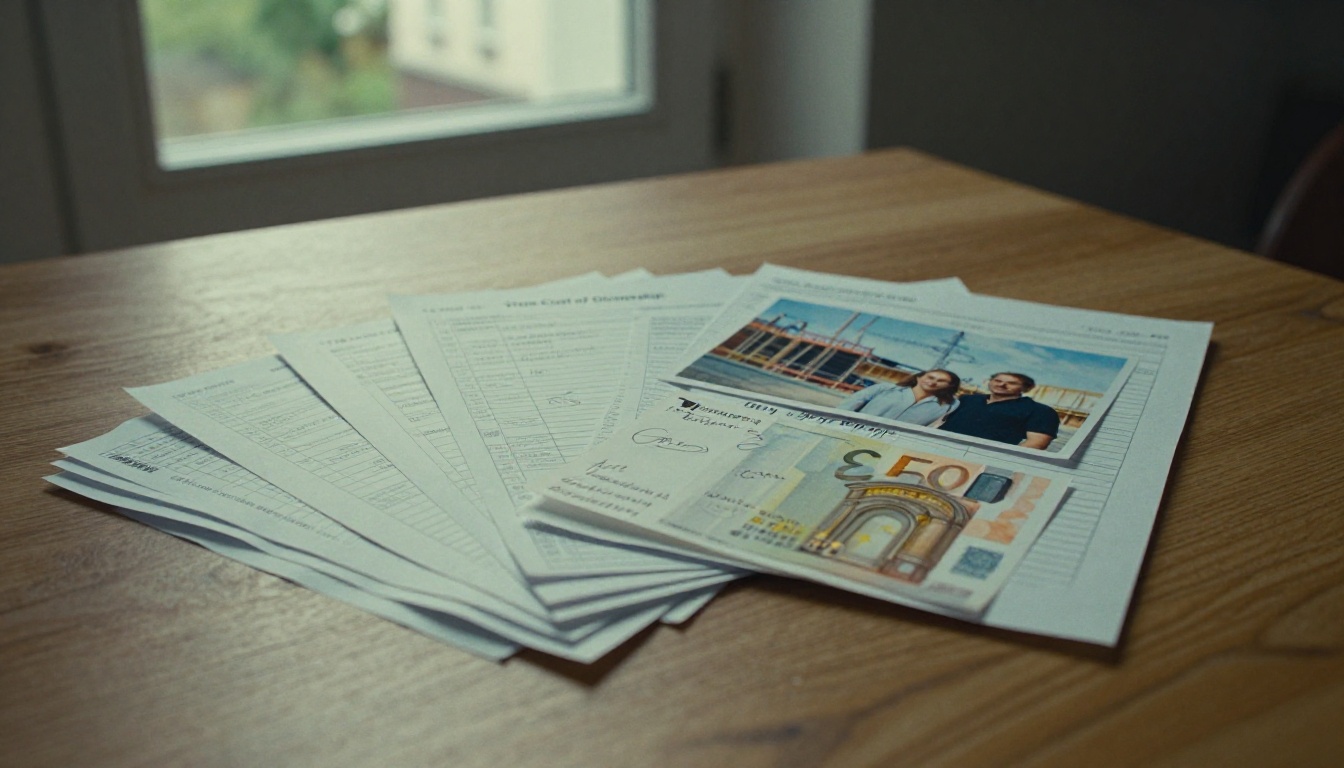
The couple in question, married, both working since their early twenties, with a peak net household income of €115,000, started with a modest apartment purchased in the mid-2010s for €218,000. By the time they upgraded, their old unit was fully paid off and valued at €340,000. Sounds like a success story, right? Except they still needed €500,000 in Eigenmittel (equity) to make the next purchase work, €350,000 of which came from their parents’ own borrowed funds.
Here’s where the math gets interesting. Their total costs for the original apartment, including a €5,000 lift contribution and all financing expenses, reached €257,000, about 18% over the base price. For their new purchase, the total hit nearly 20% when accounting for everything required to make the apartment livable. As they noted, “Man sieht auch gut das es rund 20% Nebenkosten insgesamt sind und nicht 10% wenn man alles mögliche mitberücksichtigt und nicht in einer nackten Wohnung lebt.”
Direct Purchase Costs: The Visible 10-12%
Let’s start with what actually qualifies as Kaufnebenkosten (purchase ancillary costs) in the strictest sense. These are the fees that hit before you even get the keys:
Grunderwerbsteuer (Real Estate Transfer Tax): 3.5% of the purchase price across Austria. On a €400,000 apartment, that’s €14,000 straight to the Finanzamt.
Grundbucheintragung (Land Registry Entry): 1.1% for the ownership transfer, plus 1.2% for any mortgage registration. Until July 1, 2026, there’s a temporary exemption for primary residences under €500,000, but the application must be submitted before that deadline. Miss it, and you’re paying the full amount.
Maklerprovision (Agent Commission): Capped at 3% plus 20% VAT for purchases over €36,336.42. While the Bestellerprinzip (ordering principle) means only the party who actually hired the agent pays in rental deals, purchase contracts trigger commissions from both sides. That’s 3.6% total if split, or potentially the full amount if you initiated the contact.
Notar/Anwalt (Notary/Lawyer): Required for contract preparation and signature certification. Budget another 1-2% depending on complexity.
Add these up, and you’re already at 9-10% of the purchase price, without accounting for financing costs, mandatory insurance, or that “steuerlich günstige” (tax-advantageous) lift contribution that the Vienna couple used to reduce their taxable base.
The Financing Multiplier: How Banks Triple-Dip
The Vienna couple’s experience with Erste Bank reveals a particularly Austrian phenomenon: the same financial institution can profit from a property three times over. Erste Bank financed the developer’s construction loan, provided the in-house Makler through its subsidiary s REAL Immobilienvermittlung GmbH, and then issued the mortgage to the buyer, complete with requirements for a life insurance policy and contract preparation through a specific law firm.
This vertical integration means you’re not just paying interest. You’re paying for:
– Kreditbearbeitungsgebühren (loan processing fees), though these are now limited by law
– Zinsen (interest) that can spike if you don’t have the Eigenmittel for a fixed-rate loan
– Sondertilgungskosten (special repayment costs) if you want to pay off early
– Versicherungsprämien (insurance premiums) that banks often require as loan security
The couple’s strategy of using a €550,000 bridging loan for two years, just before the KIM-Verordnung (Creditworthiness Directive) tightened requirements, saved them in a rising market but would be impossible today. Their variable-rate gamble paid off because they could throw extra cash at the loan as rates climbed. Most buyers don’t have that luxury.
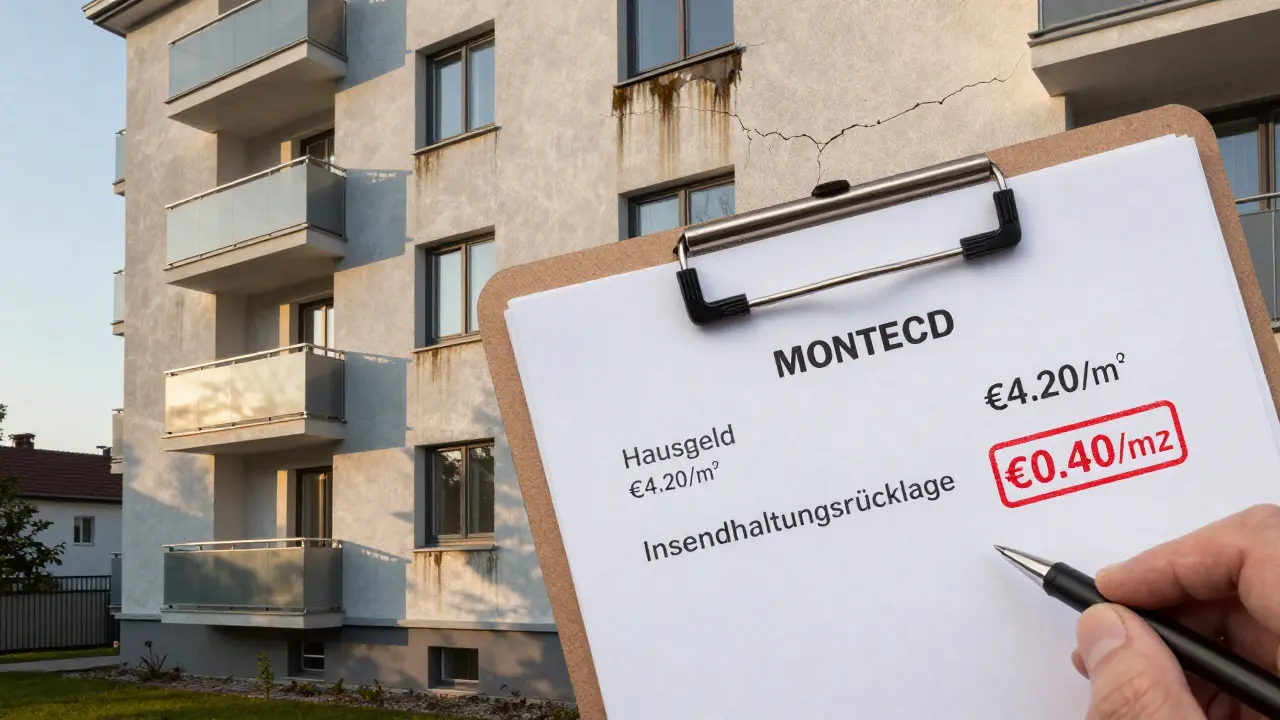
The Hidden Ownership Tax: Hausgeld and Instandhaltungsrücklage
Here’s where the 10% figure becomes genuinely laughable. After purchase, Austrian apartment owners pay Hausgeld (homeowners’ association fees) that average 20-30% more than comparable Mietnebenkosten (rental ancillary costs). In Vienna, expect €4.85 per square meter monthly just for operating costs.
But the real killer is the Instandhaltungsrücklage (maintenance reserve). Unlike the fixed reserves many German states mandate, Austria has no legal minimum. This creates a dangerous game where Verwaltungen (property managers) keep the reserve artificially low to attract buyers, knowing that Sonderumlagen (special assessments) will eventually fill the gap.
Research shows 57% of Austrian and German homeowner associations have insufficient reserves. The result? An average special assessment of €1,850 every seven years, with some owners facing sudden demands for €2,000-3,000 for elevator replacement or facade renovation. As one owner commented after receiving a €2,300 elevator assessment: “Jetzt checke ich jede Abrechnung, lese die Teilungserklärung (declaration of division) und stelle Fragen. Kein Verwaltungsservice mehr, der mir alles schönredet.”
The Parental Subsidy Reality Check
Perhaps the most controversial revelation from the case study is the normalization of massive parental support. The couple explicitly states: “Wir hätten uns diese und die alte Wohnung zu den Zeitpunkten zu denen wir diese gekauft haben niemals leisten können ohne die finanzielle Hilfe unserer Eltern… obwohl wir überdurchschnittlich verdienen.”
With €80,000 of their own savings and €350,000 from parents (who themselves took out loans to provide it), they still needed a €210,000 mortgage after selling their old unit. This pattern repeats across Austrian cities, where mortgage accessibility has become increasingly restricted. The combination of high Eigenmittel requirements and stagnant wages relative to property values has transformed property ownership from a middle-class milestone into a generational wealth transfer mechanism.
Opportunity Costs and Market Timing: The Unspoken Gamble
The couple’s success depended on three factors they acknowledge were partly luck:
1. Buying before the 2022-2023 price explosion in Vienna
2. Securing a bridge loan before KIM-Verordnung made such financing nearly impossible
3. Selling during the peak of the boom when their old apartment fetched €340,000
Had they been six months later on any of these moves, the math collapses. This exposes a harsh truth: Austrian property ownership now requires not just capital, but perfect market timing. And unlike stocks, you can’t dollar-cost average into a Wohnungseigentum (condominium ownership).
The opportunity cost extends beyond timing. Money tied up in Eigenmittel can’t fund a financial emergency cushion or be invested in diversified assets. As Austrian savings patterns reveal, the cultural pressure to own property often leads to dangerously undiversified wealth concentration.
The Real Cost Checklist: What to Verify Before Signing
Before you commit to that “affordable” €400,000 apartment in Vienna’s 10th district, demand these documents:
- Three years of Wirtschaftspläne (financial plans) from the Hausverwaltung (property management)
- Protokolle der Eigentümerversammlung (owner meeting minutes) for the last three years
- Current Instandhaltungsrücklage per square meter, if it’s under €1.00 for buildings over 25 years, you’re looking at a future special assessment
- Sanierungsplan für die nächsten 10 Jahre (10-year renovation plan)
- Leerstandsquote (vacancy rate), over 30% means unstable cost distribution
Check the physical structure too. Crumbling facade plaster, moisture under windows, and worn elevator systems are warnings that the reserve is too low. As experts note, buildings with digital financial planning have 32% fewer unexpected assessments. If your potential building still uses paper records, that’s a red flag.
The 2030 Problem: Why Costs Will Only Rise
The Gebäudeenergiegesetz (Building Energy Act) coming into full force will require substantial upgrades to insulation, windows, and heating systems. Experts predict Hausgeld increases of 35-40% by 2030. In regions with Bevölkerungsrückgang (population decline), the cost burden per owner will rise even faster as fewer residents share fixed building expenses.
For the Vienna couple, this means their current “reasonable” Hausgeld could become a significant financial strain if one partner’s Teilzeit (part-time) arrangement becomes permanent or if interest rates rise further. Their strategy of treating property as a tradeable asset, buying with intention to sell profitably, becomes riskier as transaction costs eat into gains and as transparent pricing data from the OeNB makes the market more efficient (and less prone to the wild appreciation they enjoyed).
Final Rechnung: The True Cost of Austrian Apartment Ownership
When you add it all up, the direct purchase costs, the financing fees, the monthly Hausgeld with its inadequate reserves, the inevitable Sonderumlage, the opportunity cost of locked-up capital, and the risk of market mistiming, the real cost of buying a €400,000 apartment in Austria looks something like this:
- Purchase costs: €40,000 (10%)
- Financing costs: €8,000-15,000 over loan lifetime
- First 5 years Hausgeld: €28,000 (€450/month average)
- First Sonderumlage: €2,000 (conservative estimate)
- Opportunity cost of €80,000 Eigenmittel: €12,000 (assuming 6% annual return)
- Renovation to personal taste: €15,000-30,000
Total first-five-year cost: €105,000-127,000, or 26-32% of the purchase price. And that assumes no major market downturn, no job loss, and no building-wide catastrophe.
The Vienna couple’s story isn’t a cautionary tale, it’s a best-case scenario. They had massive parental support, above-average income, perfect timing, and still spent 20% over the base price. For everyone else, especially those without family wealth or with incomes under €80,000 net, the math is even more brutal.
Before you sign that Kaufvertrag (purchase contract), ask yourself: are you buying a home, or are you buying into a complex financial product where everyone but you gets paid first? The answer might save you from becoming the next case study in Austrian housing market reality.