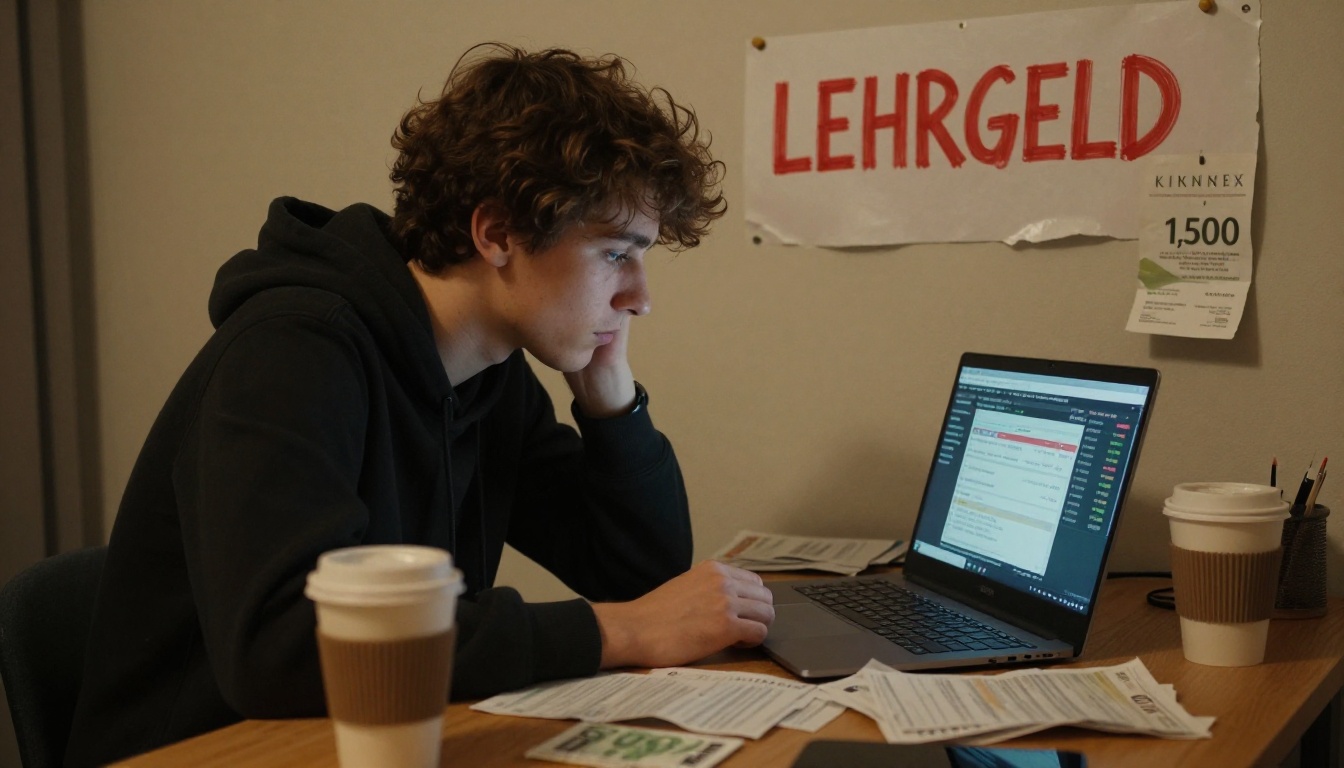
The post hit the Austrian finance community like a confession at a therapy session: an 18-year-old admitting they blew €1,500 on an algorithmic trading camp that delivered nothing but regret. The responses ranged from commiseration to mockery, but everyone recognized the pattern. This wasn’t just one person’s mistake, it was a warning sign flashing across an entire generation of young investors who believe code can outsmart the market.
The €1,500 Mirage That Promised Millions
The original poster on r/FinanzenAT described their “biggest Fehlinvestition (bad investment)” as an Algorithmic Camp offering a trading bot they could develop and improve. For a teenager, €1,500 represents months of savings or a substantial chunk of their first real salary. The camp’s pitch likely followed a familiar script: “Professional strategies, once reserved for institutional traders, now available to anyone with a laptop and dreams.”
What they actually received remains unclear, but the outcome is certain, zero returns and a valuable lesson in what Austrians call Lehrgeld (tuition money paid to the school of hard knocks). Many international residents report similar experiences with Austrian banking and investment products that promise efficiency but deliver frustration, especially when navigating the Finanzamt (Tax Office) requirements for reporting losses.
Why Austrian Beginners Fall for the Algorithmic Fantasy
The research into trading bots like Rosenthal Trading Bot and BullPower Algo reveals a consistent marketing approach targeting exactly this demographic. These systems promise to remove “Angst und Gier” (fear and greed) from trading decisions while delivering professional-grade returns. The reality check comes later, usually after the refund period expires.
Young Austrian investors face unique pressures. Traditional financial education in schools barely covers basic budgeting, let alone algorithmic trading strategies. Social media fills this vacuum with TikTok clips showing green candles and testimonials from apparent success stories. The BullPower Algo analysis specifically notes how platforms like TikTok and YouTube create an environment where “Gewinne, starke Moves, krasse Einstiege” (profits, strong moves, crazy entries) dominate, while losses remain conveniently off-camera.
The psychological trap is universal: humans overestimate their ability to beat the market while underestimating complexity. Austrian beginners compound this by trusting German-language marketing that feels more legitimate than English-language equivalents. A Wiener Linien (Vienna’s public transport) ticket costs less than a single trading course session, yet young investors drop thousands on promises that would make any Viennese coffee house regular raise an eyebrow.
The Real Portfolio Damage Beyond the Initial Loss
The €1,500 course fee represents just the entry ticket. The subsequent damage often exceeds the original investment:
- Opportunity Cost: That money could have purchased roughly 15 shares of an Austrian blue-chip stock or formed the foundation of a solid ETF portfolio. Instead, it bought PDFs and video tutorials now gathering digital dust.
- Emotional Capital: One commenter admitted buying Wirecard shares a week before collapse, losing €1,000. Another dropped €6,000 on the same doomed timing. These decisions rarely happen in isolation, they stem from the same mindset that makes algorithmic camps appealing: the belief in shortcuts and insider knowledge.
- Confidence Erosion: The most damaging long-term effect isn’t monetary. Young investors who experience expensive failures often either abandon investing entirely or swing to the opposite extreme, becoming paralyzed by analysis. Both outcomes cost decades of compound growth.
The Austrian investment landscape already presents challenges for newcomers. Between understanding Kest (capital gains tax), navigating Finanzonline for tax declarations, and dealing with Maklerprovision (broker commission) on real estate, beginners face enough complexity without adding algorithmic confusion.
When Emotions Override Austrian Financial Sense
The pattern reveals itself repeatedly: emotional decisions masquerading as rational strategy. An Austrian investor dumping US ETFs because of geopolitical anxiety exemplifies this perfectly. The move feels principled but often destroys portfolio diversification without achieving any real-world political impact. Emotional portfolio shifts based on geopolitical fears create the same financial damage as algorithmic trading scams, losses justified by narratives that don’t hold up to scrutiny.
Wirecard’s collapse trapped numerous German-speaking investors who trusted the DAX-listed company’s reputation. The algorithmic camp victim who listened to a friend recommending Wirecard paid double tuition: once for the trading course, again for the worthless shares. This highlights how personal networks amplify bad decisions, especially among young investors who trust peer recommendations over due diligence.
The Regulatory Reality Check
Austria’s Finanzamt doesn’t care whether you lost money to a trading bot or a bankrupt stock, you still owe taxes on any gains, and losses face strict offset rules. The Krypto-MPfG (Crypto Reporting Obligation Act) demonstrates how regulators increasingly monitor digital asset transactions, making it harder to hide trading mistakes. Tax and regulatory risks from crypto investments add another layer of complexity that algorithmic trading courses conveniently ignore.
For young investors, this creates a dangerous gap between marketing promises and legal reality. A course might teach you to code a trading strategy but won’t explain how the Finanzamt treats algorithmic trading profits or whether your activities qualify as gewerbliche Tätigkeit (commercial activity), triggering different tax obligations.
Better Paths Through the Austrian Investment Forest
The alternative to expensive courses isn’t giving up, it’s building knowledge incrementally:
- Start with Paper Trading: Most Austrian brokers offer demo accounts. Practice for six months without risking real money. Track every fake trade, analyze mistakes, and build discipline without paying Lehrgeld.
- Use Free Resources: The Finanzamt publishes guides for investors. Platforms like Finanznachrichten.at and the FinanzenAT community offer free, peer-reviewed advice. The €1,500 course fee could instead fund a year’s worth of actual investments in a low-cost ETF.
- Understand Real Costs: Before paying for any system, calculate the break-even point. A €1,500 course requires generating €1,500 in profits above what a simple index fund would return, just to cover the cost. For an 18-year-old with limited capital, that’s statistically impossible in the first few years.
- Consider Minor-Proof Investing: If you’re thinking about investments for younger siblings or future children, understand that Austrian law restricts certain products for minors. Inheritance of ETFs and stocks by minors in Austria requires careful planning that algorithmic trading courses never address.

The Hard Truth About Trading Bots in Austria
The Rosenthal Trading Bot analysis reveals what courses won’t tell you: even legitimate algorithmic systems require deep market understanding, constant monitoring, and acceptance of drawdown periods. The bot positions itself as a “disziplinierter Co-Pilot” (disciplined co-pilot), but the human must remain captain. Most 18-year-olds lack the experience to captain a paper airplane, let alone a complex trading strategy.
The Price Catcher Handelssystem emphasizes this reality: it works only for traders who already understand technical analysis and want to automate existing knowledge. It’s a tool for professionals, not a magic box for beginners. The marketing cleverly targets “aktive Privatanleger” (active retail investors) who want to “strukturieren” (structure) decisions, but the fine print always mentions that losses are part of the system.
Calculating Your Actual Break-Even Point
Let’s be brutally honest about the math. An 18-year-old with €5,000 total capital who spends €1,500 on a course starts with €3,500 invested. To match a simple 7% annual return from an ETF, the algorithmic approach must generate 21% just to break even in year one. Over five years, the simple ETF compounds while the trading bot must overcome both market volatility and its own cost basis.
The Austrian tax system compounds this disadvantage. Kest deducts 27.5% from capital gains, and the Finanzamt requires detailed documentation for algorithmic trades. Each transaction must be logged, creating administrative overhead that makes the already slim margin even thinner.
Actionable Steps for Austrian Beginners
If you’ve already paid for a course, treat it as a sunk cost. Don’t chase recovery by doubling down on risky trades. Instead:
- Document Everything: Austrian tax law rewards meticulous record-keeping. Every trade, fee, and loss needs proper documentation for Finanzonline submissions.
- Start Micro: Trade with €100, not €1,000. Scale only after proving consistent profitability for 12 months.
- Join the Real Community: r/FinanzenAT offers free peer review. Post your strategy, accept criticism, and learn from others’ mistakes without paying a cent.
- Read the Disclaimers: Every legitimate Austrian financial product includes detailed risk warnings. If a course lacks equivalent transparency, it’s not worth your money.
- Calculate Opportunity Cost: Before any investment, ask: “What would this money earn in an index fund?” If your alternative can’t realistically beat that baseline, it’s speculation, not investment.
Final Reckoning
The €1,500 algorithmic camp victim who confessed on r/FinanzenAT did more than waste money, they provided a public service. Their story warns others about the gap between marketing promises and market reality. In Austria, where financial conservatism traditionally ruled, the new generation faces unprecedented access to complex tools without proportional education.
The true Lehrgeld isn’t the money lost. It’s the time wasted chasing shortcuts instead of building real knowledge. While algorithmic trading has its place, that place is after mastering fundamentals, not before. For young Austrian investors, the best algorithm remains simple: invest early, diversify broadly, minimize costs, and let time compound wealth. Everything else is just expensive noise.
Your portfolio will thank you for skipping the camp and buying the index. The Finanzamt will thank you for simple, documented transactions. And your future self will thank you for learning these lessons without paying the full €1,500 tuition.