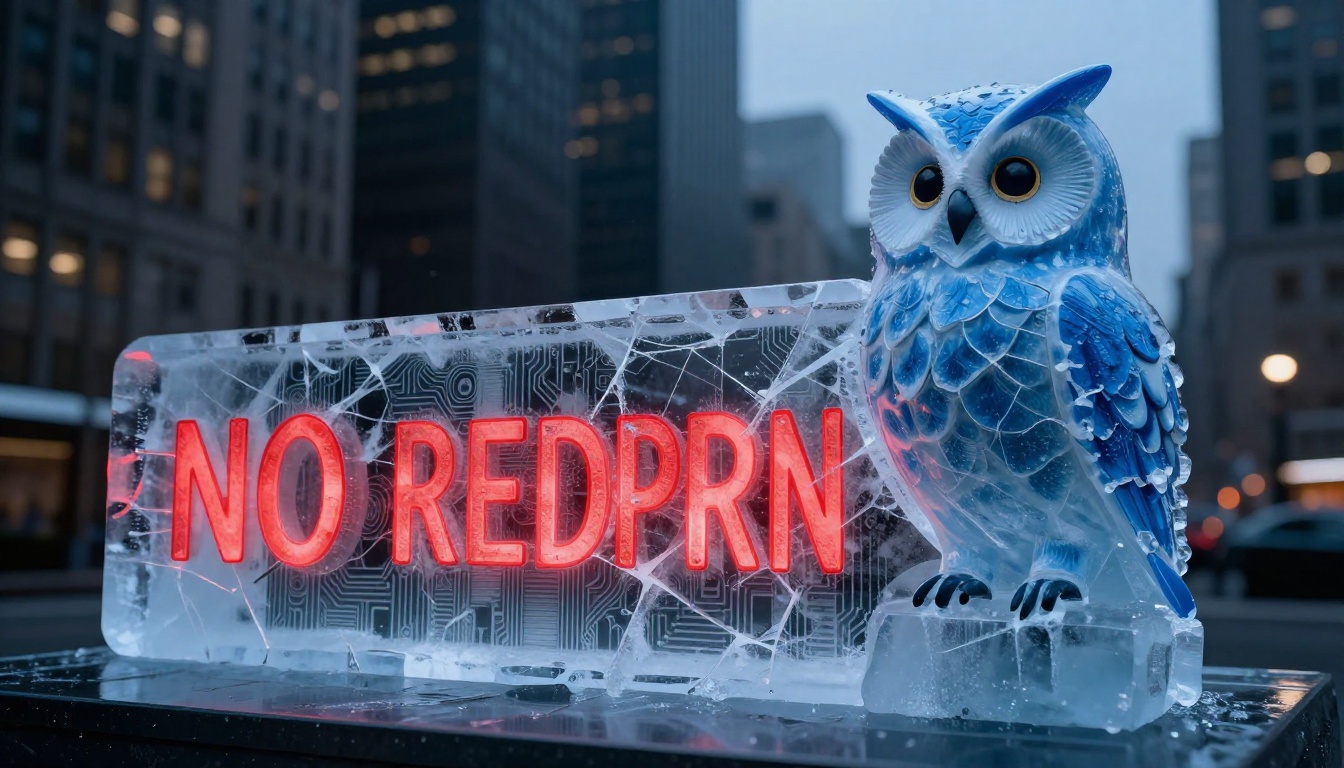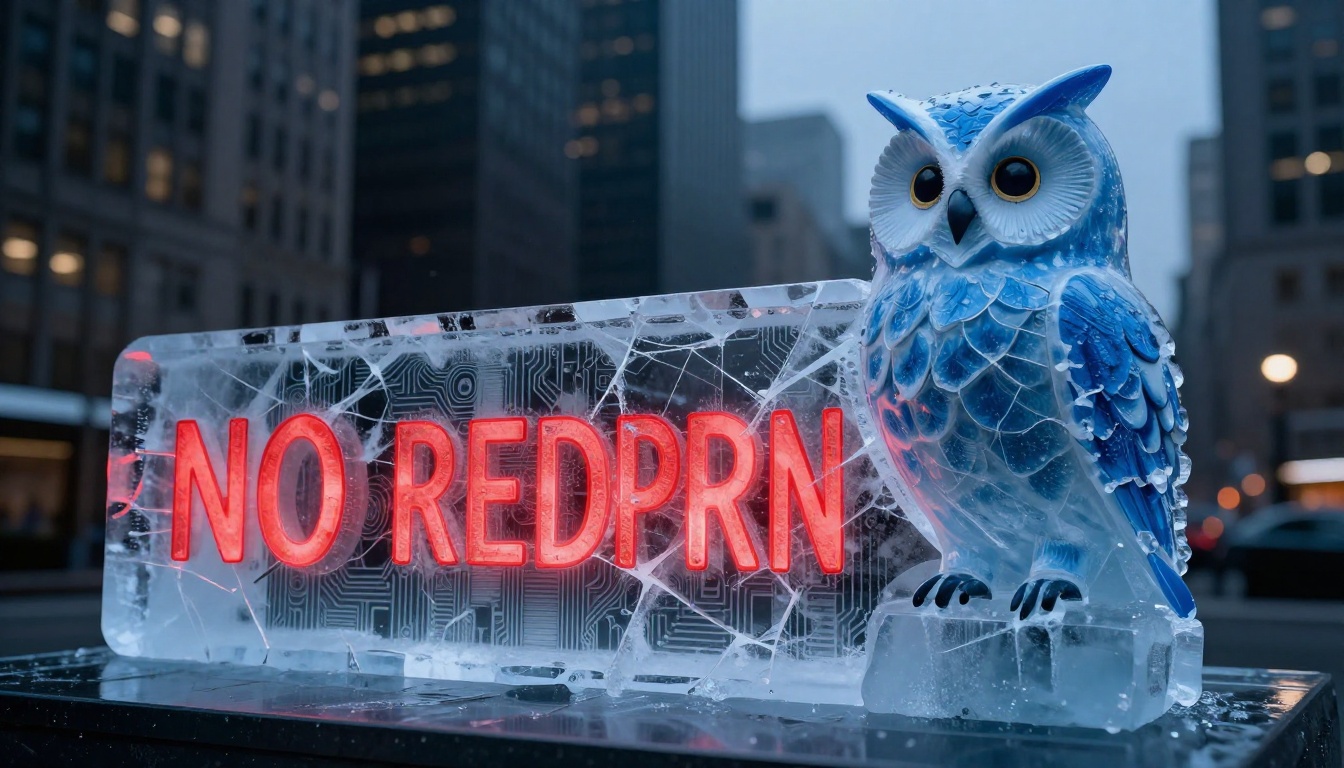
When Blue Owl Capital announced on February 18, 2026, that it was permanently suspending quarterly redemptions on its OBDC II private debt fund, the immediate market reaction was brutal. Shares in the alternative asset manager plunged 23.1% in a single session, dragging down rivals like Ares Management (-6%), Blackstone (-4.8%), and Apollo Global Management (-4.8%) in a synchronized selloff that erased billions in market value. But beneath the headline numbers lies a more troubling question for anyone with money in French investment products: could the same liquidity trap happen here?
The short answer is yes, and in some cases, it already has.
What Actually Happened at Blue Owl
Blue Owl Capital, founded in 2021, quickly became a darling of the private credit boom, managing nearly $300 billion by financing everything from middle-market buyouts to massive data centers powering the AI revolution. Its OBDC II fund, designed specifically for retail investors, promised quarterly liquidity, a feature that made illiquid private debt feel as accessible as a money market fund. That promise just shattered.
The fund’s managers cited “no significant pressure” on assets as recently as November 2025, even as investors pulled $150 million during the first nine months of the year. Yet behind the scenes, Blue Owl was quietly selling $1.4 billion in assets across three funds at 99.7% of face value to institutional buyers like CalPERS and OMERS. The OBDC II fund alone offloaded $600 million, representing 34% of its portfolio, to repay a Goldman Sachs credit line and fund a 30% capital return to trapped investors.

The permanent shift from quarterly redemptions to a “capital return” model, where investors only get money back as loans mature, has drawn inevitable comparisons to August 2007, when BNP Paribas froze three subprime-exposed funds and lit the fuse for the global financial crisis. Mohamed El-Erian called Blue Owl’s move a potential “canary in the coal mine”, while Senator Elizabeth Warren demanded immediate federal stress tests on private credit exposures.
The AI-Driven Debt Bubble No One Wants to Name
Here’s where it gets uncomfortable. Blue Owl’s explosive growth wasn’t fueled by traditional corporate lending, it rode the AI infrastructure wave, financing data centers that now face an existential question: what if the AI spending boom is a mirage?
The parallels to the dot-com era are hard to ignore. Jamie Dimon warned last October that seeing one “cockroach” (his term for bad loans) means more are hiding. Jeffrey Gundlach went further, labeling many private credit deals “junk loans” (high-risk, poorly underwritten debt). The data supports their skepticism: the Proskauer private credit default index hit 2.46% in Q4 2025, up from 1.76% in Q2, with the “real” rate approaching 5% when including selective defaults. Deutsche Bank forecasts defaults between 4.8% and 5.5% for 2026, the first full credit cycle test for an industry that barely existed during the 2008 crisis.
French investors might shrug and say, “That’s America.” They shouldn’t. The same AI euphoria driving U.S. private credit has infected European markets, with French asset managers pitching Fonds Communs de Placement à Risques (FCPR) and Fonds Professionnels Spécialisés (FPS) offering 5-8% yields on “senior debt.” The pitch sounds familiar: decorrelation from public markets, downside protection, and quarterly liquidity. Sound familiar?
Why French Banks Are Watching This Closely
The structural similarities between Blue Owl’s retail fund and French dette privée (private debt) products should make BNP Paribas, Société Générale, and La Banque Postale very nervous. French financial advisors (CGPs) have been pushing private debt, structured products, SCPIs (real estate investment trusts), and “democratized” private equity to yield-hungry clients for years. The promise is always the same: institutional-quality returns with retail-friendly liquidity.
That promise is a mathematical impossibility. Private debt funds lock up capital for 5-8 years because the underlying loans aren’t traded on exchanges. When everyone heads for the exit simultaneously, as Blue Owl investors did, the fund must either sell assets at fire-sale prices or freeze redemptions. Guess which option protects the asset manager’s fees?
The opacity problem compounds the risk. Unlike publicly traded bonds with daily price discovery, private loans are “marked to model”, valued according to theoretical formulas rather than market prices. Blue Owl’s ability to sell assets at 99.7% of face value proves nothing about the true value of what remains. It’s the valuation equivalent of a magician’s sleight of hand: distract investors with one clean sale while the rest of the portfolio’s quality remains hidden.
This complexity and opacity in retail investment products similar to private debt funds is precisely what the Autorité des Marchés Financiers (AMF, France’s financial markets regulator) has been warning about. French savers poured €42 billion into structured products in 2023, most through assurance-vie (life insurance) contracts they couldn’t explain if asked.
The Liquidity Mirage: A Feature, Not a Bug
Blue Owl’s redemption halt reveals a fundamental flaw in how private debt is sold to retail investors. The quarterly liquidity window was never a true liquidity feature, it was a marketing tool that worked until it didn’t. This isn’t a bug in the system, it’s how the system was designed.
Asset managers collect management fees on assets under management. The longer those assets stay put, the better. Quarterly redemption windows create an illusion of control while ensuring most capital remains locked. When redemptions spike, managers invoke “gate provisions” or “side pockets” (mechanisms that segregate illiquid assets), transforming temporary investments into long-term commitments without shareholder votes.
French regulators have allowed similar structures to proliferate. The regulatory pressures and structural vulnerabilities in France’s retail investment landscape show that even traditional products like the Plan d’Épargne en Actions (PEA) face scrutiny. Yet private debt funds marketed as “diversifiers” operate in a regulatory gray zone, outside the perimeter of standard banking supervision.
The 2007 Parallel: Real or Overblown?
Comparisons to 2007 make executives uncomfortable, but the mechanics are eerily similar. Back then, BNP Paribas froze funds because it couldn’t “correctly value certain assets” when subprime markets seized up. Today, Blue Owl froze redemptions after selling its most liquid assets and admitting the rest can’t be priced in a stressed market.
The difference? Scale. The private debt market is $1.7 trillion globally, with $300 billion directly exposed to non-bank lenders. That’s large enough to hurt but not (yet) systemically catastrophic. However, the interconnectedness is growing: U.S. banks have lent $1.2 trillion to non-bank financial institutions, including $300 billion directly to private credit providers. A wave of defaults wouldn’t stay contained in the “shadow banking” sector for long.
For French investors, the risks facing French retail investors in tax-advantaged accounts offer a cautionary tale. When Ubisoft shares collapsed, investors in PEA-PME accounts discovered that tax advantages don’t protect against fundamental business risks. The same logic applies to private debt: yield premiums exist for a reason, and that reason is usually risk.
What French Investors Should Do Now
If you hold private debt funds through a French distributor like Amundi, Goldman Sachs, or BNP Paribas, it’s time to ask hard questions:
-
What’s the actual liquidity mechanism? If it’s quarterly redemptions, understand you’re relying on the kindness of strangers, not a contractual guarantee.
-
How much is AI/data center exposure? Many European private debt funds rode the same wave as Blue Owl. Ask for sector breakdowns.
-
What are the gate provisions? These are the triggers that let managers freeze your money. They’re buried in prospectuses for a reason.
-
Who’s marking the loans? If it’s the asset manager itself, you have a conflict of interest. Independent valuation agents are essential.
The conflicts of interest in French bank-managed investment products research shows how remuneration structures can incentivize advisors to push complex products. Private debt’s high fees make it particularly lucrative to sell, regardless of suitability.
The Bottom Line: A Wake-Up Call, Not a Death Knell
Blue Owl’s redemption freeze isn’t the end of private credit, but it is the end of an era. The industry can no longer pretend that retail liquidity provisions are anything other than marketing fiction. For French investors, this is a moment to re-examine the entire alternative investment shelf.
The good news? This stress is happening before a systemic crisis, not during one. The bad news? Many French savers won’t hear about it until their own distributions get “restructured.” By then, the asset managers will have collected their fees, the banks will have earned their distribution commissions, and the investors, once again, will be left holding the bag.
As one industry veteran privately noted: “The investor takes the risk. The intermediary takes the fees. Guess who’s guaranteed to win?” That sentiment, echoed across professional circles, captures why Blue Owl’s move matters more than any press release can convey.
Watch the default rates. Watch the refinancing calendar for 2026. And most importantly, watch your own portfolio’s fine print. The canary isn’t just in the coal mine, it’s already stopped singing.