
That little logo on your French bank card, CB, represents one of Europe’s most successful financial resistance movements. Every time you tap to pay for a baguette or buy train tickets online, you’re likely participating in a carefully orchestrated system designed to keep payment sovereignty in French hands. Yet most cardholders remain oblivious to the quiet battle raging between the GIE Cartes Bancaires (Economic Interest Grouping of Bank Cards) and the American giants Visa and Mastercard.
The stakes extend far beyond patriotic symbolism. We’re talking about billions in fees, control over transactional data, and strategic autonomy in an era where payment systems can become geopolitical weapons. Recent moves by major French banks to prioritize CB over international networks signal a renewed offensive, one that could reshape how Europe handles digital payments.
The CB Network: France’s Financial Operating System
The réseau CB (CB network) functions as France’s domestic payment infrastructure, a co-operative entity owned by French banks that processes card transactions nationwide. Unlike Visa or Mastercard, publicly traded companies accountable to shareholders, the GIE Cartes Bancaires operates as a non-profit, charging merchants only the actual technical costs of moving money.
This distinction matters enormously. When you pay at a French merchant with a co-badged card (displaying both CB and Visa/Mastercard logos), the terminal automatically routes the transaction through CB’s domestic rails. The result? Your payment stays within French data centers, subject to French and EU regulations, while the merchant pays significantly lower network fees.
France’s approach stands as a European anomaly. While countries like Germany and the Netherlands surrendered their domestic networks to American firms years ago, France preserved its system through co-badging, the strategic placement of two payment applications on a single chip. This hybrid model lets banks maintain control over costs and data while still offering international compatibility.
Why Your Baker Secretly Roots for CB
Merchant fees represent the battlefield where CB scores its most tangible victories. Every card transaction incurs two main costs: the interchange fee (regulated by Europe at 0.2% for debit, 0.3% for credit) and network fees charged by Visa, Mastercard, or CB.
Here’s where the math gets interesting. While interchange fees remain fixed regardless of network, scheme fees (network charges) vary dramatically. Visa and Mastercard structure these fees with profit margins baked in, especially for foreign cards or commercial accounts. CB, as a non-profit, passes through only actual operational costs.
For a small business processing €100,000 in card payments annually, this difference can translate to hundreds of euros saved, real money that stays in the local economy rather than flowing to American shareholders. That’s why French terminaux de paiement (payment terminals) come pre-configured to select CB by default. The system nudges transactions toward the cheaper domestic option without requiring consumer action.
The Mobile Payment Revolution CB Almost Missed
For years, CB lagged dangerously behind in the mobile wallet race. When BPCE became France’s first bank to launch Apple Pay in 2016, CB’s infrastructure couldn’t handle tokenized mobile transactions. Payments defaulted to Visa or Mastercard rails, undermining the sovereignty argument.
The technical gap finally closed around 2020. Through tokenization, replacing card numbers with secure digital tokens, CB integrated with Apple Pay and Google Pay. Today, over 1.5 billion mobile payments annually flow through CB’s network, a silent victory for domestic infrastructure.
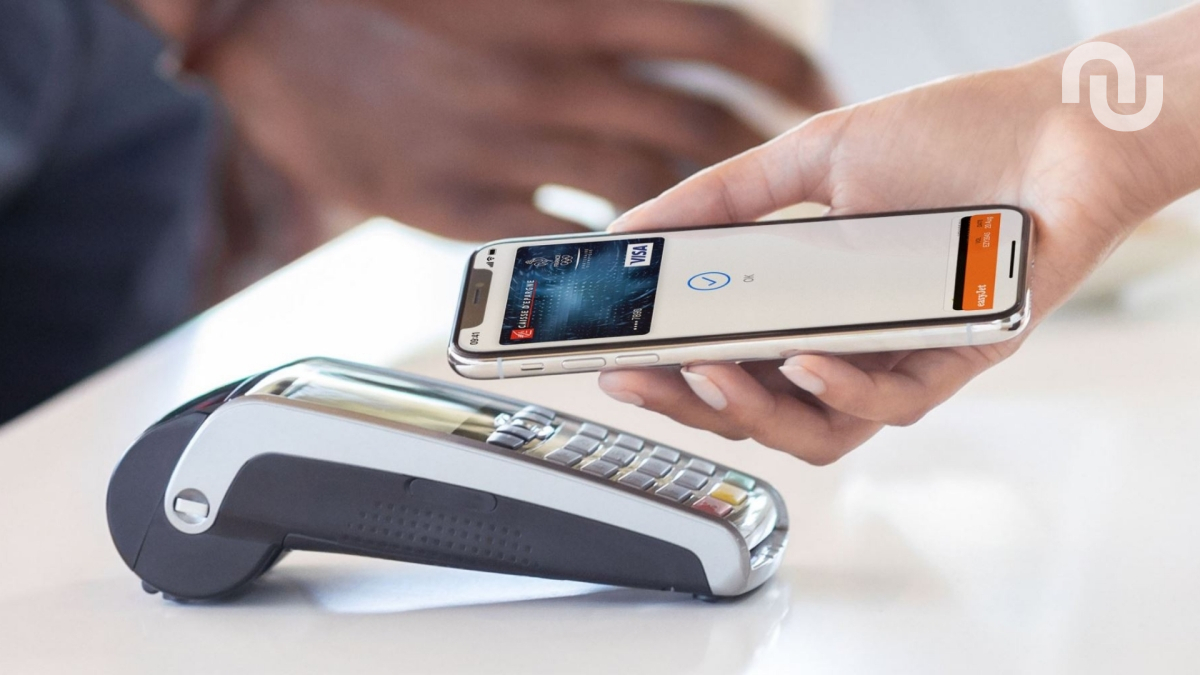
The shift becomes visible during online checkouts. When paying with Apple Pay on a French website, tapping “Change Payment Method” reveals network options. Selecting CB instead of Visa routes the transaction through domestic servers operated by STET, France’s payment processing backbone. For consumers, nothing changes. For sovereignty advocates, everything does.
BPCE’s Strategic Pivot: Ending the Visa-Only Experiment
The 2024 Paris Olympics exposed fractures in France’s payment unity. As the games’ official banking partner, BPCE issued Visa-only cards for Olympic venues, creating a temporary monopoly that sidelined CB. The GIE Cartes Bancaires criticized this move publicly, viewing it as a betrayal of collective interests.
Now BPCE is making amends. Yves Tyrode, head of digital and payments, announced that by February 2026, all Apple Pay transactions from Banque Populaire and Caisse d’Épargne will default to CB routing. By end-2027, the bank pledges that 100% of its cards will carry CB co-badging, phasing out Visa-only products entirely.
This reversal reflects heightened geopolitical awareness. With economic tensions rising between Europe and the US, payment infrastructure vulnerability has become impossible to ignore. As one European Parliament member bluntly stated: “Trump can cut us off. That’s why we need both badges.”
The Neobank Exclusion: Why Revolut and N26 Can’t Join the Club
Here’s where the CB system’s protective nature becomes exclusionary. Neobanks like Revolut and N26, despite operating in France, cannot issue CB-branded cards. Membership in the GIE Cartes Bancaires requires meeting strict technical standards and paying substantial integration costs, barriers these digital-native foreign banks haven’t cleared.
Consequently, their cards run exclusively on Visa or Mastercard rails, even for domestic French purchases. Merchants pay higher fees, and transaction data flows internationally. For CB advocates, this represents a security gap, for neobank users, it’s an invisible surcharge on every purchase.
The policy creates a two-tier system: traditional French banks with cheaper CB access, and foreign neobanks locked into more expensive international networks. This tension will likely intensify as neobanks gain market share.
CB Dynamique 2026: The Counter-Offensive Plan
Aware that convenience drives adoption, CB is launching CB Dynamique 2026, an innovation roadmap designed to match Visa and Mastercard’s user experience. Two initiatives stand out:
- Click-to-Pay enables one-click online checkouts by recognizing your card through email or phone number. Early adopters like SNCF Connect, Cdiscount, and Fnac Darty already implement it, promising three-second train ticket purchases without digging for card details.
- UPDAT’R automatically notifies subscription services (Netflix, Spotify, EDF) when your card expires, updating payment details seamlessly. No more interrupted service due to forgotten card renewals.
These features target the friction points where international networks previously held advantages. If CB can match their convenience while maintaining lower costs and domestic data control, the sovereignty argument becomes self-reinforcing.
When Payment Systems Fail: The Reliability Factor
Infrastructure resilience matters as much as cost. CB’s architecture supports offline payments, transactions that process without real-time internet connectivity, essential for parking garages, airplanes, or rural areas with spotty coverage. While Visa and Mastercard offer similar functionality, CB’s implementation has been optimized for French conditions since the 1980s.
This reliability was tested during recent technical incidents. When Monext, a major French payment processor, experienced mass transaction errors in January, the fallout exposed how dependent even domestic networks are on individual providers. Such failures remind us that sovereignty requires not just national control, but robust redundancy at every level. (technical failures in French payment processing)
The Wero Factor: Europe’s Broader Ambition
CB doesn’t fight alone. Wero, the European instant payment system championed by major EU banks, targets Visa and Mastercard from another angle. While CB handles card-based transactions, Wero enables direct account-to-account transfers using QR codes or phone numbers, eliminating card fees entirely.
The systems complement rather than compete. CB secures everyday purchases, Wero facilitates peer-to-peer transfers and business-to-business payments. Together, they form a European payment ecosystem less vulnerable to American pressure.
BPCE reports 4.2 million Wero users, adding 200,000 monthly. The service will enable online merchant payments in France by year-end, directly challenging card-based checkout dominance.
Practical Implications: What Should You Do?
For most French residents, the CB network works automatically. Your co-badged card already defaults to CB for domestic transactions. But conscious participation strengthens the system:
- Verify your card carries the CB logo. If it doesn’t (common with neobanks), request a co-badged alternative from your bank or consider switching to a traditional French bank for your primary account.
- During online checkout, select CB instead of Visa/Mastercard when prompted. This ensures data stays domestic and supports merchant savings.
- For mobile payments, check that your bank’s Apple Pay/Google Pay implementation uses CB routing. Most major French banks now do, but confirmation never hurts.
- When renewing cards, explicitly ask for CB co-badging. Banks track these requests, and volume drives policy.
The sovereignty battle isn’t theoretical. Every transaction routed through CB instead of Visa represents data kept in France, fees kept in Europe, and strategic autonomy incrementally strengthened. In an era where financial infrastructure can be weaponized, these small choices accumulate into collective resilience.
The French payment network’s fight against American dominance succeeds precisely because most users never notice it. Your “Visa” card has been a CB card all along, working silently to preserve financial independence. Now, with mobile integration complete and major banks recommitting to domestic routing, CB is poised to become not just France’s default, but Europe’s template for payment sovereignty.