
With gold prices shattering records at over $5,000 per ounce, French households are rushing to convert forgotten jewelry boxes into cash. But behind the glittering headlines lies a market riddled with pitfalls, opaque pricing, and outright scams. The difference between a profitable sale and a costly mistake often comes down to understanding France’s unique regulatory landscape and knowing which buyers actually deliver on their promises.
The Gold Rush Reality Check
The math looks tempting: gold has nearly quintupled in value over ten years, with a 100% surge in just the past twelve months. Yet most sellers walk away disappointed, discovering their “treasure” fetches far less than spot price. The reason? French jewelry rarely contains pure gold, and the market operates on strict protocols that favor informed sellers.
Physical gold (or physique) in France typically appears as 18-carat jewelry (75% pure), 14-carat pieces, or 9-carat items, not the 24-carat pure metal traded on commodities exchanges. Buyers pay only for the actual gold content, minus melting costs and their margin. When gold trades around €126 per gram, an 18-carat piece might net you €70-80 per gram at best. For 10-carat gold, expect closer to 35% of spot price.
The Poinçon: Your First Line of Defense
Every piece of gold jewelry in France weighing over three grams must bear an official hallmark (poinçon). These tiny stamps reveal everything:
- Eagle’s head: 18 carats (750/1000 purity)
- Shell of Saint-Jacques: 14 carats (585/1000 purity)
- Clover: 9 carats (375/1000 purity)
- Square shape: Gold-plated (not solid)
Located near clasps or inside ring bands, these marks determine your starting point in negotiations. However, as jewelers point out, anyone can stamp a piece fraudulently. The hallmark gives a good indication but requires verification.
Where to Sell: The Hierarchy of Trust
Banks: The Slow Lane
French banks will buy gold, but they treat it as an inconvenience. Expect high commissions, mandatory off-site verification, and payment delays stretching weeks. For many sellers, the process feels bureaucratic and untransparent.
Specialized Buyback Counters (Comptoirs de Rachat)
This is where the market lives. Reputable buyback counters (comptoirs de rachat) like Godot & fils in Orléans or BDOR in Strasbourg and Colmar offer on-site testing and faster payment. Godot & fils, for instance, conducts verification in person and processes transfers within 48 hours for substantial amounts.
The best operators perform Know Your Customer (KYC) checks, provide detailed invoices, and handle tax declarations for capital gains. They use calibrated scales, verified by government standards, and conduct tests in plain sight.
The Red Flags
The DGCCRF (France’s consumer fraud watchdog) warns against itinerant buyers setting up in hotel rooms or temporary mall kiosks. These operators vanish after three days, leaving sellers with no recourse. Similarly, private sales through Facebook Marketplace expose sellers to theft and valuation disputes.
The Verification Dance: What Happens During Testing
When you present your gold, expect this sequence:
- Magnet test: Real gold isn’t magnetic. If it sticks, walk away.
- Visual inspection: Professionals look for green discoloration or wear that suggests plating.
- Acid test: The jeweler rubs the piece on a volcanic stone, then applies acid corresponding to the claimed carat. If the mark dissolves, the purity claim is false.
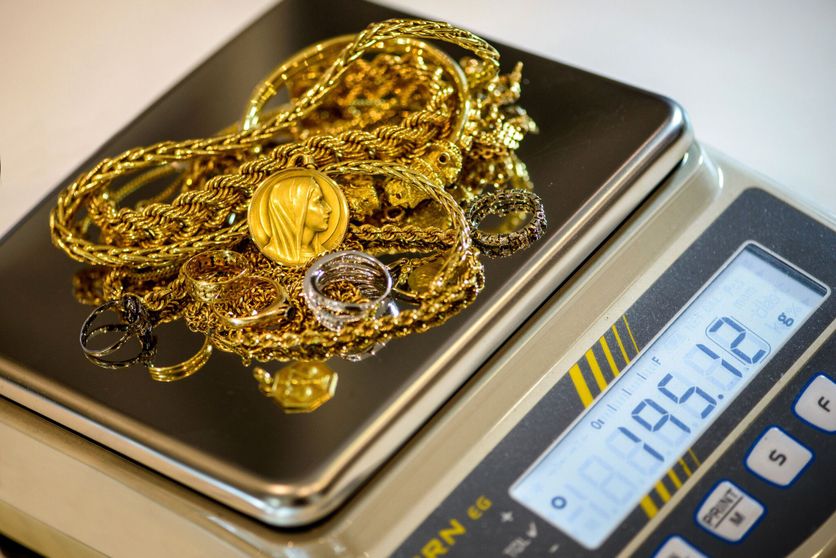
- Weighing: This occurs on a visible, calibrated scale after removing stones. For official transactions, a second government-calibrated scale confirms the weight.
- Offer calculation: The buyer calculates based on weight × purity percentage × current buyback rate (typically 75% of spot price for pure gold, less for jewelry).

Pricing Mechanics: The Uncomfortable Math
A 10-carat ring weighing 9.5 grams contains only 41.7% pure gold. At a spot price of $65/gram, theoretical value is $260. After the buyer’s margin, expect around $180-200. The gap shocks many sellers, but it reflects real processing costs and profit.
Expert tip: Bring multiple pieces. Some buyers offer better per-gram rates for larger lots.
Security vs. Speed: The Trust Problem
The core dilemma: immediate payment versus thorough verification. For small amounts (under €10,000), many comptoirs pay within 48 hours after basic tests. For larger lots, especially gold bars (lingots) without certificates, buyers often insist on sending items to specialized labs, leaving you with a receipt and a 3-month wait.
The risk? You’re trusting a relative stranger with thousands of euros in metal. As many sellers note, this opens the door to disputes over purity, weight disagreements, or worse, non-payment.
Mitigation strategy: Start small. Sell one piece first to test the buyer’s reliability. Keep copies of original purchase invoices. Photograph your items with the buyer’s receipt before leaving.
The Tax Man Cometh
France taxes gold sales at 6-11% of the transaction value. However, if you have original purchase receipts, you can opt for the capital gains tax (plus-value) regime, taxing only the profit. Reputable buyers declare transactions automatically, but private sales leave you responsible for reporting to le fisc (the tax authorities).
Silver: The Overlooked Alternative
While gold dominates headlines, silver as a complementary precious metal investment has surged 267% in a year. Many comptoirs buy silver jewelry and coins using similar verification processes. For sellers with mixed metal collections, bundling can simplify transactions and potentially improve rates.
Inflation Context and Portfolio Implications
The gold rush reflects deeper economic anxiety. With inflation and debt devaluation affecting gold’s long-term value, physical metals offer a hedge against monetary instability. Central banks have accumulated gold since 2020, viewing it as protection against unpredictable U.S. policies. For French households, selling old jewelry becomes both a financial windfall and a strategic portfolio rebalance.
The Digital Banking Caveat
In an era where risks associated with digital banks and financial trust dominate headlines, the tangible nature of gold transactions feels reassuring. Yet even here, trust matters. Choose established comptoirs with physical storefronts over pop-up operations.
Actionable Steps for Sellers
- Identify your gold: Use a loupe to find the poinçon and estimate carats.
- Test at home: A kitchen scale and magnet test provide baseline data.
- Research buyers: Check for DGCCRF registration, physical addresses, and online reviews.
- Visit multiple comptoirs: Price offers vary by 10-20%. Get three quotes minimum.
- Insist on transparency: All tests and weighing must happen in your presence.
- Document everything: Photograph items, keep receipts, request detailed invoices.
- Consider timing: Avoid peak rush hours when buyers have less time to negotiate.
The Bottom Line
Selling gold in France can be safe and profitable, but only if you treat it as a financial transaction requiring due diligence, not an emotional fire sale. The record prices won’t last forever, but the lessons from a careful sale will serve you across all asset classes.