The German healthcare financing system operates with the same efficiency as a Deutsche Bahn train, usually predictable, until construction work appears on your line. For decades, that line ran straight: employees paid health insurance contributions based on their salary, and that was largely the end of the story. Now, the SPD (Social Democratic Party) has proposed ripping up those tracks entirely.
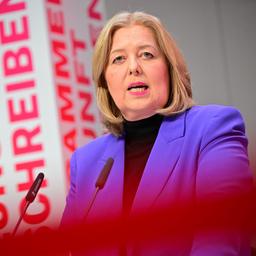
During the SPD’s recent leadership retreat in Berlin, party co-chair Bärbel Bas announced a plan to expand health contributions to all income types, including capital gains, rental income, and other investment returns. The proposal would simultaneously reduce traditional insurance premiums, creating what the party calls a "fairer" system. But for investors, freelancers, and retirees, this represents a fundamental shift in how healthcare costs are calculated.
The Current System: Wage Earners Carry the Weight
Today, Germany’s statutory health insurance (Gesetzliche Krankenversicherung or GKV) primarily relies on contributions from employment income. If you’re a standard employee earning €60,000 annually, you pay 14.6% of your gross salary (split with your employer) plus any additional contribution (Zusatzbeitrag) your insurer charges. This stops at the Beitragsbemessungsgrenze (contribution assessment ceiling) of €62,100 per year (2026). Income above that threshold is contribution-free.
Capital gains and rental income face a different treatment. These are only subject to health contributions for voluntary GKV members, typically high-earning employees who opt to remain in statutory insurance rather than switch to private coverage. Even then, contributions are capped at the same ceiling. A voluntary member with €100,000 in salary and €20,000 in investment income would pay contributions on just the first €62,100 of total income, not the full €120,000.
This creates what the SPD calls a structural unfairness: wage earners pay on 100% of their income (up to the cap), while investors and landlords often pay on a fraction, or nothing at all if they’re privately insured.
The Proposal: All Income Enters the Calculation
The SPD’s plan would fundamentally change this equation. According to a draft resolution from the party’s internal Social State Commission, health financing should "perspectively include all types of income." This means:
- Capital gains (Aktienveräußerungsgewinne) from stock sales
- Dividend income (Dividendeneinkünfte)
- Rental income (Mieteinnahmen)
- Interest income (Zinserträge)
- Private pension payouts (private Rentenzahlungen)
The party promises to reduce the standard contribution rate in exchange, though critics question whether reductions would match the new revenue.
What This Looks Like in Practice
Imagine a freelancer in Berlin earning €45,000 annually from client work plus €8,000 in ETF dividends and €12,000 from a rental property. Under current rules, they pay health contributions only on the €45,000 employment income (if they’re voluntarily insured). Under the SPD proposal, they’d pay on the full €65,000.
The impact becomes more pronounced for retirees. A pensioner receiving €25,000 in statutory pension (gesetzliche Rente) plus €15,000 from a private pension plan and €10,000 in investment income would see their contribution base rise from €25,000 to €50,000, potentially doubling their monthly health insurance bill.
The Fairness Debate: Two Competing Narratives
The proposal has sparked intense debate across the political spectrum, with two core arguments emerging.
Argument 1: "Income Is Income"
Supporters, including Juso (Young Socialists) leader Philipp Türmer, argue that distinguishing between income types is arbitrary. "Kapitalerträge tragen nichts zu unserem Sozialsystem bei" (Capital gains contribute nothing to our social system), Türmer wrote in a recent op-ed, noting that capital gains are taxed at a flat 25% rate, often lower than the marginal rate on middle-class salaries.
Proponents point out that Germany already has the EU’s most expensive healthcare system (over €500 billion annually) with mediocre outcomes. Expanding the contributor base seems logical when structural deficits are projected to reach €30 billion by 2029.
Argument 2: "This Punishes Responsible Savers"
Critics counter that the proposal effectively penalizes private retirement planning. Many Germans invest precisely because they know their statutory pension (gesetzliche Rente) will be insufficient. As one financial advisor noted in discussions: "You pay unemployment insurance and the state catches you if you become unemployed. If you lose money on your stocks, the state leaves you hanging, but if you gain, the state wants its share."
The timing compounds concerns. The Vorabpauschale (advance lump-sum tax) already taxes unrealized gains on accumulating ETFs. Paying health contributions on paper profits that might never materialize feels like double jeopardy to many investors.
The Political Reality Check
The SPD’s proposal faces significant hurdles. The party is in coalition with the CDU/CSU, which has shown little appetite for broad-based tax increases. Health Minister Karl Lauterbach (SPD) has been notably silent on the specifics, focusing instead on structural reforms.
Opposition parties have offered qualified support with caveats:
- The Greens warn the proposal must ensure "very high incomes and wealth are actually addressed, not just the middle class."
- The Left agrees the two-class system must end but insists "as long as privately insured individuals and very high incomes aren’t mandatorily included in a common system, this remains a detour rather than a fair reform."
Meanwhile, business groups argue the proposal would make Germany less competitive and could trigger capital flight to more tax-friendly jurisdictions.
The Elephant in the Room: Demographics and Bureaucracy
Critics across parties agree on one point: revenue expansion alone won’t solve the core problem. Germany’s demographic Wandel (demographic change) means a shrinking workforce supports a growing elderly population. By 2035, one in three Germans will be over 67.
Furthermore, administrative costs already consume significant resources. One analysis noted that while the health system spends over €500 billion annually, administration costs are below 3.5%, but that’s still nearly €18 billion. Digitalization could save billions, yet implementation has been glacial.
As one policy expert summarized: "The structural problem of the German health system is called demographic change. That’s why nobody dares address it. It quickly becomes about denying life-quality and life-sustaining measures to elderly people for financial reasons."
What This Means for You: Practical Implications
While the proposal remains just that, a proposal, its direction signals important shifts:
For Employees
If you earn only employment income, you might see slightly reduced contribution rates but won’t benefit from the current system’s cap on non-wage income.
For Freelancers and Self-Employed
Your effective tax rate could rise significantly. A freelancer with substantial investment income might need to increase hourly rates by 5-10% to maintain net income.
For Investors
The proposal strengthens the case for tax-advantaged accounts like the Basisrente (basic pension) or Rürup-Rente, which might be exempt. It also makes real estate investment trusts (REITs) more attractive, as they have different tax treatment.
For Retirees
Those supplementing statutory pensions with private investments face the biggest impact. Consider modeling your future health contributions based on total projected income, not just pension amounts. Our analysis of rising healthcare costs for retirees shows this could be the difference between comfortable and tight budgets.
For Homeowners
Rental income inclusion means renting out a Nebenwohnung (secondary apartment) or Ferienwohnung (vacation rental) could become less profitable. Factor health contributions (currently 14.6% plus insurer rate) into your yield calculations.
The Dutch Warning: A Glimpse of Possible Futures
Germany isn’t the first European country reconsidering its approach. The Netherlands recently implemented a 38% tax on unrealized gains for wealth above a certain threshold. While different from Germany’s health contribution proposal, it reflects a broader trend of targeting investment income to fund social systems.
German investors should monitor whether the SPD proposal incorporates similar Vorabpauschale elements. Early drafts suggest it might, which would mean paying health contributions on ETF gains you haven’t actually realized yet, potentially forcing sales to cover tax bills.
Action Steps: What to Do Now
-
Review your income structure: Calculate what percentage comes from non-wage sources. If it’s significant (over 20%), model the impact of paying health contributions on this income.
-
Optimize your investment vehicles: Consider shifting from direct stock holdings to tax-advantaged wrappers that might be exempt from the new rules.
-
Track your rental yields: If you own property, recalculate net yields assuming health contributions on rental income. Some landlords may find yields turn negative.
-
Engage politically: This proposal is in early stages. Contact your Bundestagsabgeordnete (federal parliament member) if you have strong views. The SPD is particularly sensitive to feedback from its traditional base of employed workers.
-
Plan for retirement: If you’re building a private pension portfolio, factor in potentially higher health contributions during retirement. This reinforces the importance of maximizing your gesetzliche Rente through voluntary contributions.
The Bottom Line
The SPD’s proposal represents more than a tax tweak, it’s a philosophical shift toward viewing all income as equally responsible for funding social solidarity. Whether you see this as fairness or punishment likely depends on your income mix.
What’s certain is that Germany’s healthcare system needs reform. Deficits are projected, costs are rising, and the demographic math is unforgiving. The question isn’t whether changes will come, but which ones, and whether they’ll solve the underlying structural issues or simply buy time.
For now, the proposal remains in political limbo. But as negotiations over the 2025 federal budget intensify, expect this debate to move from party conferences to parliamentary committees, and eventually to your wallet.
Keep an eye on the Beitragsbemessungsgrenze debates. If the SPD succeeds in expanding what counts toward that limit, your next tax return could look very different indeed.