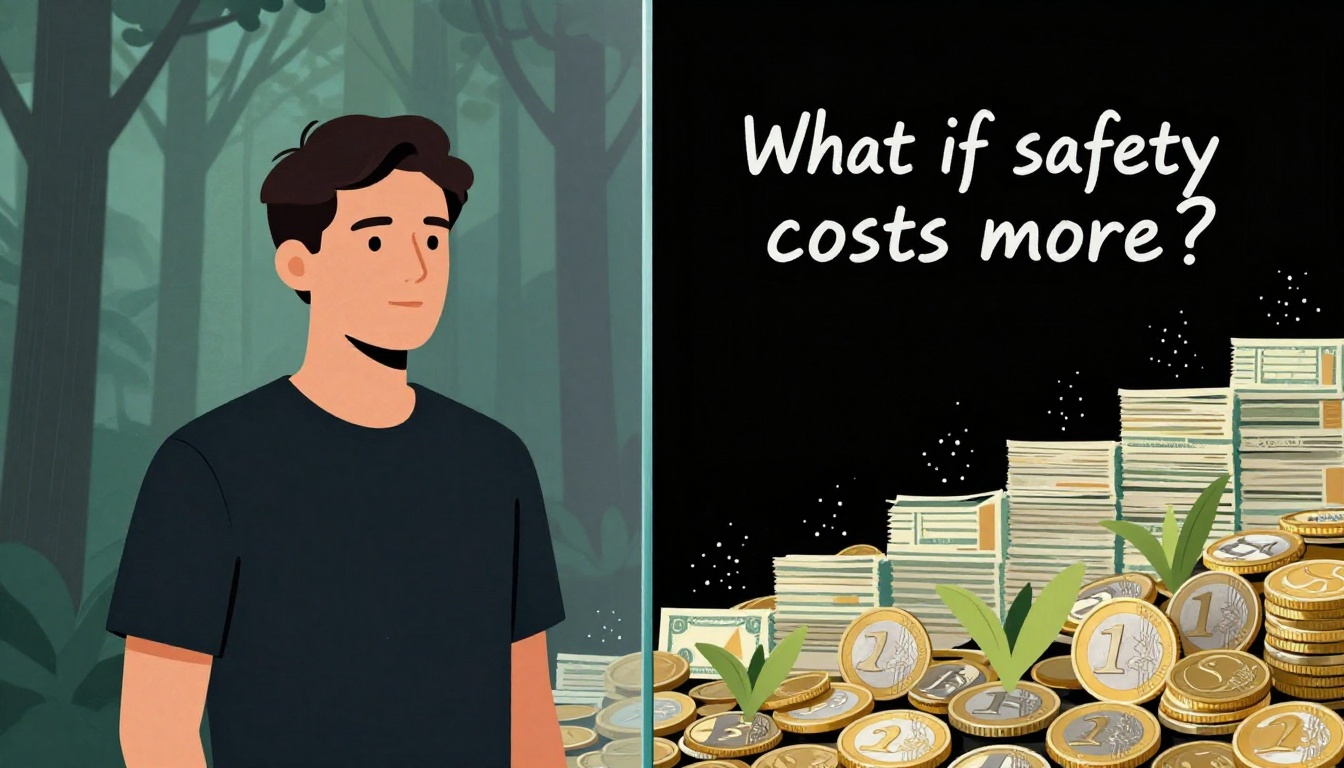
The email arrives the week after your permanent contract starts: “Congratulations on your new position! Let’s discuss your financial future.” You’re 27, earning €3,500 brutto, and for the first time, you have real money left after expenses. The advisor wears a suit, speaks with authority, and recommends the same product your parents used: a Tagesgeldkonto (daily money account) with “guaranteed safety.” Ten years later, you have €45,000 saved and a growing sense that something isn’t right.
This is the story of a 34-year-old German professional who recently confronted a harsh truth: his decade of “safe” saving likely cost him tens of thousands in lost growth. His experience, shared in a popular finance forum, reveals a critical flaw in traditional German financial advice that affects millions of international residents and locals alike.
The €45,000 Illusion: When Safety Becomes Expensive
The numbers look impressive at first glance. Saving €45,000 over ten years demonstrates discipline and consistency. But the real purchasing power tells a different story. With German inflation averaging around 2% annually over that period, and spiking above 7% in recent years, the actual value of those savings has eroded significantly.
Sparkasse, Germany’s largest banking network, openly admits on its website that “Inflation devalues your hard-earned money.” Yet their primary solution remains Festgeld (fixed-term deposits) and Tagesgeld, products that currently offer interest rates far below inflation. The disconnect is stark: banks warn about inflation while promoting products that fail to outpace it.

The forum discussion reveals a common German mindset: “Aktien, ETFs oder Krypto waren für mich lange ‘Zockerei'” (Stocks, ETFs or crypto were long ‘gambling’ to me). This perception, often reinforced by Sparkassen advisors, frames investing as reckless while treating inflation-induced wealth loss as acceptable. The math, however, doesn’t support this framing.
The ETF Alternative: What Your Bank Advisor Won’t Emphasize
While the saver accumulated €45,000 in accounts earning negligible interest, friends who started ETF-Sparpläne (ETF savings plans) with similar monthly contributions now sit on portfolios worth tens of thousands more. The difference isn’t luck or speculation, it’s compound growth in assets that historically outpace inflation.
A finanzen.ch analysis of Tagesgeld-ETFs explains the structural advantage: these products invest in short-term government bonds, offering returns that track the European Central Bank’s deposit rate much more closely than traditional savings accounts. With the ECB rate at 2.00% as of June 2025, while many Tagesgeld accounts pay significantly less, the ETF alternative provides direct exposure to actual market rates.
The key difference lies in Zinsweitergabe (interest rate pass-through). Banks decide how much of the ECB rate to pass to Tagesgeld customers, typically keeping a significant spread. ETFs, by contrast, pass through rates almost directly, minus minimal management fees of around 0.10% annually.
Reframing Risk: Why Inflation Is the Real Danger
German financial culture, particularly within the Sparkassen system, trains savers to fear market volatility while ignoring inflation risk. This creates a dangerous blind spot: your money can lose value gradually and silently, with no headlines or dramatic charts to warn you.
The Reddit user’s story echoes a broader pattern: older generations being steered toward low-yield products by traditional banks. Sparkassen advisors, often working on commission structures that favor simple savings products, present Tagesgeld as “sicher” (safe) without adequately explaining that safety from market fluctuations doesn’t mean safety from purchasing power loss.
This misguided perception of risk that keeps savers in cash while exposing them to inflation is particularly harmful for young professionals who have decades to ride out market volatility. The DKB’s controversial classification of gold as “high-risk” while allowing individual stock trading reveals how arbitrary these risk labels can be.
The Compound Cost of Waiting
Let’s quantify the damage. If the saver had invested €300 monthly (the same amount likely going into his Tagesgeld) into a simple MSCI World ETF over the past decade, historical returns suggest he’d have approximately €55,000-€60,000 today, even accounting for recent market downturns. That’s €10,000-€15,000 more than his current €45,000, while also beating inflation.
The math becomes more painful with larger amounts. For someone with €100,000 sitting in Tagesgeld earning 2% while inflation runs at 3%, the real loss is €1,000 annually. Over ten years, that compounds to over €11,000 in lost purchasing power.
This reality check is especially important for young earners opting for conservative savings despite better investment alternatives. The first years of saving are the most valuable due to compound growth, and wasting them on sub-inflation returns creates a wealth gap that’s difficult to close later.
When “Später Anfangen” (Starting Later) Really Hurts
The forum comments offer some comfort: “Besser spät als nie” (Better late than never). But for many, the realization comes too late to fully recover the lost time. A 40-year-old who finally starts investing after two decades of “safe” saving has lost the most powerful compounding years.
The situation is even more critical for disabled workers avoiding long-term poverty by rejecting ultra-conservative ‘safe’ advice. With lower average incomes and higher medical costs, they cannot afford to let inflation erode their limited savings.
Practical Steps: Breaking the “Sicher” Cycle
If you recognize yourself in this story, here’s how to move forward without self-blame:
1. Audit Your “Safe” Money
Calculate what percentage of your wealth sits in products earning less than inflation. This includes most Tagesgeld, Festgeld, and Sparbücher (savings books). The Sparkasse website lists these products as “sichere Geldanlage” (secure investments), but security is relative.
2. Right-Size Your Emergency Fund
The old rule of 3-6 months expenses in cash may be excessive, especially in Germany’s stable job market. Rethinking cash-heavy emergency funds due to lost investment growth challenges traditional advice. Consider keeping 1-2 months in Tagesgeld and the rest in accessible ETFs.
3. Start Small with ETFs
You don’t need to bet everything on stocks. Begin with a small monthly ETF-Sparplan (ETF savings plan) while keeping your existing savings intact. This builds confidence and experience without immediate risk.
4. Understand the Tax Advantages
Germany’s Freistellungsauftrag (tax exemption order) allows €1,000 in tax-free capital gains annually (€2,000 for married couples). ETFs benefit from this, while Tagesgeld interest is taxed as ordinary income.
The Cultural Shift: From Sparer to Investor
The German financial system’s emphasis on “Sicherheit” (safety) serves banks more than customers. Traditional institutions profit from the spread between what they earn on your deposits and what they pay you. They have little incentive to promote products that reduce their margins, even when those products better serve your long-term interests.
This explains why high consumption and low investing leads to long-term financial insecurity. Many Germans can afford regular iPhone upgrades and streaming subscriptions but struggle to build real wealth because their savings strategy prioritizes the illusion of safety over actual growth.
Final Reckoning: Was It a Mistake?
Looking back, the Reddit user’s “safe” strategy wasn’t entirely wrong, it was incomplete. The real mistake wasn’t saving, it was not diversifying into growth assets once a basic cash cushion was established.
The German approach of “Erst die Sicherheit, dann die Rendite” (First safety, then return) gets the order right but defines safety too narrowly. True financial security includes protection against inflation, not just market volatility.
If you’re in your 30s with cash sitting in Tagesgeld earning 2% while inflation runs higher, you’re not preserving wealth, you’re guaranteeing its gradual disappearance. The market risk you fear is temporary and manageable, the inflation risk you ignore is permanent and certain.
Your Action Plan Today
- This Week: Open a brokerage account and set up a €50 monthly ETF-Sparplan. Start with a broad world index.
- This Month: Review your emergency fund size. Move excess cash to a Tagesgeld-ETF for better inflation protection.
- This Quarter: Calculate your personal inflation rate and compare it to your savings returns. If the gap exceeds 1%, increase your ETF contributions.
- This Year: Educate yourself on asset allocation. Read finanzen.ch’s comparison of Tagesgeld and ETFs to understand the structural differences.
The 34-year-old in the forum still has time to recover. At 34, with 30+ working years ahead, shifting to a balanced investment strategy can still build substantial wealth. The real tragedy would be learning this lesson at 54, when the compounding window has nearly closed.
Don’t let German banking tradition define your financial future. Safety and growth aren’t opposites, they’re partners in building real, lasting wealth.