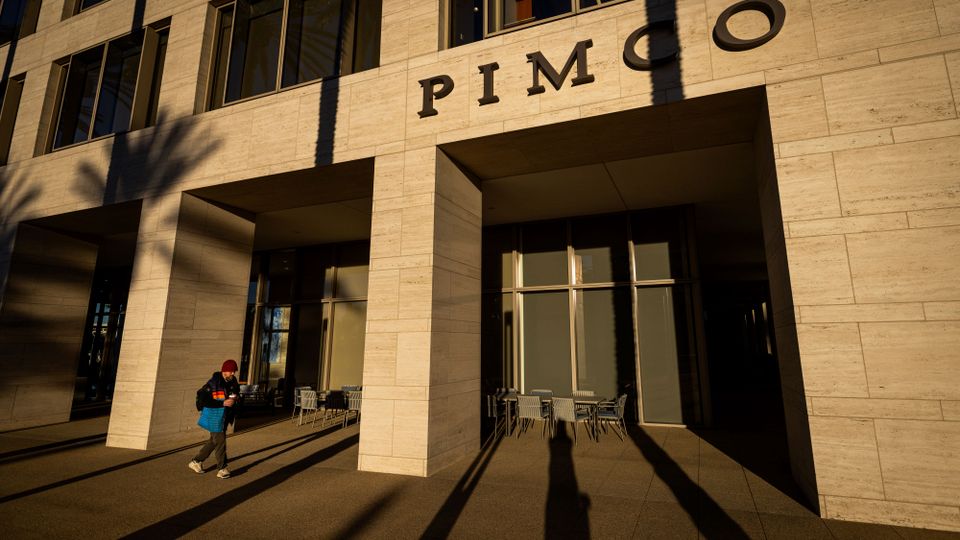
When the world’s biggest bond investor calls the U.S. government “unberechnbar” (unpredictable) and starts moving billions elsewhere, German investors should pay attention. PIMCO’s recent decision to diversify away from U.S. assets isn’t just another Wall Street headline, it’s a structural shift that directly impacts your ETF-Sparplan (ETF savings plan) and the stability of your portfolio.
Why PIMCO Is Running for the Exit
PIMCO’s Chief Investment Officer Dan Ivascyn didn’t mince words when explaining the move to the Financial Times. He described the U.S. administration as “ziemlich unberechenbar” (quite unpredictable) and confirmed the company is in a “mehrjährigen Phase der Diversifizierung weg von US-Vermögenswerten” (multi-year phase of diversification away from U.S. assets). This isn’t tactical repositioning, it’s strategic flight.
The trigger? Trump’s escalating attacks on the Federal Reserve’s independence. Several Wall Street executives now fear the president’s measures could “negativ beeinträchtigen” (negatively impact) the Fed’s crisis management abilities. When the institution that backstops the world’s largest economy appears compromised, even patriotic American fund managers start looking for safer harbors.
German investors often treat U.S. Treasuries as the “sichere Hafen” (safe haven) asset in their portfolios. But what happens when the harbor itself looks stormy?
The Political Risk Premium Just Got Real
For decades, German investors priced U.S. assets with a built-in stability premium. American bonds paid less than their risk suggested because everyone assumed the political system was, well, boring. That assumption is now costing people money.
One German finance professor interviewed by Deutsche Wirtschaftsnachrichten put it bluntly: “Die USA als größte Wirtschaftsmacht haben grundsätzlich immer einen Einfluss auf die Lage in Deutschland” (The USA as the largest economic power fundamentally always has an influence on the situation in Germany). When U.S. policy becomes erratic, the Schaden (damage) ripples straight into German portfolios.
The Reddit discussion captured this sentiment perfectly, without quoting anyone directly. The prevailing mood among international investors reflects frustration that predictable returns from “hoch seriösen Emittenten” (highly serious issuers) have become a thing of the past. Many now question whether the U.S. still deserves its risk-free status.
What This Means for Your German Brokerage Account
Let’s get practical. If you’re a German investor with a typical MSCI World ETF, you’re heavily exposed to the U.S. market. The index allocates roughly 60-70% to American companies. PIMCO’s move suggests institutional investors are now actively hedging that exposure.
Three concrete impacts:
-
Currency risk becomes political risk: Your USD exposure isn’t just about exchange rates anymore. It’s about whether the Fed can function independently. If Trump succeeds in forcing rate cuts while inflation hovers near 3%, the resulting inflation spike could torpedo bond values.
-
European assets look relatively attractive: PIMCO is reallocating to Japan and Europe. German investors might want to consider increasing their home bias, something that feels counterintuitive but could be strategically sound. The EZB (European Central Bank) might be bureaucratic, but it’s not facing direct political interference.
-
Gold isn’t just for conspiracy theorists: As one German financial advisor noted, gold serves to “mögliche Aktienverluste etwas abfedern” (cushion potential stock losses) during crises. With long-term real returns around 2%, it’s not a growth engine but a portfolio stabilizer when political systems wobble.
The Alternative Assets German Investors Are Actually Buying
So where is the money flowing? The research points to several concrete alternatives:
Japan: Low yields, yes, but also political stability and a central bank that operates without presidential tweets.
European sovereign bonds: As one commentator noted, “Welcher Staatschef sagt denn bei uns der Chefin der EZB, dass sie die Zinsen senken soll und droht ihr mit einem Gerichtsverfahren?” (Which head of state tells the head of the ECB to lower interest rates and threatens her with legal proceedings?). The point: European institutions, for all their faults, maintain independence.
Emerging market local currency bonds: Some German wealth managers are dipping into these, attracted by “sinkenden Zinsen und soliden Fundamentaldaten” (falling interest rates and solid fundamentals).
Private markets: German institutional investors are increasing allocations to illiquid assets, chasing “Illiquiditätsprämien” (illiquidity premiums) as traditional fixed income looks shaky.
The Risks Nobody Talks About
Here’s what the glossy marketing brochures won’t tell you: PIMCO can move billions without triggering capital gains nightmares. You can’t.
German investors face specific tax complications when pivoting portfolios. The Vorabpauschale (advance lump sum tax) on ETFs, the complicated Steuererklärung (tax return) requirements for foreign dividends, and the lack of tax efficiency in many brokerage accounts mean that “just reallocating” costs real money.
Moreover, the discussion about “Zinsen nach unten sind manipulieren” (manipulating rates downward) reveals a deeper problem. If the Fed does cave to political pressure and cut rates artificially, the resulting inflation could force a much sharper correction later. That would be “scheiße für Anleihen” (bad for bonds), as one analyst understated.
Actionable Steps for German Investors
You don’t need PIMCO’s research budget to protect yourself:
1. Audit your U.S. exposure: Check your ETFs and funds. If you’re 70% in U.S. assets, consider trimming to 50-55%. Look for ETFs with “EUR hedged” options to reduce currency risk.
2. Build your “Sicherheitspuffer” (safety buffer): Keep 3-6 months of expenses in Tagesgeld (instant access savings) or Geldmarkt-ETFs. Not exciting, but you’ll need it if volatility spikes.
3. Consider European dividend aristocrats: Companies with long histories of stable payouts offer bond-like characteristics without Washington D.C. drama.
4. Don’t panic into gold: As German professors emphasize, gold is a “Beimischung” (additive), not a core holding. Five to ten percent maximum.
5. Review your Anschlussfinanzierung (refinancing): If you have a German property loan, lock in rates now. The European rate environment could shift quickly if capital flows reverse.
The Bottom Line
PIMCO’s move isn’t about hating America. It’s about risk management when political institutions show cracks. German investors, living in a country that values institutional stability über alles (above all), should understand this instinctively.
The capital flight has begun. The question isn’t whether it will affect your portfolio, it’s whether you’ll adjust before or after the market forces you to.
The research is clear: “Die Welt ist nicht sicher, solange das Kapital nicht unter meiner vollständigen und totalen Kontrolle steht” (The world is not safe as long as capital is not under my complete and total control) might work as political theater, but it’s terrible for financial markets. German investors would be wise to follow PIMCO’s lead, quietly, strategically, and with an eye on the Steuerfalle (tax trap) that institutional investors don’t face.