S-Broker vs Neo-Brokers: Sparkasse’s Digital Gamble Falls Short on Price
Sparkasse’s S-Broker wants to prove that traditional banks can fight back against the neo-broker revolution. The promise sounds appealing: combine the trust of Germany’s largest banking network with modern trading capabilities. But when you dig into the numbers, the reality becomes clear, Sparkasse is asking investors to pay premium prices for a service that often feels stuck in 2005.
The Price Gap That Defines Everything
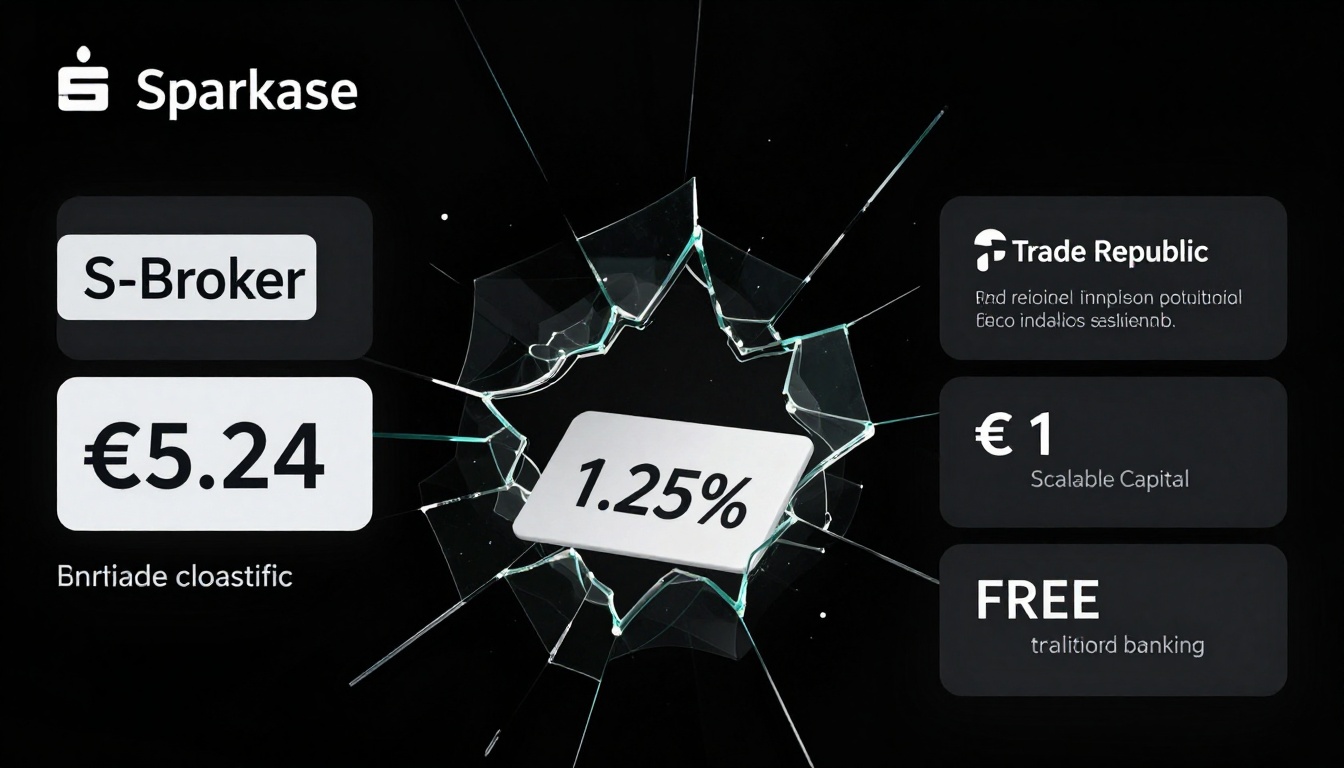
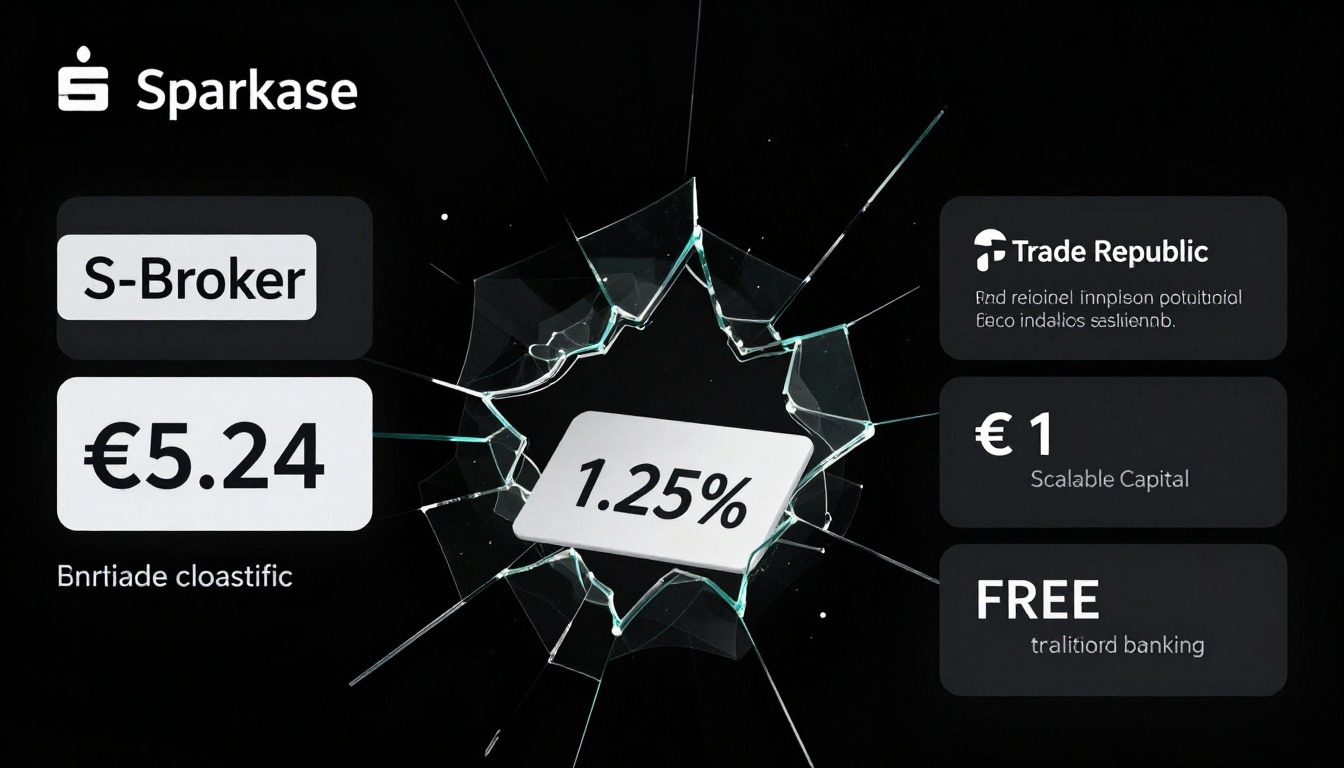
Let’s start with the brutal truth about costs. Neo-brokers built their empires on the €1 trade. Trade Republic charges exactly that per transaction. Scalable Capital’s Free Broker model asks for €0.99 per trade, with many ETF purchases available at zero cost above €250. These platforms eliminated the psychological barrier that kept small investors away from the stock market.
S-Broker operates in a different universe. Their “Sofortorder” costs €3.99 plus 0.25% of the order volume, with a minimum of €8.99 and maximum of €54.99 per transaction. For a typical €500 ETF purchase, you’re paying €5.24. That’s more than five times what Trade Republic charges. The math becomes even more painful for ETF savings plans, S-Broker takes 1.25% of your Sparplanrate (savings plan rate), while the neo-brokers execute most plans for free.
The fee structure reveals Sparkasse’s internal conflict. They’re trying to compete on price while protecting their traditional revenue streams. The result is a compromise that satisfies neither goal. You don’t get the rock-bottom costs of a pure digital player, nor the full-service advice that might justify higher fees.
ETF Availability: The Numbers Don’t Tell the Whole Story
On paper, S-Broker looks competitive for selection. They offer approximately 2,700 ETFs, nearly identical to Scalable Capital’s 2,700 and slightly ahead of Trade Republic’s 2,600. But availability means nothing without accessibility.
S-Broker provides around 1,000 commission-free ETF savings plans. Trade Republic offers over 2,600 free plans. Scalable Capital features more than 2,500 free options. The gap isn’t just quantitative, it’s philosophical. Neo-brokers built their business model around making ETF investing frictionless. Sparkasse treats free access as a promotional feature, not a core principle.
The real limitation appears when you look beyond German exchanges. Trade Republic funnels trades through Lang & Schwarz and Gettex. Scalable Capital uses Gettex and their own European Investor Exchange. S-Broker connects to 60 trading venues worldwide, including direct access to NASDAQ and other international markets. This global reach becomes S-Broker’s strongest argument, but only for a specific user profile.
The “Real Broker” Advantage: A Double-Edged Sword
S-Broker supporters emphasize that it’s a “real broker” (echter Broker), not a simplified trading interface. This distinction matters for serious investors who need features like:
- 24/7 order placement that executes when markets open
- Proper handling of foreign withholding taxes (Quellensteuern)
- Advanced order types and conditional trades
- Access to over 40,000 stocks globally
One user explained that after moving abroad and dealing with complex tax documentation, they began questioning whether the 1.5% savings plan fee at Comdirect might be worth paying compared to the stripped-down neo-broker experience. The cheaper options target standard consumers, people with one residence in Germany, no complex tax situations, and straightforward buy-and-hold strategies.
But here’s the contradiction: if you need these sophisticated features, you’re probably not price-sensitive. And if you’re price-sensitive, these features likely don’t justify the cost. S-Broker occupies an awkward middle ground, offering institutional-grade access while marketing to retail investors who’ve been trained to expect €1 trades.
The App Problem: When Tradition Meets Technology
The most devastating critique of S-Broker comes from its own users. Multiple investors describe the mobile app as “rudimentary” (geradezu rudimentär) and capable of “almost nothing” (fast garnichts). The full functionality requires using the website, defeating the purpose of mobile investing.
This isn’t just about convenience. In 2026, a clunky app signals deeper organizational problems. It suggests Sparkasse still views digital as an add-on rather than the primary channel. While Trade Republic and Scalable Capital iterate their apps weekly based on user data, S-Broker’s digital experience feels like a corporate checkbox exercise.
The planned new trading app, announced for summer 2026, might change this. Sparkasse leadership promises a solution for “self-deciders” (Selbstentscheider) that will roll out nationwide. But launching a modern app in 2026 is like opening a fancy website in 2010, the baseline expectation has moved again. By the time Sparkasse catches up, the neo-brokers will be on their next innovation cycle.
The Hidden Depot Fee That Changes Everything
S-Broker charges €3.99 monthly for depot maintenance unless you meet specific conditions: maintain a €10,000 balance, execute at least one trade per quarter, or run a savings plan. On paper, this seems reasonable. In practice, it creates a psychological lock-in effect.
Neo-brokers eliminated these fees entirely. You can open an account, deposit €50, and let it sit for a year with zero cost. This freedom encourages experimentation and learning. S-Broker’s fee structure penalizes inactivity, pushing users to make trades they might not otherwise consider.
For young investors under 26, S-Broker waives these fees through their “Young Invest” program. This reveals who Sparkasse really fears losing, the next generation of wealth management clients. But offering free accounts to students while charging everyone else premium rates is a defensive move, not a competitive strategy.
Who Should Actually Use S-Broker?
International professionals who need cross-border tax handling and access to foreign exchanges. If you’re regularly buying US stocks or managing tax implications across countries, S-Broker’s infrastructure justifies the cost.
Branch-dependent users who value in-person support. Some investors, particularly older ones or those new to markets, sleep better knowing they can walk into a Sparkasse Filiale (branch) and speak with a human. The neo-brokers’ digital-only support models have documented failures, leaving users locked out for weeks when problems arise.
For everyone else, the math doesn’t work. The €8.99 minimum order cost means any trade under €360 is proportionally more expensive than neo-broker alternatives. Over a year of monthly €200 investments, you’d pay €96 in S-Broker fees versus €12 at Trade Republic.
The Regulatory Cloud Hanging Over Everyone
The elephant in the room is the EU’s Payment for Order Flow (PFOF) ban, taking full effect in July 2026. This regulation threatens the neo-broker business model, which receives payments from trading venues for routing orders through them. Trade Republic will need to replace roughly one-third of its revenue.
S-Broker, with its traditional fee structure, faces less disruption. If anything, the regulation levels the playing field slightly. But this advantage is temporary. Neo-brokers have known about this change for years and have been building alternative revenue streams, from premium subscriptions to payment services.
The real question isn’t whether S-Broker can compete today, but whether it can adapt faster than the neo-brokers can build trust and complexity into their platforms.
The Verdict: A Solution Searching for a Problem
Sparkasse’s S-Broker represents Germany’s financial establishment attempting to retrofit modern investing onto traditional banking infrastructure. The result is a service that costs more, works less smoothly, and targets a user segment that may not exist in meaningful numbers.
For price-sensitive ETF investors, Trade Republic and Scalable Capital dominate. For sophisticated traders needing global access, Interactive Brokers or Flatex offer better tools at similar or lower costs. For branch-lovers, Sparkasse’s existing advisory service already serves that need.
S-Broker’s competitive position relies on two assumptions: that investors will pay for the Sparkasse name, and that regulatory changes will cripple neo-brokers. Both are risky bets. The name carries weight for deposits and mortgages, but not for speculative investments. And regulation rarely favors incumbents in tech-driven markets.
The planned new app might improve the user experience, but it won’t solve the fundamental pricing problem. Until Sparkasse commits to building a truly digital-first service with transparent, low costs, S-Broker remains a defensive product, not a competitive one.
If you’re already a Sparkasse customer with complex needs, S-Broker might justify its keep. For everyone else, the neo-brokers offer better value, better apps, and a clearer vision of investing’s future. The traditional banks had their chance to own this market. They chose to protect their margins instead. Now they’re playing catch-up at a price no one wants to pay.
Internal Links for SEO:
- Learn how neo-broker pricing is under regulatory pressure from upcoming EU bans
- Understand the complexities of tax-free allowances across multiple brokers
- Explore how neobrokers are expanding into state-subsidized pensions
- Read about digital-only broker customer service challenges
- Discover the risks of broker switching and bonus incentives
- Understand ETF investment risks and product complexity