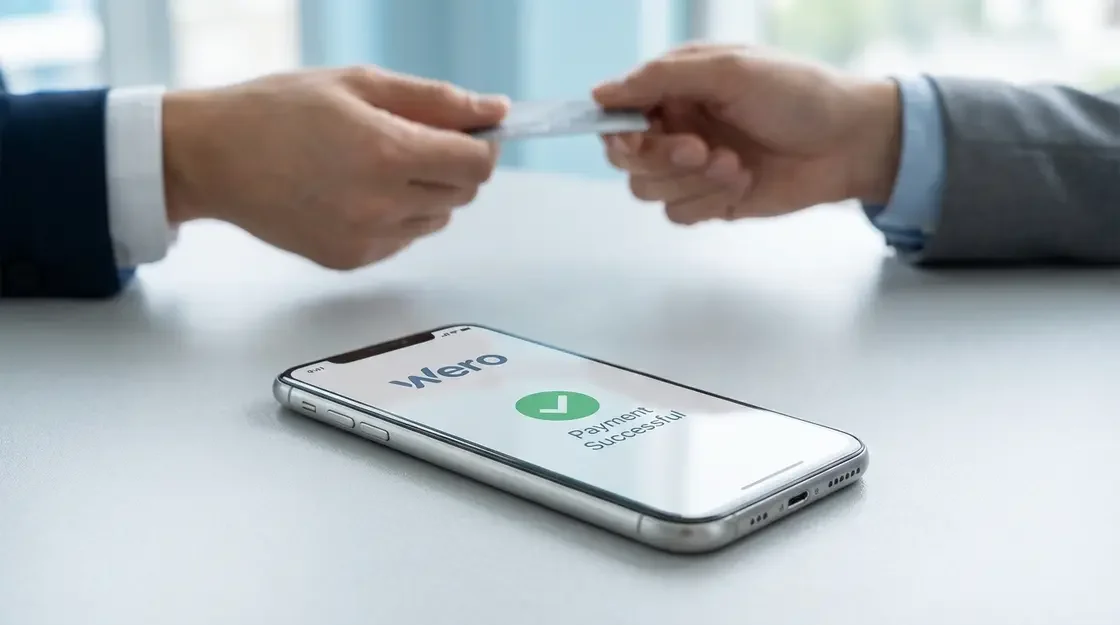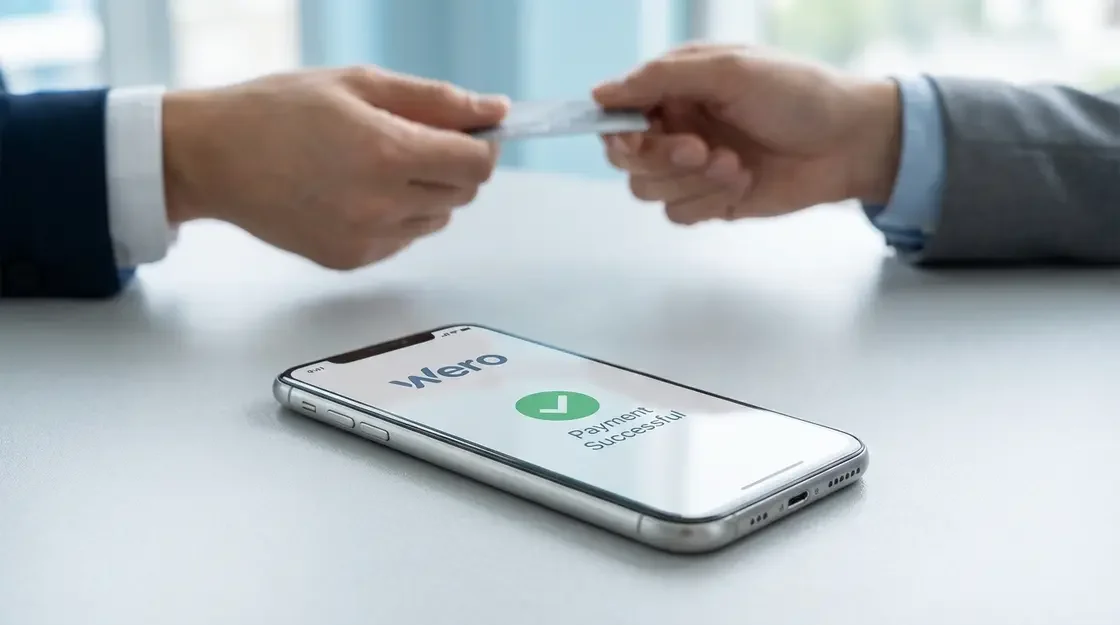
The checkout screen shows two options: PayPal, which sends your money to Silicon Valley, or Wero, which keeps it in Europe. For most Germans, the choice remains theoretical, Wero exists, but you probably haven’t used it yet. After 18 months, the European Payments Initiative (EPI) reports 46 million users and over €5 billion in transactions. The numbers sound impressive until you realize PayPal has 30 million active users in Germany alone.
Wero represents Europe’s most serious attempt yet to build a payment system that doesn’t answer to American tech giants or Chinese investors. But serious attempts don’t always translate into practical solutions.
What Wero Actually Is (And Isn’t)
Wero functions as a direct bank-to-bank transfer system. When you send money, it moves instantly from your Girokonto (checking account) to the recipient’s account, no intermediary holds the funds, no separate wallet balance accumulates. The system runs on SEPA-Echtzeitüberweisung (SEPA instant transfer) rails that German banks have offered for years.
The innovation isn’t technical. It’s organizational. Sparkassen (savings banks), Volksbanken (cooperative banks), Deutsche Bank, ING, Postbank, and eventually N26 and Revolut all agreed to let customers send money using phone numbers or email addresses instead of IBANs. This simple convenience layer transforms a clunky 22-character account number into something humans can actually use.
But here’s where definitions matter: Wero isn’t a PayPal clone. PayPal acts as an escrow service and payment shield, you never expose your bank details to merchants. Wero exposes your IBAN to anyone who knows your phone number. For some users, this transparency creates privacy concerns that the old system avoided.
The Sovereignty Sales Pitch
European regulators and bank executives frame Wero as a strategic necessity, not just a consumer product. Bundeskanzler Friedrich Merz and Finanzminister Lars Klingbeil have both endorsed the project, though the Finanzministerium (Finance Ministry) explicitly rejects forcing merchants to accept it.
The logic runs like this: 64% of card transactions in the Eurozone flow through Visa and Mastercard systems. PayPal dominates online checkout. If geopolitical tensions escalate, or if U.S. regulators decide to weaponize payment networks, Europe could find its own commerce subject to American political decisions. The Trump administration’s 2025 sanctions against the International Criminal Court prosecutor, which cut off his Microsoft services, serves as a cautionary tale.
This argument resonates with German investors already reconsidering their U.S. stock exposure. The same forces driving European financial sovereignty and reducing dependency on U.S. financial systems make Wero appealing beyond its technical features.
The Reality Check: Where You Can Actually Use It
As of early 2026, Wero works in five countries: Germany, France, Belgium, the Netherlands, and Luxembourg. Partnerships with Spain’s Bizum, Portugal’s SIBS, Italy’s Bancomat, and Scandinavia’s Vipps Mobilepay promise cross-border functionality by 2027. For now, sending money to your cousin in Spain means convincing them to download an app they’ve never heard of.
Online merchant adoption remains limited. Eventim, Lidl, Rossmann, Decathlon, and Hornbach have signed on, about 125 merchants total. Ikea and Zalando are “considering integration”, which in corporate speak means they’ve scheduled a meeting to discuss scheduling a meeting.
In-store payments launch summer 2026 using QR codes. This approach requires no new hardware but demands customers scan, confirm, and wait, slower than tapping a contactless card. The Swiss TWINT system proves QR payments can work, but Germany isn’t Switzerland.
The Merchant Perspective: Follow the Money
For retailers, the math looks compelling. PayPal charges 1.8-2.5% plus a fixed fee per transaction. Wero eliminates Visa/Mastercard interchange fees entirely, saving an estimated 0.5-1% per sale. For a mid-sized online shop doing €10 million annually, that translates to €50,000-100,000 in saved fees.
More importantly, Wero payments are final. No chargebacks, no disputes, no “the customer claims they never received it” headaches. The money arrives and stays. PayPal’s buyer protection, beloved by consumers, creates unpredictable liabilities for merchants.
But merchants face a chicken-and-egg problem. Only 10% of Germans have registered for Wero, and just 4% have actually used it. Installing checkout infrastructure for such a small base makes little business sense. The Finanzministerium’s refusal to mandate acceptance means adoption depends entirely on consumer demand, which barely exists.
Consumer Trade-offs: Privacy vs. Protection
From a user standpoint, Wero offers genuine advantages. Transactions settle in seconds, not days. No fees. Data stays under EU jurisdiction, protected by Datenschutz-Grundverordnung (General Data Protection Regulation) rather than American laws. For the privacy-conscious, this matters.
Yet the system lacks PayPal’s killer feature: buyer protection. Ordered shoes that never arrived? Paid for a service that wasn’t rendered? With PayPal, you file a claim and typically get your money back. With Wero, you call your bank and hope for goodwill. The European Payments Initiative promises protection mechanisms are “in development”, but vaporware doesn’t help with today’s purchases.
The privacy situation contains its own irony. While Wero shields transaction metadata from American companies, it reveals your IBAN to anyone with your phone number. One user discovered that knowing someone’s mobile number and first name was enough to retrieve their full name, IBAN, and bank details through the system. For parents sharing numbers in school groups or professionals networking, this oversharing creates new risks.
The Klarna Factor: A Different European Vision
While European banks slowly build Wero, Swedish fintech Klarna isn’t waiting. Klarna’s new peer-to-peer payment feature launched in 13 countries simultaneously, including the UK where Wero has no presence. The company leverages its existing “Buy Now, Pay Later” user base and millions of newly issued debit cards.
Klarna’s CEO frames the competition differently: “Customers are fed up with traditional banking complexity and fees.” The company positions itself as consumer-friendly alternative, not a geopolitical statement. This market-driven approach may prove more effective than Wero’s sovereignty narrative.
Klarna also offers what Wero currently cannot: international reach, established brand recognition, and actual buyer protection mechanisms. The Swedish company proves European fintech can compete, just not necessarily through bank consortiums.
Should You Activate Wero?
If your bank offers it, and Sparkassen, ING, Deutsche Bank, and Postbank customers already have access, activation takes three minutes. Open your banking app, link your phone number, and you’re set. There’s no downside to having it available.
For splitting restaurant bills with friends or sending money to family members who also use participating banks, Wero works flawlessly. It’s genuinely easier than manual IBAN entry and faster than traditional transfers.
For online shopping, stick with PayPal for now. The buyer protection gap is too significant, especially with unfamiliar merchants. Wero makes sense only when you trust the seller completely.
For in-store payments, wait until summer 2026 when QR code functionality launches and more merchants come online. The system needs time to mature.
The Verdict: A Foundation, Not a Finished Product
Wero succeeds in creating a technical foundation for European payment sovereignty. The infrastructure exists, the banks are aligned, and the regulatory support is solid. But infrastructure without users creates a ghost town.
The project’s biggest challenge isn’t technical, it’s psychological. PayPal spent 25 years becoming synonymous with online payments. “PayPal me” is a verb, “Wero me” is a tongue-twister. Changing consumer behavior requires either overwhelming convenience or overwhelming necessity. Wero currently offers neither.
European policymakers understand this. The Finanzministerium supports the project but won’t force merchants to adopt it. They recognize that digital sovereignty cannot be mandated by decree, it must be earned through superior user experience.
For German consumers navigating broader financial pressures on German consumers and digital finance adoption, Wero represents another option in an increasingly complex financial landscape. It’s not yet a solution, but it’s a start.
The question isn’t whether Wero can challenge PayPal today. It’s whether Europe can afford not to try. In a world where payment systems become geopolitical weapons, having a domestic alternative, however imperfect, beats having none at all.
If you’re concerned about consumer financial data and privacy in Germany’s digital economy, Wero’s European data residency offers genuine protection. Just don’t expect it to replace PayPal tomorrow. The European Payments Initiative has built the rails. Now they need to convince people to ride the train.
Bottom line: Activate Wero if your bank offers it. Use it for trusted contacts. Wait on everything else. The potential is real, but the present remains limited. Europe’s payment sovereignty depends on projects like this succeeding, but success will be measured in years, not months.