Vanguard’s Global All-Cap ETF Launch: Why German Investors Might Finally Ditch Their Complicated Portfolios
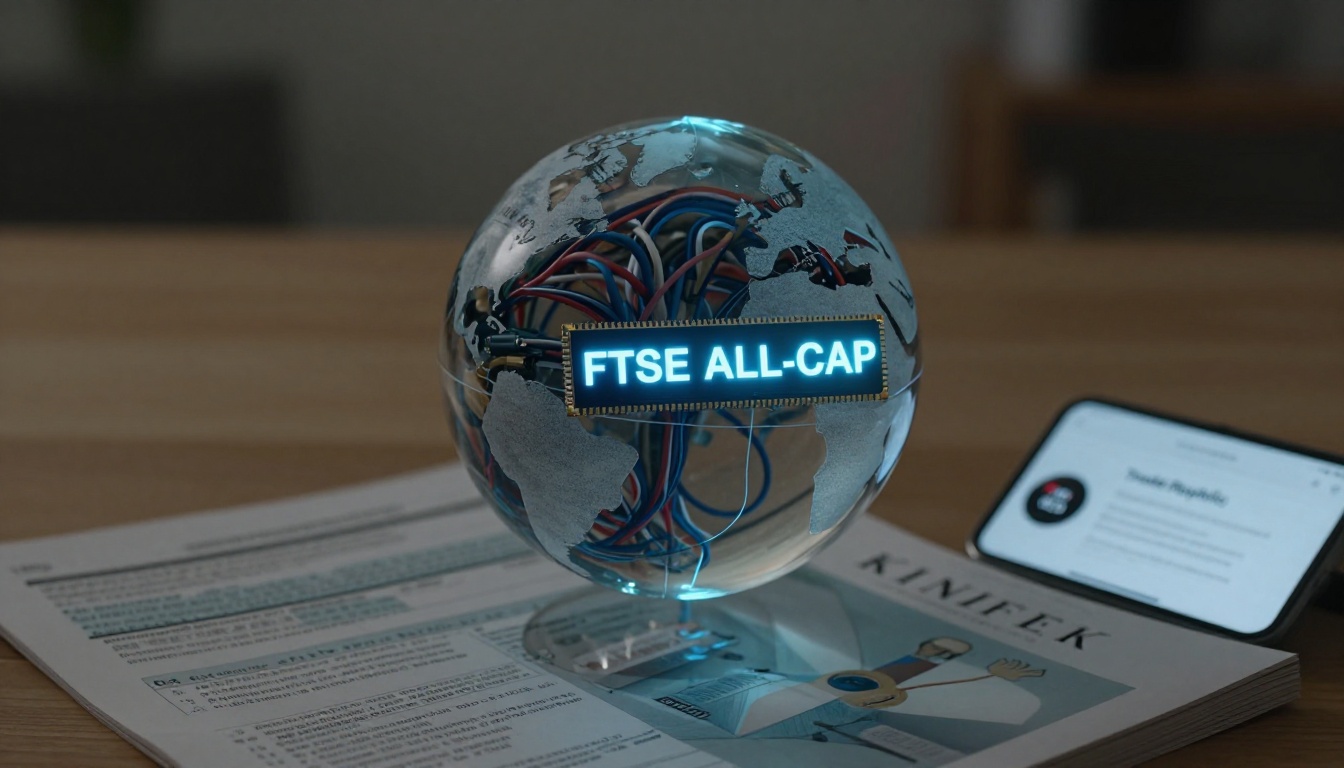
Vanguard is quietly preparing to drop a bombshell on the German ETF market, a new FTSE Global All-Cap UCITS ETF that could make your carefully constructed three-fund portfolio look like financial cosplay. While the official costs remain under wraps, the registration in Ireland signals that passive investors might finally get what they’ve been asking for: true global market exposure without the ESG filter that’s been foisted upon them.
The Portfolio Simplification You’ve Been Waiting For
If you’re currently juggling a Vanguard FTSE All-World ETF (IE00BK5BQT80) with a separate small-cap supplement, you understand the frustration. The existing All-World ETF covers roughly 3,700 companies across 49 countries, which sounds comprehensive until you realize it deliberately excludes small-cap stocks. Many German investors have compensated by adding a dedicated small-cap ETF, creating a two-fund solution where one should suffice.
The new Global All-Cap ETF promises to track the entire FTSE Global All Cap Index, bringing those overlooked small companies into the fold. This matters because small-cap stocks have historically delivered different risk-return characteristics than their large-cap brethren. For German investors who’ve been manually rebalancing between their All-World position and a small-cap satellite, this is the financial equivalent of finally getting a dishwasher after years of hand-washing.
But here’s where it gets interesting: the existing Vanguard FTSE All-World already carries a competitive TER (Total Expense Ratio) of 0.22%. German investors have become cost-conscious to the point where even a 0.02% difference sparks heated debates in brokerage forums. Many expect the Global All-Cap to land between 0.15% and 0.25%, but anything above 0.20% might face skepticism from the Finanzcommunity (financial community).
The ESG Rebellion Nobody Talks About
Vanguard’s current Global All-Cap offering comes with ESG screening, which has become a polarizing topic among German investors. While some appreciate the ethical filtering, others view it as performance-dragging virtue signaling that deviates from pure index investing principles. The new non-ESG version represents Vanguard acknowledging that not everyone wants their portfolio curated by sustainability committees.
This shift reflects a broader sentiment among German retail investors who’ve grown wary of ESG’s murky definitions and inconsistent application. When you’re trying to maximize your Sparerpauschbetrag (saver’s allowance) efficiency, the last thing you want is a nebulous ESG overlay potentially limiting your market exposure. The new ETF essentially says: “Here’s the entire market, warts and all, decide for yourself what to exclude.”
Cost Paranoia: The German Investor’s Favorite Pastime
German investors scrutinize ETF costs with the same intensity they apply to their electricity bills. The research shows existing MSCI World ex-USA ETFs already offer TERs around 0.15%, setting a brutal benchmark. If Vanguard’s Global All-Cap launches at 0.25% or higher, it risks being dismissed as “too expensive” despite offering broader exposure.
This cost sensitivity explains why the cost structure of global ETFs available to German investors generates so much discussion. Comdirect’s recent attempt to market a “free” All-World ETF with a 0.4% TER was met with collective eye-rolls from the community. Anything above 0.25% for the new Global All-Cap would likely face similar skepticism, regardless of its expanded universe.
The real question isn’t just the TER, but the Tracking Difference, the gap between the ETF’s performance and its index after all costs. Vanguard’s existing funds often achieve positive tracking differences through securities lending, effectively making them cheaper than their stated TER. German investors have learned to look beyond the headline number, studying annual reports with the thoroughness of a Steuerprüfer (tax auditor).
Brokerage Wars: Who Wins With the New ETF?
The new Global All-Cap ETF will almost certainly be available on all major German brokerage platforms, but the execution quality will vary. Trade Republic and Scalable Capital have built their business models around free ETF Sparpläne (savings plans), making them natural homes for this fund. Traditional banks like ING have followed suit, now offering permanent fee-free ETF savings plans to remain competitive.
The choice between these platforms matters more than many realize. While Trade Republic offers simplicity and a slick app interface, Scalable Capital provides access to over 1,700 Prime ETFs with extended trading hours. For the new Global All-Cap, which will likely see highest trading volumes during US market hours, this flexibility could matter for lump-sum investors.
German investors should also consider the spread, the difference between buy and sell prices. Even with commission-free trading, a wide spread can cost more than a small brokerage fee. The most cost-conscious investors might split their strategy: using Trade Republic for monthly Sparpläne while executing larger lump sums on platforms with tighter spreads.
Tax Implications: The German Complication
Here’s where the German context becomes critical. The new ETF’s structure will determine how it handles the Vorabpauschale (advance lump sum) taxation that confounds even experienced investors. Accumulating ETFs like the existing Vanguard FTSE All-World have become popular because they automatically reinvest dividends, simplifying tax reporting.
However, the accumulating vs. distributing debate remains heated. Some investors prefer distributing ETFs to manually utilize their Sparerpauschbetrag each year, while others value the pure compounding of accumulating funds. The new Global All-Cap will likely offer both versions, forcing investors to make yet another optimization decision.
For those considering leaving Germany, the tax implications for German investors holding ETFs when exiting Germany add another layer of complexity. The exit tax can trigger deemed dispositions on your ETF holdings, potentially creating a 30% tax bill on unrealized gains. This makes the choice between All-World and Global All-Cap more than just a diversification decision, it becomes a strategic consideration for mobile professionals.
The Portfolio Consolidation Opportunity
Many German investors currently run complicated portfolios: MSCI World for developed markets, MSCI Emerging Markets for growth, and a small-cap ETF for completeness. The Global All-Cap could replace all three, reducing rebalancing headaches and administrative overhead. This simplicity aligns perfectly with the German preference for Ordnung (order) and efficiency.
The trend toward simplification reflects growing adoption of ETFs among younger German investors, who’ve abandoned their parents’ complex insurance-based products for straightforward index investing. They understand that time in the market beats timing the market, and they’d rather spend their weekends hiking in the Black Forest than rebalancing spreadsheets.
The Hidden Risk Nobody Mentions
While broader diversification sounds universally positive, the Global All-Cap’s inclusion of smaller companies introduces different risk factors. Small-caps are more sensitive to economic cycles and typically exhibit higher volatility. During market stress, they can underperform dramatically as liquidity dries up.
This matters for German investors who’ve grown accustomed to the relative stability of large-cap dominated indices. The 2008 financial crisis and 2020 pandemic both saw small-caps suffer steeper declines. While long-term returns have compensated for this risk, investors need to understand what they’re signing up for.
The geopolitical risks affecting globally diversified ETF strategies also become more pronounced with broader exposure. Small-caps often have more localized operations, making them vulnerable to regional economic shocks. A trade dispute that barely registers for multinational giants could devastate smaller, more focused companies.
Practical Takeaways for German Investors
If you’re currently using a Vanguard FTSE All-World ETF, should you switch? The answer depends on your cost basis and investment timeline. Selling your existing position could trigger capital gains taxes that negate any benefit from the slightly broader exposure. Most investors would be better off directing new investments to the Global All-Cap while letting their existing All-World position ride.
For those building their first €10,000 portfolio, the decision is clearer. The Global All-Cap offers genuine one-fund simplicity that aligns with the early-stage ETF investing journey for German retail investors. Starting with a single comprehensive fund eliminates analysis paralysis and gets you invested immediately.
The hybrid approach remains valid: use the Global All-Cap as your core holding, then add satellite positions in specific themes like technology or high-dividend stocks. This strategy acknowledges that while total market exposure is efficient, some investors want to tilt toward particular factors.
The Bottom Line
Vanguard’s Global All-Cap ETF isn’t revolutionary, it’s evolutionary. It fills a gap that sophisticated German investors have been hacking together themselves. The real innovation is recognizing that many investors want pure market exposure without overlays or complications.
The success will hinge on cost. If Vanguard can deliver a TER under 0.20%, they’ll capture significant market share from competitors and convince many German investors to consolidate their portfolios. If it launches at 0.25% or higher, it may remain a niche product for purists who value completeness over cost efficiency.
For now, German investors should monitor the launch timeline and prepare their brokerage accounts. Whether you use Trade Republic, Scalable Capital, or traditional banks like ING, the new ETF will likely be available from day one. Just remember to check the Tracking Difference reports after the first year, because in Germany, the stated TER is merely the opening bid in a longer conversation about true costs.
The real winner here isn’t just Vanguard, but the German investor who finally gets to stop apologizing for their “overly simplistic” one-fund portfolio. Sometimes the most sophisticated strategy is the one that requires the least maintenance.