You’re sitting in your rented apartment in an East German Kleinstadt (small town), paying €1,360 warm each month, when the developer knocks on your door with an offer that sounds too good to refuse: a freshly renovated, energy-efficient apartment with a €37,500 KfW Zuschuss (subsidy) already baked into the price. The catch? You’ll need to cough up €366,000 and take on €1,614 in monthly financing costs for the next decade.
This isn’t a hypothetical scenario. It’s the exact situation facing a young couple in their late twenties, and it’s become a textbook example of how German real estate subsidies can make a questionable investment look deceptively attractive. Let’s dissect the numbers, the psychology, and the hard truths about leveraging KfW Förderung (promotional funding) in regions where the population is shrinking faster than your equity.
The Subsidy Mirage: Understanding What That €37,500 Actually Means
First, let’s clarify something critical: that €37,500 isn’t cash in your pocket. It’s a KfW Zuschuss tied to the property’s energy efficiency standards, specifically KfW 70, meaning it uses 70% of the reference building’s allowed primary energy. The apartment features Fußbodenheizung (underfloor heating), triple-glazed windows, and modern insulation. All excellent features, but here’s where it gets complicated.
According to KfW guidelines, the Programm 124 for Wohneigentum (home ownership) offers up to €100,000 in subsidized loans, while Programm 151 for energetic renovation provides up to €120,000 per unit. The €37,500 represents a grant portion, not a loan reduction. It’s designed to offset the premium cost of building to higher energy standards.
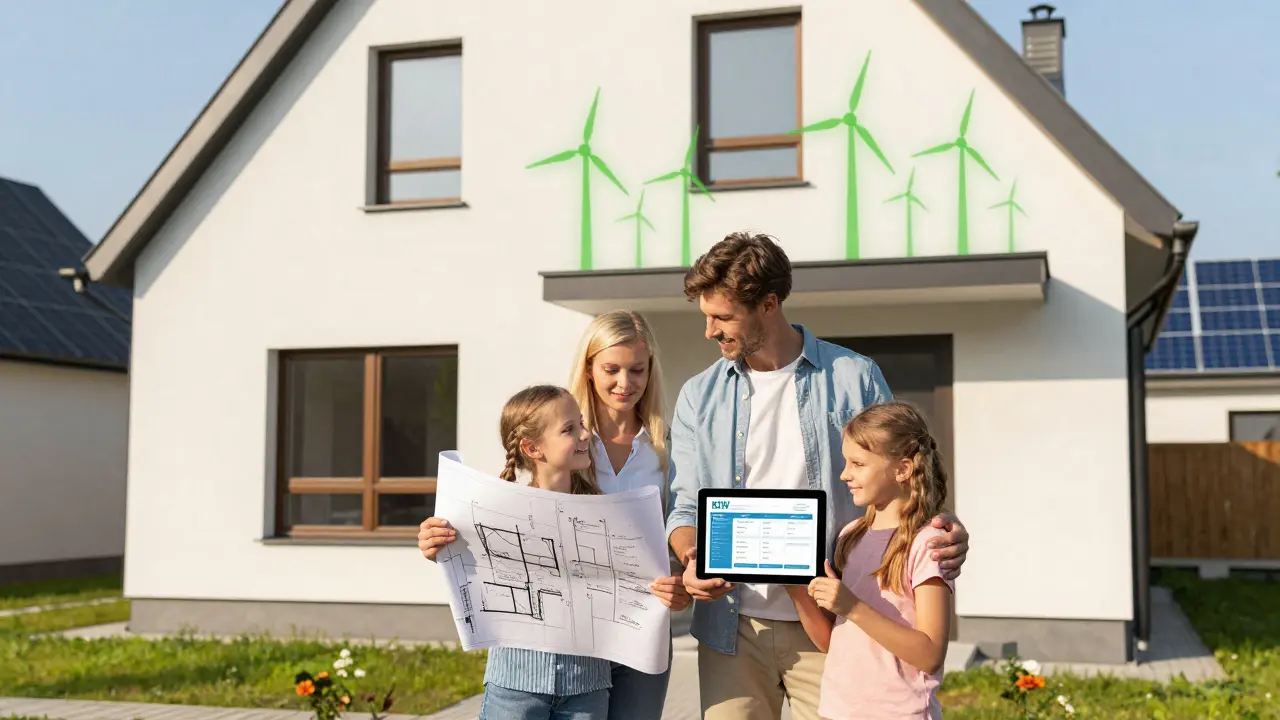
But here’s the uncomfortable question: does the subsidy justify the purchase price? In East German small towns outside Berlin’s Speckgürtel (commuter belt), Leipzig, or Dresden, property values face persistent downward pressure from demographic decline. As one analysis bluntly states, every East German city not named Berlin, Erfurt, Jena, Dresden, Leipzig, Rostock, or Magdeburg is “under water” and bleeding population, some quickly, some slowly. In cities like Gera or Chemnitz, ownership apartments start at €20,000.
Your €366,000 purchase price translates to €3,211 per square meter for 114 sqm. That’s not outrageous for a renovated property, but it’s stout money for a region where future buyers are scarce. The subsidy might be subsidizing the developer’s margin more than your future.
The Debt Structure: A House of Cards at 3.61%
The couple’s financing package reveals the classic KfW-Bankkredit (bank credit) combination strategy: €150,000 through KfW at 3.15% effective interest, and €217,000 through a conventional bank at 3.93%. This creates a blended rate of 3.61% over ten years.
Let’s put this in perspective. Their household net income is €5,300 monthly. The €1,614 financing payment represents 30.5% of net income, right at the edge of what German banks consider acceptable. But that’s before we factor in the €550 monthly car payment on a €49,000 electric vehicle loan.

The Haushaltsrechnung (budget calculation) German banks perform would show:
– Net income: €5,300
– Car loan: €550
– Mortgage payment: €1,614
Remaining for living: €3,136
That €3,136 must cover utilities, Hausgeld (building fees), maintenance reserves, property taxes, insurance, and actual living expenses. When they mention “including utilities and Hausgeld we’d be at €2,000 monthly”, they’re acknowledging the true ownership burden exceeds their current warm rent by €640 each month.
The Ten-Year Trap: Why KfW Loans Create a False Sense of Security
Here’s what many buyers miss: KfW Darlehen (loans) typically have maximum ten-year terms. The KfW portion, €150,000 in this case, must be repaid or refinanced after a decade. The conventional bank loan also has a ten-year Zinsbindung (interest rate lock).
This creates a perfect storm in 2036. The couple will be 40 and 37 years old, potentially with children, facing:
– A balloon payment or refinancing of €150,000+ KfW portion
– Refinancing the remaining bank loan principal at whatever interest rates prevail in 2036
– A property that may have depreciated in a shrinking market
If interest rates are higher then, and with Germany’s demographic trends, they likely will be, their monthly burden could jump significantly. The tilgungsfreie Anlaufjahre (interest-only startup years) some KfW programs offer don’t apply here, they’re paying full freight from day one.
The Opportunity Cost: What That €640 Monthly Difference Could Buy
The couple currently pays €1,360 warm. Ownership would cost €2,000+ monthly. That’s a €640 difference, €7,680 annually, that could alternatively flow into a diversified ETF portfolio.
Historical data suggests that over a ten-year period, a balanced ETF strategy could yield 6-7% annually. Compounded, that €640 monthly investment could grow to approximately €105,000. Meanwhile, the property’s value in a declining East German market might stagnate or drop.
This is where the emotional versus financial decision forks. As one observer noted, many people with finance degrees find their families ignoring their advice, instead trusting Hausbank (house bank) advisors with quarterly quotas to hit. The psychology of “owning your four walls” often overrides cold arithmetic, particularly in Germany, where renting carries a stigma despite strong tenant protections.
When KfW Subsidies Actually Make Sense
KfW Förderung isn’t the problem, it’s the context. The subsidies shine in three scenarios:
- Neubau (new construction) of Effizienzhäuser (efficiency houses): Combining Programm 124 (up to €100k) + Programm 151 (up to €120k) + Ergänzungskredit can yield €370,000 in subsidized financing per unit. For a family building a KfW 40 or 55 standard home, this is transformative.
- Major energetic renovation: When you’re already committed to replacing heating systems, insulation, and windows, the BAFA Zuschuss (federal subsidy) plus KfW Ergänzungskredit can close funding gaps.
- Stable markets: In growing regions with strong employment, the subsidy accelerates equity building rather than propping up questionable valuations.
The East German small town scenario fails the third test. As one demographic analysis warns, population outflow makes resale values uncertain. Your subsidized purchase price might reflect future value that never materializes.
The Bureaucratic Reality Check
KfW Förderung demands precision. Every invoice must reference the exact program title. Start work before approval, and your funding vanishes. One finanztip.de user reported a three-month delay because an invoice lacked the proper program name.
For this couple, the developer’s offer includes Mitspracherecht (co-determination rights) during final construction since the unit isn’t finished yet. This sounds appealing but creates documentation risks. If the KfW audit finds deviations from the approved energy concept, subsidy clawbacks could follow.
The Grundbucheintrag (land register entry) requirement also means both loans are secured against the property. Default on either triggers foreclosure. And unlike conventional loans, KfW Darlehen cannot be easily umgeschuldet (refinanced) to another bank later.
The Verdict: A Financial Tightrope with Limited Upside
Running the ROI calculation for this property reveals the uncomfortable truth:
Best case: Property values hold, they build equity, and in ten years they refinance at similar rates
Realistic case: Property value stagnates, they pay €76,800 more than renting over ten years, and face refinancing risk
Worst case: Population decline accelerates, property value drops 20-30%, they’re underwater on the mortgage
The €37,500 subsidy doesn’t change this math, it merely makes a marginal deal appear palatable. As one financial advisor might say when seeking unbiased financial advice for bank loans, the bank’s interest isn’t your optimal outcome, it’s closing the loan.
The couple’s discomfort with the €1,614 monthly payment is warranted. At their age and income level, tying up 38% of net income in debt service (car + property) leaves little margin for life changes, children, job loss, or relocation.
Actionable Alternatives
If you’re considering a similar deal, run these numbers first:
- Rent vs. Buy Calculator: Factor in the €640 monthly difference invested in ETFs. Over ten years, which builds more wealth?
- Demographic Deep Dive: Check the Kommune’s (municipality’s) population projections. If it’s declining, your property likely is too.
- KfW Program Fit: Does your project truly qualify for multiple programs? Single measures often don’t justify the administrative burden.
- Stress Test: Can you afford payments if the KfW portion refinances at 5% in ten years?
- Liquidity Reserve: After Nebenkosten (ancillary costs) like Grunderwerbsteuer (property transfer tax) and notary fees, do you still have six months’ expenses saved?
The brutal reality? That €37,500 subsidy might be the most expensive “gift” you ever receive if it locks you into a depreciating asset in a shrinking market. Sometimes the smartest real estate investment is the one you don’t make, especially when the government is helping you afford it.
For those weighing property against other investments, comparing investment asset allocation before purchasing real estate reveals how liquid portfolios often outperform illiquid real estate in uncertain markets. The flexibility to move for opportunity, the absence of maintenance costs, and the power of diversification aren’t captured in a subsidy calculation.
German efficiency is real, but it works both ways: the system will efficiently process your loan application, and it will just as efficiently foreclose if circumstances change. Make sure the numbers work without the subsidy first. If they don’t, walk away, no matter how shiny those triple-glazed windows look.