The math doesn’t lie, but it stings. Your mother bought a 75-square-meter apartment in Lambrate for 68 million lire, roughly €35,000, in 1994. She sold it for €285,000 in 2026. On paper, that’s an 8x return. A triumph of patient homeownership, the kind of story that makes property feel like the ultimate wealth builder.
Then she started browsing current listings.
A three-bedroom in Loreto, 95 square meters: €480,000. She checked again. No missing decimal. Her €285,000 now buys a two-bedroom in Sesto San Giovanni, if she’s lucky. Maybe Cinisello. The same capital that purchased central Milan real estate three decades ago now barely secures a foothold in the suburbs.
This isn’t a market anomaly. It’s a structural inversion that reveals how Italian housing has transformed from a vehicle of middle-class mobility into a mechanism of generational lock-in.
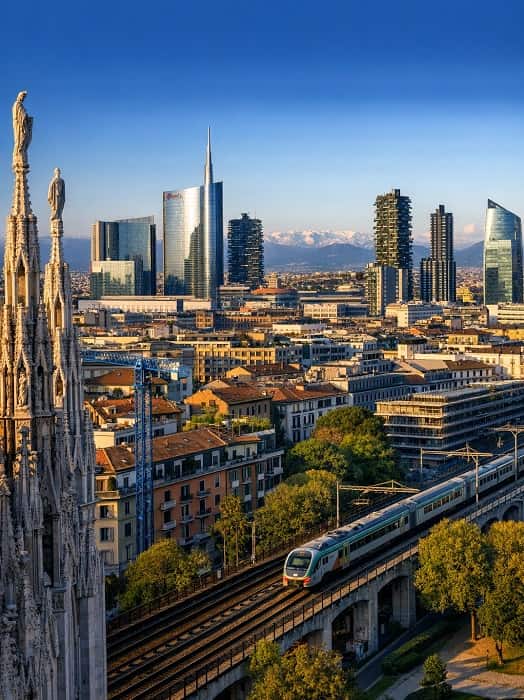
The Lambrate Parable: When Capital Gains Become Capital Traps
The story circulating through Italian financial circles captures something raw about this moment. A cashier at Carrefour in 1994 could purchase 75 square meters in a semi-central Milan neighborhood with a 15-year mortgage she “barely noticed.” Her son, working in consulting with a €33,000 RAL (Gross Annual Salary), has saved €18,000 over four years. The bank offers him €120,000 maximum, requiring a guarantor.
The generational asymmetry is brutal. The mother’s mortgage burden was manageable on a single modest income. The son, with superior education and a white-collar job, faces a lifetime of renting or a microscopic apartment in Rozzano after another decade of saving.
Many international residents report similar disorientation when comparing parental housing trajectories to their own prospects. The conventional wisdom, “just save more”, collides with arithmetic that no longer cooperates. €700 monthly rent, €400 remaining after expenses. The mathematics of deprivation dressed up as prudence.
Why Milan Defies the Bubble Narrative
The natural response is to call this a bubble awaiting correction. The data suggests otherwise.
Milan’s property market operates on fundamentals that resist normal cyclical logic. According to recent market analysis, the city continues moving in counter-trend to national patterns. While Italian property markets broadly stagnate, Milan shows consistent price growth with some peripheral zones hitting +9.5% annual increases.
The mechanism is straightforward: relentless demand meets structurally constrained supply. International professionals, students, and capital flows concentrate in Italy’s primary economic engine. The city’s transformation through projects like Porta Nuova and CityLife has redrawn value maps, making previously peripheral zones newly desirable.
This creates the perverse dynamic where selling in a “hot” market doesn’t help. You’re not cashing out into a cooler environment, you’re trying to re-enter the same overheated system with slightly less purchasing power than you had as an owner.
The “bubble” conversation itself has become a coping mechanism. As one observer noted, people have been predicting a Milan correction for twenty years. Meanwhile, prices have continued their ascent, fueled by low interest rates post-2008, foreign investment appetite, and the city’s consolidation as Italy’s undisputed economic capital.
The Inflation Engineering Behind the Wealth Illusion
The nominal gains mask a deeper erosion. This is where inflation trapping the proceeds from your property sale becomes critical to understand.
Consider the mother’s €285,000. If she holds it in conventional savings while searching for a new property, she’s bleeding purchasing power in real time. Italian inflation may have moderated to around 1.2% officially, but housing costs and essential goods have seen cumulative increases far exceeding headline figures.
The research on inflation’s real impact on Italian households reveals the trap’s mechanics. Between 2019 and 2024, average family spending rose 7.6% nominally while inflation hit 18.5%. The gap represents destroyed purchasing power, approximately €4,400 per Sicilian family, over €7,000 in northern regions like Lombardy.
For housing specifically, the divergence is more extreme. The “caro-casa” (expensive housing) phenomenon has pushed mortgage burden from 17.3% to 21.1% of family income, with rental costs approaching 26% and exceeding 30% in major cities. In Milan specifically, mortgage payments can absorb over 40% of household income.
The mother’s €285,000, even if wisely invested, faces structural headwinds. Meanwhile, the housing market it needs to re-enter continues appreciating. The gap widens not through anyone’s fault, but through monetary and fiscal dynamics that privilege asset holders over asset seekers.
The Credit Squeeze: When Banks Become Gatekeepers
The generational divide has a financial architecture. The mother’s 1994 mortgage was straightforward, 15 years, manageable payments, no guarantor complications. Today’s lending environment operates on entirely different principles.
Current mortgage offerings, even with recent European Central Bank rate reductions, remain punitive compared to the sub-1% fixed rates available in 2021. New mortgages now stabilize around 3-4%, still triple the previous floor. For a young professional with limited savings, this means reassessing asset allocation at critical life stages becomes not optional but existential.
The guarantor requirement adds insult to injury. Italian banks, burned by previous cycles and operating under stricter capital requirements, demand parental backing for loans that previous generations secured independently. This creates a two-tier system: those with property-owning parents who can guarantee loans, and those without such resources who face effective exclusion from ownership.
The surroga (mortgage refinancing) boom of 2024, up 19.5%, reveals the stress. Existing homeowners scramble to reduce payments while new entrants face prohibitive barriers. The market bifurcates between those already inside and those permanently outside.
The Political Economy of Housing as Asset Class
Finance Minister Giancarlo Giorgetti’s recent warnings about purchasing power destruction at the Eurogroup highlight the broader context. Energy costs, inflation, and monetary tightening create a pincer movement on household budgets. Housing sits at the intersection of these pressures.
What’s less discussed is the structural transformation of housing from consumption good to financial asset. Italian property, particularly in Milan, increasingly functions as wealth storage for domestic and international capital rather than shelter for productive residents. The “caso casa” (housing case/emergency) becomes acute when the same economic forces making ownership impossible also drive rental costs upward.
The government’s fiscal constraints compound the problem. With public debt exceeding 140% of GDP and interest payments projected to hit €95-100 billion annually, there’s limited capacity for housing subsidies or construction programs. The austerity shadow, spending reductions to meet European stability requirements, threatens further compression of public support for housing access.
The Geographic Arbitrage Fantasy
One proposed escape route: leave Milan. The logic is superficially appealing, why pay premium prices when smaller cities offer space at discount?
The reality is more constrained. Analysis of 2026 property markets shows that while secondary cities like Turin, Bologna, or Verona offer lower entry points, they also present thinner labor markets and weaker income prospects. The professional consulting job paying €33,000 in Milan may not exist in a smaller center, or may pay proportionally less.
Remote work promises liberation but delivers unevenly. Italian labor markets remain geographically concentrated, and the “young professional” demographic that might benefit from location flexibility often finds career advancement requires physical presence in Milan, Rome, or international hubs.
The arbitrage works primarily for those with established careers, accumulated capital, or location-independent income, precisely the groups already advantaged in property markets. For those starting out, the choice is often between unaffordable Milan housing and unavailable employment elsewhere.
The Swiss Warning and Intergenerational Mortgages
Some observers point to Switzerland as a preview of Italian housing’s future. There, property prices have reached levels requiring intergenerational mortgages, debt obligations extending across family generations to make payments manageable.
This isn’t hyperbole. Swiss banking practices already accommodate 50-100 year mortgage structures, with inheritance of debt obligations. The model transforms housing from individual achievement to family legacy project, with wealth transmission becoming prerequisite for shelter access rather than its result.
Italian markets haven’t reached this extreme, but the trajectory is visible. The guarantor requirement is a soft version of intergenerational obligation. The inability to purchase without parental capital injection, whether through guarantees, direct gifts, or inheritance anticipation, represents the same structural shift.
For those without property-owning parents, the implications are stark. The traditional Italian path of study, employment, savings, and eventual homeownership becomes a fiction. Traditional lazy portfolios facing stagnation in financial markets find their real estate equivalent in the impossibility of market entry.
Alternative Wealth Strategies and Their Limits
Faced with housing market exclusion, some turn to securing generational wealth outside of real estate. State-backed instruments like the recent 6% yield products for minors through Poste Italiane (Italian Post Office) represent attempts to build wealth through financial rather than physical assets.
These alternatives carry their own constraints. Returns, even at attractive nominal rates, rarely match property appreciation in prime markets. Tax advantages exist but are capped and conditional. Most critically, they don’t solve the housing problem, they merely offer parallel wealth accumulation that may or may not keep pace with shelter cost inflation.
The fundamental issue remains: housing serves dual functions as investment vehicle and consumption necessity. Financial assets can substitute for the investment function but not for the shelter function. Renting indefinitely means perpetual exposure to housing cost inflation without the hedge of ownership.
The 1990s Exception and Its Lessons
Historical context clarifies the mother’s advantage. The 1990s represented a unique window in Italian housing history. The “equo canone” (fair rent) system had suppressed property valuations. Cities remained under-gentrified, with central neighborhoods offering affordability precisely because they lacked the amenities and safety perceptions that would later drive prices upward.
The post-Euro period, combined with credit expansion and foreign capital inflows, transformed this landscape. What appeared as normal middle-class homeownership was actually participation in a one-time asset revaluation. The mother’s 8x return wasn’t investment genius, it was temporal luck, buying at the bottom of a cycle that wouldn’t repeat.
Recognizing this doesn’t solve the current predicament, but it does reframe the narrative. The son isn’t failing to replicate his mother’s success, he’s facing fundamentally different market conditions that make her path impossible. The appropriate comparison isn’t mother versus son in personal financial management, but 1994 versus 2026 in economic structure.
What Remains: Strategies for the Locked-Out
For those facing this reality, the options are limited and unappealing.
Geographic compromise, accepting longer commutes, smaller spaces, or less desirable neighborhoods, can stretch limited budgets. The peripheral zones showing +9.5% growth suggest even this strategy faces rapid price convergence.
Income maximization through career changes, side employment, or credential accumulation offers theoretical escape but runs into the same structural constraints. A €33,000 consulting salary already represents above-median earnings, significant increases require exceptional circumstances or extended timelines.
Family negotiation, explicit discussions about inheritance anticipation, property co-ownership, or guarantee provision, becomes necessary for many. This reintroduces the intergenerational dependency that post-war social mobility was supposed to reduce.
Finally, political engagement around housing policy, while slow and uncertain, represents the only systemic response. Zoning reform, public construction, vacancy taxes, and rental regulation could alter market dynamics, but over decades, not months.
The Harder Truth
The mother’s shock at current prices reveals a psychological as well as economic gap. She understood her sale as successful, €285,000 from €35,000!, without grasping that the same market forces creating her gain had eliminated her re-entry option.
This is the generational wealth shock: not that younger people can’t afford houses, but that older people discovering they can’t either. The property ladder, once imagined as stable and climbable, proves to be an escalator moving faster than most can ascend.
For Milan specifically, and Italian urban centers generally, the implications extend beyond individual frustration. A city where established professionals cannot afford to house themselves is a city consuming its own future workforce. The “brain drain” to more affordable European capitals, already significant, will likely accelerate.
The €285,000 sitting in a bank account, losing value daily while its owner contemplates €480,000 apartments, embodies the paradox. Capital gains without purchasing power. Wealth on paper, poverty in practice. The Italian housing market has become a machine for transforming homeownership into homelessness, one generational transfer at a time.