
The 730 Reality Check: How Italian Pension Tax Refunds Actually Hit Your Wallet
You contribute €5,000 to your pension fund in 2025. Your tax bracket is 33%. Simple math suggests you should see €1,650 back. Yet January comes and goes, February too, and your bank account remains stubbornly empty. Many international residents and Italian workers alike find themselves staring at their online banking, wondering if the Agenzia delle Entrate (Revenue Agency) simply forgot about them.
The money isn’t lost. It’s caught in the peculiar time warp of the Italian fiscal calendar, scheduled to arrive not as a separate wire transfer, but as a mysterious bump in your July paycheck. Understanding how this mechanism actually works, and why your employer plays delivery person, saves you from unnecessary panic and helps you optimize exactly how much you should be contributing.
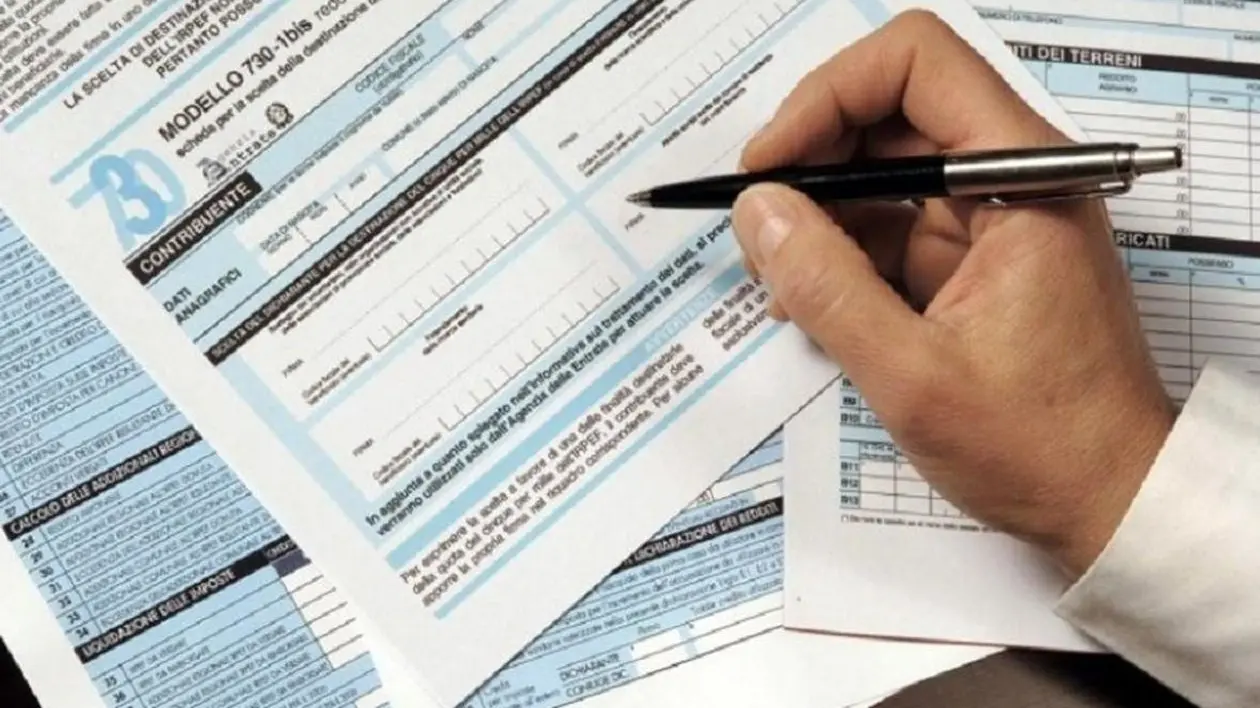
The Mechanics: It’s Not a Refund, It’s a Reduction
First, let’s kill a common misconception. When you contribute to a Fondo Pensione (Pension Fund), you don’t get a “cashback” like a supermarket loyalty program. Instead, those contributions reduce your imponibile IRPEF (taxable income) for the year.
Here’s the concrete math: if your gross salary is €49,000 and you contribute €5,000 to your pension fund, your taxable income drops to €44,000. If you fall into the 33% tax bracket, that awkward middle zone where most Italian professionals land, you effectively save €1,650 in taxes (33% of €5,000). This isn’t money the government sends you, it’s money they don’t take in the first place.

The annual limit for this deduction stands at €5,300 as of 2026, raised slightly from the previous €5,164.57 ceiling. Crucially, this limit includes both your voluntary contributions and any contributions from your datore di lavoro (employer) that are deducted from your paycheck. However, and this trips up nearly everyone, the TFR (Severance Pay/End-of-Service Allowance) does not count toward this deduction limit, even if you choose to allocate it to the pension fund. Many workers mistakenly believe their entire pension allocation is deductible, only to discover during tax season that the TFR portion receives different fiscal treatment.
The Delivery System: Why July Matters
So where does that €1,650 actually go? It arrives through the 730 (Tax Return Form for Employees), specifically the 730 precompilato (precompiled version) that appears in your Agenzia delle Entrate portal around April 30th each year.
If You’re a Dipendente (Employee)
Your employer acts as your sostituto d’imposta (tax substitute/withholding agent). This means they handle the reconciliation. When you file your 730, either accepting the precompiled version or modifying it, the system calculates your total tax position. Any excess tax you’ve paid throughout the year gets returned to you not by the state directly, but through your employer’s payroll system.
The Timing Explained
This creates the peculiar timing: contributions made in 2025 get processed in the 730/2026 declaration, with the conguaglio (tax reconciliation/adjustment) typically appearing in your busta paga (paycheck) starting in July or August. Pensioners see the adjustment on their pension payments between August and September. If you’re expecting a separate wire transfer from the tax office, you’ll be waiting indefinitely.
The Employer Contribution Twist
Many workers contribute just enough to capture their employer’s matching funds, often around 1.2% of salary to unlock 2% or 2.2% from the company, and then wonder why their tax refund seems smaller than expected. The confusion stems from how these contributions appear in your fiscal position.
Employer Contributions
When your employer contributes to your pension fund, that money is generally not considered additional taxable income to you, provided it stays within certain limits.
Your Voluntary Contributions
However, if you’re making voluntary additional contributions on top of the mandatory minimum, those are the amounts that create the immediate IRPEF (Personal Income Tax) deduction.
Layered Benefits
The employer contribution effectively gives you “free money” that bypasses taxation entirely, while your voluntary contributions trigger the deduction that generates your July refund.
Many residents fail to optimize this, either contributing too little to reach the €5,300 cap (leaving deductions on the table) or contributing through bank transfers instead of payroll deduction (which changes the timing and mechanism of the tax benefit).
The 2026 Curveballs
The 2026 tax year introduces new variables that affect your net benefit calculation. For workers with redditi da lavoro dipendente (employment income) up to €20,000, a new bonus of up to €960 enters the equation, reducing the overall IRPEF burden through the 730 mechanism.
Meanwhile, those earning between €20,000 and €40,000 now qualify for an additional detrazione IRPEF (tax deduction) that scales progressively, fuller near the €20,000 mark, tapering off as you approach €40,000.
These changes don’t alter how pension contribution refunds work, but they change the baseline calculation. If your pension deductions push you into a lower effective tax bracket, the interaction between these new bonuses and your existing deductions requires careful modeling. The precompiled 730 should capture these automatically, but anyone with multiple income sources or complex family situations should verify the calculations manually.
When You Don’t Have a Tax Substitute
The July paycheck timing only applies if you have a sostituto d’imposta. If you’re a freelancer, partita IVA holder, or otherwise lack an employer to handle your withholding, the process changes entirely. You must use the Modello Redditi (Income Tax Return) instead of the 730, and any refunds arrive via direct bank transfer from the Agenzia delle Entrate, often months later and only after navigating the F24 payment form system.
The 730 remains the simpler path specifically because it leverages your employer as the distribution channel for refunds.
The Verification Checklist
- Check your CUD (Single Certification of Employment Income), formerly called Certificazione Unica, to confirm that all employer contributions were properly registered under the correct tax code
- Verify your contributions match your actual payments, discrepancies between what you paid and what appears in the precompiled form often stem from timing differences between December payroll processing and January reporting
- Confirm your tax bracket hasn’t shifted due to other income, if you crossed from the 33% to the 43% bracket (or dropped to 23%), your refund amount changes accordingly
The Italian pension tax system operates with the bureaucratic precision of a Swiss watch, if that watch only told correct time twice a year and required you to file paperwork to see the hands move. Understanding that your “refund” is actually a tax reduction delivered through payroll reconciliation, not a separate payment, helps you plan your cash flow realistically.
Mark July on your calendar, verify your contributions hit that €5,300 sweet spot, and remember: the TFR sitting in your pension account might be growing, but it’s not the part generating your tax break.