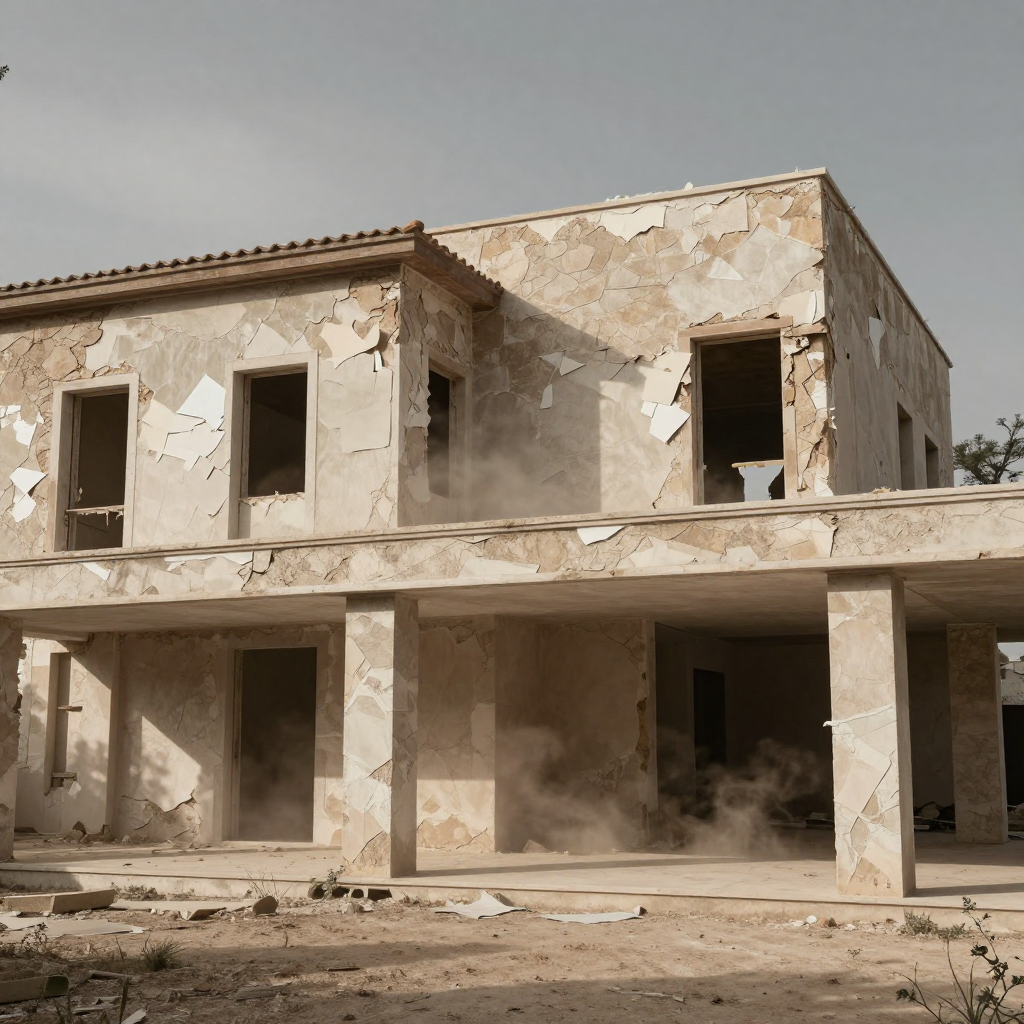
When the Renovation Boom Collapses: How PNRR Fraud Is Destroying Italian Families

The €140,000 communion fund was supposed to guarantee their daughter’s future. Instead, it became evidence in a financial crime that would dismantle an entire family.
In February 2026, the Guardia di Finanza (Financial Police) arrived at a construction business in southern Italy and seized everything. Bank accounts. Vehicles. Properties. Even the savings set aside for a child’s religious ceremony, money that represented years of thermal insulation work, renovation projects, and what the family thought was legitimate prosperity built on Italy’s construction boom.
The charge: issuing fake invoices for non-existent work, exploiting the PNRR (National Recovery and Resilience Plan) tax credits designed to rebuild Italy’s economy after COVID-19. The method was devastatingly simple. The consequences are anything but.
The “Cartiera” Economy: How Fake Invoice Schemes Operate
Italian investigators have a specific term for companies that exist only on paper: cartiere (paper mills). These shell operations don’t manufacture windows or install thermal insulation. They manufacture documents, specifically, invoices for work that never happened.
The recent Bari operation illustrates the mechanics perfectly. A window manufacturing company, investigated by the Guardia di Finanza’s Putignano unit, revealed no actual commercial relationships with its supposed suppliers. No delivery records. No material purchases. Just €1.3 million in invoices for phantom operations.

What makes these schemes particularly insidious is their integration with legitimate business. The companies receiving fake invoices often performed real construction work. They simply inflated their costs, reduced their taxable income, and redirected the “savings” into personal wealth, new cars, vacations, property purchases, that now sits frozen under judicial seizure.
Twenty-two construction and window-installation companies across Bari, Bitonto, Giovinazzo, and Sannicandro di Bari used these documents to claim improper VAT deductions and income tax reductions. The damage to the Italian treasury: over €600,000 in evaded taxes. The damage to the families involved: incalculable.
From Boom to Bust: The Psychology of Complicity
The social dynamics of construction fraud deserve closer examination. Many international residents report similar patterns across Italian regions: sudden prosperity in renovation sectors, followed by nervous behavior, then catastrophic legal consequences.
The family member who discovered her brother-in-law’s involvement describes a common trajectory. For two years, the business thrived. New car. Vacations. The assumption, shared by extended family, was simply that “the sector was doing well with all these bonuses.” The nervousness at Christmas 2025 was dismissed as work stress.
This narrative reveals something uncomfortable about Italy’s construction economy. The Superbonus (110% tax deduction) and related incentives created such extraordinary profit margins that legitimate success and criminal fraud became visually indistinguishable to family members, neighbors, and business associates. When everyone’s contractor suddenly drives a better car, individual prosperity attracts no scrutiny.
The psychological mechanism is well-documented in financial crime research: normalization through ubiquity. The arrested contractor’s own words at a family lunch capture this perfectly, “everyone does it, I just followed the wrong accountant.” The framing as a parking ticket rather than a criminal conspiracy suggests genuine belief that these practices fell within acceptable business conduct.
This matters because it explains why 331 PNRR-related fraud cases emerged in 2025 alone. Not because 331 entrepreneurs decided to become criminals, but because an entire sector’s incentive structure made criminality appear as mere optimization.
The Supreme Court’s Warning: Falsifying Start Dates Constitutes State Fraud
The legal landscape shifted dramatically in March 2026. The Corte di Cassazione (Supreme Court) issued ruling 344/2026 that transforms how construction fraud gets prosecuted.
The case involved bonus facciate (facade bonus) claims where contractors attested that work had begun by December 31, 2021, a deadline for accessing 90% tax deductions. The work hadn’t started. The attestation was false. The Supreme Court ruled this wasn’t merely tax evasion or improper documentation.
It was truffa aggravata per il conseguimento di erogazioni pubbliche (aggravated fraud against the state for obtaining public funds).
This distinction carries devastating consequences. Tax evasion typically results in financial penalties and administrative sanctions. Aggravated fraud against the state carries prison sentences of three to ten years. The contractor in the Supreme Court case received an eight-month interdittiva (prohibition order) barring him from business activities, merely the preliminary measure while criminal proceedings continue.
The Court’s reasoning deserves attention. Even if the 10% payment from condominium owners was genuine, the false attestation about work commencement enabled access to the sconto in fattura (invoice discount) mechanism. This allowed immediate 90% deductions rather than documenting only the actual cash paid. The difference in tax benefit was substantial, and fraudulently obtained.
Critically, the ruling extends liability beyond contractors to professionals who “materially attested the false” in required documentation. Architects, engineers, and accountants who signed off on fabricated start dates now face the same aggravated fraud charges.
The Family Devastation No One Discusses
Financial crime reporting focuses on seized assets and evaded taxes. The human cost receives less attention.
The sister’s phone call at 11 PM, “I didn’t know, I swear I didn’t know”, reveals the position of spouses in these cases. Italian law generally protects family members from liability for business crimes they didn’t actively participate in. Protection from legal consequences doesn’t mean protection from financial destruction.
With her husband’s assets frozen and his income eliminated, she faces a €620 monthly mortgage alone. The house is “small” and “fortunately” affordable, language that suggests financial precarity even before the crisis. The extended family’s dilemma about whether helping her constitutes “complicity” shows how thoroughly legal stigma permeates personal relationships.
The €140,000 communion fund seized by authorities illustrates a particularly cruel aspect of Italian asset forfeiture. Under sequestro preventivo finalizzato alla confisca (preventive seizure for confiscation), authorities can freeze assets equivalent to the alleged crime’s profit regardless of their source. The money might have come from legitimate work, previous savings, or family gifts. If it’s in the defendant’s accounts during investigation, it becomes seizable.
Italian law provides mechanisms to challenge seizures of clearly legitimate assets, but these require legal representation, documentation, and time, resources unavailable to families whose primary earner is under criminal prosecution.
Structural Vulnerabilities: Why Construction Fraud Proliferates
The PNRR and related construction incentives created perfect conditions for systematic fraud. Understanding these conditions helps explain why enforcement actions will likely expand.
Speed over verification. The Superbonus and related programs were designed for rapid economic stimulus. Verification mechanisms, checking that work actually occurred, that materials were purchased, that energy efficiency improvements were real, were delegated to professionals with financial incentives to approve claims. The visto di conformità (conformity certification) became a commodity rather than a genuine audit.
Credit transfer complexity. The cessione del credito (credit transfer) system allowed contractors to immediately monetize tax deductions by selling them to banks or specialized financial companies. This separated the benefit (immediate cash) from the underlying work, reducing incentives for proper completion. Banks purchasing credits performed due diligence on documentation, not on physical construction sites.
Regional enforcement disparities. The Bari operation involved 22 companies across multiple municipalities, suggesting coordinated networks rather than isolated bad actors. Yet enforcement remains geographically uneven. Companies in regions with fewer Guardia di Finanza resources face lower detection probability, creating competitive advantages for fraudulent operators.
Professional liability diffusion. Construction projects involve multiple professionals, contractors, architects, energy certifiers, accountants, each with specific documentation responsibilities. When fraud is discovered, responsibility gets diffused across this network. The Supreme Court’s March 2026 ruling attempts to address this by holding attesting professionals directly liable, but enforcement remains inconsistent.
Protecting Yourself: Red Flags for Property Owners and Families
For international residents considering renovation work in Italy, or family members observing suspicious prosperity, several indicators warrant attention.
Documentation gaps. Legitimate construction generates substantial paperwork: material delivery receipts, waste disposal certificates, photographic progress documentation, energy performance certificates with specific technical data. Contractors who resist providing these, or whose documentation lacks detail, raise immediate concerns.
Payment structure anomalies. The sconto in fattura system requires specific payment flows. If your contractor demands cash payments “to optimize the bonus”, or if payment schedules don’t match work progress, this indicates potential fraud. The 10% client contribution should be documented through traceable bank transfers, not cash.
Professional certification verification. The professionals signing your visto di conformità should be verifiable through their respective professional orders (Ordine degli Architetti, Collegio dei Geometri, etc.). Check that their registration is active and that they have no disciplinary sanctions. Professionals willing to sign false attestations often have patterns of previous complaints.
Family financial awareness. The sister’s retrospective question, “would I have noticed if my husband suddenly earned triple?”, deserves serious consideration. Sudden lifestyle improvements without corresponding business visibility (new contracts, expanded operations, additional employees) often indicate off-books income. In Italy’s current enforcement environment, this carries criminal rather than merely administrative risk.
The Enforcement Trajectory: What’s Coming
The 331 PNRR fraud cases in 2025 represent early enforcement. Several factors suggest acceleration.
European Commission pressure on PNRR fund disbursement includes anti-fraud conditionality. Italy must demonstrate effective control mechanisms to receive remaining tranches. This creates political incentive for visible enforcement actions.
The Supreme Court’s March 2026 ruling provides prosecutorial tools that didn’t exist previously. Aggravated fraud charges carry heavier penalties and enable more aggressive asset seizure. Prosecutors in other jurisdictions will likely adopt similar theories.
Cross-referencing databases has improved. The Guardia di Finanza’s ability to correlate invoice data, bank transfers, property records, and energy certificate registrations makes cartiere operations increasingly detectable. The Bari investigation began with “tax risk indices”, algorithmic flagging of anomalous patterns.
For construction sector participants, this means past practices now carry retrospective risk. The statute of limitations for tax crimes in Italy is generally five years, extendable to ten for certain offenses. Work performed in 2021-2022 remains within enforcement reach.
The Harder Question: Systemic Reform or Cyclical Crackdown?
Italy’s construction incentive programs achieved genuine economic stimulus. They also channeled billions through systems with inadequate verification. The current enforcement wave addresses individual criminality without necessarily addressing structural design flaws.
The Superbonus has already been modified repeatedly, reductions in deduction percentages, stricter technical requirements, credit transfer limitations. These changes respond to fiscal pressure and fraud concerns but create ongoing uncertainty for legitimate businesses.
For families currently navigating this landscape, practical protection matters more than policy analysis. Document everything. Verify professional credentials. Maintain skepticism about “optimization” that seems too good to be true. And recognize that in Italy’s current environment, the line between aggressive tax planning and criminal fraud has shifted decisively toward prosecution.
The €140,000 communion fund won’t be released soon. The mortgage payments continue. And the family dinner where everyone pretends nothing happened, sì, ancora ci vediamo, che disagio (yes, we still see each other, how awkward), has become the new normal for hundreds of Italian families caught between construction boom and financial bust.
