
Adult Braces in the Netherlands Cost €3,000, Not €30,000: A Financial Reality Check
The Reddit post hit like a punch to the gut. A Dutch professional in their thirties, still carrying dental damage from a childhood fall, convinced their only options were a €14,000-€35,000 set of crowns or living with the insecurity forever. The post ended with a desperate question: “Is it even smart to do this in the Netherlands?”
The answer is yes. And it costs about €3,000, not €30,000.
The €30,000 Myth That Keeps People Smiling with Closed Lips
The original poster’s math wasn’t just off, it was catastrophic. They’d researched full-mouth crowns (€14k-€35k) and “click dentures with implants” as “cheaper” alternatives to braces. This is like comparing the cost of a new car to a bicycle because you assume bicycles are expensive.
Here’s what orthodontists across the Netherlands actually charge:
- Metal braces: €2,500-€3,500 total
- Ceramic (tooth-colored) braces: €3,000-€4,500
- Invisalign (transparent aligners): €3,500-€5,500
The Reddit commenters who’d walked this path were unanimous. One wrote: “I had a similar situation… ortho gave an estimate of €3k total. I get a consultation every 4-6 weeks, so these costs are nicely spread.”
Another broke down the payment schedule: “It’s not like you pay €3k in one go. Initially maybe €1,200. Then €60 per month for 22 months, plus a retainer at the end for €300 and a night brace for €200.”

When Your Jaw Surgery Is Secretly Covered by Insurance
The original poster mentioned their dentist insisted on jaw surgery before braces, implying this would be an out-of-pocket medical expense. This is where how Dutch insurance systems can leave individuals exposed to large out-of-pocket medical expenses gets flipped on its head.
Multiple commenters confirmed: jaw surgery is often fully covered by basic health insurance when coordinated properly between your orthodontist (ortho) and oral surgeon (kaakchirurg).
The key phrase is “in samenwerking met de ortho een goed plan maakt” (in collaboration with the orthodontist, a good plan is made). One commenter explained: “The operation is paid by health insurance. I have no supplementary insurance, most insurance companies just cover it if your oral surgeon, in collaboration with the ortho, makes a good plan.”
This is the difference between a €10,000+ medical bill and €0. But you need to find an orthodontist who understands the insurance system, not one who casually recommends surgery as a private expense.
Why One Orthodontist Says “Impossible” and Another Says “No Problem”
Here’s where the Dutch healthcare system reveals its frustrating beauty. The original poster’s dentist said they “must have jaw surgery.” Commenters urged them to get multiple consultations.
One shared: “I was scared with a jaw operation by Ortho A, later at Ortho B it turned out it could be done perfectly fine without, and he gave me a nice set of teeth with just braces and pulling 2 small molars.”
Another: “First instance said my jaw must be broken, but after further investigation, it worked with some wire springs and other misery.”
This isn’t malpractice, it’s medical art meeting financial reality. Different orthodontists have different specializations, risk tolerances, and understandings of what insurance will approve. The first consultation is free. Use it. Use five of them.
The Ceramic Brace Revolution Hiding in Plain Sight
The original poster’s shame about wearing braces as an adult is so common it hurts. But it’s based on a decade-old reality.
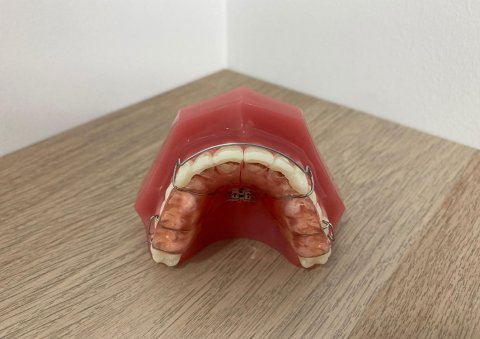
Modern ceramic braces are “transparante beugels die aan de buitenkant van de tanden worden vastgemaakt. De brackets kunnen naar keuze transparant zijn of uit metaal bestaan.” (transparent braces attached to the outside of the teeth. The brackets can be transparent or metal as desired.)
Invisalign, transparent, removable aligners, is now mainstream for adults. As one practice advertises: “Transparante aligners zijn nagenoeg onzichtbaar, waardoor het niet opvalt dat u ze draagt.” (Transparent aligners are nearly invisible, so it’s not noticeable that you’re wearing them.)
The Reddit commenters who’d actually worn braces as adults all said the same thing: “You get used to it.” One noted: “When I walked around with my braces, I started recognizing more and more that other adults also wore them, while normally I wouldn’t notice. It’s really not that bad.”
The Tax Deduction Nobody Mentions
Here’s a financial hack that turns braces from an expense into a quasi-investment: medical costs above a certain threshold are tax-deductible in the Netherlands.
One commenter explicitly mentioned: “You can also request a quote in advance and deduct the healthcare costs from taxes (above a certain threshold).”
The threshold (eigen risico) is high, but if you’re already hitting it with other medical expenses, your braces effectively get a 37%-50% discount depending on your tax bracket. That’s potentially €1,000+ back on a €3,000 treatment.
The Emotional ROI Calculation
The original poster’s deepest pain wasn’t financial, it was psychological. “It’s actually my only (big) insecurity… I wouldn’t be happy with myself the moment I laugh in front of the mirror or see my mouth open in a video.”
This is where the emotional pressure of keeping up financially when others seem more successful meets raw self-image. The Reddit community’s response was surprisingly direct: the emotional return on investment (ROI) of fixing your teeth is worth more than any index fund.
One commenter who got braces at 36 wrote: “I see it as an investment… It gives some discomfort occasionally, but if you have a good ortho, you’re well helped and advised on how to deal with it.”
Another: “Never regretted it. That was almost 15 years ago and I’m still happy with it.”
The math is simple. If you live until 80 and get braces at 35, you get 45 years of confident smiling for €3,000. That’s €5.56 per year. Show me a better happiness-per-euro ratio.
Actionable Steps: Your Dutch Orthodontic Roadmap
-
Get 3-5 free consultations. Ask each: “Can this be done without surgery? What are my insurance options?”
-
Request detailed quotes in writing. Use these for both comparison and potential tax deduction.
-
Contact your insurer (e.g., Zilveren Kruis) before any surgery. Ask: “What paperwork do I need from my orthodontist and oral surgeon for coverage?”
-
Calculate your tax situation. If you’re close to the deductible threshold, time your treatment accordingly.
-
Consider payment spreading. Most practices offer monthly plans. One commenter’s breakdown: €1,200 initial, €60/month for 22 months, €300 retainer, €200 night brace.
-
Choose visibility level. Metal (cheapest), ceramic (tooth-colored), or Invisalign (transparent, removable). For adults, ceramic offers the best cost-discretion balance.
-
Document everything. Photos, quotes, insurance correspondence. This isn’t just for taxes, it’s for your own sanity when the imposter syndrome hits.
The Bottom Line
The original poster’s shame about asking the question was the most expensive part of their dilemma. In reality, adult braces in the Netherlands cost about the same as a nice vacation, can be paid in installments, may qualify for partial insurance coverage if surgery is needed, and offer a 40+ year ROI that beats any pension fund.
taking control of personal finances despite emotional or systemic pressures often means questioning assumptions you made when you had less money. The €30,000 figure was a phantom from a childhood of financial scarcity, not a reflection of current Dutch healthcare reality.

The author is not a medical professional. Always consult with qualified orthodontists and your insurance provider for personalized advice.