
From Panic to FIRE: One Dutch Person’s First Year of Financial Independence Journey
Just over a year ago, a Dutch worker sat down, looked at thirty more years of office life, and felt something snap. Not a breakdown, but a recalibration. Within twelve months, that panic transformed into a €53,000 net worth, a fully automated investment system, and a psychological shift that many in the Netherlands are now attempting to replicate. This is not a get-rich-quick story. It is a methodical, sometimes uncomfortable, examination of what it actually takes to pursue Financial Independence, Retire Early (FIRE) in the Netherlands.
The Dutch Starting Line: More Advantageous Than You Think
The journey began from a position many locals would recognize: a small owned home with overwaarde (equity), a solid salary under a decent cao (collective labor agreement), no children, and modest but consistent monthly leftovers. By December 2024, the numbers looked unremarkable: roughly €20,000 in savings, €3,000 invested, €12,000 in studieschuld (student debt), and a €140,000 mortgage. Net worth excluding property: a modest €13,000.
This baseline highlights a crucial Dutch advantage. The studieschuld system, while psychologically burdensome, carries an interest rate of 0.46% in 2025. The mortgage interest is partially deductible under hypotheekrenteaftrek (mortgage interest deduction). The pension system, though shifting, still provides a foundational layer that many Americans pursuing FIRE lack entirely. Yet these same advantages create unique Dutch dilemmas that foreign FIRE gurus rarely address.
The Execution: Automate Everything Before You Can Spend It
The strategy was ruthlessly simple: pay yourself first, then figure out how to live on what remains. Within weeks, three automated systems were established:
- Emergency Fund Isolation: €10,000 moved to a separate spaarrekening (savings account) with superior interest rates, creating a psychological barrier against casual spending.
- Pension Gap Attack: A pensioenbeleggingsrekening (pension investment account) was opened and the entire jaarruimte (annual pension contribution room) was filled immediately. For 2025, this represents roughly 13.5% of income up to a ceiling, offering immediate belastingvoordeel (tax advantage) that reduces taxable income.
- Automatic Equity Investing: Monthly contributions to Saxo Bank’s automated platform ensured investments happened before lifestyle creep could intervene.
The income side saw aggressive action: shifting from 0.8 to 1.0 full-time equivalent, picking up a side job, and renting out a personal car. This boosted monthly income by over 25%. Critically, every euro of extra income, bonuses, raises, windfalls, flowed directly to investments or pension, bypassing the checking account entirely.
The Year-One Results: Numbers That Speak
By December 2025, the transformation was concrete:
- Emergency fund: €12,000
- Investment account: €35,000
- Pension pot: €11,000
- Remaining studieschuld: €1,600 (to be eliminated in one final payment)
- Total net worth: €53,000
The original goal of €40,000 was exceeded by 32%. But the author insists the real victory is mental: “I know to the cent what comes in and what goes out. Frugal living doesn’t feel like deprivation, but like freedom, precisely because I know what I’m doing it for.”
The Dutch Controversy: To Pay Debt or Invest?
The most heated debate in the comments centered on the decision to aggressively pay down studieschuld. One contributor argued this was “zonde” (a waste), given the 0.46% interest rate versus expected market returns of 7-8%. The counterargument: the debt was primarily mental weight, and eliminating it creates psychological freedom that mathematical optimization cannot measure.
This exposes a fundamental Dutch FIRE tension. The Netherlands offers some of Europe’s most favorable student loan terms, yet the cultural aversion to schulden (debt) runs deep. Many Dutch FIRE seekers prioritize debt elimination over mathematical efficiency, a choice that would horrify American FIRE purists but makes perfect sense in a culture where mortgage debt is the only socially accepted form.
The Marginal Tax Trap: Why Working More Might Not Work
A second controversy erupted over the decision to increase from four to five work days. Critics pointed to the Netherlands’ progressive belastingdruk (tax burden) and marginale belastingdruk (marginal tax rate), which can approach 49.5% on additional income, plus potential toeslagen (benefits) losses.
The author countered that the jaarruimte pension contribution reduces taxable income, effectively lowering the marginal rate. Yet the debate reveals a truth many Dutch FIRE seekers discover: in a country with high taxes but excellent part-time work culture, grinding extra hours is often less effective than optimizing taxes and embracing slow FIRE.
One commenter noted: “The Netherlands is the country where working part-time with a high salary is most interesting.” Another suggested the optimal path might be 0.9 FTE (four nine-hour days), preserving a three-day weekend while maintaining most income.
The Boring Middle: Where Dutch Patience Becomes an Asset
The author already references “the boring middle”, the long stretch between initial excitement and final FI. This phase demands the poldermodel (consensus-building) approach to personal finance: steady, unglamorous consistency.
Dutch culture actually excels here. The concept of gedogen (tolerating) applies perfectly to market volatility, acknowledging downturns without panic selling. The national obsession with automatiseren (automating) fits the FIRE principle of removing human emotion from investing.
Raphaël Nef, author of 10 jaar eerder met pensioen (10 Years Earlier Retirement), echoes this in his Metro interview: “The chance is 99 percent that we will reach our goal. The train is running, we don’t have to do anything anymore. At most, adjust our goal.”
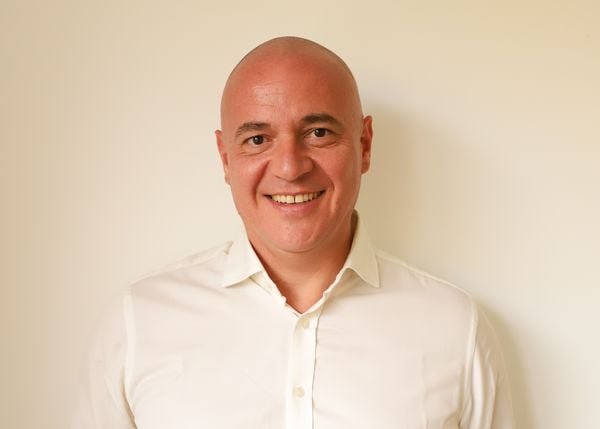
Nef and his partner emphasize that FIRE is not one-size-fits-all. Their approach, indexbeleggen (index investing) through ETFs, avoiding hefboomproducten (leveraged products), and spreading risk, provides a Dutch middle path between American aggressive FIRE and traditional pension dependence.
The Mindset Shift: From Vague Future to Concrete Choice
Before the journey, pension was something for “a vague, far-away moment, roughly right before your coffin.” Now, the goal is tangible freedom within ten years: the option to return to school, volunteer, provide informal care, travel, or work only when desired.
This represents the true Dutch FIRE revolution. It is not about Lamborghini-buying or escaping work entirely. It is about keuzevrijheid (freedom of choice) in a country where the social safety net already provides basic security. The FIRE movement here adds a layer of personal agency on top of collective provisions.
Concrete Takeaways for Dutch FIRE Seekers
If you are starting from a similar position, consider these Netherlands-specific actions:
Immediate Steps:
- Calculate your exact jaarruimte and fill it before investing in taxable accounts. The belastingvoordeel is too significant to ignore.
- Open a separate spaarrekening for your emergency fund at a bank like Revolut, N26, or a high-interest Dutch savings platform. Physical separation matters.
- Automate investments on the day your salary arrives. Use Dutch platforms like Meesman, Brand New Day, or Saxo for low-cost index funds.
Strategic Decisions:
- Run the numbers on your studieschuld. If the interest rate stays below 1%, consider whether the psychological benefit of elimination outweighs mathematical optimization. There is no universally correct answer in the Netherlands.
- Before increasing work hours, calculate your true marginale belastingdruk including potential toeslagen loss. Sometimes negotiating a higher hourly rate at your current hours beats working more.
- Embrace the Dutch part-time culture. A 0.8 or 0.9 FTE arrangement might add five years to your FIRE date but could prevent burnout, making the journey sustainable.
Long-term Mindset:
- Accept that Box 3 tax (wealth tax) will affect your returns. Plan for it in your calculations. The current system taxes fictional returns, but reforms are coming that will tax actual returns from 2026 onward.
- Do not count on the AOW (state pension) or your werkgeverspensioen (employer pension) in your earliest FIRE calculations. Treat them as safety nets, not core components.
- Focus on systemen op de rails (systems on track) rather than constant optimization. The Dutch strength lies in building robust, automated processes.
The journey from panic to FIRE in the Netherlands is not about extremism. It is about leveraging the country’s unique financial infrastructure, favorable debt terms, pension tax advantages, and part-time flexibility, while building the psychological resilience to stay the course. The €53,000 result is impressive, but the real achievement is the mental shift: from passive participant to active architect of financial freedom.