You’re 25, earning a decent salary, and ready to escape your childhood bedroom. Your partner is 26, has fibromyalgia, and sits in the ZW-uitkering (sickness benefits) system waiting for the UWV (Employee Insurance Agency) to decide their future. The houses you can afford start at €300,000. The math doesn’t work, the system doesn’t care, and every month you wait, the market moves further out of reach.
This isn’t a rare situation, it’s a growing crisis for young Dutch couples caught between chronic illness and the housing market. The brutal truth? If your partner is on sickness benefits, Dutch lenders treat them as financially invisible. You’re not buying together, you’re buying alone, with extra emotional baggage.
The Hard Financial Reality of Sickness Benefits and Mortgages
Let’s cut through the false hope: ZW-uitkering (sickness benefits) does not count as income for mortgage applications. Period. Your mortgage advisor won’t factor it in, your bank will ignore it, and your hypotheek (mortgage) calculation will be based solely on your salary.
The only exception is if your partner eventually receives an IVA-uitkering (full disability benefit), which is permanent and can be included. But here’s the catch, most people in the WIA-traject (Work and Income according to Labor Capacity Act) don’t get IVA. They get WGA (partial disability), which banks view as temporary and unreliable. One mortgage specialist bluntly states: “A WIA-uitkering can only be included if it’s an IVA-uitkering. If I read this story, I don’t expect this is or will be the situation.”
This means you’re facing a hypotheek op één inkomen (mortgage on one income) in a market designed for dual earners.
What One Income Actually Gets You in 2026
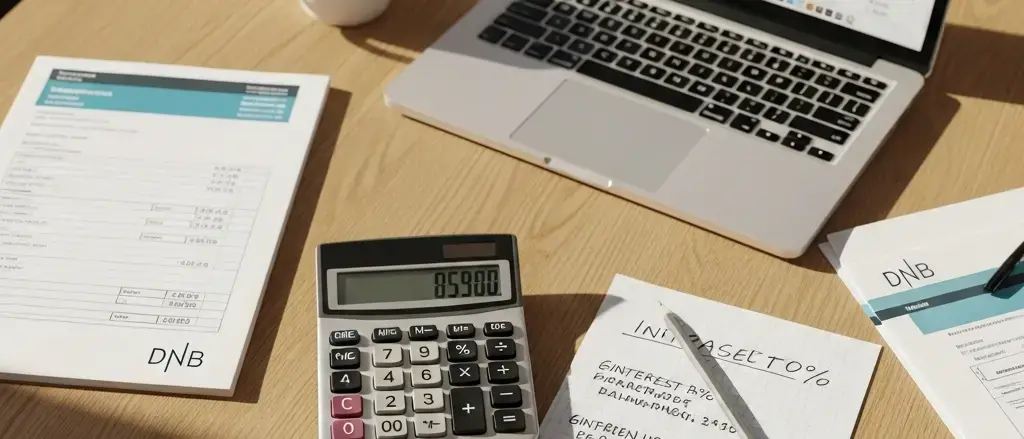
For a €300,000 home, the realistic starter price in most Dutch cities, you need a gross annual income of roughly €50,000 to €52,000. That translates to about €4,100 to €4,300 per month before taxes. Your monthly payments will run approximately €1,450 gross, dropping to €1,150 net after hypotheekrenteaftrek (mortgage interest deduction).
But that’s just the mortgage. Add opstalverzekering (building insurance), WOZ-belasting (property tax), maintenance, and utilities, and you’re looking at €1,600 to €1,900 in total monthly housing costs. On one median income, that leaves you house-rich and life-poor.
The debt-to-income ratio is merciless. Banks calculate your maximum monthly payment as a percentage of gross income, typically around 30-35%. Have a lease car? Student debt? That €20,000 studieschuld (student loan) you thought was dormant? It slashes your borrowing power by approximately €35,000, even if you’re not actively repaying it.
The €35,000 Savings Trap Nobody Warns You About
Here’s where the system gets particularly cruel. Dutch lenders don’t just want you to afford the mortgage, they demand proof you can survive financial shocks. This is where the lender requirements for savings buffers when relying on one income for a mortgage become your biggest obstacle.
When you’re the sole income earner, banks classify you as high-risk. They want to see:
– Minimum 10% equity (€30,000 on a €300,000 home)
– Additional savings buffer for payment problems (often €5,000-€10,000)
– Renovation reserves if the property needs work
– Emergency fund for unexpected unemployment
Suddenly, that €300,000 home requires €45,000 to €60,000 in cash before you even get the keys. And if your partner’s illness requires home modifications? Those costs come straight from your pocket, because the Dutch tax system offers minimal support for accessibility renovations in purchased homes.
The Renovation Debt Bomb Waiting to Explode
Many affordable €300,000 properties are ex-rental homes with energy labels E, F, or G. That “great deal” often hides a financial time bomb. The hidden renovation costs and financial risks when buying a home in the Netherlands can easily add €18,000 to €25,000 in mandatory upgrades.
A couple recently purchased a €210,000 apartment with energy label E, believing they got a bargain. Within months, they faced mandatory insulation upgrades, window replacements, and heating system overhauls that pushed their total investment to €235,000, money they didn’t have. They ended up taking expensive personal loans at 8-9% interest, negating any benefit of homeownership.
When you’re already stretching on one income, there is zero margin for a €15,000 boiler replacement or €8,000 window upgrade. Yet these are precisely the traps lurking in the starter home segment.
The Waiting Game vs. The Buying Gamble
Your dilemma is binary but excruciating:
Option A: Buy Now
– Pros: Lock in current prices and interest rates, start building equity, escape parental home
– Cons: Drain all savings, zero financial buffer, if you lose your job, you lose everything, partner’s future income remains uncertain, stress compounds health issues
Option B: Wait for UWV Clarity
– Pros: Preserve savings, reduce financial risk, partner can focus on health, clarity on future income potential
– Cons: House prices rise (average 5-8% annually), interest rates may increase, you keep living at home, relationship strain from delayed independence
The math is stark: waiting one year at 6% house price growth adds €18,000 to that €300,000 home. A 0.5% interest rate increase adds €75 per month to your payments. But buying now without reserves means one surprise expense, say, a €5,000 foundation issue, could trigger payment arrears and eventual foreclosure.
The Uncomfortable Truth About Buying “Together”
Here’s a perspective most couples avoid: buying property without joint income or financial liability in a relationship might be the most rational choice. When your partner is on ZW-uitkering, they cannot contribute to the mortgage application anyway. Putting them on the deed creates shared liability without shared borrowing power.
Consider this alternative: you buy the house alone, in your name only. Your partner pays “rent” to you, building a small savings pot on the side. If their health improves and they return to work, you can later add them to the mortgage and deed. If the relationship ends, you retain the asset and they retain mobility, crucial when illness already limits options.
This isn’t romantic, but it’s realistic. Many couples in this situation report that financial stress worsens health outcomes. The pressure to contribute when physically unable creates guilt and anxiety that hinders recovery.
The Legal Labyrinth of UWV and Disability Assessment
Your partner’s fibromyalgia puts them in a gray zone. The UWV process typically takes 6-12 months, sometimes longer. Their first request was denied, that’s common, not a final verdict. However, as one commenter with similar experience notes: “Don’t count on her ever having income that a mortgage provider will accept.”
The WIA-traject has three outcomes:
1. IVA (full disability, permanent) – counts for mortgage
2. WGA (partial disability, temporary) – doesn’t count
3. Rejected – back to work or social assistance
At 26, your partner might also qualify for WAJONG (disability benefit for young people), which has different rules but similar mortgage treatment. The key insight: the system is designed to support living costs, not asset acquisition. Benefits replace income for daily survival, not for leveraging into property ownership.
The Social Housing Alternative You’re Probably Ignoring
Here’s controversial advice: if you currently live comfortably at home, consider applying for sociale huur (social housing) instead. The wait is long, often 8-10 years in major cities, but you can register now and potentially receive priority due to your partner’s health condition.
Social housing offers:
– Capped rents (often €500-€700 for a two-bedroom)
– Security of tenure (you can’t be evicted without cause)
– No maintenance costs (landlord responsibility)
– Financial breathing room to save and focus on health
The trade-off? You’re “throwing money away” on rent and won’t build equity. But you’re also not risking €60,000 in savings on a single-income mortgage in an uncertain economy. For many couples dealing with chronic illness, the reduced stress outweighs the financial opportunity cost.
A Decision Framework for Couples in This Situation
Instead of asking “Can we buy?” ask these questions:
- What happens if I lose my job? With no partner income and drained savings, how many months can you survive?
- Can we afford the home on my income alone forever? Assume your partner never works again. Is the mortgage still manageable?
- What are the real renovation needs? Get a professional inspection focusing on energy performance and structural issues.
- What’s the mental health cost? Financial stress exacerbates chronic pain conditions. Is homeownership worth potential health deterioration?
- Do we have a Plan B? If you must sell in 2-3 years due to health or job loss, can you afford the 6% real estate agent fees and potential negative equity?
If you answer these honestly and still want to proceed, here’s the path:
- Minimum 15% equity (not 10%) to reduce monthly payments
- €10,000 emergency fund separate from equity
- €5,000 health buffer for unexpected medical costs
- Full NHG (National Mortgage Guarantee) if possible, it’s cheaper and offers payment protection
- Fixed interest rate for 20+ years to lock in certainty
- Partner not on deed until they have stable, countable income
The Verdict: Wait, But Prepare
Given your ages (25 and 26) and current living situation (both at home), the financially prudent choice is to wait, but actively prepare. Use this time to:
- Maximize your savings to €60,000+ for a €300,000 purchase
- Get UWV clarity on your partner’s disability status (6-12 months)
- Improve the property’s energy label if you buy, avoiding the €18,000 renovation debt trap
- Research social housing as a backup plan
- Consult a hypotheekadviseur (mortgage advisor) now to understand exact borrowing capacity
The housing market may rise, but buying prematurely and failing is far worse than renting a bit longer. Many couples who rushed in this situation ended up selling at a loss, destroying their savings and credit, while their partner’s health deteriorated from stress.
Your home should be a foundation for your future, not a source of anxiety that undermines it. In the Netherlands, where the system offers minimal safety nets for single-income homeowners with sick partners, caution isn’t just wise, it’s survival.
Actionable Next Steps:
1. Schedule a free consultation with a hypotheekadviseur to calculate exact borrowing power
2. Request a preliminary UWV timeline for your partner’s assessment
3. Open a separate savings account labeled “Emergency House Fund” and automate monthly deposits
4. Research your municipality’s sociale huur priority rules for disability cases
5. Have the brutal financial conversation about whether buying alone makes more sense for now
The Dutch system doesn’t accommodate your situation, it forces you to choose between love and financial logic. Choose logic now, so you can build a stable future where love doesn’t have to compete with mortgage payments.