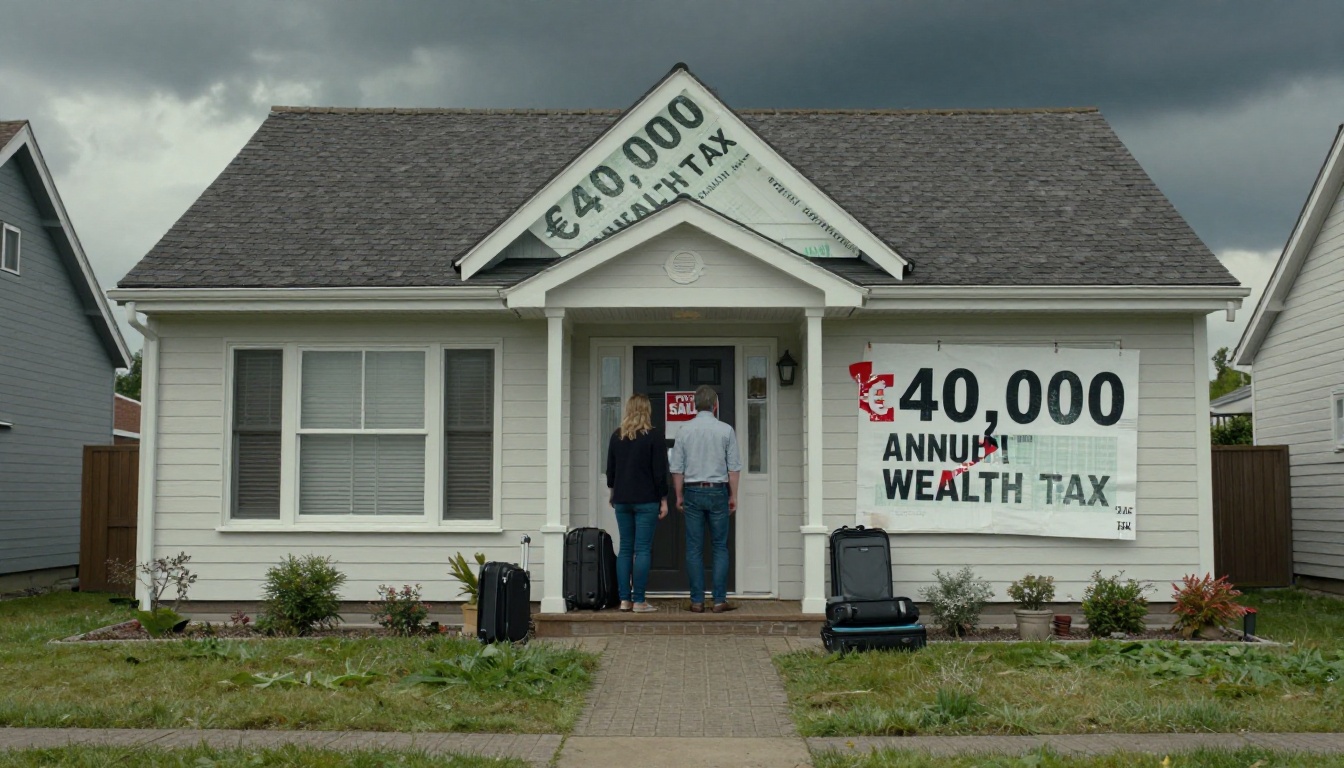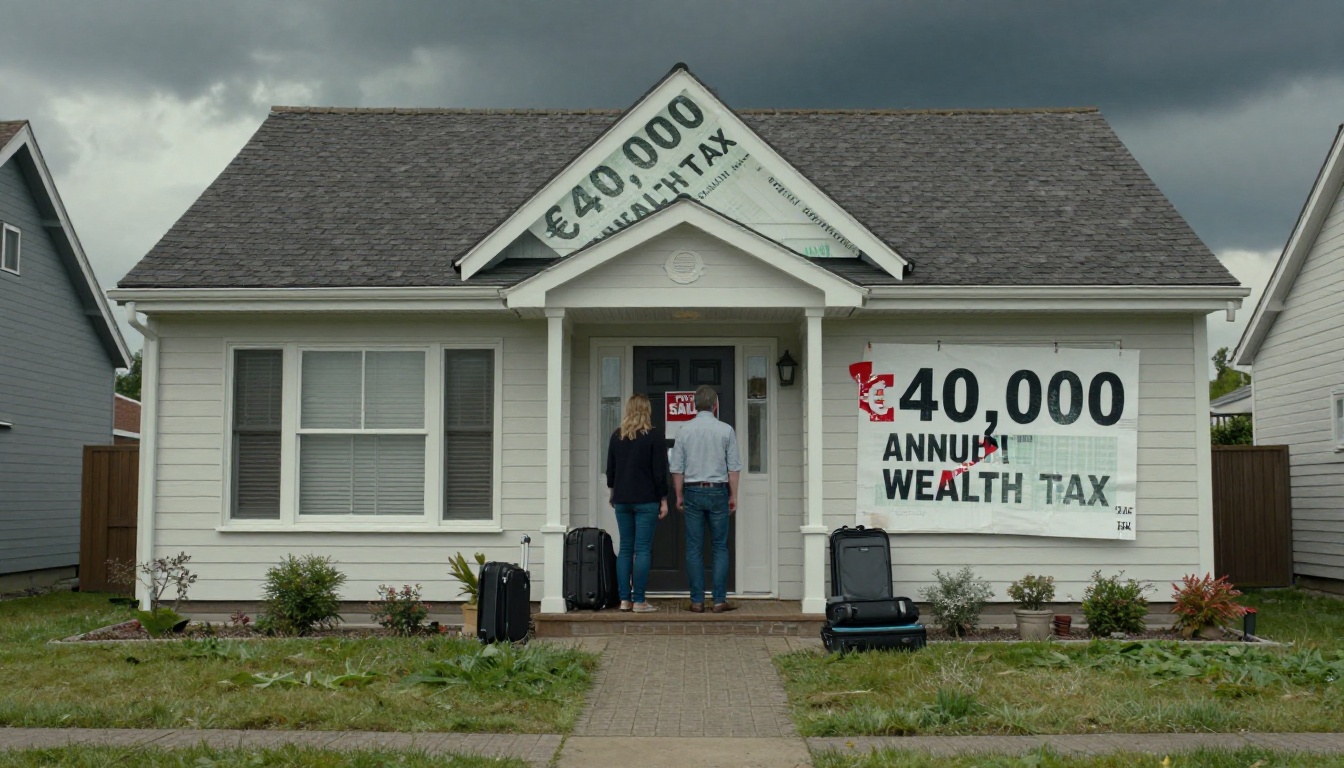
The math looks seductive at first glance. Two Dutch professionals earning €100,000 annually currently fork over €40,000 in income tax. Under the radical proposal circulating in a viral video, they’d pay just €16,000, if we replaced all taxes with a single 8% wealth tax. The pitch promises simplicity, fairness, and a swift end to the bureaucratic nightmare of subsidies, deductions, and endless Box adjustments that define the current Dutch system. But dig into the details, and this theoretical exercise reveals why it would turn the Netherlands into a cautionary tale of capital destruction and middle-class exodus.
The Viral Math That Doesn’t Add Up
The video’s central claim, that an 8% annual levy on total wealth could fund entire government budgets, relies on a sleight of hand that many commenters immediately spotted. The calculation conveniently ignores that eliminating income tax would leave most people with 30-40% more disposable income, which would then flow into savings and investments, rapidly inflating the wealth tax base. But this dynamic effect is precisely what makes the proposal collapse under its own weight.
Critics point out that if two workers suddenly keep an extra €24,000 each, the government’s revenue hole becomes massive. The model assumes static wealth while simultaneously creating conditions for that wealth to explode, then taxing it punitively. This contradiction exposes the first fatal flaw: the system would either bankrupt treasuries or require rates so high they’d trigger immediate capital flight. As one observer noted, the Netherlands already struggles with Dutch wealth taxation under Box 3 and the freedom contribution, where even modest rates are pushing residents toward drastic measures.
When Your Paid-Off House Becomes a Tax Bomb
Here’s where Dutch homeowners should pay attention. The proposal defines “wealth” as everything you own, your house, car, bicycle, even your business. Under the 8% model, a couple with a €500,000 paid-off home and modest pension savings would face a €40,000 annual tax bill. Their only “income” might be a combined €30,000 in pension payments, leaving them €10,000 short. They’d need to liquidate assets or take out loans just to stay in their own home.
This liquidity crisis isn’t theoretical. The Netherlands is already implementing a version of this nightmare with its Box 3 Tax Reforms: How the Netherlands Accidentally Built a Wealth Protection System for Millionaires. Starting 2028, the Belastingdienst (Tax Authority) will tax unrealized gains at 36% annually. A gold bar purchased for €65,000 that appreciates to €120,000 creates a €19,800 tax liability, even if you never sell it. The government expects you to liquidate precious metals, stocks, or crypto to pay the bill.
The wealth tax proposal amplifies this problem exponentially. Imagine being forced to sell 8% of your home’s value every year. Within a decade, you’d have liquidated most of your equity. The system effectively nationalizes private property through gradual confiscation, turning the Dutch dream of homeownership into a perpetual lease from the tax authority.
The Pension Ponzi That Destroys Savings
The proposal’s defenders argue that eliminating income tax gives everyone 30% more money to invest, making wealth building easier for the poor. This ignores how the Dutch pension system actually works. Under current rules, pension contributions are tax-deferred. Under the wealth tax regime, your pension pot becomes a liability that grows more dangerous each year.
A 35-year-old with €100,000 in savings aiming for FIRE (Financial Independence, Retire Early) would see their capital taxed at 8% annually. Even with 7% investment returns, optimistic after inflation, they’d net negative 1% per year. After 30 years, their €100,000 would shrink to €74,000 in real terms, while someone who spent every euro on consumption would have paid nothing. The system punishes delayed gratification so severely that rational actors would either blow their money on depreciating assets or use student debt as a deferral mechanism under looming wealth taxes.
This creates a perverse incentive structure: buy a €50,000 car instead of investing, because the car’s depreciation reduces your tax base while your investment gains increase it. The proposal inadvertently engineers a consumption economy by making saving financially irrational.
Capital Flight: The Ardennes Exodus Accelerates
The Trends article reveals that wealthy Dutch are already fleeing to Belgium’s Ardennes region to escape the upcoming 36% unrealized gains tax. Under an 8% wealth tax, this exodus would become a stampede. Christine Lagarde, ECB president, recently warned that aggressive wealth taxation deters investment and triggers capital flight. Her advice? Create investment incentives rather than punitive taxes.
The Dutch experience proves her point. The Netherlands’ Beleggings BV (investment private limited company) strategy emerged precisely because corporate structures face lower effective rates than personal wealth. Under the 8% regime, every entrepreneur would incorporate their life, business, home, car, into a BV to shield assets. The system would create an enormous black market in undervalued assets, with people hiding wealth in art, foreign real estate, and cryptocurrency.
The proposal’s assumption that European coordination prevents flight is laughable. The Netherlands can’t even coordinate its Box 3 reforms without causing a mass migration to Belgium. A pan-European wealth tax would simply shift capital to Switzerland, Singapore, or Dubai faster than you can say “vestigingsklimaat” (investment climate).
Who Actually Wins? (Hint: Not the Middle Class)
Proponents claim the ultra-wealthy would finally pay their “fair share.” In reality, they’d benefit most. Someone with €10 million in liquid assets can afford the €800,000 annual tax and still live comfortably on remaining returns. But a middle-class family with €625,000 in combined home equity, pensions, and savings, their entire life’s work, faces €50,000 in tax while earning perhaps €60,000 in gross income. They’d keep just €10,000 for living expenses.
This is why the €100,000 pension gamble traps Dutch FIRE chasers between Box 3 and a hard place. The current system already creates perverse thresholds where saving more makes you poorer after taxes. An 8% wealth tax would lower that threshold to around €500,000, well within reach of ordinary professionals who’ve paid off their mortgages.
The ultra-wealthy also have armies of tax lawyers to structure ownership through trusts, foundations, and offshore entities. The middle class has a mortgage advisor and a prayer. The proposal would accelerate wealth concentration by making it impossible for ordinary people to accumulate capital while leaving loopholes big enough for a superyacht to sail through.
The Capitalism Paradox: You Can’t Tax What Doesn’t Exist
Perhaps the most devastating critique is philosophical. If you tax wealth at 8% annually, you prevent capital formation. Why build a factory, buy a cargo ship, or develop a residential complex if the government takes 8% of its value every year regardless of profit? As critics noted, this is “the death blow for capitalism”, you cannot accumulate capital while being taxed for merely possessing it.
The proposal’s defenders argue that eliminating corporate taxes, dividend taxes, and income taxes would offset this. But businesses don’t operate in a vacuum. An entrepreneur who invests €1 million in equipment would pay €80,000 annually just for the privilege of owning it, whether the business generates profit or not. This creates massive barriers to entry and favors established players with deep cash reserves over startups.
Small business owners would be particularly crushed. Your €200,000 inventory, €100,000 delivery van, and €50,000 workshop equipment create a €28,000 annual tax bill before you’ve sold a single product. Many would close shop rather than work as indentured servants to the tax authority.
The Grassroots Reality Check
While the video presents a top-down technocratic solution, grassroots resistance to unfair wealth tax reforms in the Netherlands shows ordinary people understand these dynamics intuitively. The Box 3 protests aren’t driven by millionaires but by middle-class savers who see their pension plans and home equity under attack.
The sentiment among international residents is that Dutch bureaucracy ranks among the most confusing systems they’ve encountered. Adding a single wealth tax might simplify the forms, but it would complicate life in ways the video’s creator clearly never considered. How do you value a startup’s intellectual property? A family business’s goodwill? Your grandmother’s jewelry? Each valuation becomes a negotiation with the Belastingdienst, creating new bureaucratic nightmares while claiming to solve old ones.
Why This Remains a Dangerous Fantasy
The proposal’s appeal lies in its simplicity and its righteous anger at tax complexity. But its implementation would trigger:
- Immediate capital flight to any jurisdiction not participating
- Liquidity crises forcing people to sell homes to pay taxes
- Pension system collapse as savings become liabilities
- Economic stagnation through destroyed investment incentives
- Wealth concentration as only the ultra-rich can afford the tax
The Dutch are already living through a milder version of this experiment. From 2028, they’ll be the only developed economy taxing unrealized gains at 36%, with exceptions for real estate that are already causing investor responses to wealth taxation, such as shifting to dividend stocks and foreign property.
The 8% wealth tax proposal takes these real problems and amplifies them to cartoonish proportions. It’s a useful thought experiment for highlighting the flaws in current systems, but as policy, it’s a recipe for economic suicide. The Dutch already have enough tax headaches without adding this one to the mix.
Bottom line: Keep your receipts, track your assets, and maybe start learning French, because if this ever becomes real, that house in the Ardennes won’t just be a tax dodge, it’ll be a survival strategy.