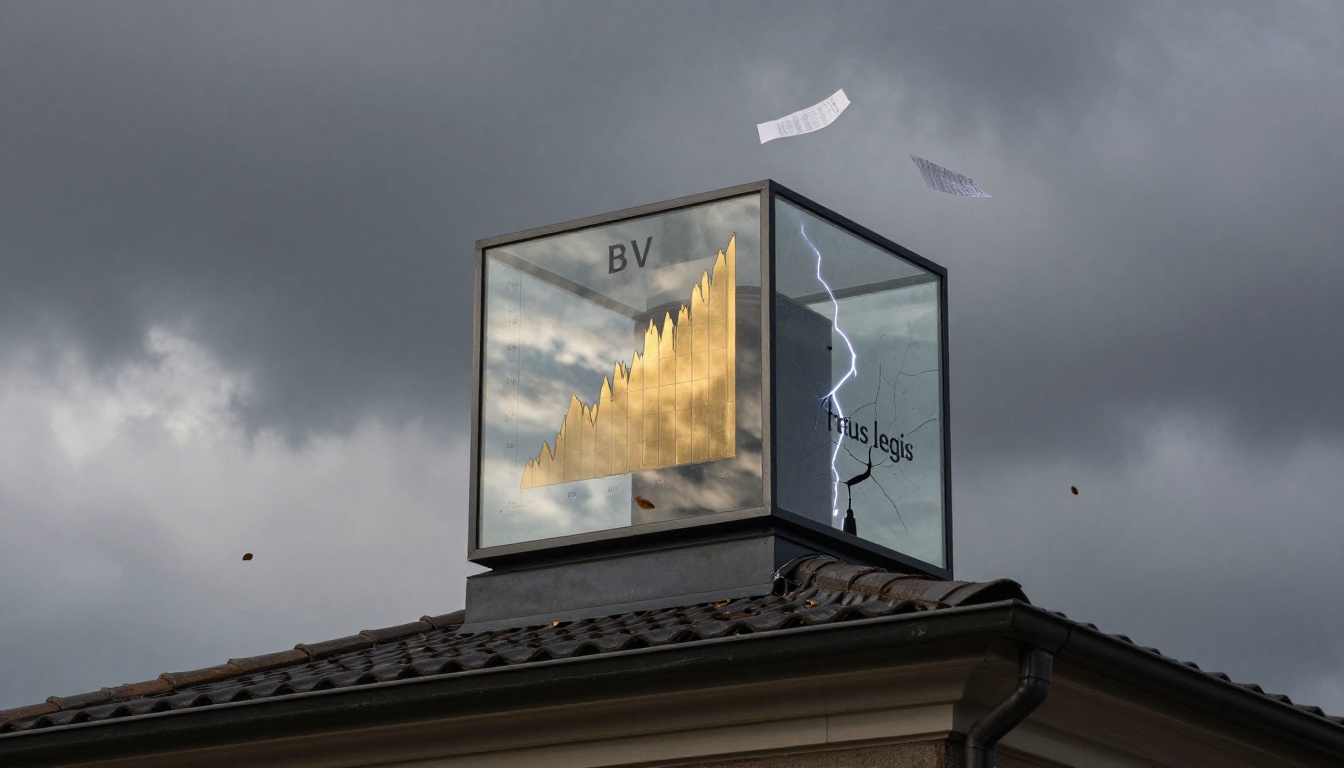
Investing Through a BV: The Dutch Tax Hack That’s Dividing Financial Advisors
The Dutch government has a talent for turning calm investors into frantic tax planners. With the new Box 3 (wealth tax box) reforms set to tax paper profits starting in 2028, a controversial workaround has financial forums buzzing: parking your investments inside a personal BV (private limited company) to duck under a different tax regime. What sounds like a clever loophole is splitting the advisory community, some call it legitimate planning, others see a regulatory time bomb ticking toward a crackdown.
The Box 3 Panic Fueling the BV Rush
The upcoming shift to a “vermogensaanwasbelasting” (wealth growth tax) has fundamentally changed the math for Dutch investors. Instead of taxing a fictional 4% return, the Belastingdienst (Tax Authority) will soon demand 36% on your actual gains, even if you never sold a single share. That €5,000 paper gain on your crypto? You’ll owe €1,800 before cashing out. Many international residents report this feels like paying VAT on a house you haven’t built yet.
Wealth managers point out that constant rule changes create uncertainty, and taxing unrealized gains intensifies the discomfort. The result? A surge of interest in Box 2, where corporate profits face different treatment. By holding investments through a BV, you theoretically move from the punitive wealth tax system to corporate taxation, where you control the timing of profit distributions.

How the BV Strategy Actually Works
The mechanics are straightforward on paper. You transfer personal investments into a BV you control, perhaps that dormant company from your freelancing days. Inside the BV, dividends and capital gains face VPB (corporate tax) at 19% on the first €200,000, then 25.8% above that. When you eventually want the money, you pay yourself Box 2 dividend tax at 24.5% on amounts up to €68,843 (or €137,686 with a fiscal partner), and 31% beyond that.
For someone accumulating €700,000 over 15 years, the appeal is obvious. Under Box 3, a 7% annual return could generate around €17,640 in theoretical wealth tax annually at the 36% rate. Inside a BV, the same return gets taxed only when you distribute profits, potentially at lower combined rates. The ability to reinvest post-tax profits without immediate personal tax leakage creates a compounding advantage that many FIRE (Financial Independence, Retire Early) enthusiasts find irresistible.
The strategy becomes even more attractive if you plan to freelance again, allowing you to funnel business revenue directly into investments without first paying personal income tax. Many investors with dormant BVs see this as a zero-cost entry point, no setup fees, just repurposing an existing structure.
The Emigration Trap Nobody Talks About
Here’s where the strategy gets complicated. If your retirement plan includes leaving the Netherlands, the BV becomes a liability magnet. When you emigrate with a substantial interest (5% or more) in a BV, the Dutch tax authorities impose a “conserverende aanslag” (preservation assessment), an exit tax on your built-up Box 2 value, even though you haven’t received a cent.
This parked liability has no time limit since rule changes in 2015. You’ll eventually pay tax when distributing dividends, but now potentially in a higher bracket and without the benefit of Dutch tax treaties. For those planning to emigrate outside the EU/EER, it gets worse: you may need to post collateral to guarantee future payment, locking up capital.
The place of effective management also matters. If you’re the sole director and move abroad, the BV’s tax residency could follow you, turning your Dutch structure into a foreign-resident company with new compliance headaches. The standard fix requires appointing a Dutch co-director with real authority and substance, an ongoing cost and administrative burden that many solo investors overlook.
Legal Minefield: When Planning Becomes Avoidance
The Belastingdienst has a term for structures that exist purely to circumvent tax: “fraus legis” (abuse of law). A BV whose sole purpose is holding investments without genuine economic activity risks being reclassified. Tax advisors warn that pure investment BVs without substance face scrutiny, potentially leading to reclassification back to Box 3 taxation plus penalties.
The distinction matters. A BV originally set up for IT consulting that also invests has a business purpose. A “spaar BV” (savings BV) created specifically to avoid wealth tax? That’s a red flag. The authorities examine whether the structure has real economic substance, employees, office space, active management, or merely serves as a tax parking spot.
Recent discussions among tax professionals reveal that the Belastingdienst is increasingly focusing on these structures. The risk isn’t theoretical, if challenged, you could face back taxes, interest, and fines that wipe out decades of supposed savings.
The Break-Even Math That Changes Everything
Running the numbers reveals how sensitive this strategy is to assumptions. The Box 3 exit calculator mentioned in investor circles shows break-even points vary wildly based on returns, time horizon, and distribution strategy. A 7% annual return over 20 years might favor a BV, but drop that to 5% or plan earlier withdrawals, and the advantage evaporates.
Costs matter too. Even DIY administration isn’t free, annual filings, corporate tax returns, and potential legal fees add up. If you need professional help, expect €1,500-3,000 annually. For a €100,000 portfolio, that’s a 1.5-3% drag on returns before any tax benefit materializes.
The dividend bracket thresholds also create planning complexity. Taking a large lump-sum dividend before emigrating could push you into the 31% bracket, while spreading distributions over years keeps you at 24.5%. But spreading requires maintaining Dutch residency longer, exactly what emigrants want to avoid.
What Seasoned Investors Are Actually Doing
Experienced voices in the community urge caution. Some who’ve emigrated to the Netherlands note that Box 3 changes, while frustrating, pale against life’s unpredictability, wars, market crashes, illness, or unexpected dependents can derail any plan. They suggest focusing on income growth and lifestyle control rather than complex tax structures.
Others point out that the BV strategy works best for specific profiles: high earners who can fund it quickly, those with existing business BVs, and investors comfortable with legal complexity. For the average saver with €50,000-150,000, the administrative burden and risks often outweigh benefits.
Tax advisors consistently recommend substance over form. If you genuinely run a business through your BV and invest surplus profits, you’re on solid ground. If you create a shell to dodge taxes, you’re building a house of cards.
The Ethical Dimension: Fairness in the Tax System
The controversy extends beyond legality to fairness. Critics argue the BV strategy is available only to those with enough capital and knowledge to exploit it, widening the gap between sophisticated investors and ordinary savers stuck in Box 3. This fuels the broader public backlash against Box 3 reforms targeting middle-class investors.
Defenders counter that using legal structures for tax efficiency is standard practice for businesses, why should individual investors be penalized for applying the same principles? The real issue, they argue, is a poorly designed Box 3 system that taxes phantom income.

The debate highlights a deeper policy failure. While the government wants to encourage investment, the new rules create perverse incentives. As Christine Lagarde noted, new wealth taxes can slow investment, sometimes creating incentives works better than punitive measures.
Who Should Actually Consider This
The BV strategy might make sense if you:
– Already have a dormant BV with business history
– Plan to accumulate €500,000+ over 10+ years
– Have no plans to emigrate, or can manage the exit tax
– Understand the compliance requirements and have professional advice
– Can demonstrate genuine business substance beyond pure investing
It likely doesn’t make sense if you:
– Have under €200,000 in investable assets
– Plan to leave the Netherlands within 5 years
– Want simplicity and low admin overhead
– Cannot afford professional tax guidance
– Are uncomfortable with regulatory risk
The Bottom Line: A Tool, Not a Magic Bullet
Investing through a BV isn’t the slam-dunk hack some promote. It’s a complex strategy with genuine benefits for specific situations but significant legal, administrative, and financial risks. The upcoming Box 3 changes create real pressure for investors, but rushing into a BV without understanding exit taxes, substance requirements, and fraus legis risks could turn a tax problem into a legal nightmare.
The most prudent approach? Model your specific scenario carefully, factor in all costs, and get professional advice before moving assets. For many, simpler strategies like pension investing vs regular investing or accepting Box 3 while focusing on higher returns may prove less stressful and more profitable long-term.
The BV investment strategy sits in regulatory limbo, currently legal but under scrutiny, potentially beneficial but operationally complex. Treat it as a scalpel, not a sledgehammer: precise, situation-specific, and dangerous in untrained hands.